Why Does My Cat Lick My Hair? 7 Vet-Verified Reasons for This Behavior


In this article
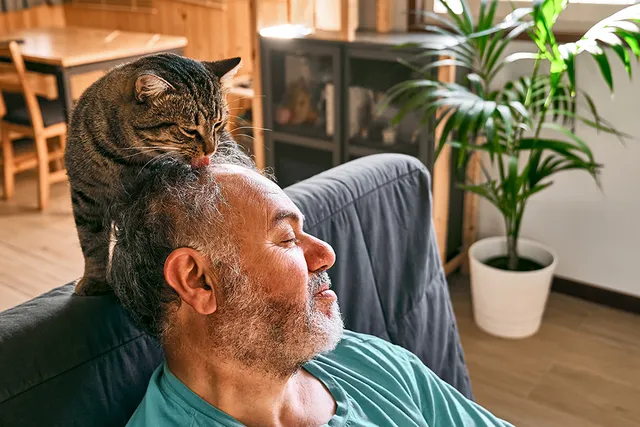
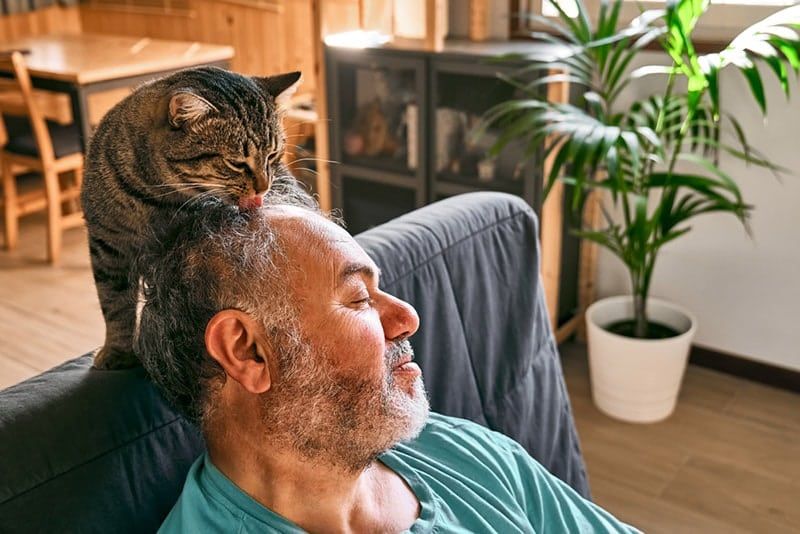
You’re sitting in front of the television, unwinding after a busy day, when all of a sudden, your cat starts licking your hair. What is going on here? Does your hair taste good, or do they think you need a good grooming?
You’re not alone. There are many cats that seem to enjoy licking their human’s hair, so we’ll look into the whys of this peculiar feline behavior. We will also give you a few tips on some of the best ways to stop this behavior if you’re not comfortable with how it feels or how your hair looks afterward!

The 7 Possible Reasons Why Cats Lick Hair
1. Love and Affection
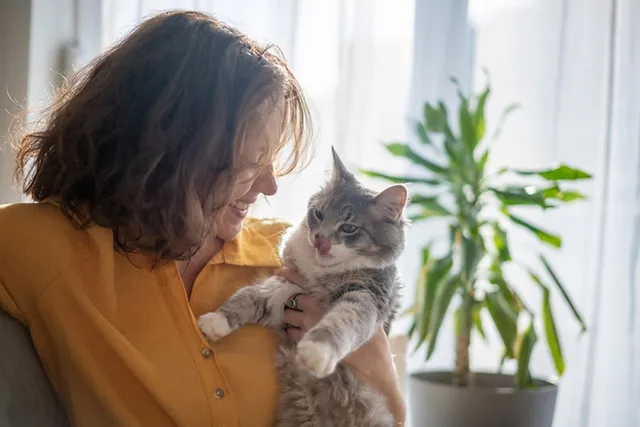
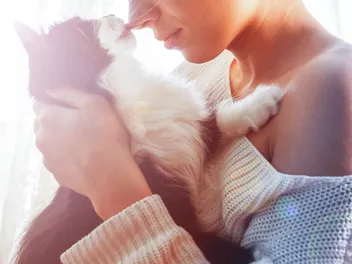
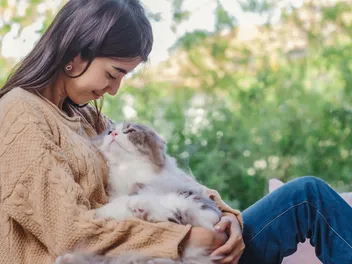
It looks like your cat loves you! Take this as a compliment because when your cat starts to lick your hair (or anywhere else), they’re showing you lots of affection as a part of their grooming process.
Cats tend to groom the heads of their “chosen friends,” which you may have observed at some point. If you have multiple cats or watch cat videos online, you will see this is common behavior, so your cat has chosen you as one of their personal favorites.
2. Claiming Territory
Beyond showing affection, your cat is quite possibly marking you as their territory. They are attempting to remove foreign scents from you. Licking you (and your hair) is a way of claiming you as a part of their territory. Using this method, they’re letting everyone (particularly other cats) know that you belong to them.

3. Playful Behavior
If you’re lying down and feeling relaxed and your cat starts licking your hair, chances are that they’re being affectionate. If you’re more active, they might be feeling playful. This is when your cat might also start biting your hair. Their own body language should tell you if they’re feeling relaxed or frisky.
4. Tasty Hair
Many of us put products in our hair that smell nice, and it’s quite possible that your cat is attracted to the scent. It’s also possible that your cat actually enjoys the taste of the natural oils or the products in your hair.

5. Grooming = Health
Cats spend about 30% to 50% of their time grooming themselves every day, as it keeps their coats and skin clean and in healthy condition. Perhaps your cat is trying to keep you in good health and is essentially cleaning you up.
6. Soothing
Some cats will groom themselves as a way of coping with stress, as grooming is soothing for them. This is why many cats engage in this behavior right before they settle down for a nice long nap. Grooming their loved ones is also a stress-free activity that will allow them to relax.
7. Instinct
Mother cats groom their kittens as soon as they are born as a means to stimulate them to start breathing air and to keep them clean. As kittens grow older, they will start to groom each other. Since cats view their owners as their family, their instincts will kick in, and they will enjoy a good grooming session with you.


Should You Be Concerned?
In most cases, your hair and your cat shouldn’t come to any harm because of this habit. However, some cats are prone to more self-destructive behaviors, such as overgrooming themselves and by extension, your hair. This can be brought on by allergies, pain, or stress, so this needs to be addressed if you’ve observed this issue with your cat.
Other cats tend to engage in cat suckling, also known as wool sucking, which is when an adult cat suckles on soft and fuzzy objects (blankets and toys, and some cats will overgroom as part of this behavior as well).
Some of the causes for wool sucking are:
As long as your cat isn’t literally chewing or eating your hair, hair licking is harmless. If you suspect your cat might be feeling stressed or is demonstrating inappropriate behavior, make a call to a vet.
One risk to consider is that the threads of human hair can exacerbate the risk of hairballs in cats. Human hair can be much longer than cat fur, so the chances of hairballs becoming problematic are higher because of the drawstring effect. If one end of a long hair strand gets caught under the tongue or in the stomach, this could prevent it from continuing its way out. When the intestine tries to move the hair, it could end up folding upon itself, leading to a life-threatening situation. Therefore, you shouldn’t let your cat lick your hair, and you’ll need to regularly vacuum or sweep to prevent your cat from ingesting hair on the floor.
How to Stop Your Cat Licking Your Hair
As adorable as it is, some people will probably want the hair licking to cease. The first step is to ensure that you aren’t accidentally encouraging this behavior. If you give your cat any attention while they’re grooming your hair, you will be reinforcing this behavior. You need to avoid looking at, speaking to, or touching your cat while they are licking your hair.
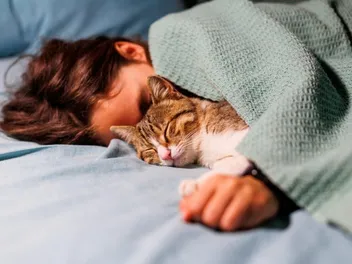
If they like to lick your hair while you’re in bed, you can put the blankets over your head until they give up and leave. If they enjoy licking your hair while they’re lying on the back of the couch or chair behind you, just lean forward so they can’t reach your hair.
If you suspect your cat is drawn to a product you’re using in your hair, you could consider switching products. Cats also quite dislike the smell of citrus (oranges, lemons, limes, etc.), so you can use a lemon-scented product (for example) or spray your hair with a citrus scent (they also don’t like peppermint).
Of course, the simplest solution is to gently disengage yourself from your cat’s administrations and leave.
Conclusion
In the long run, as long as your cat isn’t damaging your hair or being overly aggressive in their licking behavior, count yourself as a lucky person. It’s quite clear that your cat loves you and considers you one of their favorite people. However, it is best to avoid any risk of your cat eating your hair. The steps you can take to stop the behavior are pretty simple. Cats are certainly smart enough to understand that you’re not necessarily enjoying this kind of attention.
Our cats are full of quirks and make us laugh on a daily basis. Hair grooming their favorite human is just another idiosyncrasy that makes cats the unique and amazing animals they are.
Related Reads:
Why Does My Cat Stare at Me While I Sleep? 6 Reasons for This Behavior
Caterwauling: What is it & Why Do Cats Do It? 5 Reasons for This Behavior
Featured Image Credit: Caterina Trimarchi, Shutterstock
Expert cat care, straight to your inbox
News, insights, and useful advice, delivered to you.

No spam — unsubscribe anytime.
By signing up, you agree to our Terms & Conditions and Privacy & Cookies Policy.
How useful was this post?
Click a star to rate. You can leave written feedback afterwards. (We read all feedback.)
Christian started writing for a local newspaper as a teenager, and he's been involved in the publishing industry for most of his adult life. Combining his love of writing with a passion for animals, he is currently the Director of Editorial at Pangolia and the Editor-in-Chief at Catster.
Christian lives in the Philippines with his wife, son, and four rescue cats: Trixie, Chloe, Sparky, and Chopper.