22 Most Expensive Cat Breeds in The World (Info, Pictures & Prices)


Cats are some of the most popular companion animals on the planet. People welcome cats of all shapes and stripes into their lives and homes, from deeply loved one-eyed moggies to designer cats. While a moggie adopted from a shelter may not set you back that much, pedigree cats often require a significant investment. Below you'll find a list of the world’s 22 most expensive cat breeds.

The 22 Most Expensive Cat Breeds in The World
1. Ashera

Ashera cats are stunning hybrid cats that can cost up to $125,000. They're technically mixes of domestic cats, African servals, and Asian leopard cats. The breed was privately developed by Lifestyle Pets, and it's been around since the 2000s. They're extremely large cats, most weighing anywhere from 26 to 33 pounds, with solid bodies and fur that make them look like miniature leopards. Asheras are energetic and can grow to heights between 3 and 4 feet.
2. Savannah Cat

Savannah cats are another option if you're looking for a buddy who looks like they'd be at home in the jungle but has the personality of a domestic cat! They're mixes of domestic cats and servals and have slender bodies, long legs, large upright ears, and spotted coats. Savannahs are quite active and require far more patience and training than the average house cat.
Because they’re large—many easily weigh 20 pounds and grow to 17 inches tall—they can get into far more trouble than most kitties. Plan to spend anywhere from $10,000 to $50,000 to purchase a Savannah kitten.
3. Bengal Cat

Bengal cats are Asian leopard cat-domestic cat mixes. They look like tiny leopards and are known for being almost dog-like due to their friendly nature and tendency to follow people from room to room. They're intelligent and stunningly athletic.
Kittens generally cost between $10,000 and $25,000. Bengals usually adore water, and some even enjoy baths. They have high physical activity and social interaction needs, and those that don't get enough exercise and mental stimulation can become quite destructive.
4. Khao Manee

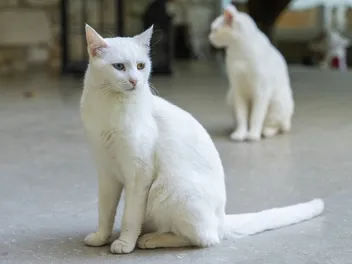
Khao Manee cats are originally from Thailand, where they were once believed to bring good luck. They're slim, athletic, and have gorgeous white fur. Most have green, blue, or gold eyes, but some have eyes of different colors. They're affectionate and vocal and usually make wonderful family cats due to their fun-loving, playful natures.
As a natural breed, they're relatively healthy; most live 10 to 12 years. Expect to pay up to $11,000 for one of these beautiful cats.
5. Sphynx Cat

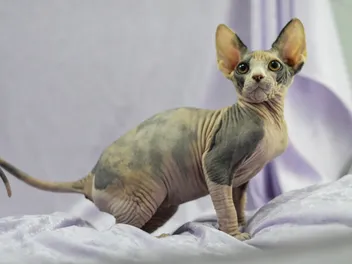
Sphynx cats are striking kitties with big ears and haunting eyes. Most are hairless, but some have varying degrees of fur. Most have relatively loose skin, which gives them the appearance of wrinkles. They're playful and mellow, and while they're not technically hypoallergenic, Sphynx often make good choices for people with allergies.
They were the 9th most popular pedigree cat breed in the US in 2022, according to the Cat Fanciers' Association (CFA). A kitten can cost anywhere from $1,800 to around $10,000.
6. Persian Cat

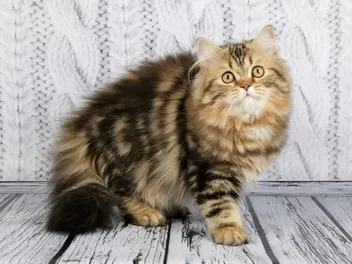
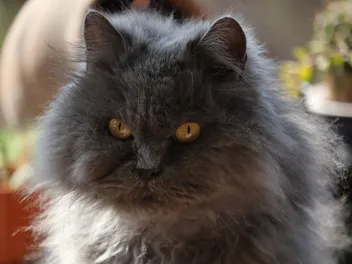
Persian cats are another incredibly popular breed that you can expect to pay between $1,500 and $5,500. These charming long-haired cats are incredibly mellow; they like people but don't require constant attention. Most prefer lounging around to running about and roughhousing.
They have flat faces with distinctive short noses and large eyes. The breed is originally from Persia (modern Iran) and most likely arrived in Europe during the 14th century. It was one of the first breeds recognized by the CFA after the organization's founding in 1906.
7. Toyger

Toyger cats resemble tiny tigers, and they're mixes of domestic kitties and pedigree Bengals. They have compact, muscular bodies and fur with distinctive tiger-like stripes. While Toyger cats look like wild kitties, they have the playful, approachable, friendly personalities of domestic cats. The breed is recognized by The International Cat Association (TICA) but not by the CFA. It can be difficult to find Toyger breeders, so be prepared to do a bit of leg work if you have your heart set on one of these stunning cats. Most cost between $3,000 and $5,000.
8. Peterbald

Peterbalds are another expensive hairless breed; most cost between $2,000 and $5,000 dollars. They're usually totally hairless, but a soft downy fuzz covers some. Most have slender athletic bodies, graceful long necks, beautiful wide eyes, and stunning large ears.
They're often described as having dog-like personalities and love spending time with people. It's a relatively young breed; the first documented Peterbald was born in Russia in the 1990s. TICA acknowledged Peterbalds in 2006.
9. Ragdoll Cat

Ragdolls allegedly get their name from the breed's tendency to flop like ragdolls when they’re picked up. They’re large and sometimes weigh up to 20 pounds. They're known as friendly cats that follow their favorite people from room to room. Ragdolls have silky, medium-length fur in many colors, including lilac, cream, and red.
Bi-color and tri-color coat patterns are also seen. Most get along exceptionally well with children and other pets. They topped the CFA's most popular pedigree cat list in 2022 and generally cost between $1,000 and $5,000.
10. Siberian Cat

Siberian cats are a natural breed; they're the pedigree version of long-haired cats that roamed forested northern stretches of Russia for centuries. They have medium-length coats that become thick during the winter and fall out when temperatures rise. Siberian cats require extensive grooming to keep their coats tangle-free and the shedding under control. They have solid, compact bodies and weigh anywhere from 15 to 20 pounds. Breeders usually ask for $1,200 to $4,000 for Siberian kittens.
11. Maine Coon

Maine Coon cats are some of the largest domestic cats in the world. They're incredibly popular and cost $1,000 to $4,000. It's not unheard of for these cats to weigh up to 30 pounds. As a natural breed, they're native to the northern regions of North America. They have pointy ears and long thick coats with a water-resistant outer layer. Maine Coons have long fluffy tails to wrap around themselves on cold winter nights and large paws with bits of fur to help them stay nimble in snowy environments.
12. Scottish Fold

Scottish Fold Cats are compact, medium-sized kitties. But they're mostly known for their charming personalities and curled-over ears, but some kittens are born without the characteristic trait. They're solid, medium-sized cats weighing between 6 and 13 pounds.
Scottish Fold Cats often stand on their hind legs like rabbits when interested in something. The breed's history started in the early 1960s when a cat with floppy ears was found on a farm in Scotland. Plan to spend $500 to $3,000 to purchase a Scottish Fold kitten from a reputable breeder.
13. Russian Blue Cat

Russian Blues have slim, elegantly muscled bodies, stunning green eyes, and silky blue fur with subtle silver highlights. They're sweet, loving, and quite mellow—most enjoy peaceful environments and generally do just fine when left alone for reasonable periods. They're native to the area around Arkhangelsk, a White Sea port about 150 miles away from the Arctic Circle. The Russian Blue only became popular in the United States in the years after World War Two. Breeders generally charge anywhere from $500 to $3,000 for Russian Blue kittens.
14. British Shorthair Cat

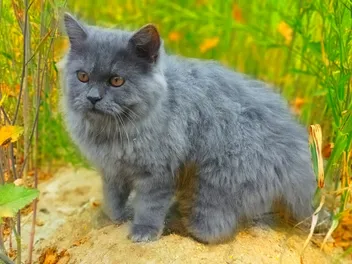
British Shorthair cats are well-muscled, compact kitties with sweet chubby cheeks. They're pedigree versions of ordinary British farm and street cats. British Shorthair Cats become attached to their family and enjoy spending time in the same room as their favorite people.
They're often happy to entertain themselves as long as their owners are nearby. Most are pretty healthy, thanks in part to their working cat heritage. It's not unusual for British Shorthairs to live for 20 years. Blue is the color most often associated with the breed, but British Shorthair Cats come in several solid colors and different patterns. Plan to spend $800 to $2,000 to bring one of these beauties home.
15. Egyptian Mau

Egyptian Mau cats have dazzling green eyes and gorgeous silver, smoke, or bronze coats featuring dark spots. They generally cost between $800 and $1,800. They typically have lithe, medium-sized bodies, and most weigh between 8 and 12 pounds. They're incredible feline athletes that can reach some of the fastest speeds of all domestic cats. While Egyptian Mau cats are relatively active, most prefer calm, quiet environments as they're often easily startled.
These smart cats can learn to open drawers and turn on faucets. Even though they love to jump and explore, Egyptian Mau Cats are happy cuddling up next to their favorite person.
16. Norwegian Forest Cat

Norwegian Forest Cats sport thick, medium-length, water-resistant coats that they shed two times yearly, and their fur requires frequent grooming to keep from becoming matted and tangled. They’re often devoted to one person but aren’t usually fond of cuddling. They're typically hefty cats, and large males can weigh up to 20 pounds. Kittens usually cost $800 to $1,500.
17. Selkirk Rex

All Selkirk Rex cats have thick, curly fur, but they come in short and long-haired variants. Short-haired kitties resemble teddy bears, but long-haired Selkirk Rex Cats have hair like sheep's wool. They're incredibly friendly and are happiest in the presence of companions, and most would rather spend time with people than entertain themselves. The gene responsible for the breed's curly fur also causes curly eyebrows and whiskers. Prices for Selkirk Rex Cats range between $600 and $1,500.
18. American Curl

American Curls are beautiful medium-sized cats with graceful, inward swooping ears. They come in almost every possible shade and color imaginable, but some have short fur, and others sport long, silky coats. It's not an old breed, and the first known cat with curled ears was a stray who turned up on a California doorstep in the 1980s.
American Curls have straight ears when born, but the “curled” trait starts to develop when kittens are 3 to 5 days old. Plan to spend $800 to $1,200 for one of these family-friendly cats.
19. American Wirehair Cat

American Wirehair cats have the same adaptable personalities as American Shorthairs but have coarse fur instead of soft coats. The trait is caused by a genetic variation that popped up in a litter of New York cats. Some American Wirehairs can have dense, almost spiky fur, and others have coats featuring bent or hooked hairs. They're considered good family pets; they generally enjoy the company of people and are often relatively unconcerned by the antics of reasonably well-behaved dogs. American Wirehair Cats usually sell for $800 to $1,200.
20. American Shorthair Cat

American Shorthair cats are the descendants of North American working cats whose ancestors were most likely ships' cats tasked with keeping rodents at bay on European sailing vessels. They're solidly built, medium-sized cats with lovely round cheeks and thick fur.
American Shorthairs are quite healthy, and it’s common for these kitties to live for 15 to 20 years. They were called Domestic Shorthair Cats until the 1960s. The breed was one of the first recognized by the CFA during the organization's inaugural year. Breeders generally ask between $600 and $1,200 for American Shorthairs.
21. American Bobtail

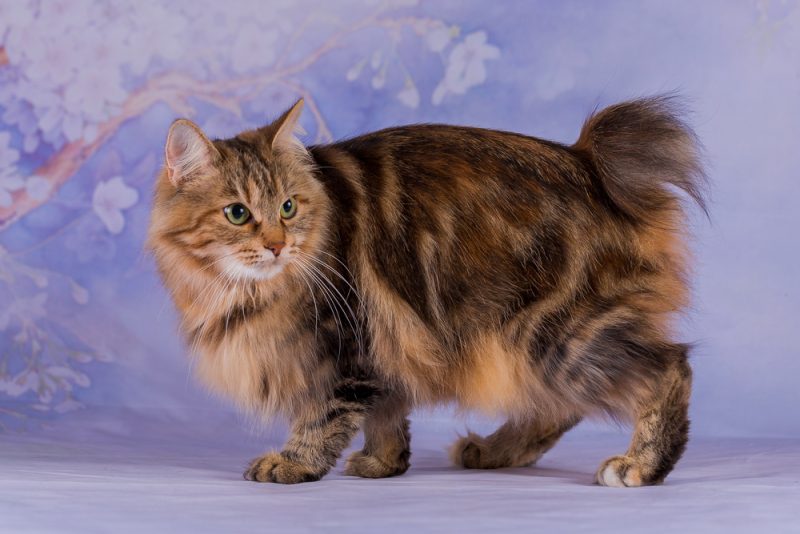
American Bobtails have short tails, solid builds, and long hind legs. Their tails are generally between 1 and 4 inches long and can be tiny stubs or feature kinks and bumps. They're considered medium-sized cats and usually weigh 7 to 16 pounds.
American Bobtails come in numerous colors and can have long or short-haired coats. Most are incredibly social and get along well with other pets, even canine ones. Expect to pay $600 to $1,200 for one of these relatively rare cats.
22. Korat

Korat Cats are originally from Thailand, and they've been around for quite some time. There are paintings of similar kitties dating from the 1350s. All Korat Cats have blue fur with silvery highlights, and they're considered an extremely low-maintenance, generally healthy breed. They often take longer than the average cat to reach maturity and don't hit full growth until they're 2 to 4 years old. Expect to pay $500 to $800 for a Korat kitten.
Conclusion
You may be saving up for quite some time if you're set on welcoming an Ashera Cat into your home. Ashera Cats are extremely rare and by far the most expensive pedigree felines on earth. Most pedigree cats cost far less than the $125,000 Ashera, but some Savannah Cats can go for around $50,000. However, over 40 cat breeds are recognized by both TICA and the CFA, and not all pedigree cats cost tens of thousands of dollars.
Related Reads:
Sources
Featured Image Credit:Seregraff, Shutterstock
Expert cat care, straight to your inbox
News, insights, and useful advice, delivered to you.

No spam — unsubscribe anytime.
By signing up, you agree to our Terms & Conditions and Privacy & Cookies Policy.
How useful was this post?
Click a star to rate. You can leave written feedback afterwards. (We read all feedback.)
Lorre Luther is a writer who is firmly convinced that cats are smarter than humans. She left her law career in the United States and moved to the Netherlands to follow her dream of becoming a writer. Lorre currently lives in Rotterdam, she enjoys traveling and greatly appreciates the beauty of nature. Lorre has a spot for animals and admires the intelligence of cats.