Get

In Your Inbox

Catster is reader-supported. When you buy via links on our site, we may earn an affiliate commission at no cost to you. Learn more.

When to Euthanize a Cat With Hyperthyroidism: Vet-Approved Advice

Share

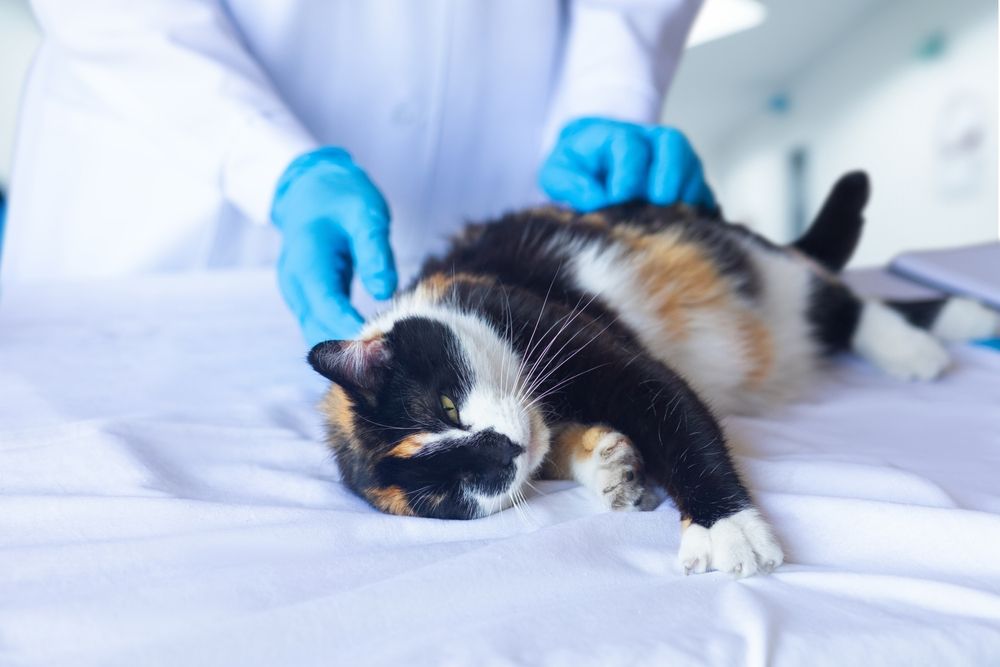
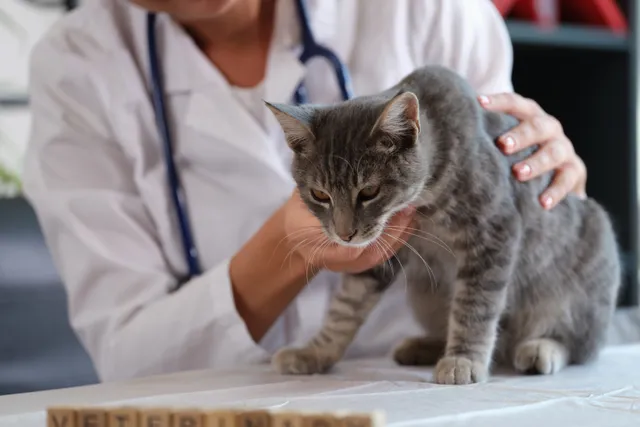
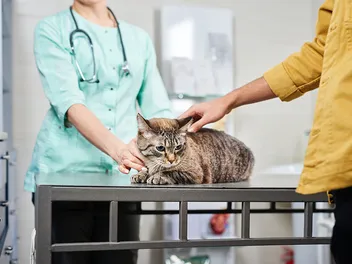
vet checking cat on the table

Making the heartbreaking decision to euthanize your pet is never easy. You’ve likely gone through an emotional journey with your cat; from their first worrying signs, through diagnosis and anxiously waiting for test results, to managing the condition and finally making your cat comfortable at the end of their life.

Knowing the right time to say goodbye can feel impossible, and I’ve personally helped owners through it. Luckily, there are many treatments (and some cures) for hyperthyroidism in cats, but some individuals will suffer significantly from the disease or concurrent conditions, and their quality of life will begin to decline; that is when it’s time to think about letting them go.

divider cat paws 2 oct 2024

When to Euthanize a Cat With Hyperthyroidism

Most of the time, cats with hyperthyroidism respond well to treatment. However, treatment may prove too expensive for some owners, or your cat might be experiencing other health problems at the same time. Clinical examinations and blood tests will help to know how your pet is coping, but monitoring your cat’s quality of life is the only real way to decide when it’s time to euthanize them, as it’s not a decision that can be made for you.

A cat's quality of life can be assessed in numerous ways, but signs that a cat's quality of life is deteriorating can include the following:
  • If they are in pain
  • If they have problems moving around, getting up, or grooming themselves
  • If they cannot, eat, drink, urinate, or defecate properly
  • If they can’t display normal behaviors, such as scratching, grooming, or playing
  • If they don’t interact with their family anymore, and they are no longer enjoying things that used to make them happy
  • If their bad days outweigh their good days

It is important to recognize when the bad days outweigh the good. There have been times when I’ve noticed owners struggling to accept their cat’s deteriorating health, and this can lead to unnecessary suffering. While it’s never easy to decide on euthanizing your beloved pet, it is often the kindest, most important gift you can give them when they are in pain.

Ultimately, the decision will be yours, but speaking with your vet can help you decide when the time is right for you to say goodbye.

divider cat paws oct 2024

What Is the Lifespan of a Cat with Hyperthyroidism?

Hyperthyroidism is a common condition in older cats, affecting more than 10% of cats over the age of 10 in the US. Because of the advanced age of most cats diagnosed with hyperthyroidism and the increased likelihood of other concurrent conditions, such as kidney disease, you might think that hyperthyroid cats would have a significantly reduced lifespan.

While untreated hyperthyroidism will reduce lifespan, even elderly cats can live for years if their hyperthyroidism is treated! Because of how effective most treatments are, cats often live for 5 years or longer with the disease. Certain situations might make treatment more complex (such as cancerous hyperthyroidism), but these are rare.

The treatments available often reverse the clinical signs completely and return a cat to health. I have personally seen many cats start hyperthyroid treatment when they were in incredibly bad shape, and within a few months, their coats were shining, their eyes were bright, and they were full of life!

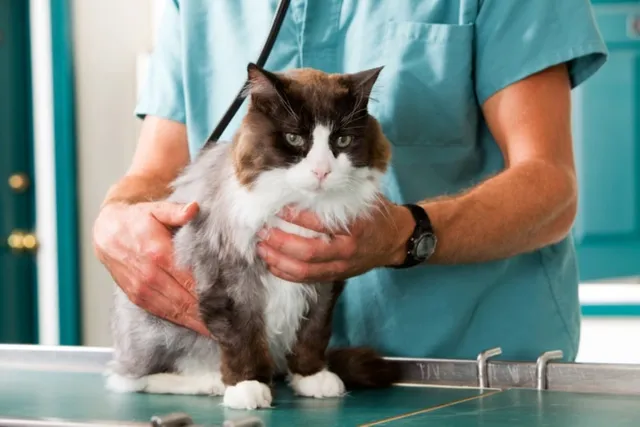
cat on the table being checked by a vet
Image Credit: brodtcast, Shutterstock

divider cat paws 2 oct 2024

What Treatments Are Available for Hyperthyroidism?

Many treatments for hyperthyroidism are available for cats, most of which are relatively non-invasive and very effective. Some cats might not be the best candidates for certain treatment options (such as surgery), but there’s almost always an alternative. Because of these treatment options, many hyperthyroid cat owners leave the vet’s office overjoyed that their cat is coming home with them, as even mid-to-late-stage hyperthyroidism can be reversed.

The treatment options for feline hyperthyroidism are:

1. Medication

Treatment can be prescribed for hyperthyroid cats as an oral pill, liquid, or topical gel. These anti-thyroid medications, such as methimazole, reduce the amount of thyroid hormone released by the thyroid gland. These medications must be given at least once a day, so discussing how well your cat takes medication with your vet is essential. Because the medication doesn’t destroy the thyroid tissue that causes hyperthyroidism, your cat will have to take it for life, but most cats adapt to the medicine exceptionally well.

Medication has some side effects to consider, such as lethargy, vomiting, and effects on the kidneys, liver, and bone marrow, though many of these are temporary and can be managed with dose adjustments. Most cases will, at least initially, be treated with anti-thyroid medication to assess their response to treatment before exploring other treatment options.


2. Therapeutic Diet

There has been promising research showing how an iodine-restricted diet can help cats with mild to moderate cases of hyperthyroidism. Because the thyroid gland uses iodine to produce thyroid hormone, only giving the body enough to produce the essential amount of hormone (nothing more) can mean hyperthyroidism is managed. Your cat must be on a strict diet, so if they manage to sneak food from other places, you might need to consider other options.

cat eating food from the bowl
Image Credit by: Roman Samsonov, Shutterstock

3. Radioactive Iodine (I-131)

Radioactive iodine is now the most popular way of completely removing all thyroid tissue in a cat’s body, eliminating the need for daily medication or surgery. This is an excellent, albeit expensive, choice for cats who won’t take medication or might not fare well under anesthesia. This radioactive iodine is administered at a specially equipped veterinary facility where your cat will need to stay for around 5–7 days until the radiation levels are safe enough to be discharged.

There is minimal aftercare needed once treatment is done, and your cat will soon begin recovering from the symptoms of hyperthyroidism.


4. Surgery

The last option is surgery to remove the affected thyroid tissue. Surgery is effective in treating hyperthyroidism if all the tissue is removed, but some thyroid tissue can grow in places it shouldn’t, such as the chest or under the tongue, so medical or dietary management might still be needed.

There is also a risk that the parathyroid gland (which sits right beside the thyroid gland) could be removed or damaged during surgery, which will affect calcium levels in the body. Anesthesia is also a bigger risk to older cats, but surgery can still be useful for treatment if other options are limited.

cat wearing plastic cone collar
Image credit: Roman G Potapov, Shutterstock

divider cat paws 2 oct 2024

Symptoms of Late-Stage Hyperthyroidism in Cats

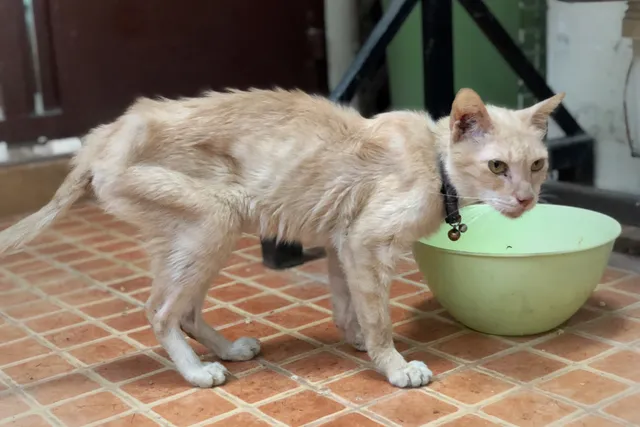
The typical stage at which cats are brought into the vet is when they show signs of more advanced hyperthyroidism, such as marked weight loss, unkempt coats, and excessive vocalizing (especially at night). Unfortunately, some symptoms of hyperthyroidism can be very similar to other conditions common in older cats, such as kidney failure, which can make diagnosis and treatment more complicated.

If your cat is diagnosed with hyperthyroidism, they should be seeing the vet regularly for checkups and blood tests to monitor their thyroid levels. Because of this, you’ll be able to track symptoms and discuss them with your vet to decide on the next treatment steps.

Signs that your cat's condition is worsening due to hyperthyroidism or concurrent disease include:
  • Pronounced weight loss and a gaunt appearance
  • Lethargy
  • Extreme thirst and needing to pee constantly
  • Not eating
  • Vomiting and diarrhea
  • Collapse
  • Seizures

divider cat paws 2 oct 2024

Conclusion

My heart goes out to any owners in the position of thinking about euthanizing their cats. It’s a difficult decision no matter what the reason, but it’s not one that automatically applies to cats diagnosed with hyperthyroidism. Even advanced stages of hyperthyroidism can be controlled (and even reversed) with treatment.

However, because hyperthyroidism often goes hand-in-hand with other geriatric cat conditions, owners often have a difficult decision to make at some stage of this disease.

Speaking with your vet about your cat’s quality of life is the best way to determine whether or not it’s time to euthanize them.


Featured Image Credit: Natali _ Mis, Shutterstock

Want content like this delivered to you?

Sign Up For Our Newsletter

News, insights, expert advice, and everything cat

* By submitting, you agree to our Terms & Conditions and Privacy & Cookies Policy.


How useful was this post?

Click on a star to rate (you can leave written feedback after clicking submit)

Help us improve Catster for pet parents!

Your feedback really matters.

What did you like about this post? Also how can we improve it?

Join the conversation

8 Responses

  1. Jetta is 13 and was recently diagnosed with hyperthyroidism was put on 2.5mg. felimazole, not working 2months into it, now he spits them out, I believe the diagnosis is about late, I thought it to be arthritis, he's gotten down to 5lbs. is rather mean bites me and keeps me up alot wanting more to eat, I can't lay it out he just throws it up, his behavior is not his anymore, my last visit to vet was $430. and that was for diagnosis and medicine. Jetta and I have been together a long time, my daughter found him on a tree stump in my driveway after a flood went through, had to feed him with an eye dropper he was so tiny,"I think something stole him from litter, my daughter coming in scared it off, I don't believe I can afford to continue d tests and medicine, I don't know what to do.

    1. Hi Mary adler, sorry to hear about Jetta's diagnosis. Besides medicines, there are alternative therapies available for hyperthyroid cats including surgery and radioactive Iodine. As the post discussed the quality of life needs to be honestly evaluated. If you wish to get her case reviewed by a veterinarian please don't hesitate to contact www.pangovet.com, they can guide you through the options and help you make an informed decision. It is not easy and we are sorry you are going through this. Thanks for saving Jetta as a kitten and giving him 13 years of love and care, which is truly admirable.

  2. My almost 15-year-old is suspected to have cancerous hyperthyroidism. I'm so utterly devastated, but my partner and I made the decision years ago that as our cats got older, we wouldn't put them through invasive procedures or extend their lives just because we didn't want to let them go. I want him to live as long as I do, but not at the cost of his happiness and wellbeing. My partner is palliative care trained (for humans), and the biggest thing we both took from that training is that quality of life is so, so much more important than quantity.

    We euthanized another of ours a few years ago when she was still happy (although clearly on the decline), and it was the most beautiful, peaceful death. It didn't blunt the pain of losing her, but it gave us some peace and warmth knowing that she died happy and at home, after eating her favorite food, being held by her favorite person. I want that for all of our animals, and I hope all pet owners realize what a special thing it is to be able to give your pet a good death, free of pain and distress. Finding a vet who will do at-home euthanasia is even better. The two kindest things we do for our pets are giving them a good home and a good death. They deserve it.

    1. Hi Avery, thanks for sharing your story with us. We absolutely agree that quality of life is so, so much more important than quantity; we believe that euthanasia is a gift. https://www.catster.com/felines-weekly/why-euthanasia-is-a-gift/

  3. Hi Miriam,

    Somehow I ran across your post. My sweet boy Ollie has CKD and hyperthyroidism as well which he was officially diagnosed w about 11 months ago and has been so well in spite of this but I have noticed behavioral changes in the last few days. I have been through this before and it is the worst phase ever… not knowing when it is time to say good bye especially when there are spurts of completely normal behavior. I just wanted you to know you are not alone. I am going through the same heartbreaking process.

    1. Thank you for sharing your story and supporting our community Sheryl. We are so sorry to hear about Ollie's condition, but it warms our hearts to see the Catster community supporting and cheering each other up, especially during difficult times. It is not easy to let go. Kind regards from our team.

  4. My cat has cdk and hyperthyroidism. She has some side effects of the medication, Methimazole, namely excessive scratching and licking and becoming self inflicted wounds. Off, the medication now, but with both diagnoses, my heart is breaking for the time when I need to do what’s best for her. I don’t want her to suffer.

    1. Hi Miriam,
      We are very sorry to hear about your beloved cat. It is not an easy decision but please take a look at:
      https://www.catster.com/felines-weekly/why-euthanasia-is-a-gift/
      https://www.catster.com/lifestyle/euthanasia-guilt/
      Remember that Love and attachment are two very different things. Extending an animal's life beyond its natural course or even letting a disease run its natural course is not always the best approach. While it is hard to say goodbye to a loyal companion, if we have the ability to prevent their pain and suffering, this should be prioritized over our attachment to their presence. Preventing pain is an act of love.

Leave a Reply

You’re very welcome to leave a comment or question. Please know that all comments must meet our community guidelines, and your email address will NOT be published. Let’s have a positive and constructive conversation.


Catster's Digital Magazine is Back!

Vet-approved health & behavior advice

Real cat stories & community features

Ask Dr. Paola – My Cat Loves Eating Grass, But It Makes Her Vomit! (June 29, 2026)

Welcome to our “Ask Dr. Paola” series, where every Monday we bring expert advice straight from Dr. Paola Cuevas (MVZ) to help our...

Learning to Speak Cat with Anthony Smith

Many cat lovers know me through Learn to Speak Cat and Cattitude – Doggonit, cartoons that explore the often mysterious, occasionally mischievous, and...

Weird Cat Behaviors That Actually Make Perfect Sense

We have been sharing our lives with cats for thousands of years, yet we still find ourselves genuinely stumped by what they get...

The Dream of Talking to Cats Just Got Closer to Becoming a Reality

If you’ve ever wished your cat could simply tell you what they wanted, you’re not alone. From the meow that wakes you before...

More related

Sisal Rugs Direct Sisal Remnants for Cats Review 2026: Quality Carpet for DIY Cat Accessories

Whether you’re trying to save your couch from cat claws, refinish an old scratching post, or get creative with some DIY cat accessories,...

5 Potential Hairball Cat Food Side Effects: Vet-Reviewed Considerations & Tips

Most cats get hairballs. If you’re a cat parent, you know this is a fact you can’t get away from. Whether you have...

Can Cats Eat Bananas? Vet-Approved Facts & FAQ

Are bananas an absolute must on your grocery list? Bananas are a fruit found on many countertops, and if you have a curious...

Can Cats Eat Nuts? Vet Approved Facts & Safety Guide

Cats can enjoy eating many different kinds of foods. With that being said, cat owners must still be mindful of what types of...

Keep reading

How to Bottle Feed a Kitten: Vet-Approved Tips & Feeding Chart (With Video)

Kittens are quite vulnerable and need a great deal of nurturing and care during the first few weeks of their lives. Generally, their mothers are capable of caring for them on their own. However, there are cases in which a...

bottle-feeding newborn kitten

Bald Spots on Cats: 10 Vet-Verified Causes & Treatment Options

One feature synonymous with cats, the hairless breeds notwithstanding, is a soft and fluffy coat. So if your feline has developed a bald spot, we need to find out the cause and get on top of treating the problem. The...

cat with bald spot on neck

Can Cats Eat Raw Fish? Vet Approved Nutritional Facts & FAQ

While cats are often associated with eating fish, fish may not actually be a major part of their diets. Domestic cats descended from African wildcats, meaning their natural diets would mostly consist of small birds and mammals including small livestock...

Can Cats Eat Raw Fish

Why Does My Cat Keep Going to Their Litterbox (But Nothing Happens)? Vet Approved Advice

Over 37% of households in the United States have invited a cat into their homes; that is over 45 million households! About 63% keep their pets indoors exclusively. That’s a good thing, too, since it gives owners a heads-up if...

orange cat beside litter box

How to Stop Your Cat from Over-Grooming: Vet Answer & Advice

Cats are fastidious self-groomers, which is their trademark trait that begins from an early age. Your cat will tend to clean their fur by licking themselves for a large part of their waking hours. This makes it challenging to observe...

Chinchilla Persian Cat licking its paw

Why Does My Cat Pee In The Litter Box But Poop On The Floor? 9 Vet-Reviewed Reasons & Solutions

For some, dealing with the litter box is easy. But for other cat owners, not so much. Here’s the thing—cats are finicky creatures, especially when it comes to the litter box. A tiny detail can cause a cat to start...

man holding a plastic shovel is removing cat poop from the litter

Fever Coat in Kittens: What Is It? Vet Reviewed Science & Facts (With Pictures)

Do you have a kitten that seems to have mysteriously changed colors? If so, they may have a fever coat. Although “fever coat” may sound scary, it is nothing to worry about and does not harm your kitten. Although it’s...

gray kitten plays on floor

Evolve Cat Food Review of 2026 : Recalls, Pros & Cons

Review Summary Crafted with premium, whole-food ingredients, Evolve cat food contains exactly the nutrition your feline needs to stay in peak health. It’s a bit pricey, but you’re getting quality recipes for what you pay. Granted, not all cats love...

Evolve Cat Food Review

Love Cats? So Do We! Join the Catster Community

Stay informed with expert pet care insights delivered straight to your inbox! Discover professional guidance on animal behavior, feeding tips, trusted product picks, and much more.


Sign up for the Catster Email Newsletter

Stay informed with expert pet care insights delivered straight to your inbox! Discover professional guidance on animal behavior, feeding tips, trusted product picks, and much more.