Why Do Cats Sleep at the Foot of the Bed? 8 Possible Reasons for This Behavior (Vet Reviewed)


In this article
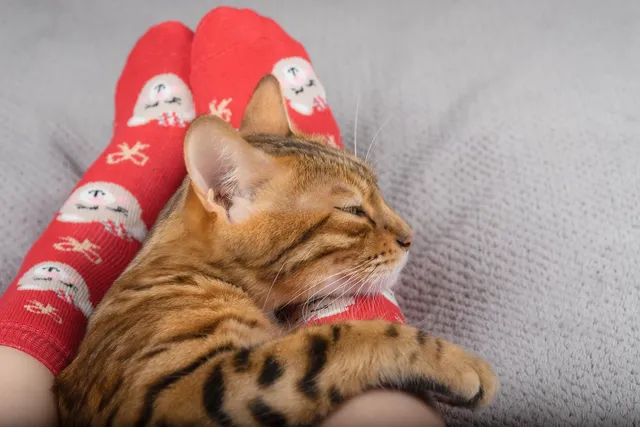
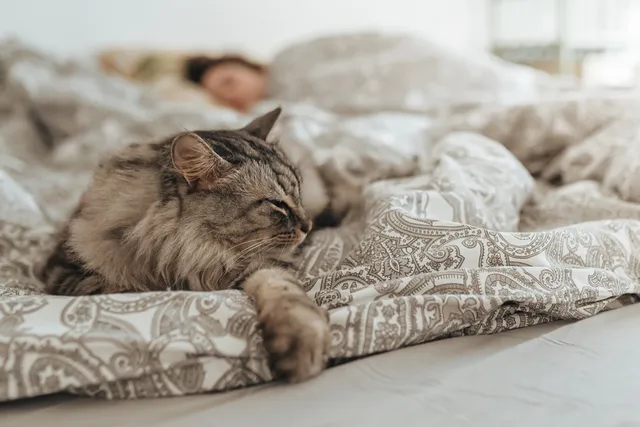
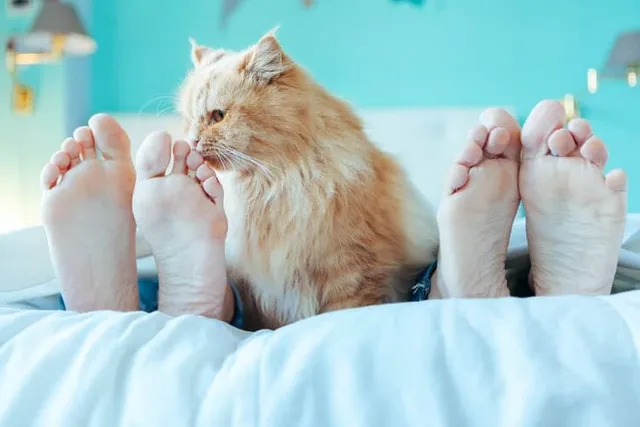
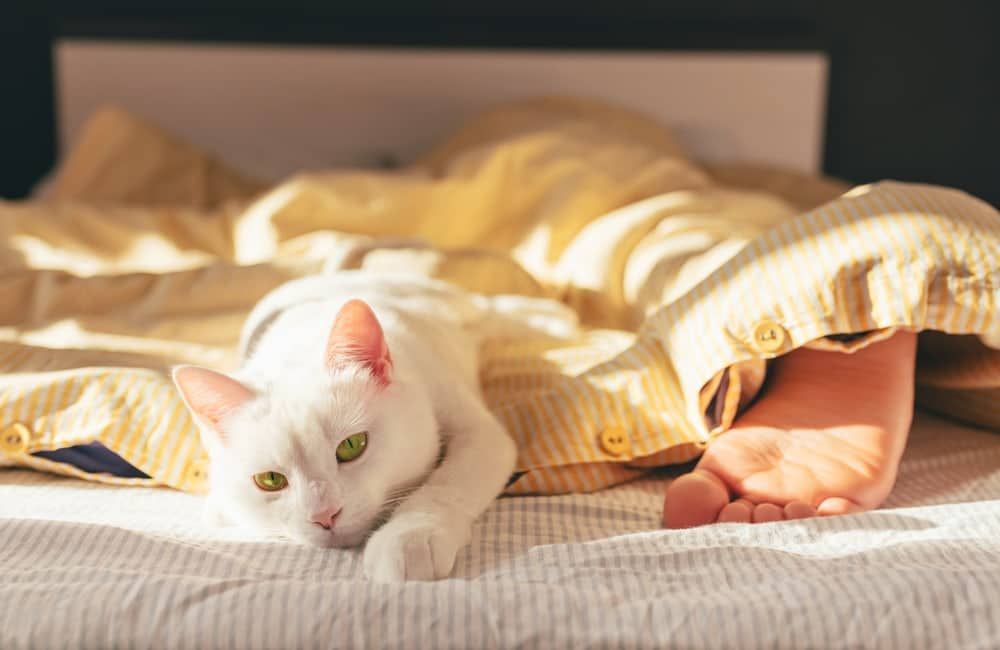
Of all the strange things cats do, why do they choose to sleep at your feet instead of snuggling at your chest at night? On average, felines sleep for 16 hours a day, most of which happens in places you least expect. However, you may have noticed that while your cat enjoys curling by your side during daytime naps, it usually makes its way to your feet during nighttime rests.
Although it’s impossible to know for sure why cats do the things they do, we have gathered a few possible theories that might explain this behavior. Keep reading to learn more!

Why Do Cats Sleep at Your Feet?
All kitties are unique, each with its special dispositions. But what stands out amongst most of them is their napping rituals. Kitties are crepuscular, meaning they are most alert in low-light conditions such as nightfall and early mornings.
Cats have predatory instincts that make them aware of their surroundings, always ready and prepare for a hunt. It’s also why their eyes remain slightly open, or their ears twitch and rotate towards noises.
Besides being hunters by nature, kitties also portray prey instincts, making them always look out for potential threats. They believe they are responsible for their survival, especially at night, when they are most vulnerable.
The foot of your bed could just be the best spot that allows them to assess every situation and scope out possible enemies. Here are eight possible reasons why your feline might choose to nestle at your feet at night.

Top 8 Possible Reasons Cats Sleep at the Foot of the Bed
1. Cat Survival Instinct: Escaping
A cat may snuggle up at the foot of your bed beside your feet because of its innate survival intuition. This part of the bed offers it an escape chance in case of imminent danger as it doesn't want to be curled up in your arms or caught up in the sheets, blocking it from easy escape.

2. For Protection
As much as cats are predatory creatures by nature, owners shouldn't forget that they can also be preyed on by other animals. For this reason, a cat may sleep beside your feet because it feels the safest and most secure place to seek extra protection.
However, it may not always be looking after itself. If your cat is fond of you, it'll sleep beside you to keep watch over you at night and signal if they sense any threats, protecting you in return! Although cats lack the "protector" instinct seen in dogs, their loyalty and affection may lead them to stay close and remain attentive while you sleep.
3. Temperature Control & Air Flow
It's normal for humans to heat up and sweat at night. The middle and upper part of your body tends to heat the most, making the middle and top part of the bed feels like a heating furnace for your furry animal, especially if you add heavy fluffy covers.
While kitties love the warmest places, it's all about balance. Like us, they avoid extremes and will avoid running out of air. For this reason, a cat may prefer sleeping between or close to your legs because in most cases, there is better airflow and they are able to cool down a bit if needed.
Sleeping next to your feet is a way of feeling close to you without getting trapped or left without airflow under the heavy covers.

4. Trust and Affection
Unlike popular belief that kitties are old and uninterested pets, cats can show their love to their owners and display it by sleeping by your feet. This position puts it close to you and shows how much it trusts and loves being around you. Apart from sleeping near your feet, it may portray other accompanying signs like purring, kneading, and rubbing against your feet.
5. Door Visibility
Well, the closer your kitty is to the room's entrance and exit, the better it can see who gets in and leaves. Since cats have a natural survival instinct, they tend to feel more secure and in charge when sleeping at your bed's foot because it allows the door to be in sight all through the night.
In most cases, the bed's foot is the closest to the bedroom door that's considerably comfortable, unlike the floor. So, it makes sense that the kitty may make it its tucking spot for the night.

6. Comfort - Less Disturbance
These animals are intolerant to their sleep being disrupted by frequent tossing, turning, and upper body movement. For this reason, your cat may choose to grab some space at your feet or far enough away from your body where there's less disturbance.
Well, most humans tend to have restless legs and "wiggle" too much in their sleep. For this reason, your cat may gauge your sleep activity, and if there's much disruption, it'll run out of patience and choose to sleep at the foot of your bed.
Is there anything better than a happy cat? We don’t think so—that’s where the Hepper Nest Bed comes in.

- COMFY KITTY - Your cat or kitten will have an amazingly deep sleep in this self warming, nesting cat bed. The warm, fluffy cat bed lining provides calming stress relief for cats of all ages.
- PRETTY HOME - This round cat bed has a modern and unique design that’s perfect for a sleek indoor look. We don’t think of it as cat furniture but think of the Cat Nest as a “cat home”.
- SPACE SAVER - Reclaim your desk, window sill, or couch from kitten encroachment. This calming nest cat bed has an elevated, space-saving hideout so comfortable your kitty can't resist!
This product was designed with both your and your kitty's happiness in mind. While the comfortable bowl shape and wide lip to rest their heads on are ideal for sleepy kitties, you’ll appreciate the removable and machine-washable fleece liner for easy cleaning. It doesn’t get any better than this! Click here to try it out.
At Catster, we’ve admired Hepper for many years and decided to take a controlling ownership interest so that we could benefit from the outstanding designs of this cool cat company!
7. More Room
Your kitty is pretty intelligent, actually, and it shows it by sleeping at the bottom of your bed, where there's more room than at the top. Since it may only have two or four feet to fight for space with, and most owners' feet do not reach the bed's rear, there tends to be more room for your cat to stretch or curl up undisturbed.

8. To Mark Its Territory
It's in a cat's genetic urge to mark and guard its territory. So, it's no surprise if your kitty sees your bed as another territory to claim.
By sleeping by your feet, your feline friend might be proving to other house pets that it owns you. Kitties mark their territories by depositing their scent by rubbing against the covers, scratching, or worse, urinating on fresh sheets!
Or, your fur baby could be sleeping by your feet to establish that your bed is also his or her territory.

Summary
Unfortunately, kitties can sneak into your heart and onto your bed even if it prevents you from catching some quality sleep. But, don't worry if you can't keep your kitty out of your bed completely.
A tip to try is allowing them by your feet; this might allow you to harmoniously share your bed with your kitty. It would also be best to sleep with your bedroom door slightly open, so it can slip out without waking you.
See Also:
Featured Image Credit: KateKlim, Shutterstock
Expert cat care, straight to your inbox
News, insights, and useful advice, delivered to you.

No spam — unsubscribe anytime.
By signing up, you agree to our Terms & Conditions and Privacy & Cookies Policy.
How useful was this post?
Click a star to rate. You can leave written feedback afterwards. (We read all feedback.)
Christian started writing for a local newspaper as a teenager, and he's been involved in the publishing industry for most of his adult life. Combining his love of writing with a passion for animals, he is currently the Director of Editorial at Pangolia and the Editor-in-Chief at Catster.
Christian lives in the Philippines with his wife, son, and four rescue cats: Trixie, Chloe, Sparky, and Chopper.