Get

In Your Inbox

Catster is reader-supported. When you buy via links on our site, we may earn an affiliate commission at no cost to you. Learn more.

Why Do Cats Sit on Their Toys? 6 Possible Vet-Reviewed Reasons for This Behavior

Share

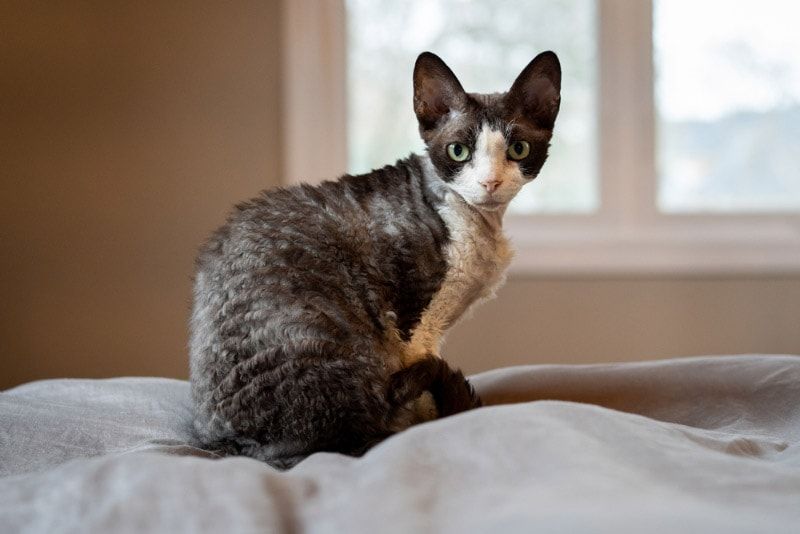
devon rex cat sitting on the bed

Cats are strange creatures with adorable, quirky habits that make them endlessly fascinating to watch as they go about their enigmatic feline business around our home. Cat owners have probably seen their cat sitting on their toys for no apparent reason or sitting on random objects around the house sometimes, like boxes or plastic bags. No matter what the object is, your cat has probably sat on it in some way. Why? We’ll explore six potential reasons below. Ultimately though, it might just be your cat’s idiosyncratic tendencies that lead to this behavior!

divider 3 paws

The 6 Possible Reasons Why Cats Sit on Their Toys

1. To Hide It

Your cat might be possessive of their toy or even think of it as a prey animal, which would explain their innate drive to protect it. While cats in the wild do not display such behavior with their prey, your well fed and content cat who has no competitors in your house might feel differently. They have also learned that sitting on a toy elicits a response (and possibly some cuddles or a treat) from you, and might be doing so with the intention of soliciting these rewards from you.

Calico-Kitten-with-Toy
Image Credit: Casey Elise Christopher, Shutterstock

2. To Protect It

Another reason your cat might be sitting on their toys is to protect their natural resources – which in this case happens to be the toy in question. This is more common in multiple-cat households, where one cat tends to assert dominance over another by guarding certain resources, including toys.


3. They’ve Learned That It Gets Them Attention

Sitting on odd objects like toys, boxes, or bags gets cats’ attention because it’s adorable, and cats are very quick thinkers. They catch on quickly that you flip out when they sit on their toys or other stuff and will begin to do it more frequently in hopes that you give them more attention. It’s frightfully effective and cute, but it’s typically harmless.

cat playing catnip toy
Image by: Chendongshan, Shutterstock

4. They’re Putting Their Scent on the Toy

Cats rely more heavily on scent than we do, and they’re driven to mark their territory. For cats, territory includes all objects within that territory, including toys, food, and so on. Cats have scent glands around their bodies that release subtle pheromones we can’t smell but that they and other cats can. However, there are very few such receptors on their belly, so to imagine this as a reason why they sit on toys is a stretch at times. Nonetheless, they might scent marks and then sit on their toys simply because they can.


5. It Has Your Scent on It

Cats are sentimental critters that grow to love certain smells, including yours. Items that you frequently handle or touch, like clothing, carry your scent, but even minor items like toys can hold your scent for a long time to enhance a cat’s olfactory abilities. Your scent becomes something to be revisited and valued by your cat, which you should take as a compliment.

Cat playing with stuffed toy
Image by: guvo59, Pixabay

6. Lying on Top of Things Keeps Your Cat Warm

Toys offer a little insulation against the cold, bare ground, so cats may prefer toys on a floor in the way they prefer to be nestled in a cozy bed. Cats who sit on toys for such reasons may simply choose to take the toy to a much more comfortable surface, such as a couch or a bed.

divider 3 paws

Conclusion

Cats love to sit on toys, bags, boxes, and nearly anything they can interact with. Without real prey to hunt, your house kitty is naturally inclined to sit on toys for a variety of reasons that you’ll never quite pin down. Still, it’s likely that some of the reasons above play a role!

See also:


Featured Image Credit: Heather Raithby Doyle, Shutterstock

Want content like this delivered to you?

Sign Up For Our Newsletter

News, insights, expert advice, and everything cat

* By submitting, you agree to our Terms & Conditions and Privacy & Cookies Policy.


How useful was this post?

Click on a star to rate (you can leave written feedback after clicking submit)

Help us improve Catster for pet parents!

Your feedback really matters.

What did you like about this post? Also how can we improve it?

Join the conversation

Leave a Reply

You’re very welcome to leave a comment or question. Please know that all comments must meet our community guidelines, and your email address will NOT be published. Let’s have a positive and constructive conversation.


Talk With A Vet Online

Peace of mind,
anywhere, anytime

Affordable vet advice

Welcome to Coastal Cats & Critters

As much as we all love cats, we also know that in many parts of the country (and the world), the problem of...

Ask Dr. Paola – Help! My Cat Suddenly Has Dandruff! (March 30, 2026)

Welcome to our “Ask Dr. Paola” series, where every Monday we bring expert advice straight from Dr. Paola Cuevas (MVZ) to help our...

Your Cat Keeps Vomiting After Eating: Here’s What’s Going On

Cats vomit. It’s one of the less glamorous facts of life with a feline, and most cat owners have cleaned up more than...

Ask Dr. Paola – Help! My Cat Gets Diarrhea from Wet Food! (March 23, 2026)

Welcome to our “Ask Dr. Paola” series, where every Monday we bring expert advice straight from Dr. Paola Cuevas (MVZ) to help our...

More related

Can Cats Drink Bone Broth? Vet-Approved Nutritional Facts & FAQ

Bone broth has become a very popular topic of conversation for pet owners. It is being touted as a more natural way for...

Blue Point Siamese: Info, Pictures, Temperament & Traits

We’re all likely familiar with Siamese cats, but have you ever wondered if there are personality differences dependent on their coat color? If...

EveryCat Health Foundation Honored Recipient of Cat Writers’ Association Annual Fundraiser in 2024

EveryCat Health Foundation has been honored with the November 10th Donation Award from the Cat Writers’ Association, in conjunction with the CWA’s 30th...

8 Best Cat Beds in 2026 – Reviews & Top Picks

Cats take legendary naps. As crepuscular creatures, they’re likely to “cat nap” through most of the day and then become active around the...

Keep reading

Do Cats Have Bones in Their Tails? Feline Anatomy Explained (Vet Verified)

A cat’s tail is a fascinating and finely tuned structure adapted for survival in the wild, and yes, it has bones. These are called caudal vertebrae. Long-tailed cats can have anywhere from 19 to 23 bones in their tails. Short-tailed...

tail of a cat on vintage background

How to Introduce a Puppy to Cats (10 Vet-Verified Tips)

If you already have a cat at home but are considering adopting a puppy, you might be wondering if there are any steps you can take to minimize stress for all parties involved. Cats often don’t react well to changes...

a cat and a puppy outside

How to Train Your Kitten to Use the Litter Box: 7 Vet-Approved Tips

Bringing home a new kitten can be exciting, but it’s not without challenges. Litter box training is one of the first and most important processes to introduce to your kitten. But how do you accomplish this mission as easily as...

kitten-litter-box-training

Can Cats Eat Pumpkin Puree? Vet Approved Facts & Nutrition Guide

When people think of pumpkins, they usually think of falling leaves, bonfires, chilly temperatures, and seasonal treats. However, did you know that some cats love pumpkin just as much as their pet parents? While your feline pal might show interest...

Can Cats Eat Pumpkin Puree

7 Natural Sources of Taurine for Your Cat: Vet-Reviewed List

When it comes to feline diets, the importance of taurine cannot be overstated. An essential amino acid for cats, this nutrient is found almost exclusively in animal meats. Prolonged deficiency of this key ingredient can lead to a plethora of...

Taurine - powder and capsule

How to Introduce Cats in a Small Studio Apartment (5 Great Tips)

Living in a studio apartment with one cat can be a challenge, but trying to introduce a new cat to the mix can lead to some serious problems. While having a cat when you live by yourself or even with...

cat disturbs a woman doing yoga inside the apartment

How to Care for a Cat After Surgery: 12 Vet-Approved Tips

The last thing that we want is for our cats to experience any kind of pain or discomfort, but surgery can be a necessary part of caring for them. Whether you’re having your cat spayed or neutered or something else...

cat in vet clinic recovering from spaying procedure

Are Croton Plants Toxic to Cats? Our Vet-Approved Advice

The croton (Codiaeum variegatum) is a popular houseplant. This leafy, ornamental plant is native to tropical areas but adapts well indoors. But if you have a cat, this isn’t a plant you want in your home. All croton varieties—including evening...

Catster_Are Croton Plants Toxic to Cats

Love Cats? So Do We! Join the Catster Community

Stay informed with expert pet care insights delivered straight to your inbox! Discover professional guidance on animal behavior, feeding tips, trusted product picks, and much more.


Sign up for the Catster Email Newsletter

Stay informed with expert pet care insights delivered straight to your inbox! Discover professional guidance on animal behavior, feeding tips, trusted product picks, and much more.