Can a Cat Ride on a Motorcycle Safely? Vet-Reviewed Facts & Tips


In this article
As a cat owner and frequent motorcycle rider, you may wonder if you can have your cat join you on a ride. We strongly advise against having your cat join you on a motorcycle ride, as this carries a lot of unnecessary tangible risk for their health and may lead to them getting seriously or even fatally injured.
That is not to say that there aren’t cats who join their owners on motorcycle rides and do fine, especially if they have been trained to do so since a young age. However, this is generally not advisable and may unnecessarily endanger their life. Please be aware that even if you take all the possible precautions, this type of journey will never be risk-free and there is a chance you or your cat may get severely injured, with these risks being much higher for your kitty. In some parts of the world, motorcycles are the main mode of transport, including for trips to the vet. But if you have other available modes of transport, enclosed vehicles are much safer for your cat.
In short, cats should not ride on motorcycles, even if you think you have taken all the possible safety precautions. If you still wish to take your cat on a motorcycle, we will do our best to discuss the risks and precautions you need to be aware of so you can make an informed decision.
In this article, we will discuss whether cats even like to travel and the tools and equipment you can consider as an alternative to motorcycle travel, along with all the risks associated with this type of transport.

Do Cats Enjoy Motorcycle Rides?
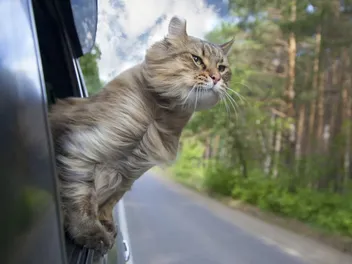
Unlike dogs, who love to stick their heads out the car window and enjoy the wind as their owner drives on a summer day, cats are typically not big fans of traveling, even for a short trip to the vet. They can get distressed, become vocal or nauseous, may vomit and toilet in the carrier box, and it can be a very unpleasant or even traumatizing experience for some. Other cats may tolerate travel fine, depending on their training and exposure to various experiences in early life, as well as the duration and type of travel. Still, the vast majority of cats usually prefer the safety of their homes and yards, where they know the territory and all the hiding spots.
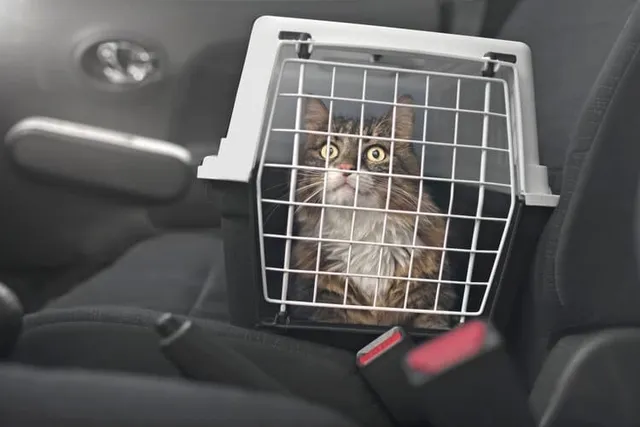
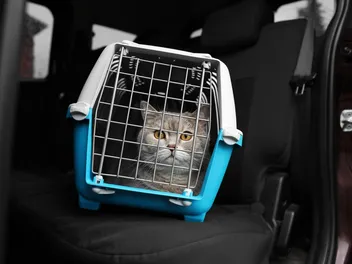
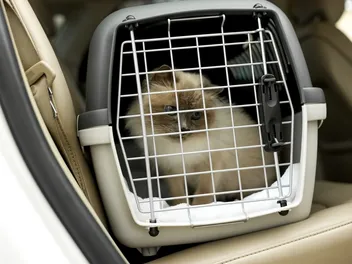
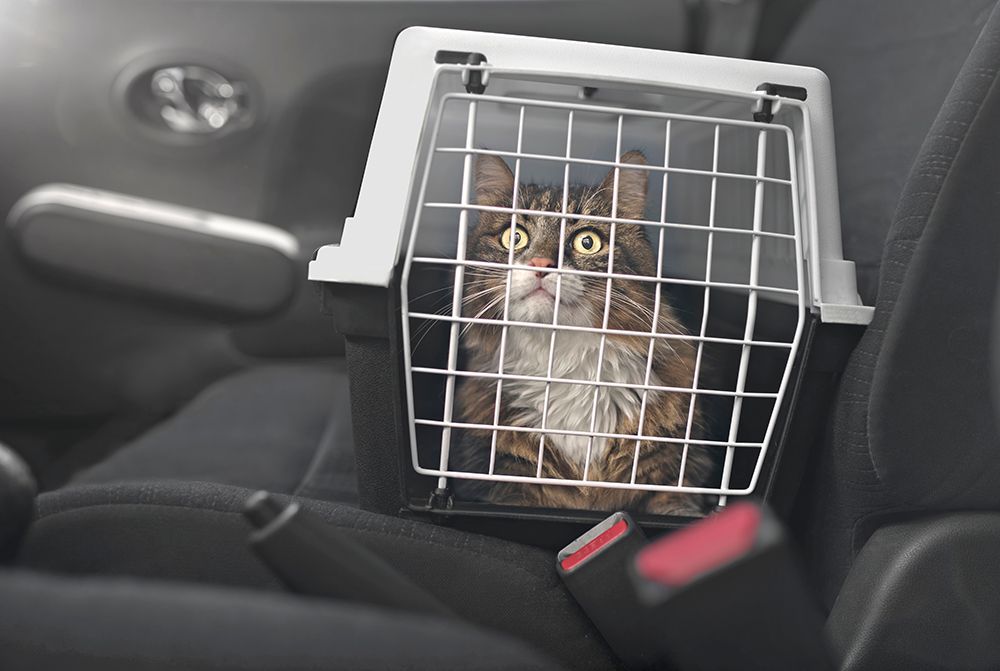
They can become skittish in unfamiliar territory and may be easily scared by loud noises, like the ones that can frequently occur while on the road. However, some cats don’t mind riding in the car, but that does not mean they would enjoy riding on a bike, which would certainly be quite distressing for most, not to mention unsafe. Driving in a car in their carrier box is a safe and appropriate way of transporting cats, as long as they are in a secure and closed carrier that is appropriately placed in the car. This way, they cannot tumble around, even in case of a car accident or sudden braking.
Is There Any Way I Can Ride a Motorcycle With My Cat Safely?
There are certainly ways to make this travel safer for your cat, but there isn’t a way to make it entirely safe, unfortunately. Unless this is your only means of transport and your cat is used to it due to proper training, motorcycle rides should be avoided with cats. It’s just not worth the risk for your cat, and they will gain nothing from it, except the risk of an injury or unnecessary stress. Cats are not small dogs, which cat parents know very well, although they also respond quite well to training and positive enrichment. They may react differently to outside stressors in their environments, such as loud traffic and engine noises, depending on their personality and previous experiences. Their reactions may also be very individual and unpredictable, usually revolving around a fight or flight reflex. This can cause most cats to try and escape, which may lead to them injuring themselves, getting lost or hit by a car, or scratching and biting you while trying to wiggle out.
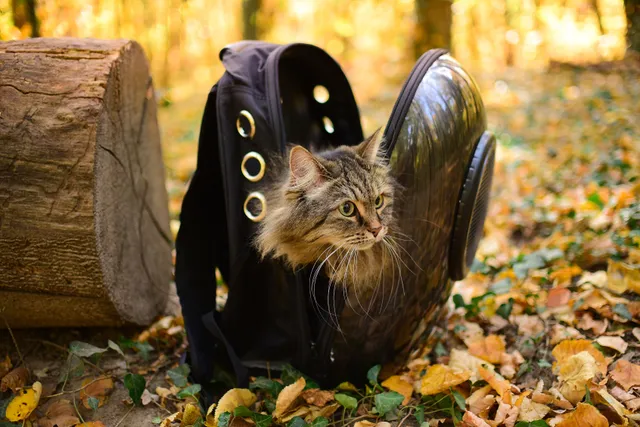
Some people may think that their cats will be safe in secure backpack carriers or carriers strapped into motorcycle sidecars. This is not entirely true. Certainly, keeping them in a secure carrier, either on your back or in a fixed sidecar, may be safer than other means of transporting them on a motorcycle, but the risk of an accident or them reacting adversely is still there. It's just not possible to keep a cat as safe on a bike as they would be in an appropriate cat carrier in a car, as motorcycles are generally less safe for their drivers than cars. In an accident, nothing stops the driver from falling and getting injured, besides their helmet and protective clothing. This is not something that can be put on most cats.
Despite our advice to not risk a motorcycle journey with your cat, unless there is absolutely no other way, we still want to give you some safety guidelines.
1. Get a Carrier and Harness

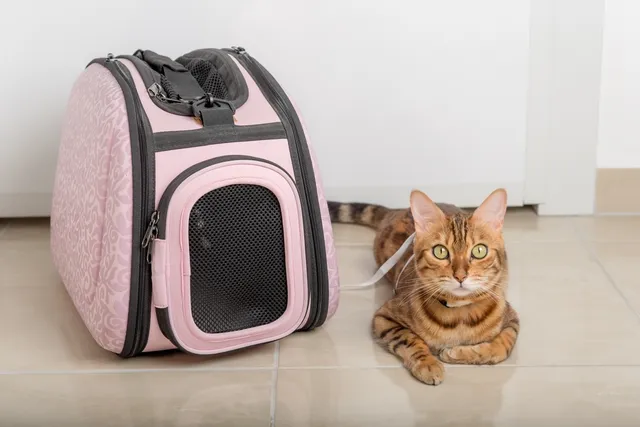
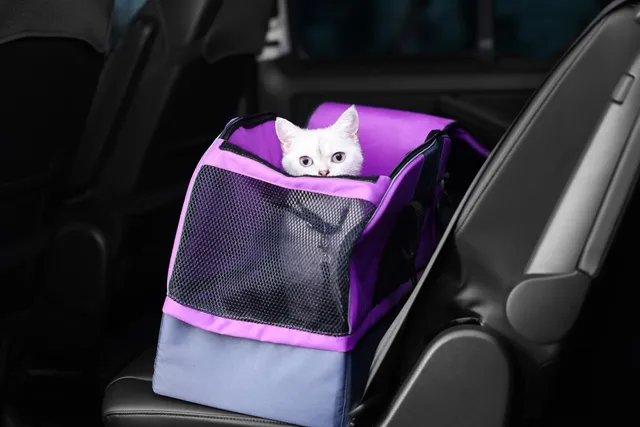
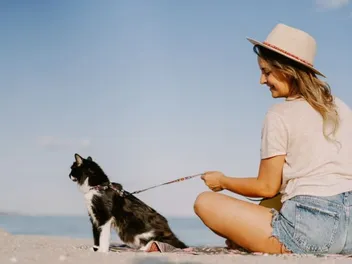
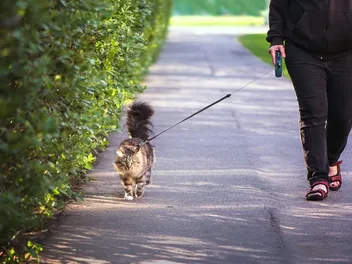
If your cat is willing to get on the bike with you, the first step is to get a good carrier. It should be sturdy yet provide plenty of ventilation so your pet can stay cool but also have protection from the wind and dust. It should also be large enough that your cat can rest and turn comfortably. If you use a harness as well, ensure that it’s snug but not too tight. It would be best to have a harness on the cat while in their carrier and never just hold your cat in your lap or let them sit or step on any parts of the motorcycle while driving. This is very dangerous and can lead to your cat jumping or falling off, or stepping on a hot part of the exhaust by mistake, leading to severe burns. Your cat needs to be accustomed to wearing a harness with a lead before you start introducing them to the motorcycle.
2. Acclimate Your Pet

Give your cat plenty of time to acclimate to the carrier before you hit the road. Leave it open on the floor so they can go in and out as they explore. If they are avoiding it or not wanting to stay in it for too long, place a few treats or toys inside to coax them. Repeat this daily, or even several times per day, for a few minutes, until your cat associates their carrier and harness with food and a positive pleasurable experience.
3. Go for Short Trips in the Car

Once your cat is familiar with the carrier and is comfortable inside, you can take them for short trips in the car to see how they react and to help get them used to the sound and motion of the road before going on a motorcycle. You can even first just keep them in their carrier in a running car that isn’t moving, so they can get used to the noise.
4. Go for Short Trips on the Motorcycle

With your cat comfortable with the carrier in the car, you can try very short trips on the motorcycle. They can even be just a few minutes at a very slow speed in a quiet neighborhood, but always ensure the cat carrier is securely closed and strapped to a safe spot on the motorcycle. These will help the cat get used to the sights and sounds of the road. You can gradually increase the length of your travels as your cat gets used to it. Please remember not to use this type of transport if there is a choice of a car, which will be more comfortable and safer for your cat.
Important Considerations
Safety
Cats have good hearing, and the loud noise of traffic can stress them, and even potentially damage their hearing with long-term exposure. Try to keep the engine noise down while you ride with your cat, especially if they are still getting used to it, and consider purchasing a pair of special noise-reducing earmuffs for felines, although most cats will not tolerate wearing them.
Rocks and dust can also be hazardous to your cat’s eyes, so avoiding dirt roads when possible is a good idea, though you can purchase a pair of cat goggles. However, getting a cat to wear these items may be close to impossible, or at least may take a while to teach, so a quiet motorcycle on a paved road is a better option.
Enjoyment
As mentioned previously, many cats won’t enjoy leaving the house or their yard, no matter how many steps you take to make them more comfortable. Trying to take them on a motorcycle will be a frightening and stressful experience for most cats. So, if your cat shows signs of distress or discomfort, like meowing loudly and excessively, panting, vomiting, or trembling, it’s important to stop the ride immediately and return home to let your cat recuperate. They should not be forced to tolerate motorcycles, and it’s important to respect that by focusing on a car as a more appropriate and safe means of transport.
Conclusion
Some cats may tolerate a ride on a motorcycle with plenty of prior positive reinforcement training, but it requires a great deal of preparation and caution, and is never without risk. Please keep in mind all the precautions and risks we discussed and consider alternative transport options such as a car that will be safer and more suitable for your feline. We recommend only using the motorcycle if there is no other option, not just for fun.
If you still decide to try and take your cat on the bike, ensure that you have a suitable carrier, and let the cat get used to it in the house, well in advance of their first motorcycle experience. Start with short rides close to the home, and gradually increase the length as your cat becomes more comfortable. Use earmuffs and eye protection if your cat will allow it.
Remember that not all cats will enjoy riding each time or at all, so watch them to see if they seem stressed and uncomfortable, and return home if so.
Featured Image Credit: Lightspruch, Shutterstock
Expert cat care, straight to your inbox
News, insights, and useful advice, delivered to you.

No spam — unsubscribe anytime.
By signing up, you agree to our Terms & Conditions and Privacy & Cookies Policy.
How useful was this post?
Click a star to rate. You can leave written feedback afterwards. (We read all feedback.)