How to Travel With a Cat in a Car: 11 Tips & Tricks


As much as we love our cats, the idea of traveling with them in a car on a long-distance trip can be daunting and just a little bit terrifying as well. If your cat is anything like most cats, they might spend the entire trip howling, screeching, and letting everyone know that they are terrified.
It’s important to realize that cats will remember being kittens and being taken to the vet for shots or even just the car ride to their new home. So, they’ll be expecting the same experience again when you load them into the car.
In this list, we’ll give you a few tips and tricks to make the trip in the car easier and more pleasant for you and your feline friend.

The 11 Tips & Tricks for Car Travel with a Cat
1. Always Use a Cat Carrier

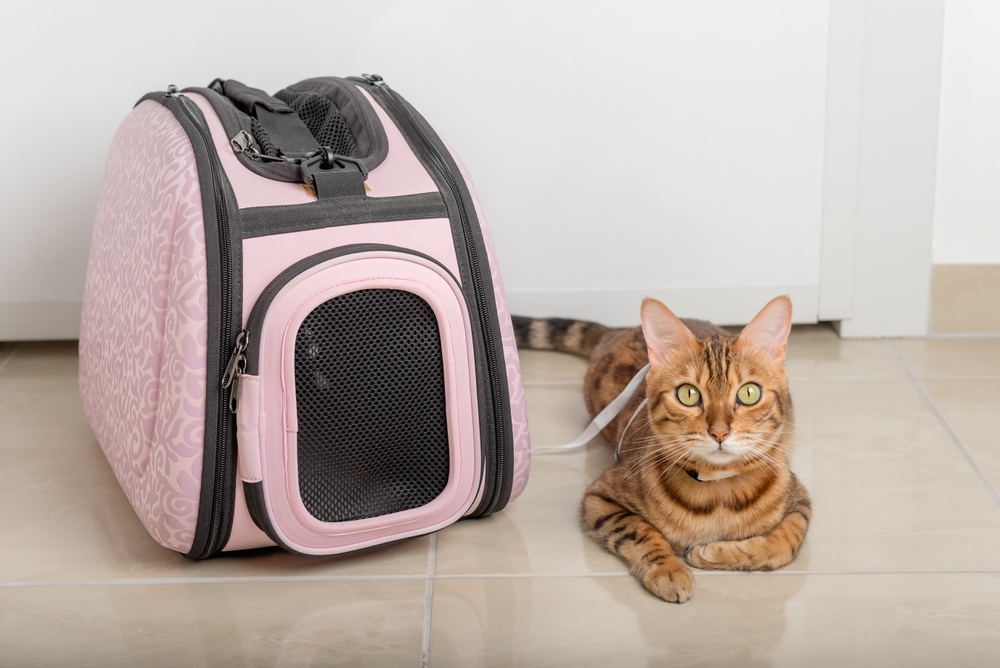
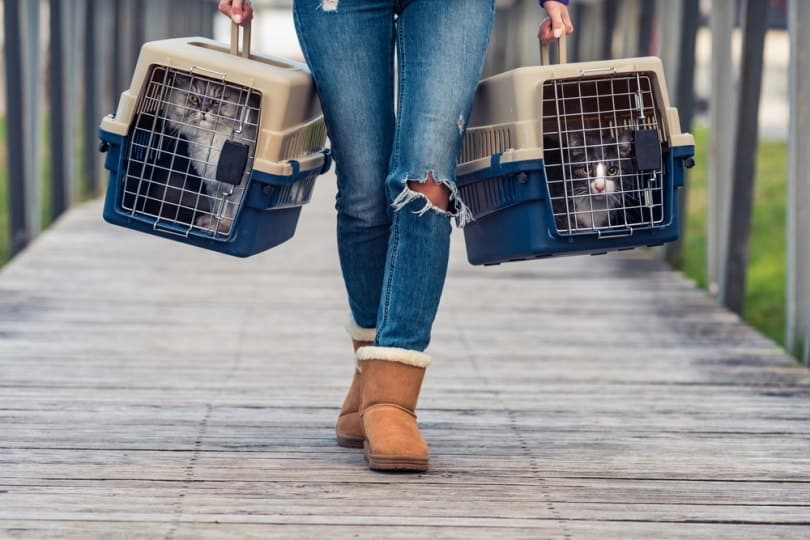
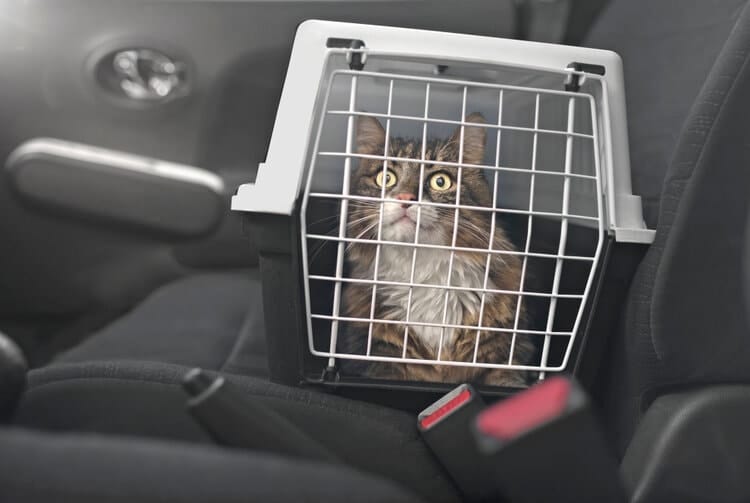
Never take your cat anywhere in the car without using a cat carrier. Not only is it dangerous, but in some states, it’s also illegal to let your pet roam freely in the car as you drive.
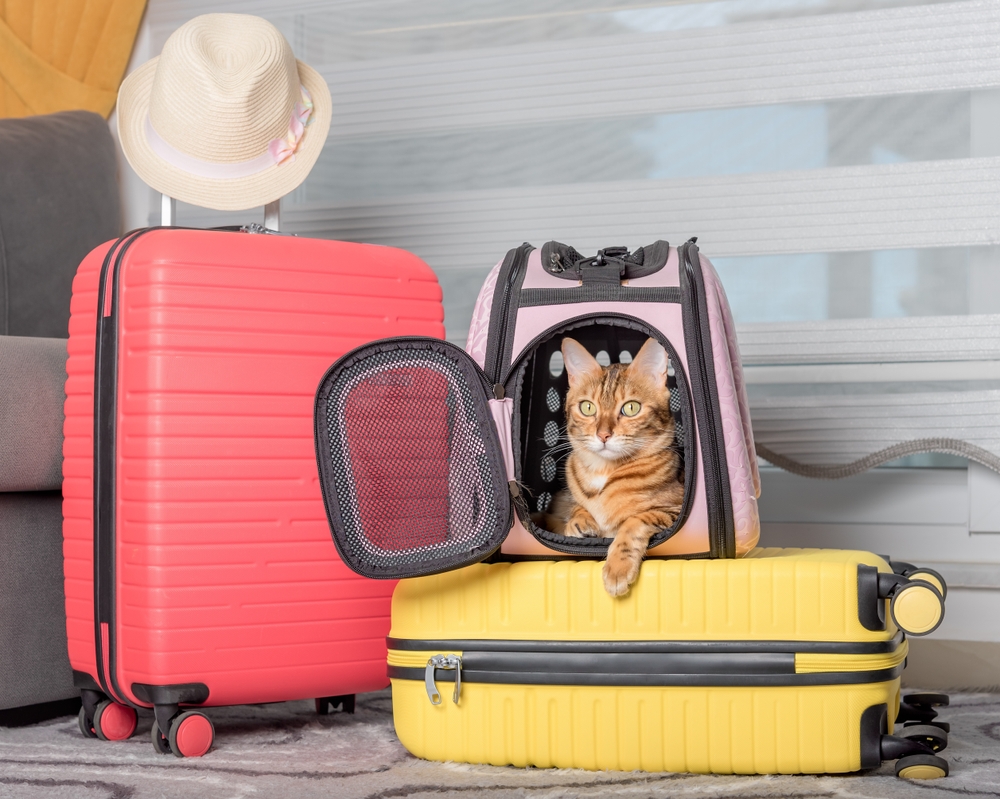
You want to make sure that the cat carrier is as comfortable as possible for your feline companion. This means that the carrier should be big enough for the cat to stand up, turn around, and lie down with ease.
Ensure that the carrier you use is well-ventilated so that the cat can breathe easily.
2. Let Your Cat Explore the Carrier
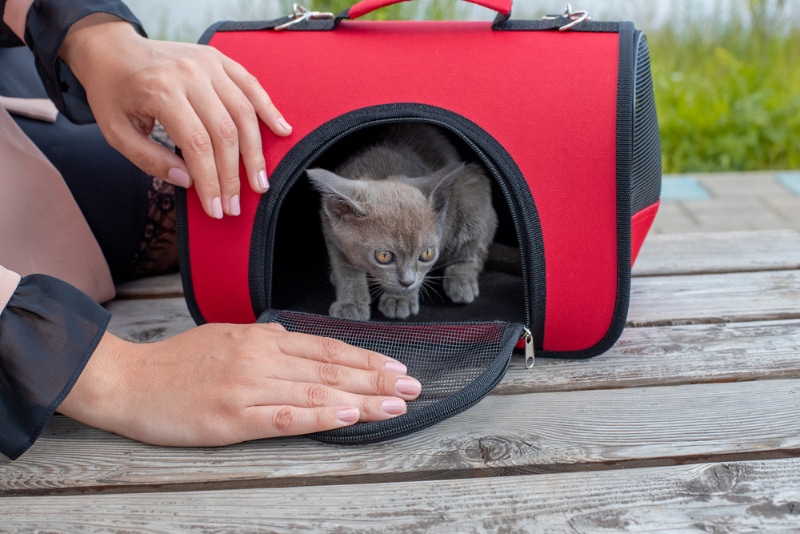
If your cat is used to roaming freely and has never used a carrier before, then he’s going to be anxious and terrified for most of your trip. Instead of just forcing your cat into the carrier and hitting the road the day of the trip, give your cat the time to explore the carrier in his own time.
Remember, many cats love boxes! So leave the door to the carrier open, throw in your cat’s treats and favorite toys, and then let your cat explore the carrier at will. Hopefully, they’ll get used to the carrier and have no problem entering it and laying down when traveling time arrives.
3. Beat the Heat

Just like you get hot when the sun beams directly into the car, so does your cat. So make sure to put the carrier in a well-ventilated area that benefits from the air conditioning you’re sure to have going if you’re traveling in the summer heat. Avoid areas of the car that will get direct sunlight or the cargo area of the car where air doesn’t circulate.
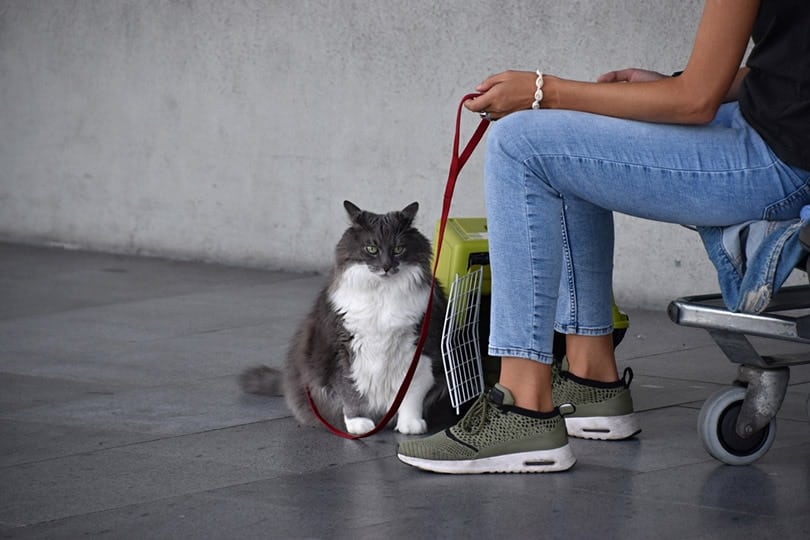
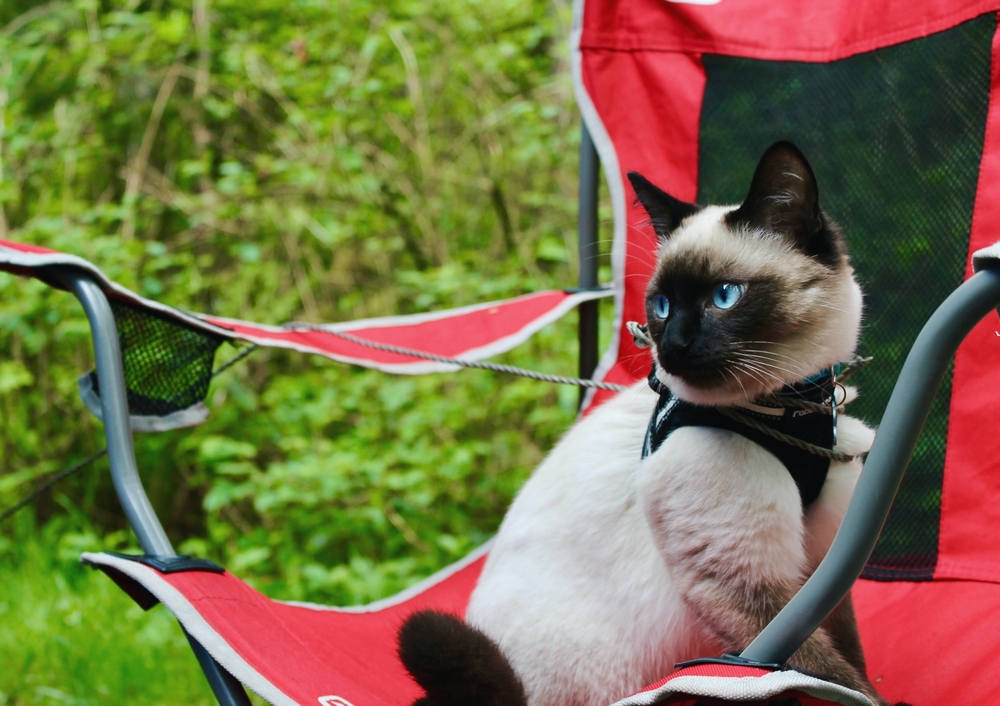
Never, leave your cat in the car alone when you stop somewhere. When you stop and turn off your engine, take the cat and carrier with you. If your cat tolerates a leash and a harness, you can do it that way, but never leave your cat in the car. It’s also not a good idea to leave the engine running. That’s inviting car thieves to take the car, meaning you’ll not only lose your car but your feline friend as well.
It’s essential to note that most states have made it illegal to leave your animal in the car. If you’re caught, you can face a fine, imprisonment, or both for cruelty to animals.
4. Gather Your Supplies/Check Your Supply List
About a week before you’re supposed to head out on your trip, gather any supplies that you need for your cat along the way. If you’re unsure what those supplies might be, we’ll give you a few suggestions below.
- Fresh water, preferably bottled or from home
- Food and treats
- Clean cat litter
- Litter box
- Two bowls
- Pet medications
- Pet first-aid kit
- Extra tag and collar
- Extra harness and leash
- Blankets and towels to replace anything soiled
- Pictures of your cat
- Vet records for the cat
- An extra carrier just in case
- Poop bags and poop scooper
Once you’ve gathered all these items, go through your pet supply checklist and check them off one at a time. You don’t want to need these supplies and have to find a place to buy them when you’re on the road.
The best cat leashes are sturdy, comfortable to hold, and easy to attach to the harness. Hepper's Cat Harness & Leash Set offers all that and more, which is why we highly recommend it.
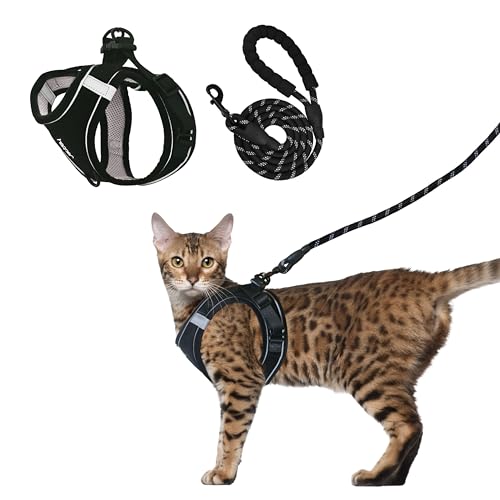
- Escape Proof - Cat leashes and harnesses for walking aren't all equally secure. Our double aluminium D-rings ensure strength when outside, as does the reinforced stitching on this step in vest.
- Superior Comfort - Our cat harnesses are lightweight, made with premium velvet fabric, breathable mesh, with soft edging and resilient cushioning. Also, it is machine washable. Looks and feels great!
- Free Extra Strength Leash - You don't need to worry about your cat escaping this harness. This cat leash is made of thick nylon climbing rope with rotating clamp to keep the strongest kitties at bay.
This set includes a lightweight velvet and mesh harness with reinforced stitching, quick-release buckles, and reflective strips, plus a five-foot leash made from sturdy nylon climbing rope. We especially love this leash's rotating clamp and padded neoprene handle.
At Catster, we’ve admired Hepper for many years and decided to take a controlling ownership interest so that we could benefit from the outstanding designs of this cool cat company!
5. Consider Microchipping Your Cat

The last thing you want is to stop at the local diner, and your cat disappears, never to be seen again. While you might think you can keep a sharp eye on your cat, accidents happen, so it’s best to be prepared.
If you haven’t already, you might consider microchipping your cat before the trip. Other precautions to take include having the pictures of your cat suggested above, making sure your cat has your name, address, and telephone number on their tag and collar, and making sure the same is on his crate, along with “Live Animal” written on the side of the crate.
Doing all of these will make it easier to track down your cat should the worst happen during your trip.
6. Check-Out Accommodations Ahead of Time
As a pet parent, you probably already know that not every hotel, motel, bed and breakfast, or vacation rental is going to be pet-friendly. Nothing is worse than pulling into a hotel on the road, only to find you can’t find a room that will allow you to have your cat inside. But, of course, you can’t leave the cat in the car, so what can you do?
The answer is to find pet-friendly hotels along the route you’re taking to your destination long before you head out on the road. Then, call ahead to check the pet policies of the accommodations you know accept pets, as some only allow certain pets, have a pet deposit, and have a limit on how many pets you can bring.
Once you’re in your room, it’s best to set up the litter box in the bathroom where there is no carpet, just in case an accident happens, so that you won’t be charged for carpet cleaning when you check out.
7. Expect the Unexpected

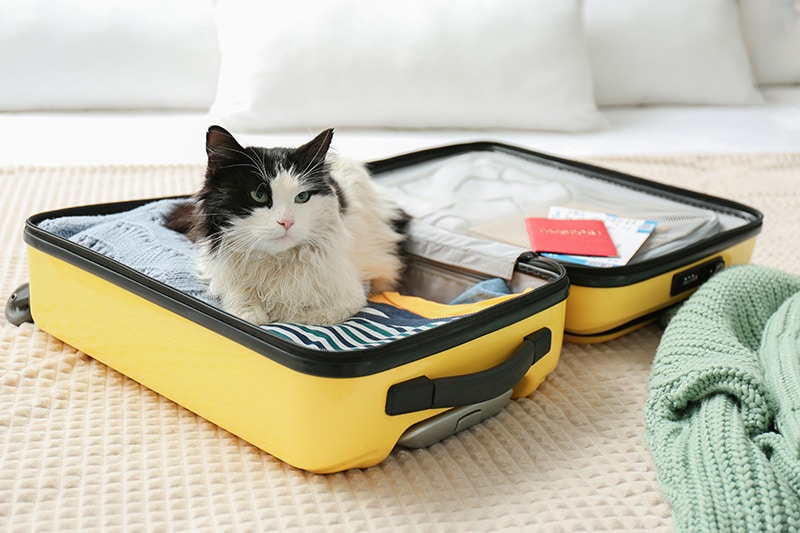
If you’ve traveled with or without pets, then you already know you should always expect the unexpected. You never know when something will happen, and you’ll have to fly back home instead of driving the car. So you need to be prepared to travel by plane with your cat if the worst should happen.
If you have a favorite airline, then call and see what their pet policy is before you leave on your trip, just to be on the safe side.
8. Always Secure the Carrier
Just as you never know when you will have to fly home for an emergency, you also never know what could happen on the road. You may have to stop suddenly, slam on the brakes, and send your carrier and cat flying, ending with the cat being injured.
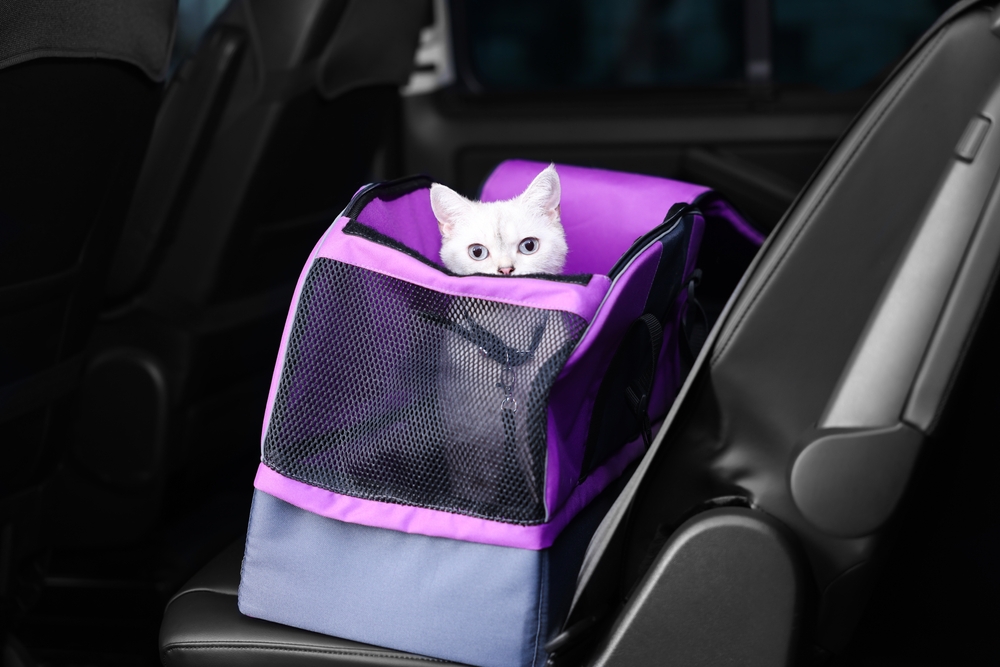
So, once you have the carrier in good working order, put everything your cat needs to be comfortable inside and make sure to secure the carrier firmly with a working seatbelt. This will prevent the carrier from sliding and your cat from getting hurt.
9. Schedule a Few Practice Runs

Once your cat is used to the cat carrier and feels comfortable lying down inside, you can schedule a few practice runs for the cat to get the feel of the moving car. Start with short trips, such as driving around the block or backing out of the driveway and then pulling back in. Then, keep an eye on how your cat reacts, and if he reacts badly, stop the car and try again another day.
Doing this also shows the cat that every car ride doesn’t end at the vet, which will help when you’re on the road. If you can’t schedule practice runs before your actual trip, try to keep your cat calm by staying calm yourself. Remember, our pets pick up on our stress levels and react in kind.
10. Talk to Your Vet Beforehand
It’s always a good idea to schedule an appointment with your vet for a checkup before going on a car trip, just to ensure everything is okay with your pet.
If your cat suffers from anxiety, this is the time to talk to your vet about medications that will keep him calm. Though none of us want to sedate our pets, it’s better to go this route than to have an anxious cat that’s injured when trying to get out of the carrier going down the road.
11. Use Patience, Kindness, and Love
Even with all the tips above, you need to use patience, kindness and love to keep your little feline friend calm and happy during a car ride.
If you get upset, yell, or seem mad at your cat, then the cat is going to respond in kind, which means you’re in for a long trip with an angry cat.

Conclusion
When you travel in a car with a cat, you can expect to make a few adjustments to keep your pet safe and relaxed. Hopefully, these tips will make your next car ride with your cat a roaring success, or at least a little more bearable for the two of you and any family that is tagging along.
Related Reads:
Featured Image Credit: Lightspruch, Shutterstock

Expert cat care, straight to your inbox
Vet-reviewed advice, behavior tips, and the best of Catster. Free, and you can unsubscribe anytime.
By signing up, you agree to our Terms & Conditions and Privacy & Cookies Policy.
Patricia is a pet writer and lifelong animal lover. She has two cats (Binx and Link) and one dog (Mystery). Binx was found as a kitten under her house and has been part of the family ever since! Patricia is also a published author under the pen name Skylar McKinzie. When she isn’t writing, Patricia enjoys volunteering at her local animal rescue.
Join the conversation
Ask a question, share your story, or send private feedback.