Ways to Calm Your Cat in the Car: 11 Vet-Reviewed Methods


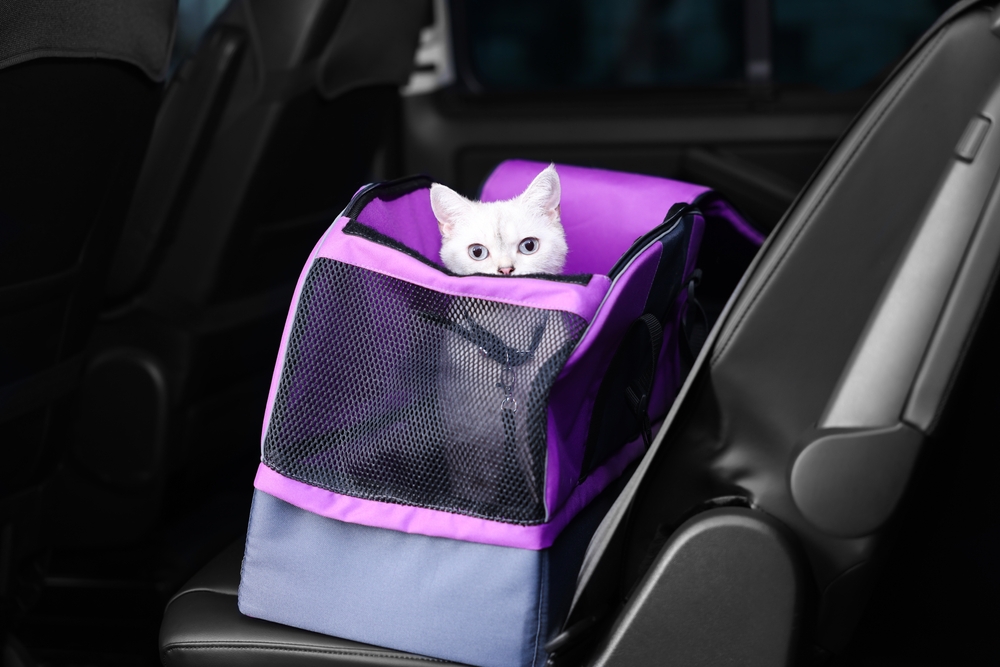
Some cats don’t enjoy traveling in a car. Whether it’s a short trip to the vet’s or a road trip across the country to stay with family, they can become visibly distressed, yowl loudly, and scratch their carrier in an attempt to escape. They may feel nauseous, vomit, or even pass feces. This situation can be stressful for owners, too!
Luckily, there are a few tips and tricks that you can try to make those essential trips less stressful for you both. In this article, learn how to calm a cat down while we count down the 12 ways to keep your cat more comfortable and settled in the car. A few of these tips need to be done before you travel, and of course, that’s not always possible if you must make an unscheduled trip to the vet’s. We’ve also included plenty of tips that don’t require preparation.

The 11 Ways to Calm a Cat in the Car
1. Use a Familiar Cat Carrier

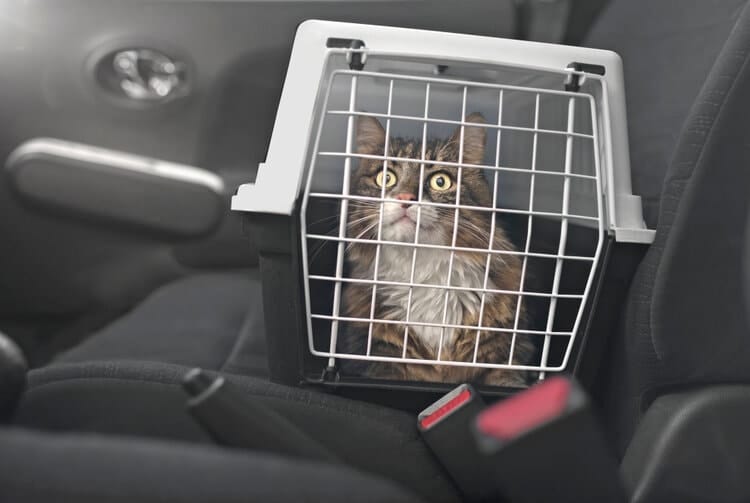
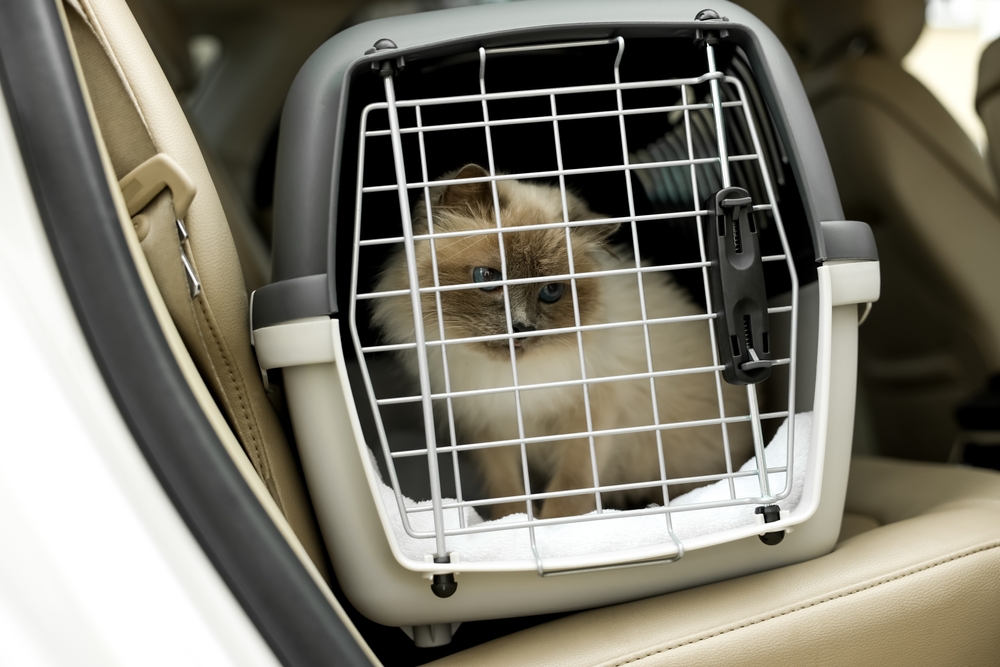
It’s important to use a cat carrier your cat is used to. Expecting your cat to accept a carrier that smells new and unfamiliar will add another layer of stress to their journey. If you can, leave the carrier out for at least a week before you need to use it for an intended trip, or keep it somewhere in the house so it’s always accessible to your cat.
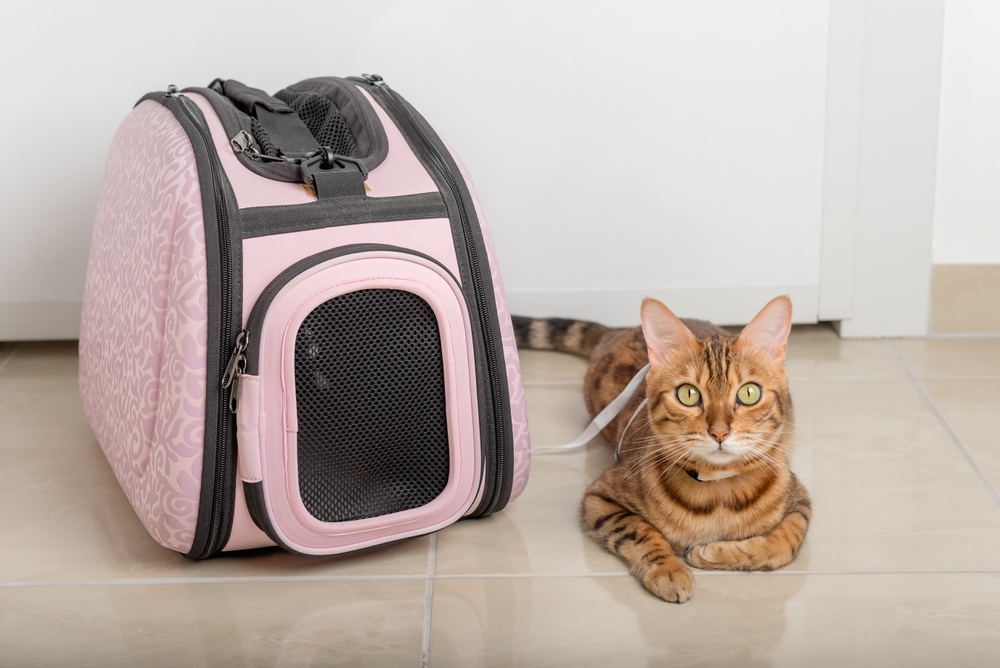
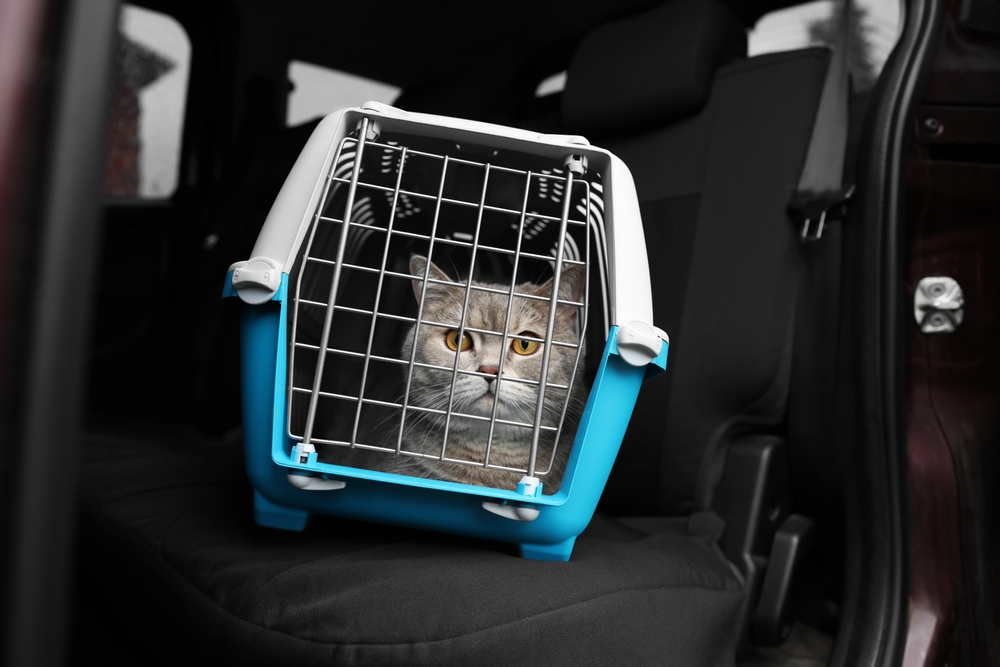
Whether you use a hard or soft carrier is up to you, and you can read our cat carrier reviews to give you ideas. If your cat gets stressed and claws at their carrier, a hard carrier made from plastic will be best, as they can stand up to robust use and you won’t have to worry about your cat ripping the fabric like you might with a soft carrier.
2. Get Them Used to the Car Next
After your cat has accepted the cat carrier, it’s time to get them used to being in the car. This can be done initially with a few minutes spent in the back seat of the car in their cat carrier, but only with the car being turned off. Slowly extend the time they spend in the car, and of course, never leave them unsupervised. This is particularly important if it’s warm outside.
Ensure there is plenty of fresh air and adequate ventilation. Keep the radio and any unnecessary noise to a minimum. If your cat is being calm, reward them with treats and attention.
The next step is to see how they behave when the car is on, without actually going anywhere. Afterward, try short drives around the block, and if they are settled, you can slowly extend the driving times.
3. Use a Pheromone Spray
Synthetic pheromones can be effective in helping your cat feel less anxious and stressed. Pheromones are used to reduce stress-related behaviors in cats and provide them with reassurance and calming messages. You can spray them inside your cat’s carrier or wipe them on surfaces within your car. This may help reduce your cat’s anxiety and help them cope better with the stress of travel.
4. Stay in Your Cat’s Eye Line
Some cats will feel more stressed if they can’t see their owner, so rather than put your cat’s carrier on the rear seat where they can’t see you, experiment with placing it somewhere within your line of sight. Having someone sit next to your cat can help reassure them that they’re with someone familiar.
However, safety while driving is most important, and make sure not to get distracted no matter what is going on in the back seat. Always secure and double-check the carrier and the seat belt to ensure the cat can't get out of the carrier during the drive.
5. Talk to Your Cat

Some cats find the sound of their owner’s voice reassuring, and it might be the best way to travel with a cat. Experiment to see if talking to your cat helps them calm down. Use a gentle tone of voice, and of course, it doesn’t matter what you talk about. If there are multiple passengers in the car, the sound of conversation can help soothe your cat.
6. Play Calming Music
Background music can help some cats, especially if you choose music they’re used to hearing at home in a relaxed environment. You can even find channels with cat-calming playlists! This is especially important if your car has a loud exhaust system, as it helps to provide a soothing, constant sound that drowns out the more erratic noise of your car as it speeds up and slows down, as well as the sound of surrounding traffic. Of course, this may not work for some cats, while others may even get more agitated, in which case you should keep the radio off or turned down.
7. Pet Your Cat if Possible
Never open the carrier in the car, as this may distract the driver and put everyone involved at risk of injuries, or your cat may escape. This tip won’t work for all cats and will also depend on the type of carrier that you use. Some cats feel instantly calmer from the reassuring touch of their human. So, if you’re not driving the car but sitting next to your cat in the back seat, see if they appreciate a soothing touch through the bars of their closed carrier.
Some cat carriers make for easy petting. Soft carriers often have a smaller zipped opening so you can pet your cat without worrying about them escaping.
8. Tire Your Cat Out Before Travel

If you know that you’ll be taking a car trip with your cat, it can be a good idea to spend the time getting rid of their excess energy before you get in the car. Encourage your cat to play, chase their favorite toys, and run around the house before putting them in their carrier for the journey.
9. Keep Your Car at a Comfortable Temperature
Keeping your car’s interior at a comfortable temperature will make traveling feel better for your cat. Using the air conditioning or heater is a great way to make your cat as comfortable as possible.
Keep bathroom stops short, and remember that the interior temperature of your car will quickly return to the ambient outside temperature once you turn your car off. If you have to stop, ensure someone can always stay with your cat. Never leave them in the car unsupervised, as it can get very hot in the summer, causing life-threatening heatstroke.
10. Drive Carefully
You probably already do this but be mindful of how you approach corners and how smoothly you brake. Your cat won’t have any prior warning of changes in speed or direction, and if there are sudden sharp stops or turns, they can be difficult for your cat to brace themselves against. Make sure you secure your cat’s carrier by attaching it to a seatbelt.
11. Speak to a Veterinarian
If you’ve tried various combinations of all the tips and nothing seems to be working, it’s time to speak to a veterinarian. They can sometimes prescribe motion sickness medication or anti-anxiety medication to make your cat’s essential car journeys easier for you both.
Conclusion
Traveling in a car is often a stressful time for a feline, particularly one that is not used to being in the carrier or in the car and has no previous experience with it. When they're in a carrier, they can't observe the world as they usually can, and the sharp turns and loud engine sounds can be frightening and cause motion sickness. However, you can make the adventure more pleasant by using the tips we discussed above.
It may take weeks or months of training your cat using positive enrichment before your cat becomes comfortable in a vehicle. If done correctly and gradually, they may get used to traveling in the car without experiencing excessive stress or fear, and some cats may cope well even with longer journeys. Some cats will always find this a very stressful experience, and it’s crucial to seek advice from your vet in order to make it as comfortable for them as possible.
See also:
Featured Image Credit: New Africa, Shutterstock

Expert cat care, straight to your inbox
Vet-reviewed advice, behavior tips, and the best of Catster. Free, and you can unsubscribe anytime.
By signing up, you agree to our Terms & Conditions and Privacy & Cookies Policy.
Christian started writing for a local newspaper as a teenager, and he's been involved in the publishing industry for most of his adult life. Combining his love of writing with a passion for animals, he is currently the Director of Editorial at Pangolia and the Editor-in-Chief at Catster.
Christian lives in the Philippines with his wife, son, and four rescue cats: Trixie, Chloe, Sparky, and Chopper.
Join the conversation
Ask a question, share your story, or send private feedback.