15 Calmest Cat Breeds (With Info & Pictures)
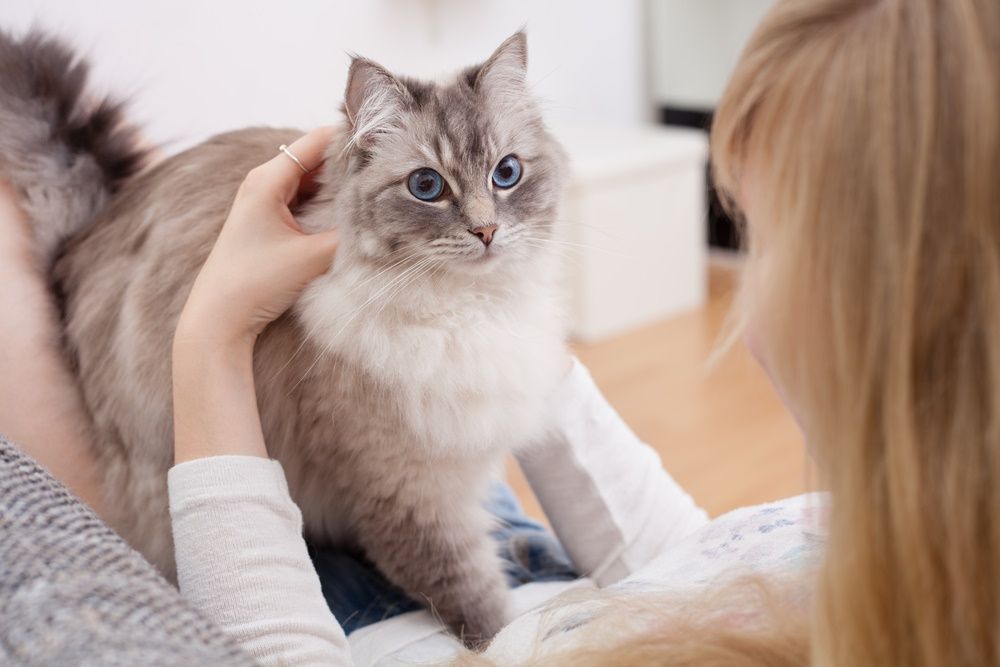
Determining the calmest cat breeds is challenging. Individual felines vary in their temperament, and external factors also play a role in shaping an animal’s personality, such as age acquired, home life, and time alone. Of course, exceptions always exist. The other consideration is genetics, which allows us to make general statements about the various breeds.
Remember that cats are intelligent. They learn from their owners and environments, which can also influence their personality and our perception of calmness. Felines haven’t changed much from their wild counterparts, with changes from natural selection only affecting 13 genes versus the 36 for dogs. The International Cat Association (TICA) only recognizes 73 different breeds, but which of these are the calmest? Check out our list below.

What Makes a Cat Calm?
Let’s first begin with defining “calm.” Scientists have studied cat behavior extensively using various parameters. One widely accepted classification uses five trait categories: aggressiveness, sociability, activity, exploration-avoidance, and shyness-boldness. Other researchers add fearfulness to the mix since it can profoundly impact behavior.
We consider a cat that is easygoing and not rambunctious a calm animal. They aren’t overly fearful and certainly not aggressive. A review of the scientific literature revealed several candidates for our list. We also found a means of evaluating cat behavior using an owner questionnaire to give scientists a tool for assessing the animals for articles like this one.1 Our list of calm breeds includes pooled data from several studies.
The 15 Calmest Cat Breeds
1. American Curl

Breed Overview
Size:
Color:
Life Expectancy:
American Curls get their name from their unique ears. They make excellent family pets that will enjoy being a part of the household activity. They aren’t loud and talkative like a Siamese. Instead, they have a gentle cooing sound that seems to calm others around them as well. The breed is relatively new, getting its start in California in 1981 with the mutation that gave them their ears.
2. Birman

Breed Overview
Size:
Color:
Life Expectancy:
The Birman is a gorgeous animal that resembles other breeds with pointed colors. This cat stands out with their striking blue eyes and Roman nose visible in the animal’s profile. This intelligent feline loves people and likes to stay close to their human companions. One study identified the cat as one of the least active and fearful breeds.2
3. British Shorthair

Breed Overview
Size:
Color:
Life Expectancy:
The British Shorthair has a long history that goes back to the Romans. They are a stocky animal, with noticeable differences between males and females. The latter is the more docile of the sexes. You’ll also see long-haired cats of the same breed from selective breeding done around World War I. Both are sweet animals with gentle dispositions.
4. Devon Rex

Breed Overview
Size:
Color:
Life Expectancy:
The Devon Rex is a lover, and everyone is their friend. This intelligent cat has their active moments but is otherwise quite calm. Enthusiasts selectively bred this feline to encourage their cute ears and pixie-like appearance in England in the 1960s They are related to another English feline, the Cornish Rex. This cat has a soft, wavy coat that doesn’t shed as much as other felines.
5. Exotic Shorthair

Breed Overview
Size:
Color:
Life Expectancy:
The Exotic Shorthair has a thick body and small ears. Early outcrosses with Persians gave this kitty their distinctive appearance. Some even consider them short-haired Persians because of their hybrid background. The American Cat Fanciers Association (ACFA) recognizes a long-haired variant of this quiet and easygoing pet.
6. Himalayan

Breed Overview
Size:
Color:
Life Expectancy:
The Himalayan resembles the Exotic Longhair and the Persian, to which they are related. Their long coats make them look bigger than they really are. This cat is calm and gentle, preferring to lounge around instead of roughhousing. They occasionally get in touch with their inner kitten but are otherwise happy to lay in the sun and soak up the rays.
7. House Cat

Breed Overview
Size:
Color:
Life Expectancy:
We use the term “house cat” to denote a mixed-breed feline. They far outnumber purebred animals and appear in the data sets of various studies. Of course, many variables exist when including them on our list. However, the study we cited earlier had 807 mixed-breed cats. The researchers found them to be relatively docile animals, although some were fearful, perhaps because they were strays.
8. Maine Coon

Breed Overview
Size:
Color:
Life Expectancy:
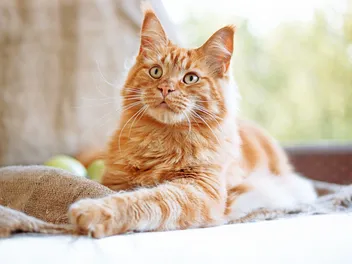
The Maine Coon’s place on our list probably won’t surprise many pet owners. This cat epitomizes the gentle giant among felines. They enjoy being a part of the family and will interact with everyone, including cat-friendly dogs. Surprisingly, they can be lap cats despite their size.
9. Neva Masquerade

Breed Overview
Size:
Color:
Life Expectancy:
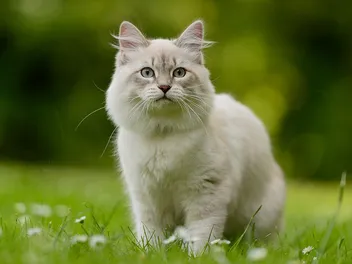
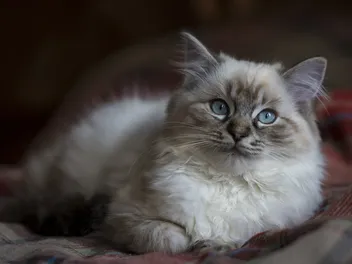
The Neva Masquerade is an ancient Russian breed. The cat is a color-point variation of another kitty on our round-up, the Siberian. Like the Exotic Shorthair, this feline has penetrating blue eyes. They have long, thick coats and a stocky body. They prefer the company of people and may develop separation anxiety if left alone often, but they are otherwise fairly calm.
10. Norwegian Forest Cat

Breed Overview
Size:
Color:
Life Expectancy:
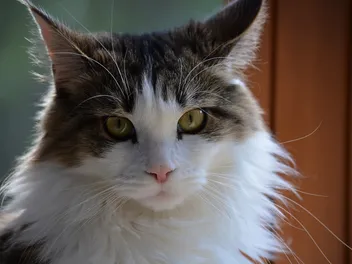
The Norwegian Forest Cat is another breed with a big presence. Despite their size, they are loving pets with a gentle disposition. However, this kitty isn’t as physically affectionate as similar cats. They prefer to watch the action from a decent vantage point. Nevertheless, they form strong bonds with their family. Like the Maine Coon, this feline isn’t talkative, although they may “chirp” to get your attention.
11. Persian

Breed Overview
Size:
Color:
Life Expectancy:
The Persian is probably the most regal of cats. It’s only fitting that this one will be on our list of the calmest cat breeds. These animals are an excellent choice for a quiet household since they prefer that kind of home. Perhaps the gentleness is in their genes.
12. Ragamuffin

Breed Overview
Size:
Color:
Life Expectancy:
The Ragamuffin is related to our next entry and has many of the same endearing traits. They differ from the latter with the lack of pointed coloration. This cat loves people and cuddling. They have long coats with what almost looks like a mane. However, don’t let the luxurious coat fool you; they are muscular animals with delightful personalities that have won over many followers.
13. Ragdoll

Breed Overview
Size:
Color:
Life Expectancy:
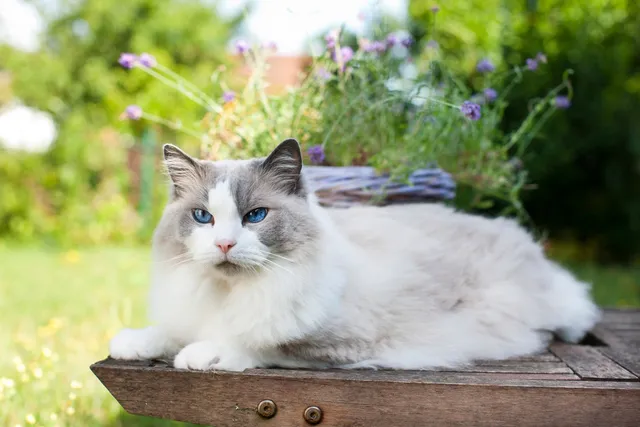
The Ragdoll is another cat with a fitting name that describes them to a tee. They are happy-go-lucky animals that are about as tolerant and adaptable as you can expect from a feline. While they’re calm, they also are playful, given the right incentive. The breed is a relative newcomer, hitting the scene in the early 1960s. It didn’t take long for this kitty to get a large and loyal following.
14. Scottish Fold

Breed Overview
Size:
Color:
Life Expectancy:
The Scottish Fold makes it hard not to notice them, with their large eyes and distinctive ears caused by a genetic mutation. They are friendly animals that enjoy the company of their family. They won’t have it any other way, being prone to separation anxiety. Taylor Swift is a fan of the breed, having three of her own. However, note that this breed is controversial due to the mutation in their genes.
15. Siberian

Breed Overview
Size:
Color:
Life Expectancy:
The history of the Siberian goes back over 1,000 years. They are robust animals with thick coats to keep them warm. They also love to snuggle to share the warmth. Like many large cats, they mature slowly, reaching full adult size at around 5 years old. Regular grooming is essential for keeping their coats mat-free and looking their best. However, if you can keep up with that, you’ll enjoy their calm demeanor.
Conclusion
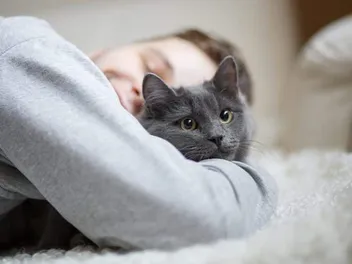
Being calm seems fitting for an animal that sleeps as much as a cat. Our list includes a variety of breeds, coming in all sizes and shapes. Nevertheless, you’ll find plenty of calm cat breeds on our list, whether you want a small kitty to cuddle or one that will stay quiet and relaxed whenever you leave the house.
Featured Image Credit: rock the stock, Shutterstock

Expert cat care, straight to your inbox
Vet-reviewed advice, behavior tips, and the best of Catster. Free, and you can unsubscribe anytime.
By signing up, you agree to our Terms & Conditions and Privacy & Cookies Policy.

Chris has been a science-focused pet writer since 2009, specializing in health and the environment. She lives with her husband Norm and three amazing cats in the land of 10,000 lakes. When she's not writing about cats, Chris also enjoys boating and sampling wine. She has her WSET 1 and 2 certifications and is currently pursuing her Certified Wine Specialist Award (CSW).
Join the conversation
Ask a question, share your story, or send private feedback.