Get

In Your Inbox

Catster is reader-supported. When you buy via links on our site, we may earn an affiliate commission at no cost to you. Learn more.

Do Neutered Cats Still Mate? Vet-Approved Facts

Share

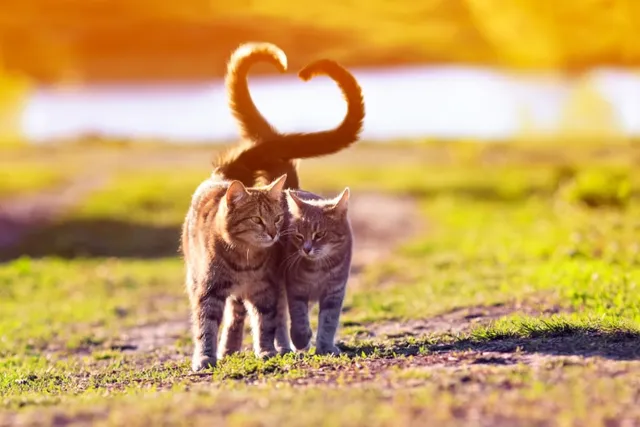
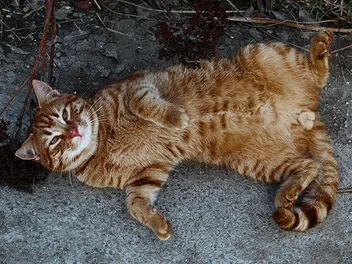
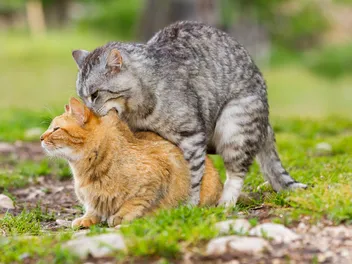
Close-Up Photography of Tabby Cats Laying

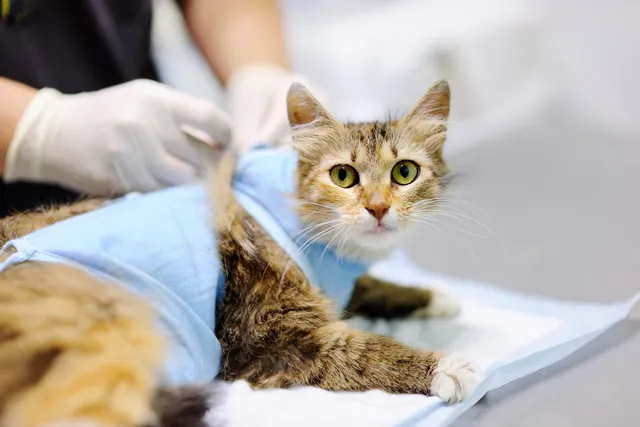
Neutering a cat involves surgically removing a cat’s reproductive organs to prevent them from reproducing. It is done by a veterinarian by the time most cats are around 4 months of age or sexually mature.

Owners may choose to get their cats neutered for various reasons, but usually to avoid unwanted pregnancies, decrease the risk of certain cancers, and to reduce hormonal behaviors. However, it can leave you wondering whether they can still mate or even have the urge to.

Although neutering can reduce a male cat’s urge to mate, they can still technically mate with female cats without resulting in pregnancy.

divider cats oct 2024

What Is Neutering in Cats?

Neutering refers to the castration of male cats when their testes are surgically removed. The term “neutering” is generally used for male cats, whereas “spaying” is used for female cats. If you do not want to be specific about the terms, it is simply called sterilization. In scientific terms, neutering is an orchidectomy.

Feline neutering is considered a routine procedure done by veterinarians around the world. Many disruptive behaviors in male cats are fueled by high testosterone levels. This includes increased roaming behavior, urine spraying, and persistent yowling. Unneutered male cats can get unspayed female cats pregnant, so sterilization is a common method used to prevent it. The neutering process doesn’t take very long, and cats can go back to their old routine after a few days of recovery.

You are free to use this image but we do require you to link back to Catster.com for credit

Can Cats Still Mate After Being Neutered?

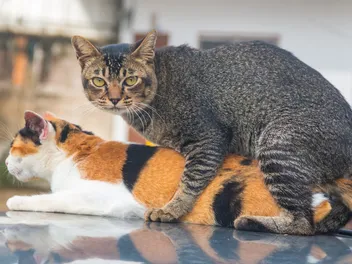
Yes, male cats can technically mate with female cats after they have been neutered. Neutering only removes a male cat’s testes and not their penis which is needed for penetration. Their testicles contain sperm and their primary source of testosterone which is responsible for sexual behavior and reproductive organ development. Without testes and sperm, neutered cats can no longer get female cats pregnant. However, he may still try to mate with her.

Do Neutered Cats Want to Mate?

Many neutered cats will still have the urge to mate after their procedure, as the testosterone hasn’t completely left their bodies yet. It can take several weeks before you notice a difference in your neutered cats’ sexual behaviors. Once they are no longer driven by testosterone, their urge to mate usually decreases.

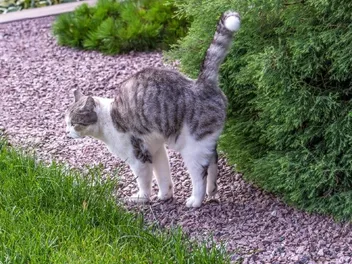
Your neutered male cat may spend less time urine spraying or desperately attempting to escape in search of a female cat. Many cat owners see this as a win, as a hormonal male cat can be destructive in the home, neighborhood, and to other cats.

yowling adult cat at the park
Image By: shymar27, Shutterstock

Do Spayed Female Cats Still Have the Urge to Mate?

Since female cats lack testes, their reproductive organs like ovaries and uterus are removed instead. This eliminates the risk of unwanted litter since a spayed cat can no longer become pregnant. This is true even if she mates with an unneutered male cat. Spaying does not prevent a female cat from being able to physically mate with a male but typically reduces the urge to.

The urge for unspayed female cats to mate isn’t as disruptive as it is in males aside from when they are in heat (estrus cycle). Female cats go into estrus once or twice a month and willingly seek out male cats to mate with. Once a female cat is spayed, she no longer goes into heat and doesn’t have a strong desire to mate anymore. In rare cases, leftover ovarian tissue can cause something known as Ovarian Remnant Syndrome, where a spayed cat continues to act as if she is in heat.

If you are concerned or have questions about your cat’s health, you can also speak to a vet from the comfort of your own home.

If you need to speak with a vet but can't get to one, head over to PangoVet. It's an online service where you can talk to a vet online and get the advice you need for your pet — all at an affordable price!

PangoVet_Mention-in-Content for PangoVet2 save money

divider 1 paws

Final Thoughts

Both neutered and spayed cats can still technically mate, but the hormonal urges to do so will be reduced. This is because their reproductive organs have been removed. A neutered cat will not be able to get a female cat pregnant and usually experiences fewer urges to mate in the first place.


Featured Image Credit: Ninz Embalsado, Pexels.com

Want content like this delivered to you?

Sign Up For Our Newsletter

News, insights, expert advice, and everything cat

* By submitting, you agree to our Terms & Conditions and Privacy & Cookies Policy.


How useful was this post?

Click on a star to rate (you can leave written feedback after clicking submit)

Help us improve Catster for pet parents!

Your feedback really matters.

What did you like about this post? Also how can we improve it?

Join the conversation

5 Responses

  1. eliminate as in get some kind of cage and trap them I've got to eliminate them for my property the only thing I know is that get a hold of animal control somehow and get a cage or get them to travel help me I don't sure I can't do it by myself that mean

  2. my female cat was spayed in July of 2025 & there are 3-6 male cats hanging around my carport spraying & fighting with my neutered male. I can't even let my male outside cause the stray males here for my spayed female will viciously attack my male. I have had enuff! I don't know wut to do but I know wut I am about to do & that is eliminate these mean mean stray males.

    1. We hear how incredibly stressed and pushed to the limit you are; it is exhausting to feel like a prisoner in your own home and watch your neutered male be targeted by aggressive strays. While it feels like they are there for your spayed female, these intact males are likely fighting over the territory of your carport and food source, creating a high-tension "war zone" that is dangerous for your pets. We strongly urge you to reconsider "eliminating" them yourself, as harming animals can carry serious legal consequences and won't actually solve the problem—due to the "vacuum effect," new unneutered males will likely just move in to take their place. The most effective way to stop the spraying and fighting for good is to remove the biological drive by contacting a local TNR (Trap-Neuter-Return) group to have these specific males trapped and neutered, which drops their testosterone and ends the territorial aggression.

Leave a Reply

You’re very welcome to leave a comment or question. Please know that all comments must meet our community guidelines, and your email address will NOT be published. Let’s have a positive and constructive conversation.


Catster's Digital Magazine is Back!

Vet-approved health & behavior advice

Real cat stories & community features

The Surprisingly Simple Ways to Help a Cat With Hairballs

Cats spend an astonishing amount of time grooming. It is part hygiene routine, part comfort ritual, and part instinct that traces back generations....

What a CATastrophe! A Tire-ing Ordeal For a Pony in the UK

As you would expect, our weekly news updates are usually centered around feline topics – we are a cat care website after all...

Ask Dr. Paola – Help! My Cat Has Stopped Eat His Wet Food! (June 1, 2026)

Welcome to our “Ask Dr. Paola” series, where every Monday we bring expert advice straight from Dr. Paola Cuevas (MVZ) to help our...

Chatting About Fake News in the Pet World, AI Again, and New Age Journalism | Chatty Cattys, Episode 23

Navigating the modern digital landscape requires a sharp eye to distinguish fact from fiction. In this episode of Catster’s podcast, Chatty Cattys, Nicole...

More related

6 Pet-Friendly Hotels Near New Orleans (2026 Guide)

Also called the Big Easy or Nola, New Orleans is a quintessential southern melting pot of vibrant nightlife, jazz music, Cajun food, rich...

Do Domestic Violence Shelters Allow Pets? Facts & Safety Tips

According to statistics from the National Coalition Against Domestic Violence (NCADV), one in three women and one in four men experience some type...

Are American Shorthair Cats Hypoallergenic? Vet-Reviewed Facts & Allergy Precautions

When it comes to the question of whether American Shorthair cats are hypoallergenic, the straightforward answer is no. American Shorthairs, like most cat...

Sisal Rugs Direct Sisal Remnants for Cats Review 2026: Quality Carpet for DIY Cat Accessories

Whether you’re trying to save your couch from cat claws, refinish an old scratching post, or get creative with some DIY cat accessories,...

Keep reading

How Long Do Russian Blue Cats Live? Vet-Reviewed Lifespan & Care Tips

You love your feline friends, but you’re aware they won’t be around for your entire life. However, some cats live longer than others, so certain breeds will be in your life for far longer than other breeds. Knowing how long...

Grey little cat breed Russian Blue Cat

Can Cats Eat Lentils? Vet-Reviewed Nutritional Facts & FAQ

We’ve all heard that curiosity killed the cat, and that saying has a foundation in reality; cats explore their world with their mouths, and ingesting foreign substances and objects can be fatal! Lentils are a superfood for humans that packs...

Catster_Can Cats Eat Lentils_v1_Dec 3 2024

Do Cats Play Fetch? Trainable Breeds & Useful Tips

Fetch has long been associated with dogs. This active game is so pleasing to dogs, as they’ve spent centuries domesticated to work with and for humans, many for retrieving purposes. Cats have also been domesticated for a long time, not...

Main Coon running on a field

How to Handle Food Aggression in Cats: 11 Vet-Reviewed Tips & Tricks

Dealing with food aggression in a cat can be overwhelming and even scary at times. Food aggression can exhibit itself in a variety of ways, including growling, biting, food stealing, and attacking. Unfortunately, without appropriate management, food aggression will almost...

tabby cat eating cat food out of bowl inside

Can Cats Eat Chicken Noodle Soup? Vet-Reviewed Facts & Risks

Simple to digest and soothing to the throat, chicken noodle soup has been touted as the remedy for a variety of ailments in humans. Cats naturally love chicken, so they may be drawn to the soup regardless of its supposed...

Can Cats Eat Chicken Noodle Soup

Bald Spots on Cats: 10 Vet-Verified Causes & Treatment Options

One feature synonymous with cats, the hairless breeds notwithstanding, is a soft and fluffy coat. So if your feline has developed a bald spot, we need to find out the cause and get on top of treating the problem. The...

cat with bald spot on neck

Cat Asthma: Vet Reviewed Signs, Life Expectancy, & Treatment

Asthma isn’t just a human disease; it can affect our pets too. In fact, it affects between 1% and 5% of cats. It’s a chronic but treatable breathing condition that causes inflammation and reactive constriction of the airways. While it’s...

tabby cat sneezing

Why Are Cats Afraid of Water? Vet-Reviewed Facts & Useful Tips

Many cat owners have witnessed the displeasure that some cats derive from getting wet or being doused in water. While some cats like and even love water, for most owners, we really only see whether a cat loves or loathes...

cat staring at water

Love Cats? So Do We! Join the Catster Community

Stay informed with expert pet care insights delivered straight to your inbox! Discover professional guidance on animal behavior, feeding tips, trusted product picks, and much more.


Sign up for the Catster Email Newsletter

Stay informed with expert pet care insights delivered straight to your inbox! Discover professional guidance on animal behavior, feeding tips, trusted product picks, and much more.