Get

In Your Inbox

Catster is reader-supported. When you buy via links on our site, we may earn an affiliate commission at no cost to you. Learn more.

Female Cat Behavior After Spaying: Vet Reviewed Changes to Expect

Share

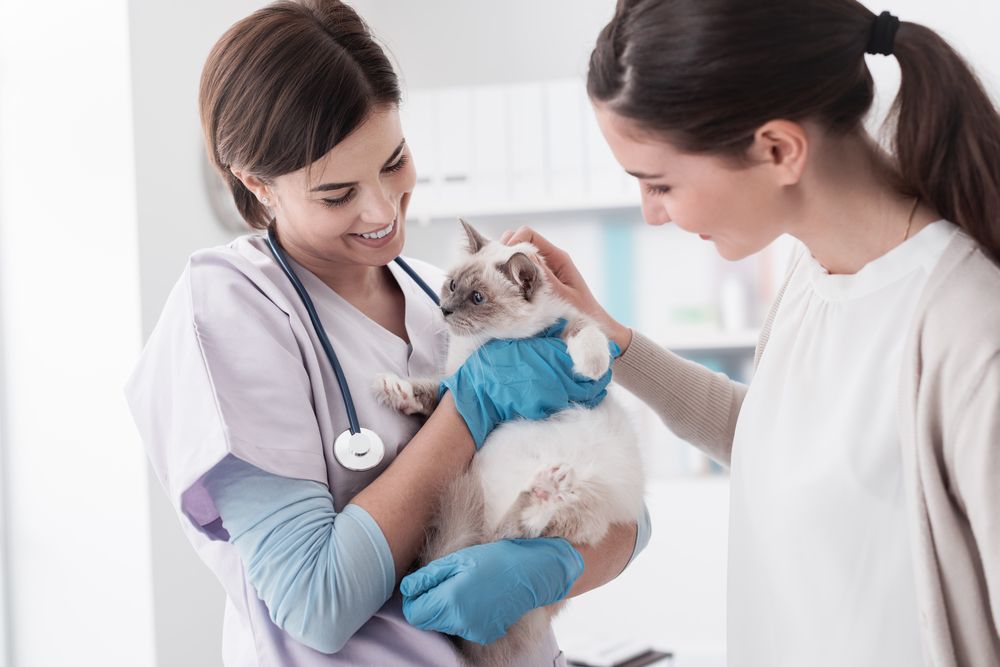
cat and owner and vet

One of the side effects of spaying a female cat is behavioral changes. Some are short-term and directly related to the pain your cat is likely in after surgery. Plus, some other side effects are common as well, which can resemble behavior changes. Other behavioral changes are long-term. Often, these changes result from hormonal differences now that your cat is not looking to reproduce.

Cats are often much easier to handle when they are not looking to reproduce. In this article, we’ll look at some of the most common behavioral changes. Your cat may not experience all of these, or she may experience changes not on this list. Either way, the changes should give you an idea of what you should expect.

divider 3 paws

Female Cat Behavior After Spaying: What to Expect

After you bring your cat home, you’ll likely notice that she is sleepier and more lethargic than usual. This is normal since she needs time to recover from surgery. However, these effects should not be long-lasting. Most cats bounce back in a matter of days.

Some cats are a bit disoriented. However, this is a short-term effect, and most cats are monitored by their vet while recovering from anesthesia. So, if the surgery was performed in the morning, but you didn’t pick your cat up until the evening, you likely won’t notice this sign.

Some cats are more aggressive. Usually, this is due to the pain associated with the surgical site. They may not understand what is going on, which can make them accidentally attack the people they love. If your cat is aggressive, it is best to give them space. You should, however, keep up with any post-operative care prescribed by the veterinarian.

Despite these changes, your cat should still eat and drink somewhat normally. A slightly lower appetite is expected after surgery, but your feline should drink water normally. In the days after the surgery, your cat may be more timid or jumpy.

However, this change should be temporary. In a few days, your cat should relax back into their routine and become lovable again. Most behavioral changes directly after the spay are caused by the surgery, not the hormonal differences. The long-term differences are much different from the short-term ones.

Image Credit: Frau aus UA, Shutterstick

Long-Term Behavioral Effects of a Spay

The most apparent changes female cats experience are related to their hormonal cycles. After the surgery, female cats no longer go in heat. Therefore, they will not experience any signs associated with being in heat, including the midnight yowls in search of a mate.

You won’t have to deal with the ups and downs of owning a hormonal cat. Spayed females are typically more relaxed and easygoing. They spend more of their time lounging around the house because they don’t have hormones driving them to look for a mate.

In many cases, the surgery will not affect your cat’s personality. She won’t have those ups and downs of hormonal heat cycles. In fact, your cat may have more of a personality than before since she won’t have hormones getting in the way.

Hormonal changes do not occur right away. It takes a few weeks to a few months for your cat’s hormones to balance out. Therefore, don’t expect hormonal-related behaviors to disappear after surgery. It may take them a while to get back to normal.

lilac-point-siamese-cat-resting
Image Credit: tovsla, Shutterstock

What to Watch For

There are a few behavioral changes that can point to something serious going on, such as an infection. While some behavioral changes are normal, not all of them are.

First, your cat should only be lethargic for a few hours. By her second or third day home, she should be feeling better. If she isn’t acting any better, you should speak to a vet. In many cases, this can be a sign of infection or another underlying problem.

Second, many cats will not eat directly after surgery. They just won’t feel like it. However, they should eat within about 12 hours. If they don’t, call the vet. While it may be your cat reacting worse to the surgery than others, she may need supportive care while she gets better. Cats need calories to recover from surgery, after all.

Your cat should be eating normally after a few days. If she isn’t, you can contact the vet. There may be a reason your cat is not bouncing back as fast. Of course, beyond behaviors, you should keep an eye on your cat’s stitches for infection.

Red, flushed skin is the most obvious sign of infection. Swelling and fluid seeping are other common signs that an infection has occurred. Usually, cats bounce back very quickly. If your cat still acts lethargic and groggy after 24 hours, contact a vet. Your cat should not take long to return to her usual antics.

divider 3 paws

Final Thoughts

Most owners choose to get their cats spayed to eliminate the chance of pregnancy. However, others may decide to spay their felines because of behavioral differences. Without their heat cycle, female cats typically act much more content and calmer. Their hormones no longer push them to find a mate, and they may feel much more relaxed.

However, hormonal changes do not happen overnight. It takes time for your cat’s hormones to become balanced. While waiting, you may find that your feline experiences short-term changes due to the surgery.

For instance, most cats are a bit lethargic after surgery. They may also be more aggressive, especially if they are in pain. Either way, these changes should fade after only a couple of days.


Featured Image Credit: Stock-Asso, Shutterstock

Want content like this delivered to you?

Sign Up For Our Newsletter

News, insights, expert advice, and everything cat

* By submitting, you agree to our Terms & Conditions and Privacy & Cookies Policy.


How useful was this post?

Click on a star to rate (you can leave written feedback after clicking submit)

Help us improve Catster for pet parents!

Your feedback really matters.

What did you like about this post? Also how can we improve it?

Join the conversation

16 Responses

  1. My cat just got spayed about 3 weeks ago. She bounced right back the next day and has been fine ever since. She is very quick around the house. She was fine yesterday. Today is lethargic and sleeping and not moving much. She didn't eat her breakfast.. She is an indoor cat. ziI am worried. What the heck could have happened over night?

    1. Hi Patty Gyolai. Sounds like you need to speak to a vet. Our vets at www.pangovet.com are one click away and will be happy to help guide you through the best next steps.

  2. I got my kitten when she was only five weeks old. I literally held her in my arms or apron pocket every minute for several weeks. She was so sweet, always purrring and rubbing on me. Very playful. Very much wanted to be with me. Then at about 3 months, she started getting mean. She would bite for no reason. I want to get her spayed — will that change her back to her sweet, loving disposition?

    1. Dear Texas Grandma. It is very common for kittens separated from their mothers too early (before 12–14 weeks) to develop "mean" behaviors like biting, as they missed the crucial period where their mother and siblings would have taught them "inhibited play" and boundaries. While spaying is highly recommended to prevent hormonal aggression, territorial spraying, and the stress of heat cycles, it is not a "magic switch" that will automatically fix biting habits rooted in a lack of early socialization. To help her regain her sweet disposition, you should combine the surgery with consistent "redirection" training with consists of immediately stopping all play when she bites and swapping your hands for a wand toy. For a personalized plan to manage these specific behavioral shifts, we recommend a 1:1 consultation with our vets at www.PangoVet.com for advice to manage this behavior.

  3. Jerry Long says:

    My two kittens were spayed 11/03/25 had the 3 day pain shot did ok eat ok, next day did good eat well. On the third day one was good other one eat small amount in the morning has not eaten or drank since and is the forth day called vet, Is this normal.

    1. Jerry Long, we understand your concern. It is incredibly stressful when a kitten won't eat after surgery.
      While it's great that your kitten did well initially, not eating or drinking for an entire day, especially on the fourth day post-surgery, is not normal and can be very serious for a kitten. It is crucial that you seek follow-up advice immediately.
      Since you've already called your vet, if you haven't received specific instructions or if the kitten's condition doesn't improve instantly, you need an urgent re-check. A physical examination is necessary to ensure there are no complications, such as fever, pain, or issues with the incision.

  4. My cat was spayed a week ago she was little one. she had the 3 day pain shot. she. hasn't been right since she's laying down sleeping slot she isn't playing at all. before surgery she was climbing. the curtains had the zoomies. now she won't even play with her toys. she use to follow my husband around she always meowed at the bathroom door until he came out is she ok.please help..????????????

    1. Hi, Shirley sounds like you need a vet’s input. Did you contact the vet who spayed her? If not possible please feel free to contact www.pangovet.com they can help you determine the urgency of the situation and guide you through the next best steps.

  5. I have a spayed female cat and adopted a second female cat. She was supposed to be spade but was super aggressive towards my first cat. they have been kept separate for most of the 4 months this whole process has taken. Working with cat behaviorist on slow and a re-introduction. there was about 3 days they got along. Long story short over about 2 months it was discovered 1 ovary was not removed and has since been removed. We are post-surgery 6 weeks. Second cat is healed and doing good. My first cat has a lot more confidence, but my second cat still lunges and my first cat runs and hides. Second cat would chase and tackle her. I have had the Feliway diffuser plugs going the entire time and use the spray and give my second cat a daily supplement for calming. I cannot have them near each other. How long before I know hormones are not in play?

    1. Hi Meg, sorry to hear your two cats are not getting along. It can take a couple months but you should keep in mind that regardless of this some cats can build positive relationships, some learn to tolerate each other and some others never learn to live together. However, working with a behaviorist is great and he or she can help you have better chances of socializing your cats. If your vet confirms that the cat who was recently spayed for a second time still goes into estrous, there are other possible causes for this including exposure to exogenous estrogens, adrenocortical carcinoma, pathology of the zona reticularis of the
      adrenal cortex, the vet will need to investigate it. We wish you the best of luck with your two cats.

  6. My cat did well after getting spayed. She only had one day of being lethargic. She was an indoor/outdoor cat before pregnancy. Near her due date, I kept her indoors until after surgery. When I finally let her out, she was so happy. For first few days she stayed close to home. Two weeks after surgery though, she disappeared for over two weeks. I thought a coyote got her or someone took her in. She came back but she acted differently towards me. She was not affectionate with me at all. She stayed around only to eat. Now she is gone again. I think a neighbor up the street has her. How come after surgery, she chose another person? I spoil my cats.

    1. Hi Karen, thanks for sharing your story and we are sorry to hear your cat has been distant, it is not uncommon for cats who have access to go outdoors to find a second family/owner option. The surgery is unlikely to be the cause. Perhaps you can try placing a GPS tracker or collar to figure out where is she going and speak to them. They might be thinking she is lost or a stray and feeding her or even believe that they gave her a very needed home. Check out: https://www.catster.com/lifestyle/best-cat-gps-tracker-collars/
      We hope this helps!

  7. my male cat has disappeared ,may be lost .
    his sister has just been spayed , will he still be able to smell her scent and find his way home

    1. Hi Jackie, we are sorry to hear that your cat is lost. Cats' sense of smell is very strong and while the female cats' scent does change after spaying them, this is not the only cue your boy has to return. Please consider a GPS tracker for your cat to prevent them from getting lost:
      https://www.catster.com/lifestyle/best-cat-gps-tracker-collars/
      Best wishes

  8. after spaying, my cat won't leave my side. She is constantly purring & rubbing on me like she acted almost before she was spayed like she was starting in heat. Is this a hormone problem & will it go away??

    1. Hey Carla, thank you for your comment. We’d love to help :) Your kitty’s behavior does sound potentially normal and may go away, but a consult with our vet team could help you explore the issue further. With our veterinary telehealth service, PangoVet (https://pangovet.com), you can talk to one of our vets during a virtual veterinary consult and they can have a look at your vet on camera and help answer any questions you have.

Leave a Reply

You’re very welcome to leave a comment or question. Please know that all comments must meet our community guidelines, and your email address will NOT be published. Let’s have a positive and constructive conversation.


Catster's Digital Magazine is Back!

Vet-approved health & behavior advice

Real cat stories & community features

Weird Cat Behaviors That Actually Make Perfect Sense

We have been sharing our lives with cats for thousands of years, yet we still find ourselves genuinely stumped by what they get...

The Dream of Talking to Cats Just Got Closer to Becoming a Reality

If you’ve ever wished your cat could simply tell you what they wanted, you’re not alone. From the meow that wakes you before...

Kizzy: The Feline Princess With a Purpose

We were first introduced to Miss Kizzy after she won a licky-treat challenge hosted by Professor Fluffovich, our resident feline research specialist. While...

Chatting With Sally About Mission Meow & Helping Cat Rescue Organizations Collaborate | Chatty Cattys, Episode 24

In this episode of Catster’s podcast, Chatty Cattys, Nicole and Dr. Karyn sit down with Sally Williams, the founder of Mission Meow, for...

More related

How to Introduce a Hyper Dog to a Kitten: Vet-Reviewed Step-by-Step Guide

Having a family full of furry friends can be a lot of fun if all the required precautions have been considered. When you...

The Secret to Getting Your Cat to Love Your New Kitten

Bringing home a new kitten is supposed to be exciting until your resident cat gives you the look. The hissing, hiding, or cold...

Clumping vs. Non-Clumping Cat Litter: Vet-Reviewed Pros, Cons & Which to Choose

You may be surprised by how many brands of litter are available and may need help deciding which is best. Well, there are...

10 Weird Cat Litter Box Habits (Vet-Approved Explanation)

Cat litter isn’t everybody’s favorite topic, but it’s an important one, nonetheless. You’ve gotten used to your cat’s usual comings and goings and...

Keep reading

Can Cats Eat Goldfish Crackers? Vet Approved Facts & FAQ

Feeding time comes with numerous questions about what and how to feed your pet. Is it okay to give them human food? Can you share, for example, some Goldfish crackers? No, you should not be sharing your Goldfish crackers with...

Can Cats Eat Goldfish Crackers

Inhaler for Cats: Vet-Approved Tips on How to Use It for an Asthmatic Feline

Feline asthma is a respiratory condition that results from inflammation and muscle constriction in the airways. It is not well-understood in cats, but is often treated similarly as asthma in humans. There are several treatments for asthma in cats, including...

Treating a cat for asthma with an inhaler

8 Best Cat Combs of 2026: Reviews & Top Picks

Your furry friend deserves to look and feel their best. Cats are generally great at self-grooming, and they spend a large part of their day keeping clean. Short-haired and long-haired cats will both benefit from regular combing, glove use, or...

brushing cat fur

My Cat Has Worms: How Do I Clean My House? Vet Approved Guide

Living with cats can be full of play, laughs, and plenty of cuddles, but there are always aspects of cat ownership that aren’t fun, such as when your cat gets worms. You’ll need to know what steps should be taken...

Bengal cat next to a bucket of detergents home cleaning

Cat Dandruff: Vet-Verified Signs, Causes & Care

If you ever notice white flakes on your cat’s fur or skin, you could find yourself wondering if it could be cat dandruff. Dandruff is very common in humans, but can cats get dandruff? Is dandruff a minor condition in...

cat fur with dandruff

Raw Paws Pet Food Review 2026: Pros, Cons, & Verdict

Raw Paws Pet Food is a company that makes dog and cat foods. They offer frozen food that comes in rolls, patties, or ground, freeze-dried food, as well as grain-free kibble for dogs. They also offer food toppers, chews, supplements,...

Raw Paws Cat Food Review

Why Do Cats Lick Dogs? 4 Vet-Reviewed Reasons

Who says that cats and dogs can’t live in harmony? Most people think that cats and dogs do not like each other, hence the saying, “fighting like cats and dogs,” but that’s not always true. Cats and dogs can get...

cat sniffing a dog

Why Does My Cat Bite Me Unprovoked? 5 Vet-Reviewed Reasons for this Behavior

There’s no secret—cats try to get our attention, whether it’s good or bad. Because your little kitties have fangs, it won’t feel too good when they sink them into your flesh. If your cat is biting you for no real...

a red domestic cat bites its owner's hand

Love Cats? So Do We! Join the Catster Community

Stay informed with expert pet care insights delivered straight to your inbox! Discover professional guidance on animal behavior, feeding tips, trusted product picks, and much more.


Sign up for the Catster Email Newsletter

Stay informed with expert pet care insights delivered straight to your inbox! Discover professional guidance on animal behavior, feeding tips, trusted product picks, and much more.