Can Cats Eat Frogs? Vet-Reviewed Safety Facts


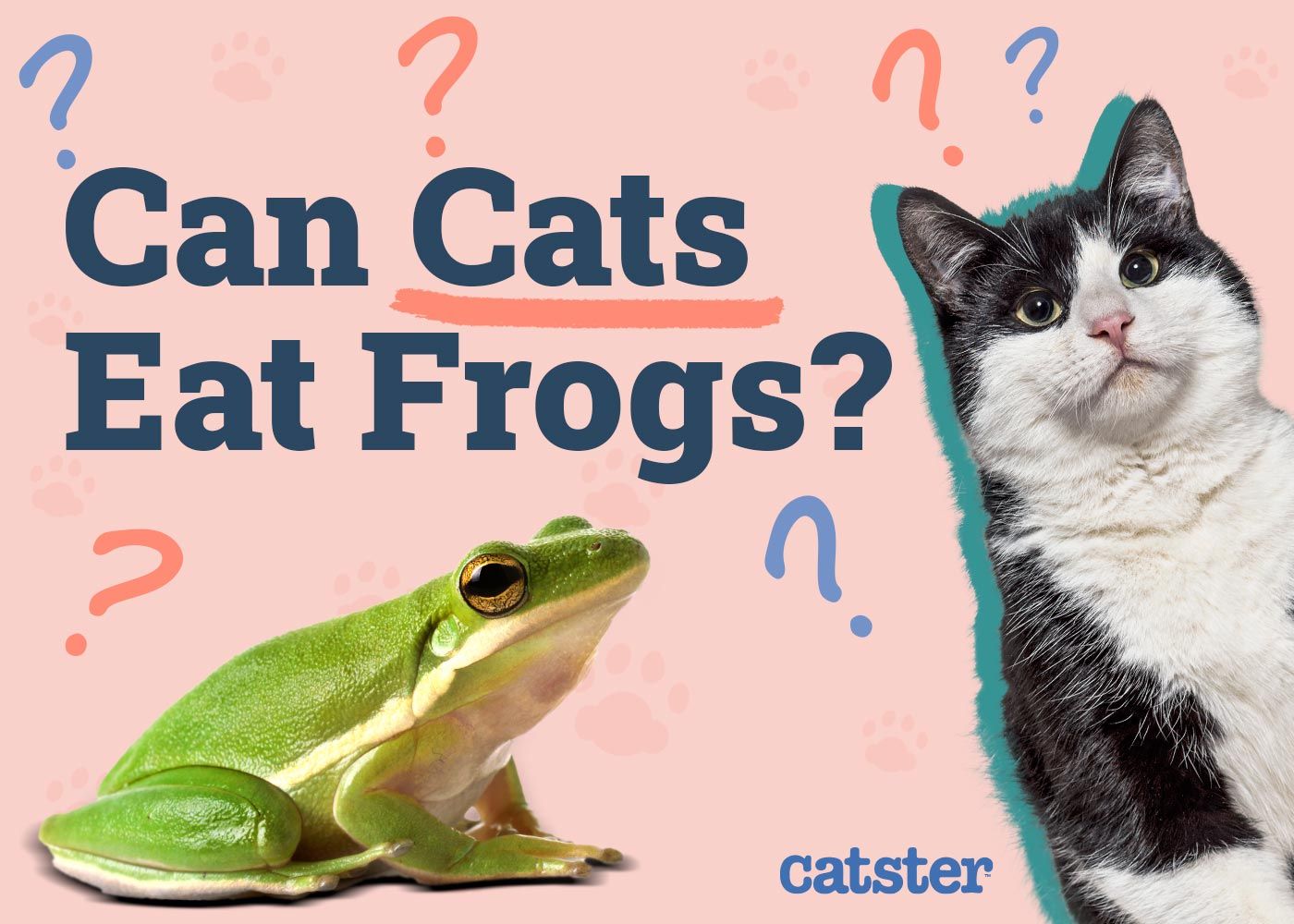
If you have a rambunctious feline with a strong prey drive, you have likely come across them playing with something strange or unsavory. Cats are incredible hunters, and they will hunt almost anything smaller than themselves. In many climates, that includes frogs. But can cats eat frogs? If you find your cat eating a frog, should you be concerned?
In many cases, cats can eat frogs in the sense that most frogs shouldn’t cause them harm. Cats are natural predators of frogs, but not all frogs are safe for cats to eat. Additionally, it’s important to know the difference between frogs and toads, because there are many more toads that are toxic to cats than there are frogs. Here is everything you need to know about cats eating frogs.

Yes, Cats Can Eat Frogs
If a frog is not toxic, there is very minimal risk of a froggy snack causing anything more serious than a mild tummy upset. Cats love hunting and eating small animals like frogs and lizards, and they can—and will—eat frogs. However, not all frogs are safe to eat. Not many frogs in the world are toxic or poisonous; the most well-known is the poison dart frog. Most toxic frogs live in tropical climates in the humid jungles that hug the equator. There are very few toxic or poisonous frogs found in North America.
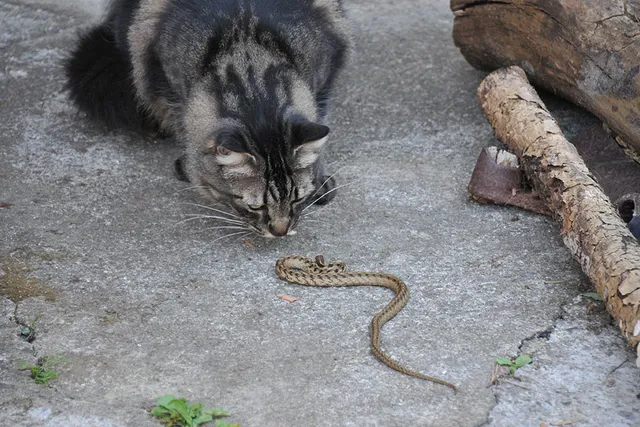
Many domesticated cats will play with or hunt a frog, especially if it is hopping about in an enticing manner. However, most pet cats will stop once the hunt is over, preferring the taste of their human-provided food over a slimy amphibian.

Can Cats Eat Toads?
Many people see a toad and assume it’s a frog, so it’s important to know that there is a difference. You should be much more wary of your cat playing with or eating toads as there is a far greater number of toxic and poisonous toads in the United States and Canada than there are poisonous frogs. There are multiple toads that can cause severe illness, even death if they are ingested or even licked by certain animals like cats and dogs. That means that there is a much higher likelihood of your cat becoming ill from eating a toad than there is from eating a frog.
Toad toxicity tends to be higher in dogs than in cats, however.1 We make no judgments or assertions about the comparative intelligence of dog vs. cat, but cats tend to be more cautious about potentially toxic creatures, whereas dogs often find their way into the emergency vet after licking a toad.
Research Toxic Frogs (and Toads) in Your Region
If your cat spends any amount of time outside, it is a good idea to research toxic frogs (and toads) that might live in your area, along with any other potentially dangerous species. A quick internet search should yield some basic results. You can also consult with a local veterinarian or your local extension office to get information about the local frog and toad populations; emergency vet practices are a good place to get an idea of how many cases are seen in your area.
Knowing what frogs and toads are commonly found in your area and the differences between them will let you know if they are safe for cats or dangerous for cats. If you live in an area devoid of dangerous amphibians, then you will not have to worry as much if you find your cat eating a frog or toad. If you live in an area with toxic frogs, you will need to keep an eye out; if you spot any around your house or in your neighborhood, you will need to be careful about letting your cat outside.

Nutritional Benefits of Eating Frog
It might be surprising to cat owners to learn that eating frogs actually has a number of nutritional benefits for cats. Being a natural source of food for cats in the wild, they can provide many key nutrients, as well as some benefits to digestion. Small animals like frogs, lizards, mice, birds, and rats make up a large part of a cat’s diet in the wild, and it is the skin, bones, cartilage, eyeballs, and entrails that give a feline the balance of nutrients they need. This is why cats should not be fed a diet consisting solely of muscle meat; it is lacking in vital nutrients.
If your cat is an avid hunter, they will likely digest a frog without any issues. If they are not used to a diet of live prey, a frog might pose a bit of a challenge to their digestive system, and vomiting or diarrhea could occur.
Domestic Cat vs Wild Cat Frog Consumption
Wild cats or stray cats eat frogs in much greater numbers than domestic cats. In fact, many domestic cats won’t eat frogs at all. Domesticated house cats will play with animals like frogs, toads, and lizards if they have the chance, but they will rarely eat them. That is because domesticated cats do not need to eat things like frogs to sustain themselves. They have full bellies and are given regular meals. Wild cats will eat frogs if they find one that is available to eat. Frogs are a source of protein, vitamins, and minerals for cats, especially wild cats.
That means if you find your cat playing with a frog, you shouldn’t worry too much. A pet cat will rarely cross the line and begin to eat the frog.

What to Do if Your Cat Eats a Frog
Don’t panic. The first thing to do is try to determine what kind of frog it was. If you believe that it is a harmless frog, the next thing to do is to keep an eye on your cat for signs of troubled digestion. Eating frogs can cause allergic reactions or gastrointestinal upset in some cats, so keep an eye out for signs like labored breathing, itchiness, abdominal discomfort, or nausea.
If your cat is showing severe signs of a reaction or gastrointestinal signs that are severe or are not resolving, contact a vet immediately.
If you believe that the frog is toxic or poisonous, or you are worried that it might be, you need to get your cat to see a veterinarian right away. If it is late in the evening, you might need to get in contact with an emergency clinic to assess and triage your cat. It is always better to err on the side of caution where a potential toxin is involved.
How to Prevent Your Cat From Eating Frogs
The best way to prevent a cat from eating unsavory things like frogs is to ensure that they have ample nutrition. Pet cats might hunt things like frogs if they are deficient in something like iron or protein that a higher rate of animal meat can give to them. You might also want to change their food to something that is packed with more protein and animal meat.
Unfortunately, domestic cats instinctively hunt prey, even if they don’t intend to eat what they catch. Millions of years of evolution have cemented that prey drive, which in most pet cats, has become a method of play rather than sustenance. Providing lots of activities at home and playing games with your pet can help to satisfy that instinct.
If you know your cat is at risk of hunting and eating a toxic species, the only surefire way to protect them is by keeping them indoors. There are lots of ways to provide your cat with all the benefits of an outdoor lifestyle from the safety of home, including cat trees and gyms, cat enclosures, cat window boxes, and wall or ceiling-mounted walkways.

Conclusion
Cats can eat frogs. As long as the frog in question is not toxic or poisonous, nothing is preventing a cat from chowing down on a delectable frog as a snack. Thankfully, there are not many poisonous frogs that are dangerous for cats outside of the tropical regions of the equator. There are, however, numerous poisonous toads that need to be considered. It is a good idea to know the difference between a frog and a toad for this reason to ensure that your cat does not accidentally ingest something dangerous and force an expensive trip to the veterinarian.
Related Reads:
Featured Image Credit: SteveCrowhurst, Pixabay
Expert cat care, straight to your inbox
News, insights, and useful advice, delivered to you.

No spam — unsubscribe anytime.
By signing up, you agree to our Terms & Conditions and Privacy & Cookies Policy.
How useful was this post?
Click a star to rate. You can leave written feedback afterwards. (We read all feedback.)
Grant is a freelance writer with years of experience writing about a diverse range of topics. He currently lives in his home state of Florida with his wife. His days are spent writing, raising a rambunctious son, and caring for eight animals (two horses, two donkeys, two goats, and two dogs). In his free time he enjoys slowly carving out a quaint hobby farm from the Southern scrub.