Can Cats Eat Spiders? Precautions & Facts


In this article
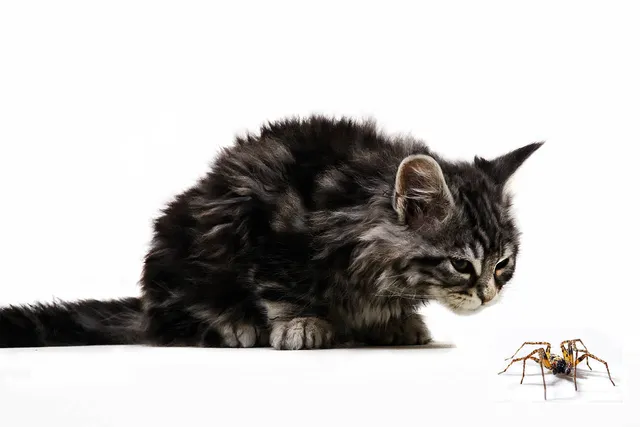
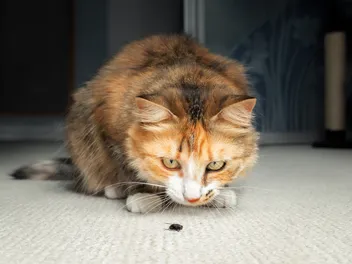
Whether you’re a seasoned kitty owner or brand new to the feline community, chances are you’ll notice your cat taking an interest in spiders. Most likely, your cat will bat them around and play with them, then before you know it, your cat has swallowed one whole!
Don’t be alarmed. Cats can eat spiders, but there are some spider exceptions. It’s very common for cats to find spiders in the house and eat them. But should you let your cat eat a spider? We'll explore the topic further and learn why cats kill these eight-legged creatures.

Why Do Cats Eat Spiders?
The idea of a spider in your house might make your skin crawl, but cats usually love to play with them! Cats are natural-born hunters, and to your kitty, a spider is a perfect hunting opportunity. While house cats don’t need to hunt for their food like wild cats, the killer instinct is still hotwired in their brain.
That’s why cats can’t resist any chance they get for a hunt. Small prey like mice, birds, hamsters, snakes, and spiders appeal to cats. But what about spider venom? Does it affect your cat's stomach? Spider venom is unlikely to be a problem if your cat eats a spider. Their stomach acid destroys the venom before it can negatively affect your cat.
But there could be a problem if your kitty is bitten in the face or mouth while eating the spider. This could cause swelling that can interfere with breathing, so it’s best to see a vet if your cat is bitten by a spider.
The Nutritional Value of Insects
As we know, cats don’t hunt only when they’re hungry; it can also be a source of entertainment. Still, insects provide nutritional value to a cat’s diet and may comprise a small percentage of a cat’s diet in the wild. The British Journal of Nutrition found that bugs and insects accounted for about 1.2% of a free-range feral cat’s diet in North America1.
It’s not much, but it gives us important insight into cat behavior and their unique ability to find food. Because cats are carnivores, they require high protein levels in their diet. Researchers have found that insects can make an efficient, sustainable protein source for cats.
Insects also provide essential fatty acids, vitamins, and minerals. Taurine, an amino acid, is critical to a cat's diet. Without taurine, cats can develop severe medical issues. Luckily, research has shown that insects exceed the minimum requirement of taurine, crude protein, and other essential amino acids.
Some pet food companies have noticed this and are experimenting with insect protein in their food. Cats don’t consume enough insects to live off of them, but they can be an excellent supplement to their daily diet.
Keep in mind that this by no means means that you should encourage your cats to eat spiders or other bugs since some can bite or sting, just that if they happen to safely, the insect can provide a little nutritional boost.

Which Spiders and Insects Are Dangerous to Cats?
It’s important to note that some insects can harm your cat. Most likely, your kitty will be okay if they eat a bug. The concern is if a bug bites your cat.
Some venomous species are harmful to cats. These species include:
- Black widows
- Brown recluse
- Hobo spiders
- False widow
- Tarantulas (hairs can cause severe irritation)

Bugs like wasps, bees, fire ants, and poisonous caterpillars can cause reactions from bites. It’s best to research spiders and insects in your area to learn which ones can harm your pet.
Spider venom can affect the nervous system (neurotoxic) or tissue (necrotic) when a spider bites a person or creature. Knowing this is important when observing your cat.
Reactions can include any of the following:
A bacterial infection can also occur around the site of the bite if it’s not treated.

What to Do if Your Cat is Bitten by a Spider
Spider bites don’t always show clinical signs right away, so you should monitor your cat if you suspect an insect or spider bit them. Obvious clinical signs require immediate attention, such as collapse and difficulty breathing. If you notice any of these signs, immediately seek medical attention for your pet. Otherwise, seek veterinary attention if your cat has severe swelling, pain, or a wound from a spider bite.
When in doubt, call your veterinarian for further instructions. If your primary vet isn’t available, emergency pet hospitals stay open 24/7 so you can take your kitty to the doctor at a moment's notice.
Final Thoughts
It’s natural to be scared if your cat eats a spider or strange insect. Your cat should be fine after eating a spider, as eating doesn’t usually cause problems, but a bite from the spider can. Because of this, it’s always a good idea to call your veterinarian and discuss your concerns.
Cats are beautiful creatures and impeccable hunters. Spiders trigger the hunting instinct that kitties can’t resist. For those with harmless spiders in their homes, having their cats gulp one down may be a good thing!
Might Also Interest You: Can Cats Eat Dragonflies? Vet Approved Facts & FAQ
Sources
Featured Image Credit: Andre Mueller, Shutterstock
Expert cat care, straight to your inbox
News, insights, and useful advice, delivered to you.

No spam — unsubscribe anytime.
By signing up, you agree to our Terms & Conditions and Privacy & Cookies Policy.
How useful was this post?
Click a star to rate. You can leave written feedback afterwards. (We read all feedback.)
Cassidy's journey from vet tech and professional pet sitter to pet writer showcases her lifelong passion for animals, both domestic and wild. Throughout the years, she has cared for many pets and enjoys writing about the animal-human bond. She and her husband have settled in Wichita, where they live with their German Shepherd, Raven, two cats, Lucy and Strudel, and a small flock of backyard chickens.