


In this article
View 2 More +There are quite a few cat breeds with blue eyes out there. A common misconception is that white cats with blue eyes are deaf, but that is not quite the reality. Some are deaf, but not all of them have this fate. Also, while many cats with blue eyes have white coats, not all cats with blue eyes do.
Here are eight blue-eyed cat breeds that all feline lovers should know about!

The 8 Blue-Eyed Cat Breeds
1. Siamese

| Origin: | Thailand |
| Lifespan: | 14 years |
| Weight: | 5 to 15 pounds |
The Siamese cat is one of the most well-known felines with blue eyes. They have been highlighted in various movies throughout the years, including Lady and the Tramp and That Darn Cat. They are popular among households throughout the world. One big reason is their beautiful blue eyes that create a deep contrast to their dark coats. These cats originated in Thailand, where they were revered for their striking black hair and elegant stature. Siamese cats are energetic, curious, and intelligent creatures that enjoy spending time with human companions and don’t mind being affectionate when the time is right. They also happen to be vocal, known for waking their companions in the middle of the night and interrupting conversations to get attention.
2. Turkish Angora

| Origin: | Central Anatolia (modern Turkey) |
| Lifespan: | 15 years |
| Weight: | 5 to 10 pounds |
As a breed that is hundreds of years old, the Turkish Angora enjoys popularity worldwide today. Legend has it that these cats were once the companions of gods, as their eyes were said to reflect the heavens above. Many Turkish Angoras have two different colored eyes: one blue and one green or amber. Some don’t have blue eyes at all. However, blue eyes are commonplace for this breed.
Turkish Angora cats are playful, affectionate, and good-natured on the whole. They love to interact with toys and kids and enjoy exploring their surroundings regularly to see if anything new is happening or has been introduced to the home. These cats are great jumpers and acrobats, so they can be a bit destructive when they feel rambunctious or get bored. They need climbing shelves, scratching posts, and towers to accommodate all their physical energy.
3. Ragdoll

| Origin: | California, United States |
| Lifespan: | 15 years |
| Weight: | 10 to 20 pounds |
The Ragdoll came into existence when a Persian breeder named Ann Baker from California decided to breed a domestic long-haired white cat with selected cats that she already owned. From there, she used selective breeding practices to perfect the Ragdoll cat that we all know and love today. These blue-eyed cats are beautiful, gentle, and affectionate, which makes them amazing household companions that are both fun to look at and enjoyable to interact with. They have no problem snuggling on the couch or napping in a lap all day, though they also don’t mind spending time with toys and exploring.
4. Balinese

| Origin: | The United States |
| Lifespan: | 15 years |
| Weight: | 5 to 12 pounds |
As essentially long-haired versions of the Siamese (they are related, after all), Balinese cats were developed in the United States, when two Siamese breeders decided to develop more of the longhair kittens that appeared in their litters. The American Cat Fanciers Association first accepted the breed for championship exhibition in 1968. Balinese are extremely adaptable and can do well in households with single adults, seniors, families with kids, and families with other pets. They love to socialize and are not shy to let their family members know when they are not getting enough attention. These smart cats like to play, but they also have a laidback side.
5. Snowshoe

| Origin: | The United States, sometime in the 1960s |
| Lifespan: | 15 years |
| Weight: | 7 to 12 pounds |
Snowshoe cats aren’t popular, and many people have never even heard of them. They are the result of breeding an American Shorthair and a Siamese. Their name is a nod to their snow-white paws. Their white and smokey brownish/blackish bodies and blue eyes give them an exotic look that definitely turns heads. Snowshoe cats are vocal like Siamese cats tend to be, so they should be expected to regularly participate in vocal conversations with family members at home.
6. Tonkinese

| Origin: | Asia |
| Lifespan: | 15 years |
| Weight: | 6 to 12 pounds |
The Tonkinese is a blue-eyed cat breed that doesn’t get nearly as much attention as they deserve. These cats are playful, goofy, and sometimes a little mischievous, and they are always a joy to be around. These cats developed from a cross between the Siamese and the Burmese cat breeds. It’s not exactly known where the Tonkinese originated, though the first known Tonkinese was named Wong Mau and arrived to the U.S. in the 1930s. This leads experts to believe that the breed originated in Asia. These cats are typically outgoing and sociable, willing to interact with family members and household visitors alike. They love interactive games and thrive with things like puzzle toys and slow feeders. Tonkinese cats are known for their independence and ability to keep themselves company when nobody else is around.
7. Birman

| Origin: | Northern Burma |
| Lifespan: | 9 to 15 years |
| Weight: | 12 pounds |
This pointed cat breed has gorgeous, long hair and striking blue eyes. These cats come in a few different colors, but what they all have in common are their white paw “mittens.” These cats are known for being sweet, shy, and sometimes playful when they’re in the mood.
This is a vocal breed, but their meows and noises are not typically as loud as some other vocal cats, like the Balinese. They require regular brushing to keep shedding to a minimum and to ensure that tangles don’t develop.
8. Javanese
| Origin: | North America |
| Lifespan: | 10 to 15 years |
| Weight: | 8 to 12 pounds |
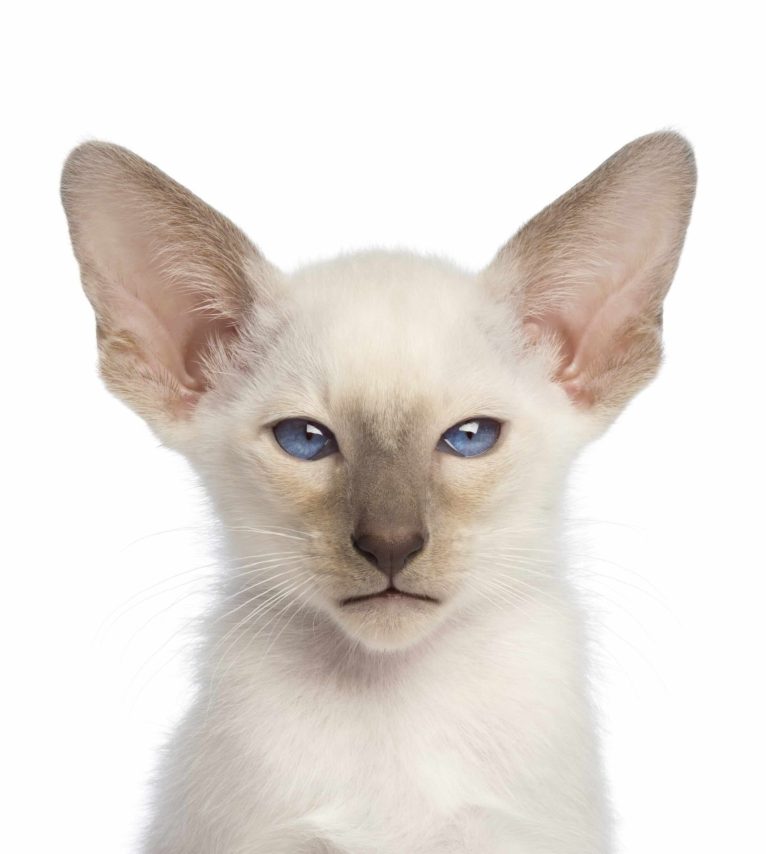
The Javanese cat is a type of Siamese cat. These cats look like typical Siamese cats and have long, silky hair that is a pleasure to stroke. They don’t have an undercoat, so their hair lays flat against their bodies, giving them a look of elegance.
These cats are full of energy, so they require plenty of stimulation through play, toys, scratching posts, and climbing shelves. They don’t mind spending time at home alone, but they do like attention, which means someone should be around at least part of the day to keep them company. If you’re looking for a cat with blue eyes that is lively and playful, this may be the breed for you!

The 3 Facts About Blue-Eyed Cats
There are a few things that you should know if you’re a fan of blue-eyed cats and perhaps want to own one someday.
1. A Lack of Pigmentation Is What Causes Some Cats to Have Blue Eyes
Blue-eyed cats are not that common, even though many breeds may have them. Blue eyes are the result of a lack of pigment (melanin) in the iris. Cats with pointed coat coloring may have a recessive albinism gene that contributes to their blue eyes.
2. A Significant Percentage of Cats With Blue Eyes Are Deaf
Deafness is a concern for white cats with blue eyes due to the genes that cause the lack of pigmentation. Up to about 22% of white cats with eye colors other than blue are deaf. Up to 40% of white cats with one blue eye end up being deaf. However, up to 85% of white cats with two blue eyes are deaf. Sometimes, these cats are only deaf in one ear. Deafness is not a big concern among pointed and colored cats that have one or two blue eyes.
3. All Cats Are Born With Blue Eyes
All baby kittens lack eye pigmentation when they are first born. It takes about 6 weeks for their pigmentation to develop. So, until then, they all have blue-gray eyes. If your kitten still has blue eyes after about 8 weeks, chances are that they will keep their blue eyes.

Frequently Asked Questions
Are Blue-Eyed Cats Hypoallergenic?
Unfortunately, blue eyes don’t make a cat hypoallergenic, and furthermore, there is no such thing as a hypoallergenic cat. All cats produce and shed allergens, the most common one is called Fel d1. This protein is considered an allergen and is responsible for the allergic reactions that susceptible humans have when interacting with cats. The protein is released through dander, saliva, and even urine. Cats with blue eyes can produce just as much of the Fel d1 protein as any other cat breed.
Do Blue-Eyed Cat Breeds Require Special Care?
Luckily, cats with blue eyes are just like any other cats (unless they’re white and happen to be deaf), so they do not require any extra healthcare that any other breed wouldn’t need. Regular brushing, nail trimming, and plenty of love are all you need to provide.
Are Cat Breeds With Blue Eyes More Expensive?
Yes, many cat breeds with blue eyes can be more expensive to purchase from a quality breeder for a few reasons. First, their blue eyes are exceptional and rare compared to all the cat breeds that don’t have blue eyes out there. Second, these cats typically have long, luxurious hair that make them elegant and sought after. Also, these cats are specially bred to maintain their lineage and ensure the development of blue eyes.

Final Thoughts
Some cat breeds have striking blue eyes—some of these breeds are rare, while others are just as common as those without blue eyes. Choosing a cat with blue eyes as a companion should be less about breed and more about compatibility. Compare your lifestyle to the needs of a cat that you’re considering adopting to ensure that you’ll make a great fit for each other.
See also:
Featured Image Credit: oussama el biad, Shutterstock











2 Responses
What is the truth about breeding A blue eyed cat to another blue eyed cat ? safe and acceptable or problematic??
Hi GG. The safety of breeding two blue-eyed cats hinges entirely on the specific underlying genetic cause of the eye color. For instance, if the blue eyes are linked to the colorpoint gene, common in breeds like Siamese or Ragdolls, the breeding is generally safe and introduces no extra health concerns. However, the situation becomes riskier if the blue eyes are a feature of the dominant white (W) gene, as this significantly elevates the risk of deafness, and breeding two such cats, especially if both have blue eyes, can lead to potential health and developmental issues in the kittens. The most dangerous scenario involves the rare Ojos Azules gene, where breeding two carriers is potentially lethal to the offspring. Consequently, before any attempt to breed blue-eyed cats, identifying the precise genetic background is a crucial and essential step.