Ask Dr. Paola – Litter Troubles, Chickens & Weird Breathing (September 2, 2025)
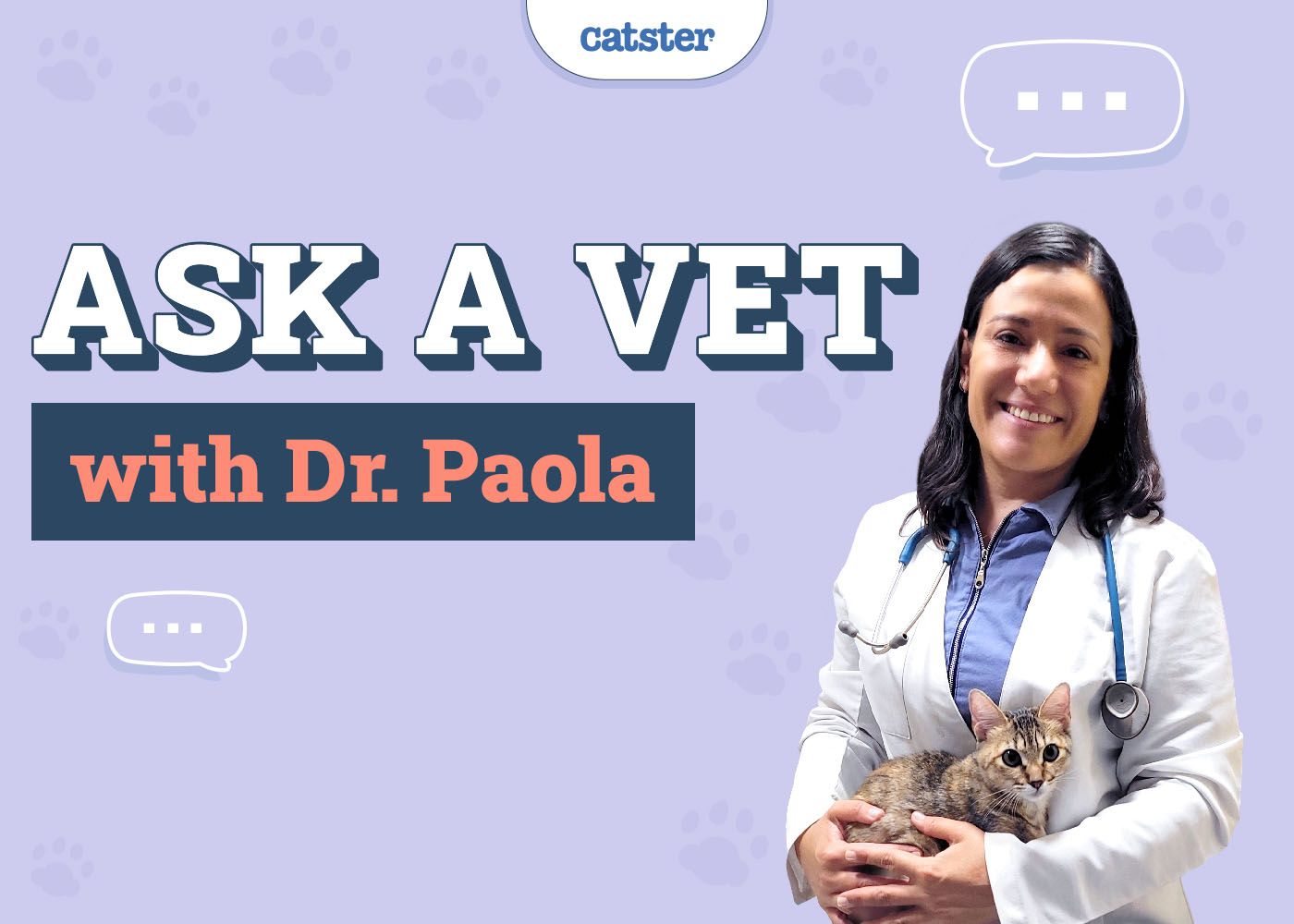
Welcome to our "Ask Dr. Paola" series, where every Monday we bring expert advice straight from Dr. Paola Cuevas (MVZ) to help our readers better understand their cat's health and well-being.
Whether you're a new pet parent or a seasoned cat lover, Dr. Paola is here to provide answers to your most pressing questions. From nutrition tips and preventive care to troubleshooting common behavioral issues, Dr. Paola is ready to offer insights that will keep your kitty happy, healthy, and feline fine. Stay tuned for expert guidance on a range of topics that matter most to you and your cat, so you can make informed decisions and provide the best possible care for your furry companion.
Have a question? Send it in here!

Help! My Cat is Always Rubbing!
"We have a 2-year-old, neutered male cat, Cosmo, that we adopted from a local shelter when he was about 12 weeks old. We have never had any issues with him using the litter box until recently, when I went on a 2-month vacation, and my husband took on the responsibilities of taking care of Cosmo. While I was gone, he started urinating on a small concrete pad in our laundry room instead of using the litter box. I was (and still am, I hope) Cosmos’s “human,” so we had a routine every day which included playing, cuddles, and brushing him each evening before bed. I also took care of the day-to-day things that are required when you have a cat. When I was away, although my husband was taking care of the litter box and food/water, Cosmo wouldn’t allow my husband to play with him or brush him.When I got home from my trip, I cleaned the concrete as best I could and put pee pads down. I’ve sprayed the area with an enzymatic spray, placed aluminum foil on the area, and sprayed vinegar on the area. And although he does urinate in the litter box now, he continues to urinate on the concrete. When using the pee pads, I checked to see if there was any sign of blood in his urine, but it looked normal. I am at my wits’ end with this. Any suggestions as to how we can stop this behavior?" - Jeannie
Hi Jeannie,
Thank you for sharing Cosmo’s story in such detail; it really helps to understand the situation. Cats are very sensitive to changes in their environment and routine, and what you describe sounds like a stress-related response that became a new habit while you were away. Even though his urine looks normal to the eye, it is still important to rule out medical causes such as a urinary tract infection or bladder inflammation, since these conditions can cause discomfort and lead cats to associate the litter box with pain, making them choose alternative spots. A veterinary visit to check his urine and overall health would be the first step.
If medical issues are ruled out, the focus shifts to behavior and environment. Since Cosmo clearly formed a strong bond with you, the disruption of his daily routine may have created stress and reinforced this new urination spot. Concrete is particularly tricky because it is porous, so urine soaks deep into it and lingers even after surface cleaning. The best way to address this is to saturate the area with an enzymatic cleaner designed for pet urine, letting it soak for several hours or overnight so the enzymes can reach deep into the pores. This may need to be repeated, and if odor persists, sealing the concrete with a pet-safe product is often the only way to truly block residual scent. Along with this, try blocking his access to the laundry room for a few weeks and reinforcing his bond with you through play, brushing, and routine. Synthetic Pheromone diffusers can also help reduce stress and encourage consistent litter box use. With time, consistency, and reassurance, most cats do return fully to their boxes once both health and environment are addressed.
Good luck!
Dr. Paola

Help! Do I Need to Worry About My Chickens Around My Cat?
"Daisy is always around me when I feed my chickens and little chicks, and she has never shown an interest in chasing them or hurting them in any way. The chicks even come up to her and seem to love her. But, I've had a few family members (none of whom own cats) tell me that this is dangerous and that I trust my Daisy too much. In 3 years, there's been no issues, and she's nearly 10. Should I keep trusting her?" - Charles
Hi Charles,
Daisy’s gentle behavior around the chickens and chicks speaks to her temperament, life experience, and the secure bond she shares with you. At nearly 10 years old, with a long history of peaceful coexistence, the likelihood of her suddenly turning predatory is low, though it is important to remember that cats are instinct-driven animals, and behaviors can sometimes shift under new circumstances or stressors.
It sounds as though Daisy has learned to associate the chickens with safety and routine rather than prey. That being said, I would still recommend some common-sense precautions. Just as we would not leave a toddler unsupervised around a swimming pool, even a trusted cat should not be left entirely unattended with vulnerable chicks. Supervision allows you to intervene quickly if the dynamics ever change, and it helps reinforce positive interactions. With your mindful presence, Daisy can continue to be part of this peaceful little community, and you can feel confident that you are balancing trust with safety. But do keep an eye, please, things can change in a second.
Sincerly
- Dr. Paola

Help! My Cat Always Seems Out of Breath!
“Dear Dr. Paola,
Ever since Silver was a kitten, she has made this weird sound like she's out of breath a quick like outtake of air, like she sucks in a quick breath and lets it out quickly ,almost like a cough/sneeze, if that makes sense. Why does she do that? She is 3 years old and still does it if she gets really excited or angry. Any ideas?" – Christine
Hey Christine,
The way you describe Silver’s breathing episodes sounds very much like what we call a “reverse sneeze.” This is a fairly common occurrence in cats and dogs, where the soft palate or nasal passages become irritated, leading to a sudden spasm. It creates that characteristic snorting or honking sound, almost like the pet is trying to suck air inward quickly. Excitement, sudden movement, or environmental irritants such as dust can sometimes trigger these episodes.
The good news is that reverse sneezing is usually harmless, especially if Silver has been doing this since kittenhood, remains otherwise healthy, and the events are short-lived. However, because signs that involve breathing can sometimes overlap with other conditions like asthma, nasal polyps, or airway irritation, it is always best to have your veterinarian listen to her lungs and upper airways to be certain nothing more concerning is at play. A brief exam provides peace of mind and ensures you are not missing an underlying cause. In most cases like Silver’s, this becomes simply part of her unique behavior rather than a health threat.
Best,
Dr. Paola
This article is a part of our weekly Ask Dr. Paola series
Expert cat care, straight to your inbox
News, insights, and useful advice, delivered to you.

No spam — unsubscribe anytime.
By signing up, you agree to our Terms & Conditions and Privacy & Cookies Policy.
How useful was this post?
Click a star to rate. You can leave written feedback afterwards. (We read all feedback.)

Catster is a cat magazine and cat website where cat lovers come together and get expert advice about cat behavior, cat health and cat news.