How Do Vets Deworm Cats: Typical Procedure (Vet Answer)

In this article
Over the last few years, "animal dewormer" has frequently been in the news—and not for use in your beloved pets. As veterinarians, we approach intestinal parasites from a preventative standpoint and also a treatment standpoint after infection has been established. But what does that mean for your cat? How can you help prevent intestinal parasites and should you be concerned about deworming them if they are already infected?

What Are Intestinal Parasites?
Intestinal parasites are different types of worms or protozoa (single celled organisms) that can live, reproduce, and negatively affect the gastrointestinal tract of your cat. These worms can be anywhere from the stomach to the small intestines to the colon (large intestine), depending on the type of parasite. The side effects of parasite infection can range from no abnormal signs, to severe bloody diarrhea.
It’s important to keep in mind that these parasites will sometimes migrate through other body tissues during certain life cycles. Some parasites will migrate through the skin, eyes, liver, and lungs. This is important when speaking with a veterinarian and letting them know everything abnormal your cat has been doing.
If you're concerned about your cat's health we suggest you speak to a vet.
Sources of Infection
The two main sources of infection are fecal matter and fleas. If cats ingest fecal matter with parasites in it (most commonly the eggs, which are microscopic), these parasites are then able to infect that cat. Depending on the type of parasite, they may go through an entire life cycle within your cat, or just a partial lifecycle between moving to another host.
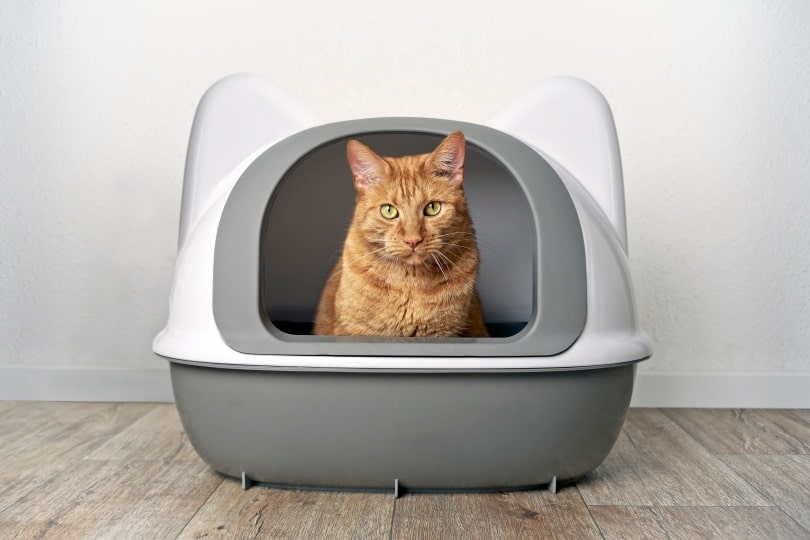
Your cat does not necessarily need to physically eat the feces. They may walk through a litter box where an infected cat already defecated. Your cat may also walk through grass or carpet that an infected cat walked through and had feces on their feet. Your cat may also drink out of a community water bowl that has been infected by another cat.
Tapeworms can infect your cat after they ingest fleas. We can see this commonly in cats because of their behavior to groom themselves. Often, owners will notice “rice-like worms” in the stool, which is often an indication of a tapeworm infection. Remember when treating your cat that flea preventative is also needed in addition to dewormer. Veterinarians recommend never getting your cats’ flea preventative over the counter as many of these products can cause severe tremors, seizures and even death in cats.

Parasite Prevention
Many types of flea/tick/heartworm preventatives also have parasite preventative in them. As stated above, flea preventative is also important to prevent tapeworms. Make sure that if you have multiple pets in your house, all pets are on flea prevention. If not, your cats may groom one another, or even groom the dog, ingest fleas, and eventually develop tapeworms.
When you go to a veterinarian with a new kitten, they will often deworm them due to the high incidence of parasites in young cats. If the cat spends a lot of times outdoors, the veterinarian may have you give them dewormer at home as well.
Please speak with a veterinarian about what prevention is best suited for your cat. They can give you the best information on what is recommended for just an indoor cat, multi-cat households and/or cats that spend time outdoors. Veterinarians strongly recommend not buying prevention or dewormer for cats over the counter at any store. There are many products that can be severely harmful and cause death. Other products may not be safe in cats or difficult to dose due to the cats small body size.
Never ever give a product labeled for a dog or other pet to your cat. Please be aware that cats are unable to metabolize certain products that can be safe for your dog. Administering canine or other species products to your cat may cause death.

Parasite Treatment
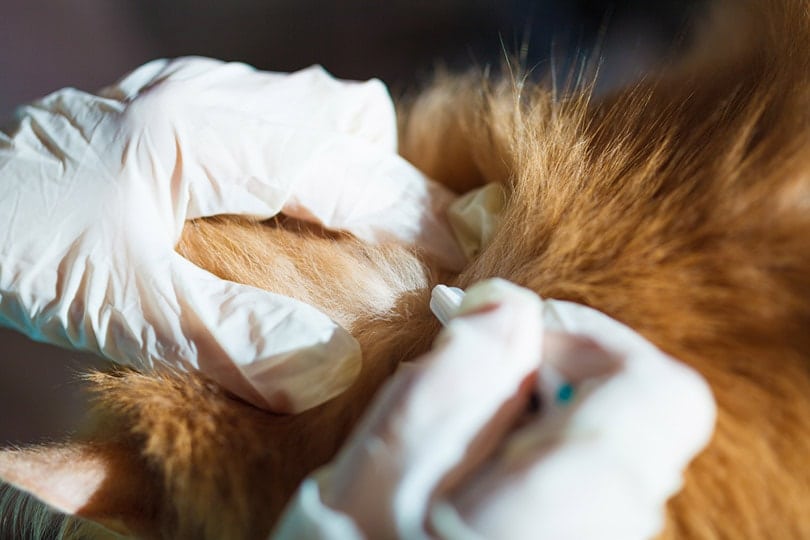
A veterinarian should be able to diagnose what type of parasite is affecting your cat. Sometimes there is more than one kind. Based on that, the veterinarian may recommend some type of medication that your cat can eat (either as a liquid, pill, or powder) or put on your cats skin that will help to eliminate the worms. There is also an injectable type of dewormer that a veterinarian may use if your cat has tapeworms.
Depending on the product and what type of parasites your cat has, it may only have to be given once. Others need to be given multiple days in a row. Some may even be repeated a few weeks later. The reason for the different protocols is that different medications work differently.
Some medications work at the larval stage to help eliminate the parasites. If your cat has parasites that are outside the larval stage, you may need to give the medication more than once or for multiple days in a row. Other types of medication work to dislodge the adult worm and eliminate them, allowing them to be given only once or repeated only one time.
Is OTC Dewormer Safe for My Cat?
A veterinarian can best recommend the medication that will work based on what type of parasite infecting your cat. As with OTC flea preventative, never purchase OTC dewormer for your cat. Most OTC products are not labeled for use in cats and can be severely harmful if given to a different species than what the label says.
We also never recommend any type of home remedies such as garlic, mineral oil, fleet enemas, vinegar, etc. Each of these remedies carries their own risk and side effects. Not only will you not treat the underlying parasites, you will end up doing more harm to your cat than good. Deworming products through a veterinarian are affordable and should be the only products used at the prescribed dose.

If I Don’t See Worms in the Stool, Then My Cat Doesn’t Have Parasites, Right?
Not always! Cats may defecate out the adult worms which are often visible to the naked eye. However, if your cat is a master at covering their stool in the litterbox, this may make it difficult to visualize any worms. Other times, cats do not defecate out the adult worms but, rather, the parasite eggs. These are microscopic. Special solution and testing is needed to visualize these eggs under a microscope.
Even with testing, not seeing adult worms or eggs is not a guarantee that your cat doesn’t have parasites. The infection may be so low the eggs or adults are not detected. Your cat may also be in a period of the parasite lifecycle where they are not actively shedding, or pooping out, the eggs to be seen. A veterinarian may choose just to treat your cat depending on your cat’s exposure history and risk for contraction.
Conclusion
Your cat should have a yearly fecal exam tested and multiple performed in kittenhood to monitor any evidence of parasites. A veterinarian may also recommend this test if your cat has diarrhea, weight loss, a bloated abdomen or seems ravenous without gaining any weight. Once the veterinarian diagnoses what type(s) of parasite your cat has, they can safely recommend an appropriate dewormer.
It’s important to remember not to give any over-the-counter flea/tick medications, dewormers or at-home remedies for parasites. Always speak to a veterinarian about what to do so as not to put your cat in danger.
Sources
Featured Image Credit: bdavid32, Shutterstock

Expert cat care, straight to your inbox
Vet-reviewed advice, behavior tips, and the best of Catster. Free, and you can unsubscribe anytime.
By signing up, you agree to our Terms & Conditions and Privacy & Cookies Policy.
Dr. Kim Podlecki DVM (Veterinarian)
A graduate of The Ohio State University College of Veterinary Medicine, Dr. Podlecki has more than 12 years of experience working with small animals in the United States. Dr. Podlecki worked almost exclusively in emergency and specialty medicine for more than 10 years before transitioning to relief in both general practice and ER. Dr. Podlecki also owns her own consulting company (renewvetconsulting.com) with the focus of helping veterinary hospitals prioritize their staff to promote a healthier internal culture.
Join the conversation
Ask a question, share your story, or send private feedback.