Is Vanilla Essential Oil Safe for Cats? Vet-Approved Facts & FAQ


In this article
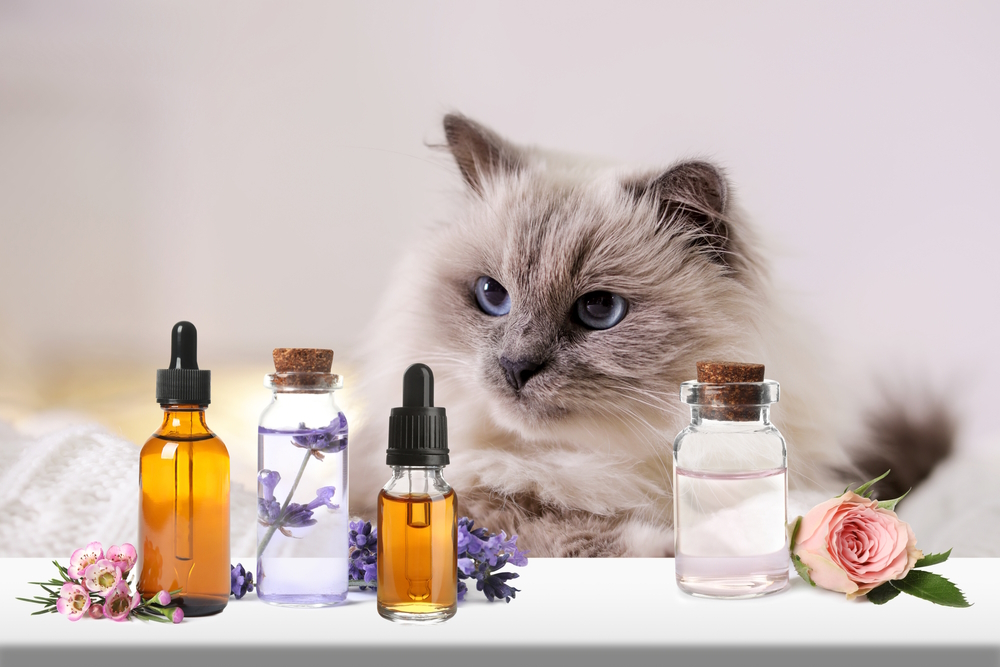
Essential oils come from extracting oils from certain plants and flowers, and vanilla essential oils come from fermented vanilla beans. You can use vanilla essential oils for many things, such as flavoring agents in foods and beverages, in oil diffusers for pleasant scents, and even in the pharmaceutical industry. But is vanilla essential oil safe for cats? The short answer is no, vanilla essential oil is not safe for cats.
In this article, we'll dive into vanilla essential oil and discuss why it's best to avoid using it as well as other essential oils around your cat.

Is Vanilla Essential Oil Safe for Cats?
Generally, no essential oils are safe for cats. According to the ASPCA, essential oils in their 100% concentrated form are toxic to animals when digested, inhaled, or put onto the fur, which penetrates down into the skin. Vomiting, diarrhea, and depression are common symptoms of essential oil poisoning in cats.
Essential oils are metabolized through the liver, and cats have a decreased number of liver enzymes that do not allow the oils to be metabolized effectively. Remember that cats are self-groomers, meaning if they get any essential oil on their fur, they will lick it off and digest the oil, and it doesn’t take much to pose a health problem.

What Are the Symptoms of Essential Oil Poisoning?
If you suspect your cat has digested, inhaled, or had direct contact with an essential oil, watch for these signs:
- Drooling
- Lethargy
- Difficulty breathing
- Smell the scent on the fur
- Pawing at the face or mouth
- Muscle tremors
- Burns or redness in the mouth (lips, tongue, gums) or the skin
- Vomiting
If you suspect that your cat is suffering from any of the above, it's best to contact your vet or animal poison control for more information and determine your next steps.
What Essential Oils Are Considered Toxic?
As we’ve mentioned, no essential oil is 100% safe for cats, but some are more toxic than others. Here are the oils to avoid at all costs:
- Cinnamon
- Citrus
- Peppermint
- Pine
- Sweet birch
- Tea tree
- Pennyroyal
- Ylang ylang
- Wintergreen
Tips for Keeping Your Cat Healthy & Safe
Many people love to use oil diffusers to give off a pleasant scent in the home. Before using one, we recommend consulting your veterinarian. And if you buy a diffuser, ensure it’s a passive one rather than an active one.
Passive diffusers work by evaporating the oil into the air, whereas active diffusers disperse droplets of the oil into the air, which can land on your cat’s fur. Plug-in, reed diffusers, and candle burners fall into the passive diffuser category and are considered the safer of the two. Some essential oils are more harmful than others, and vanilla essential oil is not classified as one that is harmful. However, it’s best to avoid any essential oils altogether for the safety of your cat and any other pets in the home.
Rinse your cat immediately with mild dish soap if you notice any oil on the fur. In general, the quicker you take action, the better the prognosis, whether your cat inhaled, digested, or made direct contact with the fur. Keep essential oils out of reach from your cat, and if you must have a diffuser, keep it in an area of the home where your cat cannot access it.

Conclusion
For the best chance of keeping your cat safe, we recommend not using any essential oils, whether it’s vanilla or otherwise. Essential oils pose too much of a health risk for your cat and are not worth the chance.
If you want to keep a diffuser in your home, opt for a passive diffuser and keep it in an area your cat cannot access. Also, consult your vet before using any essential oil as an extra precaution.
Sources
Featured Image Credit: Madeleine Steinbach, Shutterstock

Expert cat care, straight to your inbox
Vet-reviewed advice, behavior tips, and the best of Catster. Free, and you can unsubscribe anytime.
By signing up, you agree to our Terms & Conditions and Privacy & Cookies Policy.
Rachel Giordano is a Pensacola, Florida-based musician and writer. She lives with her partner and their two dogs, Sophie, a Boston Terrier, and Aero, a Border Collie/Sheltie mix. Rachel holds a Bachelor of Arts degree in communication and loves writing about all types of cat breeds. When she’s not writing about cats, she loves to write suspense/thriller novels. A musician by night and writer by day, she enjoys sharing her knowledge of the needs and requirements of our furry friends.
Join the conversation
Ask a question, share your story, or send private feedback.