Russian Blue Cat Health Problems: 7 Vet-Reviewed Issues

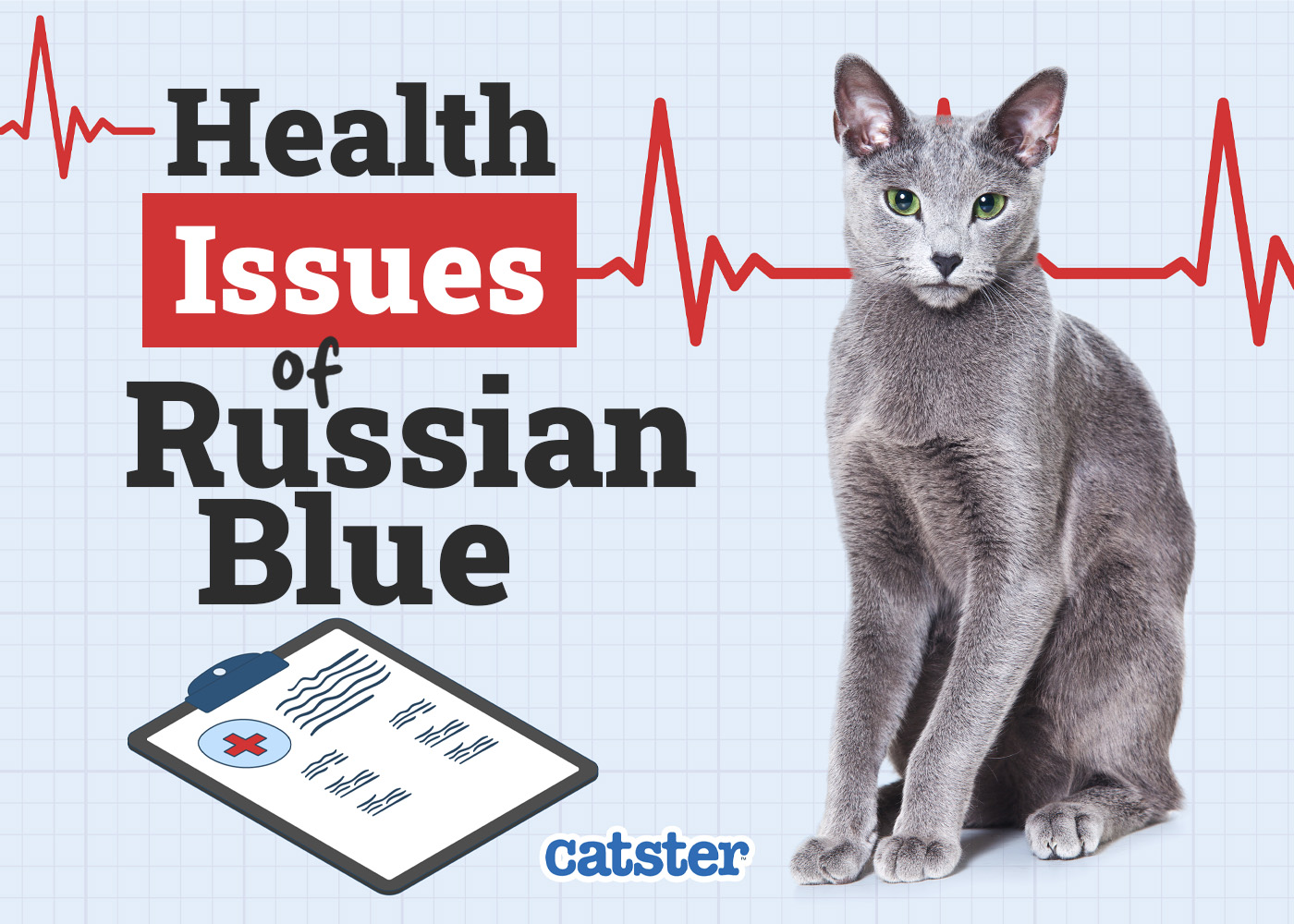
Russian Blues are a beautiful cat breed known for their playful demeanor and highly intelligent mind. They’re great for families looking for a cat that can hold its own and won’t need constant attention and affection from its owners.
If you’re considering adopting a kitten of this breed, you might find yourself wondering if they’re prone to any particular health condition or disease. Generally speaking, Russian Blues are a healthy cat breed that isn’t genetically susceptible to health problems like other pedigree breeds, mainly because they’re a naturally occurring breed. That said, there are a few conditions that Russian Blue owners should be on the lookout for.
Keep reading to find the seven most common health issues found in Russian Blues.

The 7 Common Russian Blue Cat Health Problems
1. Obesity
According to PetMD, Russian Blues love to eat and aren’t afraid to ask their owner for seconds or thirds after a meal. This makes the breed susceptible to weight-related conditions, especially if owners are prone to giving in to their pet’s whining.
The good news is that obesity is an entirely preventable condition. The best way to keep your Russian Blue at a healthy weight is to measure out their food to ensure you’re providing them the exact nutrients they need to thrive and sticking to a regular feeding schedule.
You might also consider talking with your vet to determine a nutrition plan that will work best for you and your pet. Your vet can give you some great food recommendations as well as feeding guidelines to follow to prevent obesity.

2. Diabetes Mellitus
Pumpkin Pet Insurance commonly sees diabetes mellitus in Russian Blue cats. Since this breed is prone to obesity and obese cats are four times as likely to develop diabetes than cats at an ideal weight, it is not surprising to hear that diabetes is often seen in Russian Blues.
Diabetes occurs when a cat’s body is not able to produce the amount of insulin it needs to convert the sugar in its blood into cellular energy. Cats need sugar (glucose) for energy, but when glucose is in the blood, it needs insulin to “unlock” the door to the body cells. Insulin attaches itself to cells and tells the body when the time is right to start absorbing the glucose. When this process occurs, the fat deposit cells, liver, and muscles can receive fuel while simultaneously lowering the amount of glucose in the blood.
Cats with Type I diabetes have high concentrations of blood glucose levels because the body cannot keep up with insulin production. Cats with Type II diabetes have high glucose levels because the body’s cells are not appropriately responding to the insulin. In both types of diabetes, the cells are unable to access the nutrients necessary even though there is an appropriate amount of sugar in the blood because insulin is unable to transport this sugar from the blood into the cells that require it. Type ll diabetes is the most common in cats.
The most common signs of diabetes are weight loss despite a healthy appetite and a marked increase in thirst and urination.

3. Eye Issues
Like most cats, Russian Blues can develop problems with their eyes.
Pet Plan, an insurance company based in the United Kingdom, found that this breed can be more prone to conjunctivitis. Conjunctivitis occurs when the conjunctiva (a mucous membrane covering part of the eyeball and lining the eyelid) becomes inflamed. If your Russian Blue develops this condition, you may notice the following signs:
Conjunctivitis has a wide variety of causes including infections, scratches to the eye surface, allergies, or entropion (an abnormal inward rolling of the eyelid).
Pet Plan also suggests that glaucoma and cataracts are common eye issues in Russian Blues, but they don’t appear to occur more often in this breed than any other.
Bow Wow Meow, another pet insurance company, lists progressive retinal atrophy as another common eye condition that Russian Blues may be prone to. Progressive retinal atrophy refers to a group of degenerative diseases that affect the eye’s photoreceptors and eventually cause a decline in your cat’s quality of vision and could even lead to blindness.

4. Urinary Tract Diseases
Veterinarians with Pumpkin Pet Insurance say that Russian Blues may be prone to developing certain urinary tract diseases. Feline Lower Urinary Tract Disease (FLUTD) is any condition that affects a cat’s bladder or urethra.
Cystitis, a general term that refers to inflammation in the urinary bladder, has a wide variety of causes, including stress, infections, bladder stones, or not urinating often enough. Signs of FLUTD to be on the lookout for include:
Some cats may develop a complete urinary tract obstruction which makes it impossible for them to urinate at all. This is a medical emergency, and prompt veterinary care is necessary to prevent serious complications and even death.
While bladder conditions are not as preventable as something like obesity, you can take some steps to reduce the likelihood of your Russian Blue developing them.
Promoting good drinking habits is key. Provide water dishes for your pets in peaceful areas of your home. Some cats prefer running water fountains, while others like to drink only still water. Provide a few different types of options to determine which your cat likes best.

5. Polycystic Kidney Disease
Bow Wow Meow says that PKD is another common condition amongst Russian Blues. This condition is inherited, and signs will often start at a very young age. PKD causes multiple cysts to form in the kidneys that start off small but will eventually grow to be large enough that they can disrupt proper kidney functioning. If left untreated, PKD can eventually cause chronic renal failure.
This condition is the result of a single mutated gene abnormality. Every cat that is born with this abnormal gene will have PKD, but not every cat with PKD will develop any clinical signs of the condition.
While there is no specific treatment for PKD, your vet might recommend a special diet, fluid therapy, or medication to treat the signs.
The signs of PKD to be on the lookout for include:

6. Heart Disease
Pumpkin Pet Insurance treats a lot of Russian Blues for heart disease. This may not be a condition they develop based solely on their breed as many cats can develop heart problems, but it is important to include it in our list.
Hypertrophic Cardiomyopathy (HCM) is a condition where the heart’s muscle walls thicken causing a decline in cardiac function. HCM affects cats in their young adult years, but signs of the condition can rarely begin in kittens as young as three months.
Many cats with HCM live their lives without displaying any signs of the disease. When complications of HCM do arise, they can be sudden, severe, and even fatal. Congestive heart failure, irregular heartbeats, and thromboembolism can develop as a result of HCM.
Signs of HCM to look for include:

7. Dental Issues
Like most cats, Russian Blues can experience certain oral health issues. According to Pumpkin Pet Insurance, this breed often develops periodontal (gum) disease. This condition occurs when plaque begins building up so much that it forms a layer of tartar that leads to gum inflammation. If it is left untreated, the gums can begin to weaken and may even start regressing from the teeth. Dental diseases can lead to infections, tooth loss, and could even cause internal organ damage.
All cat owners need to take preventative steps to help prevent dental disease. You can do this by pledging to remove food residue from your cat’s teeth regularly through tooth brushing. Never use human toothpaste on your pets, though. Pet-specific kinds of toothpaste are safe to be swallowed and are available in flavors that your cat won’t despise.
Another way to prevent dental disease is through water additives, treats, or diets that prevent the accumulation of tartar. Look for the Veterinary Oral Health Council label on commercial foods and treats to determine if they’ve received the VOHC seal of approval. You can also check out this list of VOHC-accepted products for cats here.

Final Thoughts
Although the above health conditions sound scary and can be serious, there is no way to know for sure if your Russian Blue cat will develop them. Most of these conditions are just as likely to develop in cats of any other breed. Russian Blues are genetically sound and are at risk of the same conditions as any other cat breed. All you can do as a pet owner is provide the best diet and environment for your beloved Blue, and know you’re doing all you can do to ensure that your pet stays happy and healthy.
See also: How Long Do Russian Blue Cats Live?
Sources
Featured Image: Review News, Shutterstock

Expert cat care, straight to your inbox
Vet-reviewed advice, behavior tips, and the best of Catster. Free, and you can unsubscribe anytime.
By signing up, you agree to our Terms & Conditions and Privacy & Cookies Policy.
For Chantelle, writing and animals are the two driving forces in her life. Growing up on the Canadian prairies surrounded by pets, she now shares her home with five cats, two guinea pigs, and a bearded dragon. Chantelle, her husband, and their child pride themselves on being dedicated pet parent, even spending a fortune on wall-mounted cat shelves to provide their cats with an indoor jungle gym. When she's not snuggling with her cats or photographing their humorous moments, Chantelle is exploring the Rocky Mountains, rewatching her favorite Netflix series, and reading up on various random subjects.
Join the conversation
Ask a question, share your story, or send private feedback.