Get

In Your Inbox

Catster is reader-supported. When you buy via links on our site, we may earn an affiliate commission at no cost to you. Learn more.

The Dark Side of Cat Cloning: Cost, Process, Ethics & More

Weekly Mews Dark Side of Cat Cloning

In the almost three decades since the creation of Dolly, the world’s first cloned sheep, the technology of cloning has been tweaked and perfected to a point where biotech companies are now offering to clone our pets. Imagine being able to get another 14 or 15 years with our beloved cat, starting all over again from kittenhood. Sound too good to be true? Well, maybe it is.

No longer the stuff of science fiction, pet cloning companies are reporting waiting lists for their services, with demand increasing every day. And it’s understandable, of course. One of the hardest things about having pets is that their lifespans are so much shorter than ours, and we are destined to grieve the loss of our furry loved ones, often multiple times throughout our lives. While scientists haven’t quite cracked the code on extending our pets’ lives, they appear to have perfected the technology to allow us to relive them.

For just $1750, you can have your cat’s genetic material preserved and stored until you decide (or can afford) to go ahead with the next step: cloning. At around $50,000 a piece, it’s not surprising that only 20% of clients actually proceed with the cloning process, although it’s not clear whether that decision is down to cost or cold feet.

When you take a look at the cloning company websites, you’ll find lots of information about the cloning process, and how your carbon copy cat is created. In a somewhat complicated nutshell, cells are taken from your pet, cultured and preserved, and kept in storage until the green light is given to go ahead with cloning.

From here, your cat’s genetic material is removed from the cell and inserted into the empty egg (ova) from a donor cat. Once cell division has progressed to a specific stage, the embryo is transferred into the uterus of a surrogate feline.

PangoVet_The Cloning Process for Cats
Image credit: PangoVet.com

Peeking Behind the Cloning Curtain

What is notably missing from these websites are the details of the cats that make this process possible. We spent hours scouring different pet cloning websites, searching through FAQ sections and information leaflets, but could not find any information about where these donors and surrogates come from, and what happens when they are no longer needed.

So we sat down with Lauren Aston from Viagen, one of the leading pet cloning companies based in the US, to get some answers.

ViaGen Pets works with multiple dog and cat breeders to provide our services to clients,” says Lauren. Surrogate cats are used to produce a single litter, then are rehomed. “We work with an adoption agency to provide safe and loving homes for the surrogate moms.”

With in vitro fertilization, multiple embryos are transferred into the surrogate to improve the chances of a successful pregnancy. In humans, multiple viable fetuses is not necessarily the desired outcome, but for litter-bearing species like cats, pregnancy often progresses more naturally if there are more than one fetus. The cats typically give birth with little intervention required, but they are equipped to perform cesareans should the need arise.

Sometimes a client wants more than one copy of their pet, or they may have more than one cat they would like cloned. But what happens when multiple embryos survive to birth, but the client only wants one? Lauren tells us that Viagen will help owners rehome any unwanted kittens, which might not be as easy as it sounds given the number of cats and kittens already in need of homes in animal shelters across the country.

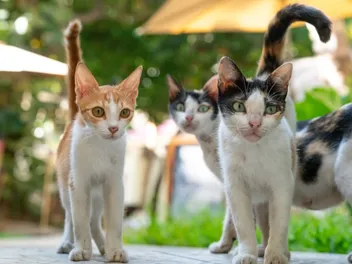
Double Vision - a couple of Viagen's clones

So here’s the truth about pet cloning:

  • Your cat’s clone may look identical to the original, but, due to some maternal influences that occur in utero, they might look slightly different. This is exactly what happened with CC, the very first cloned kitten, whose tabby and white fur looked quite different from her predecessor’s calico coat.
  • Your cat’s clone may behave in a similar way to the original, and have similar mannerisms and temperament, but they are not the same cat, and their personality will depend very much on their individual experiences and early socialization.
  • Your cat’s clone requires one cat to donate her eggs, a procedure that requires a general anesthetic to retrieve the eggs from the oviduct.
  • Your cat’s clone needs a second cat to be a surrogate mother after the embryos are inserted into her uterus.

This is a brave new world, and if you can afford it, the idea of cloning your favorite feline is a tempting one. Just make sure you know what to expect, and be aware that the true cost of cloning is more than just a $50K price tag.


Featured Image Credit: bellena, Shutterstock


Did You Know? 

  • Our breaking news articles are featured in our weekly emails. Don’t miss out on the latest and sign up for our newsletter below!

Want content like this delivered to you?

Sign Up For Our Newsletter

News, insights, expert advice, and everything cat

* By submitting, you agree to our Terms & Conditions and Privacy & Cookies Policy.


How useful was this post?

Click on a star to rate (you can leave written feedback after clicking submit)

Help us improve Catster for pet parents!

Your feedback really matters.

What did you like about this post? Also how can we improve it?

Join the conversation

6 Responses

  1. I really want to clone my cat but I can't afford it. She is a great and rare breed of cat. There are traits that are uncommon. Unfortunately she became pregnant at about 6 months and I did not take her to the vet meaning someone else did and she came back spayed. I have been really upset that this happened because I know the value of a natural life.

    Wishing I could have the cat cloned to preserve these natural rare breed of animal. We had been host to her mother and watched her grow from the very beginning. She is not like other cats. Great cat. Anyone looking for a cell donor of a rare breed can contact me. She is a beautiful cat. She spent 5 months with her mother who then disappeared one day in January. Her brothers disappeared about a month and a half before the mom did. There were one or two more kittens who disappeared in the first month. She came in and has been our cat ever since.

    The mother was a different color but very similar type of other attributes.

    1. Hi Johnny Cat
      We understand that you have a deep affection for your cat and believe she possesses rare and special traits you wish to preserve. It sounds like you've been on a heartfelt journey with her since she was born.
      We appreciate your interest in preserving rare traits, but we recommend focusing on celebrating the unique, loving cat you have with you now.

  2. Very thought-provoking post. Much as I will be devastated when I lose my cats, there is no way I would be comfortable with this cloning procedure. It’s also cruel on the surrogate mother – to have her kittens taken away. I don’t think this sort of service should be allowed.

  3. This sounds no different than cloning a pet, as if we would do the same with a child in case the horrible happens and we lose them. There is just something rather heartless about this idea.

    Sorry, I love my cat for who he is now, in this life, as he has grown and I have grown with him. I do not think cloning him as if he is a fine piece of china of which I should have an extra on hand should the original be lost or become damaged says much about someone who would do this. And no, I no more relish the idea of losing him eventually than anyone else. Having shared my life with cats all my life, I know full well what I am accepting when doing so. Nothing exists forever. We come into this world, we grow, we thrive, we reach our apex, then decline. And then the inevitable happens. It's called "entropy" and it is the most basic law of the physical universe. We become more evolved, caring, and loving beings through the experience of it. Life is not a carnival ride, it is harsh, brutal, and no guaranteed, despite the common messaging we are fed. Accept the pain, or wallow in stagnation in the endless pursuit of perpetual security and happiness.

    Opinions aside; after all opinions are nothing but beliefs anyway and facts being something quite different, I think we really need to do some serious self-reflection on this.

    Cats, like all living beings are not toys or simple objects and our attitudes to that effect which would prompt someone to clone one would suggest that is exactly how someone is thinking about their pet.

    To be more responsible about this, just the existence of the problem of the existence of so many homeless cats and dogs out there, it is an insensitive and selfish idea that we have to either bring one more into the world (as a clone even) or buy a specific breed just to satisfy our sense of aesthetics or desire. If you love the idea of a pet as a companion, rather than one more thing to own and possess, chances are you will see them as individuals in their own right. We do not choose our children, nor our friends based on their looks, or make demands on them for our acceptance. We should do the same with all living creatures, if not the world itself.

Leave a Reply

You’re very welcome to leave a comment or question. Please know that all comments must meet our community guidelines, and your email address will NOT be published. Let’s have a positive and constructive conversation.


Talk With A Vet Online

Peace of mind,
anywhere, anytime

Affordable vet advice

Are Polydactyl Cats Inbred? Vet Approved Facts & FAQ

Cats have various physical traits that make them unique. For example, some cats are short and squat, while others are long and slender....

10 Pet-Friendly Hotels in Denver, CO (2026 Guide)

Denver is a shining jewel of Colorado, loaded with culinary delights, educational museums, top-shelf breweries, and its fair share of well-regarded sports teams....

Why Does My Cat Hug My Arm & Bite Me? Our Vet Answers & Explains

Cats are curious creatures, and any pet lover who owns one can tell you it’s true. A cat can be perfectly happy with...

Persian Kittens for Sale in Washington: Breeders List 2026

Catster advocates for adopting before shopping, though we fully understand there are many reasons for seeking a breeder. So, we encourage it to...

More related

Do Cats Have Healing Powers? What the Research Says

Cats are known for being cute and quirky, but did you know that they could be healing too? Cat ownership is a rewarding...

Where to Put a Litter Box in a Small Apartment: 4 Vet-Approved Places

Do you live in a small apartment and have a cat or two living in that apartment with you? We all love our...

Omlet Cardboard Cat Scratching Post Review 2026: A Detailed Look

As a devoted cat owner, I amalways seeking the perfect solution to satisfy my pets’ natural scratching instincts while minimizing damage to furniture...

Why Do Cats Cover Their Face When They Sleep? 5 Likely Reasons (Vet-Verified)

Cats are adorable when they sleep, which is good because they spend so much time snoozing throughout the day and night. You have...

Keep reading

Can Cats Eat Coconut Oil? Vet-Reviewed Nutrition Facts & FAQ

Coconut oil has long been used for cooking, particularly in South Asian cuisines. It appears to have some health benefits, and some studies suggest it may increase fat burning and decrease hunger in some people. But what about cats? Is...

Can Cats Eat Coconut Oil

Savannah Cat Health Problems: 8 Vet-Reviewed Issues

The Savannah Cat is a large cat breed that’s known for its intelligence, playfulness, and athleticism. The Savannah Cat hybrid is the result of breeding a domestic cat with a Serval wild cat. These first offspring are then bred again...

Savannah Cat Health Problems

The Importance of Regular Cat Checkups: 4 Vet Reviewed Benefits

Cats are biologically very different from humans, but what they have in common is a need for regular wellness checks. Even healthy cats should be examined at least once a year by a qualified veterinarian to ensure they are fit...

vet checking up the cat

Do Cats Feel Remorse or Guilt the Same Way Humans Do? Dealing With Bad Behavior (Vet-Reviewed)

While your beloved cat feels connected to you, he won’t feel bad if he pees or poops outside the litter box, scratches up your furniture or does something outrageous in your home that creates chaos. Unlike us humans who feel...

Sad, calico cat sitting, looking through small front door window on porch

Why Does My Cat Pee on Plastic Bags? 6 Vet-Reviewed Reasons & Solutions

If you’ve ever come home to find that your cat has peed on a plastic bag, you’re not alone. This odd behavior is surprisingly common in cats for a variety of reasons. The reasons could be as plain as a...

cat lying inside a plastic bag

Why Do Cats Bury Their Poop? 3 Vet-Verified Reasons for This Behavior

Burying items, especially waste, is not at all uncommon in the animal kingdom. Dog owners have long witnessed this behavior from their canine pals, who love to bury all sorts of goodies. But cat owners observe their cats carefully burying...

two cats looking at the litter box

Can Cats Eat Pumpkin Puree? Vet Approved Facts & Nutrition Guide

When people think of pumpkins, they usually think of falling leaves, bonfires, chilly temperatures, and seasonal treats. However, did you know that some cats love pumpkin just as much as their pet parents? While your feline pal might show interest...

Can Cats Eat Pumpkin Puree

Why Do Cats Rub Against Your Legs? 3 Vet-Verified Reasons for This Behavior

Trying to understand any aspect of your cat’s behavior can be frustrating, and as all cat owners know, cats have a wide array of behaviors! Usually, a cat rubbing up against your legs is a good sign, and there is...

Cat,Rubbing,Against,Owners,Legs.

Love Cats? So Do We! Join the Catster Community

Stay informed with expert pet care insights delivered straight to your inbox! Discover professional guidance on animal behavior, feeding tips, trusted product picks, and much more.


Sign up for the Catster Email Newsletter

Stay informed with expert pet care insights delivered straight to your inbox! Discover professional guidance on animal behavior, feeding tips, trusted product picks, and much more.