Cats in College - The Rise of ESAs in College Dorms

Recent controversy aside, one of the best things about Hogwarts School of Witchcraft and Wizardry, apart from the magic, Quidditch, and having your end-of-year exams cancelled because some underclassman called Harry keeps running amok, was the fact that you were encouraged to bring along your pet cat. Of course, with the exception of Hermione’s marvellously moth-eaten ginger moggie, Crookshanks, and the ever-watchful Mrs Norris, the castle grounds seemed to remain suspiciously feline-free.
Though Crookshanks seemed to be a rule unto himself, roaming the castle grounds, presumably most cats were wisely contained within the student dormitories, something that is becoming a reality for an increasing number of college students.
Far from the magical halls of Hogwarts, college dorms across the country have seen a huge boom in feline residents, thanks to greater recognition of emotional support animal rights.

The Rise of the ESA
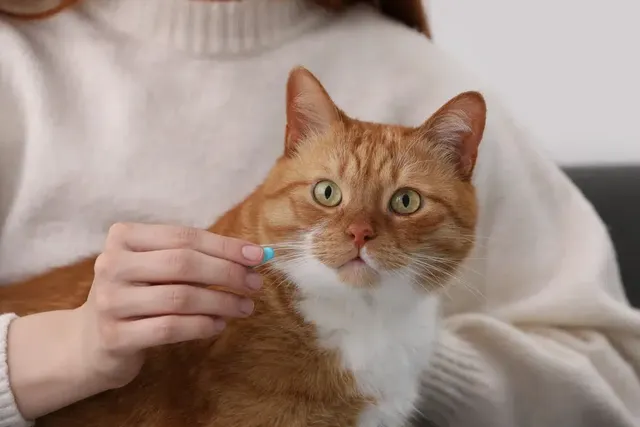
Over the last decade, and particularly since the Covid-19 pandemic, we have become far more aware of the prevalence of health conditions such as anxiety, depression, ASD, and ADHD, and how they impact the day-to-day lives of those affected by them. In addition to tools and strategies like medication and talking therapies, emotional support animals (ESAs) have emerged as an effective way to help people more confidently navigate situations that were previously inaccessible to them.
The term ‘service animal’ now encompasses a far greater population than just guide dogs, though the law is still trying to catch up with the changes, with rules regarding shoulder-surfing support cats still up for debate in some places. Although progress is being made, there are undoubtedly plenty of people who exploit the relatively easy process of having an animal given ESA status, blurring the lines between genuine cases and those taking advantage.
One area that has seen quite a steep rise in ESA cases is tertiary education.
Campus Cats
For most students, college life is filled with excitement and discovery, but for some, the transition can be overwhelming. In most cases, it’s simply a case of taking a bit of time to settle in, but when you are crippled with anxiety to the point of incapacity, it’s going to take more than a few mixers or ice-breaker events to get that parasympathetic nervous system under control.
Enter: The College Dorm Cat

Until recently, rules regarding keeping pets or animals in dorm rooms were a pretty straightforward ‘Don’t’, with the exception of service animals like guide dogs, hearing dogs, or seizure detection dogs. However, changing perspectives on ESA status have paved the way for cats to matriculate at many university and college campuses around the country.
Naturally, this doesn’t mean that you should expect to see cats lining up in the cafeteria or signing up for Philosophy 101, but you may start to notice the odd feline face peering out from dorm room windows.
Can Anyone Bring an ESA to College?
This isn’t simply a free-for-all to bring your pet to college, and certain steps and stipulations must be followed to qualify for an ESA on campus. Rules and guidelines will vary between establishments, and the fears, phobias, and allergies of fellow residents also need to be considered before moving in your four-legged friend. However, according to ESA Doctors, tenants have a right to be accompanied by an emotional support animal in their homes, even in buildings that prohibit pets. These rules apply to most types of housing, and universities are not exempt.
Provided students can provide a supporting letter from a licensed healthcare professional, an ESA cannot be turned away without justifiable cause. However, as universities become more wary of students fraudulently exploiting this ruling, you can expect the requirements to get a lot stricter in the future.
Yay or Nay for the College Dorm ESA?
There is no doubt about the positive impact of an ESA on the social interactions, mental health, and stress levels of students who would otherwise struggle to adapt, drop out, or worse. However, there are some pretty significant problems with this warm and fuzzy movement.
Other Students
As mentioned above, not everyone loves animals. Some have a strong aversion to any creature of the non-human variety, while others can suffer from severe phobias. And even mild allergies could become a major issue if you’re sharing a hallway with a collection of furred or feathered co-eds.
For cats in particular, litter box hygiene could be a huge sticking point, especially when you think of how far and wide cat litter is known to scatter.
The ESAs
While emotional support animals are generally granted residential privileges, they are not permitted in classrooms. Consequently, these companion animals would need to be left in dorm rooms for extended periods when their designated human is in class. Additionally, most campus accommodation tends to be somewhat limited on space, so the size and temperament of a live-in cat (or dog) needs to be considered; our emotional support should not come at the cost of their welfare.
The Verdict
For many of us, sharing your dorm room with your cat would be an incredible treat. For others, the stabilizing and calming impact of a feline presence can mean the difference between experiencing college or spending a lifetime paralyzed by fear. The impact an ESA can have on the lives of those who depend on them can be difficult to comprehend unless you have needed a similar type of interventional therapy.
However, along with the many positives of having ESAs permitted in college accommodation, it’s important to consider the potential impact this arrangement may have on fellow students and on the therapy animal itself.
What are your thoughts on ESAs in college dorms? We’d love to hear from you!
Feature Image Credit: Fusso_pics, Shutterstock
Did You Know?
- Our breaking news articles are featured in our weekly emails. Don't miss out on the latest and sign up for our newsletter below!
Expert cat care, straight to your inbox
News, insights, and useful advice, delivered to you.

No spam — unsubscribe anytime.
By signing up, you agree to our Terms & Conditions and Privacy & Cookies Policy.
How useful was this post?
Click a star to rate. You can leave written feedback afterwards. (We read all feedback.)

Dr. Karyn Kanowski BVSc MRCVS (Veterinarian)
Dr. Karyn comes from Queensland, Australia, and has lived in the UK for the past 10 years. In 2010, she graduated from The University of Queensland School of Veterinary Science and also has a Bachelor’s degree in Zoology. She is passionate about using evidence, experience, and owner collaboration to provide the best solutions for pets, and believes in making reliable information about animal health accessible to all. Dr. Karyn shares her home with five cats, four dogs, and one husband. When she is not in the scrubs, she spends her time writing, gardening, and cleaning up pet hair!