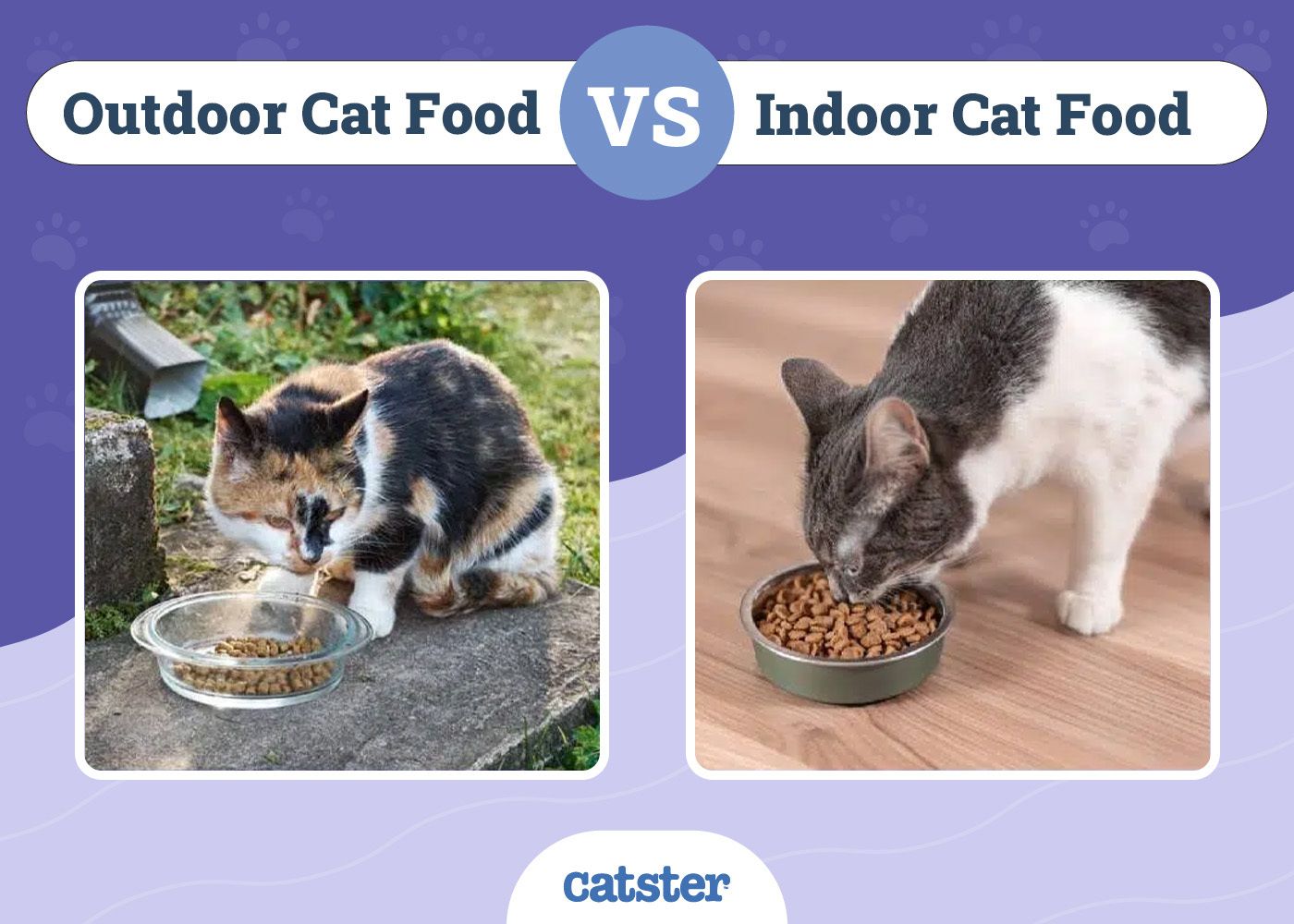
Indoor vs. Outdoor Cat Food: Vet-Reviewed Nutritional Differences


In this article
You’ve probably stood in the cat food aisle of your local grocery or pet store and marveled at the sheer number of options available. There is seemingly a special type of cat food for every cat out there. There are grain-free, raw, freeze-dried, kitten, senior, and many more options. Two types that can be very puzzling to cat owners are indoor and outdoor cat food. What is the difference between the two and which one does your cat need?
In this short guide, we explain the differences between indoor and outdoor cat foods. We also give you some tips about how to choose the best food for your cat’s needs.

Overview of Indoor Cat Food
A few brands of commercial cat food come in an option for cats that are exclusively indoor pets. Food formulated for indoor cats typically has fewer calories per serving than food designated for outdoor cats. This is because cats who live only indoors typically get less exercise than cats who roam outdoors. You can read the back of the package to see the total calorie content per serving or per container to give you an idea of how many calories a serving provides your cat with.

Is Indoor Food Healthy?
If your indoor pet gets sufficient exercise, they don’t necessarily need food intended for indoor cats and can be offered any nutritionally complete diet. A nutritionally complete diet has a mention or statement of it being able to meet all the nutritional requirements of your pet. These are often in the form of an approval from a relevant regulatory body. For example, in the US, pet manufacturers follow guidelines set forth by The Association of American Feed Control Officials (AAFCO).
Some indoor foods are perfectly healthy for your cats, while others might not be appropriate for your pet. It’s important to read the ingredients before purchasing a new kind of cat food. The main ingredients should be real meat from poultry, fish, beef, or another source. There shouldn’t be any artificial dyes or other fillers in the food. If you notice a bunch of odd-sounding ingredients that make you ask yourself “Should this be in here?” you probably need to select a different food.
Indoor foods typically have lower protein content, instead, they rely on high-fiber vegetable fillings. While it’s fine for cats to have some vegetable matter in their food, they still need a significant amount of protein. Taking away protein from their food doesn’t make a cat healthier. Instead, veterinarians suggest encouraging your cat to get more exercise.
One benefit, however, of the higher fiber levels in indoor foods is they help move things through the digestive tract more easily. This can be helpful if your cat is prone to hairballs as the fiber will help clear the hair from the digestive tract. However, in a strict sense, cats don’t have a dietary requirement for fiber, and diets with added fiber will inevitably call for more frequent litter box maintenance, which might not be appreciated by all pet owners.

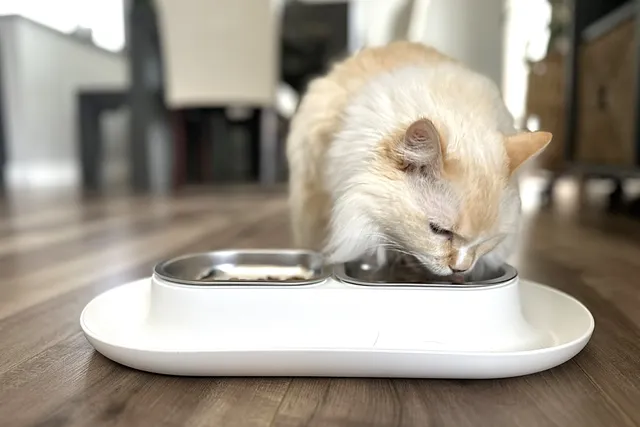
- NO MESS - The 360° tray on this cat food and water bowl set has a raised design to catch and contain stray crumbs and drips. Protect your indoors and floors from wet and messy meals!
- WHISKER FRIENDLY - Shallow and wide metal containers with flat bottoms ensure your kitty can enjoy mealtime free from whisker fatigue!
- CHEW-SAFE MATERIALS - Kittens and cats love chewing on silicone and soft rubber - but it's a choking hazard. Our cat feeding station materials are anti-chew for a 100% safe feeding frenzy!
Feeding your cat a high-quality diet is important for keeping them healthy and happy. But it goes beyond the food you choose; the dishes they use also matter. The Hepper NomNom Cat Bowl is our favorite for its unique, five-star design that protects from whisker fatigue and promotes good posture which also aids in better digestion. As an added bonus, it’s beautifully crafted and offers a modern take on the traditional cat bowl that fits seamlessly with all home stylings. Learn more about the NomNom by clicking here.
At Catster, we’ve admired Hepper for many years and decided to take a controlling ownership interest so that we could benefit from the outstanding designs of this cool cat company!
What Types of Indoor Foods Are Available?
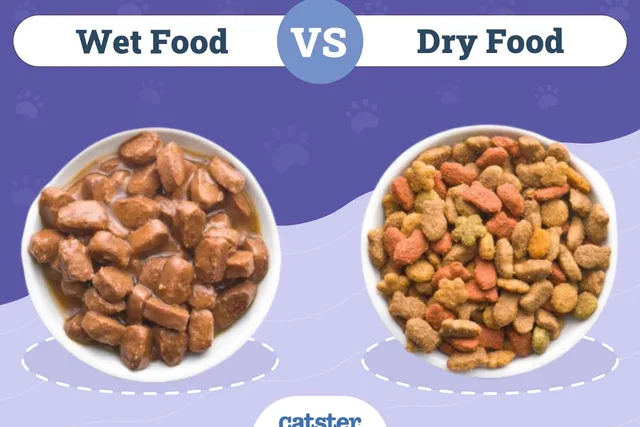
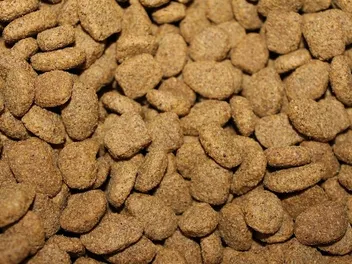
Indoor formula cat food comes in many different varieties from canned, to freeze-dried, to senior food, to raw, to dry kibble. The one that is best for your cat is the one they will eat! Cats can be choosy eaters, just like humans.
Pros
- Lower in calories
- Some high-protein options are available
- Come in a wide variety of types
- Can help with hairball control
- Might be a good choice for a very sedentary cat due to lower calorie counts
Cons
- Some brands replace protein with filler ingredients
- Can create a caloric deficit in your cat’s diet if they’re active
- Is not an alternative to exercise
- If you want a list of our favorite indoor cat foods, you can read about them here.
You should also discuss your options with a veterinarian to determine your cat’s specific nutritional needs.
Overview of Outdoor Cat Food
The only real difference between indoor cat food and outdoor cat food is the calorie count. Most cat foods designated as outdoor cat foods are just regular cat food without calorie cutbacks.

Is Outdoor Cat Food Healthy?
Food intended for outdoor cats can be considered healthy if it has high-quality ingredients. Just like with indoor formulas, you should look for food that lists real meat as the first ingredient. The best way to find food that is healthy for your cat is to look at the ingredient list. If you notice many fillers and additives, it’s not a good choice for your cat. Likewise, the food needs to be nutritionally complete and balanced.
If you find a food your cat enjoys and it has minimal ingredients, you’re probably off to a great start. If you have a very active indoor cat or one that doesn’t have a problem with hairballs, you don’t need to feed them an indoor cat formula.
One other key component to remember is that indoor cats, regardless of the type of food they eat, are often healthier and live longer than outdoor cats. Keeping your cat indoors protects them from parasites, predators, and accidents. There are plenty of ways to keep your cat active indoors, too, so you don’t have to worry about them gaining unhealthy excess weight.
The biggest drawback of outdoor cat food is that it’s very difficult to ascertain your cat’s nutritional needs if they roam outdoors. Granted, they may exercise more during their outdoor excursions, but they may also eat more while outdoors. This can be in the form of catching prey or being fed by well-intentioned samaritans. Furthermore, some outdoor cats aren’t necessarily active and may enjoy their outdoor time relaxing somewhere and simply enjoying the sights and sounds of the neighborhood.

What Types of Outdoor Foods Are Available?
Like indoor formulas, outdoor foods are available in wet, raw, freeze-dried, and kibble styles.
Pros
- Higher in calories than indoor formulas
- Great for active cats
- Available in many types for all cat palettes
Cons
- Higher in calories and can cause weight gain in inactive cats
- Many brands use unhealthy fillers and preservatives
- Difficult to ascertain an outdoor cat’s nutritional needs.
- If you want a list of our favorite outdoor cat foods, you can read about them here.

Conclusion
Next time you shop for cat food, you don’t have to stress about the many different options on the shelves. Of utmost importance is making sure the food is nutritionally complete and balanced for cats. The best food for your cat is one that contains high-quality ingredients and suits their caloric needs. The biggest difference between indoor and outdoor cat food is the calorie content. If you’re still uncertain about what your cat needs, ask your veterinarian for guidance.
Featured Image Credit: Capri23auto, Pixabay, Seattle Cat Photo, Shutterstock
Expert cat care, straight to your inbox
News, insights, and useful advice, delivered to you.

No spam — unsubscribe anytime.
By signing up, you agree to our Terms & Conditions and Privacy & Cookies Policy.
How useful was this post?
Click a star to rate. You can leave written feedback afterwards. (We read all feedback.)
Christian started writing for a local newspaper as a teenager, and he's been involved in the publishing industry for most of his adult life. Combining his love of writing with a passion for animals, he is currently the Director of Editorial at Pangolia and the Editor-in-Chief at Catster.
Christian lives in the Philippines with his wife, son, and four rescue cats: Trixie, Chloe, Sparky, and Chopper.