Can Cats Eat Hay? Vet-Reviewed Nutrition Facts


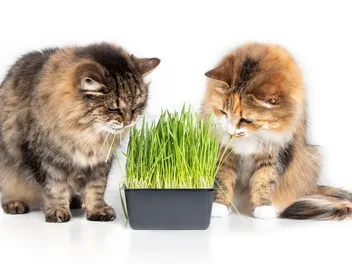
While cats are often notoriously picky about cat food, they do seem to like nibbling on various plants and human foods. If you have hay lying around the house, don't be surprised if your cat takes a bite or two. After all, it’s crunchy and interesting, and just like a baby, a cat tends to explore their world with their mouth.
Hay is not toxic to cats. So, you don’t have to worry too much if you see your feline snacking on it. While large amounts can make your cat sick or cause a blockage, cats will rarely eat this much.
That said, hay does not have any nutritional value for cats. It is basically just fiber, since cats cannot digest it. While there isn’t necessarily anything wrong with this, it does mean cats won't get any of their necessary nutrients from the hay. Therefore, they should not be filling up on hay instead of their usual cat food. Over time, this may cause nutritional deficiencies.
If your cat is snacking on hay, we included everything that you need to know in this article.

Is Hay Toxic for Cats?
There is (usually) nothing in hay that would poison your cat. It is completely non-toxic, so you don’t have to worry too much about your cat eating it.
That said, eating too much hay can cause digestive upset in cats. For instance, your feline may experience diarrhea and vomiting if they ingest too much hay. It simply won’t sit on their stomach well. Furthermore, cats are obligate carnivores, so they cannot digest hay. It simply works as fiber in their digestive tract.
If your cat eats too much hay, it may result in an intestinal blockage. Basically, this occurs when your feline eats so much hay that it clogs their digestive tract. Obviously, this leads to all sorts of issues. Blockages require veterinary attention. Your cat cannot digest any food with a blockage, so acting quickly is often necessary. Sometimes, your cat may even need surgery to remove this blockage.
While hay is not toxic for cats, you typically don’t want them eating too much of it. It can cause an array of digestive issues since cats cannot digest it well.

Is Hay Good for Cats?
Hay is basically just fiber. While fiber is important for your cat’s digestive system, they don’t need very much of it. It is vital to keep your cat’s digestive tract running well, though most cat food should have plenty of added fiber.
The problem is that hay has too much fiber. It doesn’t do anything else or provide any particular nutrition. Because your cat can’t digest it, it can cause digestive blockages and similar problems.
We are not saying that hay is completely bad. However, it isn’t exactly good either. In small amounts, it probably won’t have a huge effect on your cat’s digestive system or nutrition. However, you don’t want them eating too much hay, as this can cause blockages and all sorts of problems.
How to Prevent Your Cat From Eating Hay
Since cats should not really be eating all that much hay, you should keep it out of reach when possible. Most cats will not have a liking for hay and will only eat a nibble or two, which isn’t enough to be a problem. However, other cats may come back for more or develop a bit of an obsession.
When cats eat a non-food item like hay continuously, it is called pica. Often, there is an underlying cause of this disease, like a nutritional deficiency. Therefore, the best way to prevent them from eating hay is to fix the underlying cause of their pica, which will often require veterinary attention.
However, even after you handle their pica, some cats may continue to eat hay out of pure habit. This is the most difficult behavior to stop since there isn’t much you can do but change the habit forcefully. You should put the hay up out of reach and not allow your cat access to it. Over time, they may lose their taste for hay and not go after it anymore. However, at other times, you may need to hide the hay for the rest of their life.
You don’t really need to make your cat stop until they are consuming so much that it is becoming a problem. A nibble or two here and there typically isn’t a huge deal. It’s when they’re replacing their cat food with hay or eating so much that they risk a blockage that you need to consider taking steps to prevent its consumption.

Conclusion
Hay is not in a cat’s typical diet. Usually, cats only eat meat. However, some cats may develop a taste for hay or simply explore it with their mouth. In this circumstance, it can pose a threat. While a small amount of hay doesn’t matter that much, large amounts can lead to intestinal blockages and are a sign of pica.
Pica is caused by a number of issues, including compulsive disorder, stress, and dietary deficiencies. There is likely a genetic component, as some cats are more prone to this disease than others. Once the underlying cause is treated, the hay-eating usually subsides, but not always.
Generally, your best bet is to keep hay put away if your cat begins to eat it. Denying access is the easiest way to keep your cat safe. However, you don’t usually have to worry about a nibble or two.
Related Reads:
Expert cat care, straight to your inbox
News, insights, and useful advice, delivered to you.

No spam — unsubscribe anytime.
By signing up, you agree to our Terms & Conditions and Privacy & Cookies Policy.
How useful was this post?
Click a star to rate. You can leave written feedback afterwards. (We read all feedback.)
Kristin is passionate about helping pet parents create a fulfilling life with their pets by informing them on the latest scientific research and helping them choose the best products for their pets. She currently resides in Tennessee with four dogs, three cats, two fish, and a lizard, though she has dreams of owning chickens one-day!