Catster is reader-supported. When you buy via links on our site, we may earn an affiliate commission at no cost to you. Learn more.

Nutrition

Can Cats Eat Thyme? Vet-Reviewed Facts

By Christian Adams · Reviewed & fact-checked by Dr. Lorna WhittemoreVet Approved
Dr. Lorna Whittemore
Reviewed & Fact-Checked byDr. Lorna WhittemoreMRCVS (Veterinarian)
Lorna is a vet based in Cape Town, South Africa. originally from Scotland. Lorna loves to travel and has lived, studied, and worked on three continents. Lorna has 20 years of experience in small animal medicine and surgery, both in the charity and private sector, plus a further qualification in feline medicine.View authorThe information is current and up-to-date in accordance with the latest veterinarian research. Read about our vets
Share
Can Cats Eat Thyme

Cats are obligate carnivores, which means the vast majority of their dietary intake should come from meat and other animal-based ingredients. However, it is not unusual for cats to also be given fruit, vegetables, and certain herbs, especially in commercial cat food, due to the potential health benefits.

Thyme is a perennial herb typically grown for its ornamental and culinary uses. It is considered safe for cats and even proposed to help kill worms, improve digestive system health, and prevent fungal growth, hence its inclusion in certain feline foods and supplements.

Read on for more information about thyme and its potential health benefits to cats, along with alternatives and ways that you can give this herb to your feline family members.

divider single cat paw oct 2024

Potential Health Benefits of Thyme to Cats

1. Kill Worms

Many cats will suffer from intestinal worms at some point in their lives. They’re unpleasant and can cause gastrointestinal problems and illness. Thymol, which is found in thyme, has been shown to have some antiparasitic properties. However, it is not 100% effective and should not be relied upon to treat worms.


2. Prevent Bacterial Growth

Image Credit: brenkee, Pixabay

Thymol is a chemical agent that has been shown to have antibacterial and antifungal properties.


3. Improve Digestive Health

Thyme is said to improve digestive health with its antioxidant, antiparasitic, and antibacterial properties.

divider cat faces 2 oct 2024

Other Healthy Herbs

There is an herb called cat thyme that has similar effects to those of catnip but smells stronger. It is not related to thyme but is a relative of germander and does carry certain health benefits, such as stress relief for cats. Here are three other herbs that can have health or mental benefits for your cat.

1. Catnip

Image Credit: R. E. Beck, Pixabay

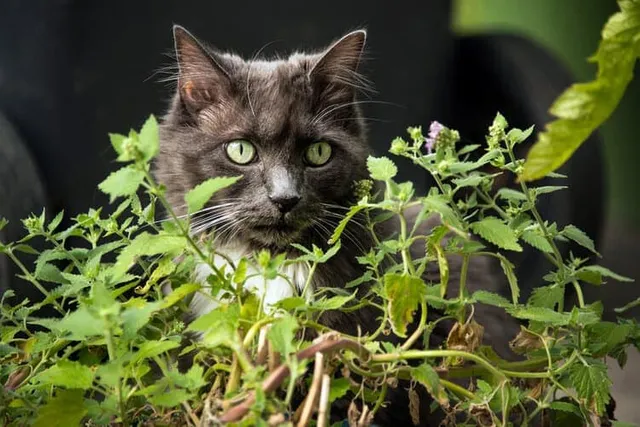
Most cat owners are aware of catnip and the seemingly intoxicating effect it can have on cats. It lifts their mood, reduces stress and anxiety, and can even be used as a topical application as part of a bath to help reduce itchiness and flaking skin. It doesn’t work on all cats, but it is considered safe, so there’s no reason not to give it a try.


2. Valerian

valerian plant
Image Credit: DEZALB, Pixabay

Valerian is given to humans to help them sleep but acts as a stimulant for cats. It tends to be a tasty favorite with cats, so it should be easy to feed them and is especially popular with lazy cats that need to lose weight because it will encourage them to exercise.


3. Licorice Root

Image Credit: psaguer, Pixabay

Licorice root is a supplement that a lot of cats like the flavor of. It can soothe itching skin and help alleviate certain skin conditions. It may also help combat digestive, respiratory, and inflammatory complaints in your pet kitty.

divider cat faces 2 oct 2024

How to Give Thyme to Your Cat

If you want to try feeding thyme to your cat, it is worth noting that not all felines will enjoy the flavor. First, ensure that the thyme that you choose is organic and washed well because while the thyme itself is non-toxic, any chemicals or pesticides that are on it may prove very toxic and could make your cat quite ill. Second, start with a small amount, and see how your cat reacts before offering a little more at a time. Typically, it is best to use a supplement or some kind of thyme product for felines because this will be portioned appropriately for your cat, to ensure that you are not administering too large of a dose.

If you are unsure about the type of supplement and the dosage, we recommend seeking veterinary advice and guidance before offering anything new to your pet.

divider cats oct 2024

Conclusion

Thyme is a popular herb used in cooking and as a medicinal aid for humans. It also has certain health benefits for cats, so it's safe for your kitty to eat and could prove beneficial to them. It has proven effective at killing worms, aiding digestive health, and preventing bacterial and fungal growth in laboratory conditions. Consult a vet to ensure that there is no reason to avoid giving it to your cat, and start with a small amount before potentially increasing the dose. Bear in mind that not all cats will enjoy the flavor of this herb.

Next on your reading list:

Sources

Featured Image Credit: maxmann, Pixabay

The Catster Newsletter

Expert cat care, straight to your inbox

News, insights, and useful advice, delivered to you.

No spam — unsubscribe anytime.

By signing up, you agree to our Terms & Conditions and Privacy & Cookies Policy.

Click a star to rate. You can leave written feedback afterwards. (We read all feedback.)

Christian Adams
Authored by

Christian Adams

Leave a Reply

You're very welcome to leave a comment or question. Please know that all comments must meet our community guidelines, and your email address will NOT be published. Let's have a positive and constructive conversation.

10 Herbs That Are Safe for Cats (& Ones to Avoid) Our Vet Answers

10 Herbs That Are Safe for Cats (& Ones to Avoid) Our Vet Answers

It’s natural to want to fill your home and garden with sweet smelling flowers and fragrant herbs, but if you also share your home with a cat, you’ll know that…

Dr. Samantha Devine
By Dr. Samantha Devine ·
Can Cats Eat Cilantro? Vet-Reviewed Nutritional Facts & FAQ

Can Cats Eat Cilantro? Vet-Reviewed Nutritional Facts & FAQ

Cilantro is a popular herb used in cooking all around the world, but can cats eat cilantro? The bottom line is that cats can eat cilantro without a problem, bu…

Christian Adams
By Christian Adams ·
Is Basil Safe for Cats? Vet-Verified Nutritional Facts & Safety Guide

Is Basil Safe for Cats? Vet-Verified Nutritional Facts & Safety Guide

Basil (Ocimum basilicum), also known as sweet basil, is a member of the mint family. It is native to India but grown across the world, especially as a culinary…

Christian Adams
By Christian Adams ·
Can Cats Eat Oregano? Vet-Verified Toxicity Facts & What to Do

Can Cats Eat Oregano? Vet-Verified Toxicity Facts & What to Do

Oregano is a popular and versatile culinary herb that’s often used in cooking all over the world, as well as for medicinal properties. Many common cooking herb…

Christian Adams
By Christian Adams ·

Can Cats Eat Rosemary? Vet-Verified Potential Benefits & Risks

If you like to cook for your cat, you might be tempted to sprinkle a little rosemary on their chicken. Or maybe you’ve brought home a rosemary plant and notice…

Christian Adams
By Christian Adams ·
Can Cats Eat Rosemary? Vet-Verified Potential Benefits & Risks

Can Cats Eat Catnip or Is It Just for Sniffing? Vet-Verified Facts

Everyone knows that cats love catnip. If you’ve never seen a cat’s reaction to the herb, you must because it’s hilarious. Some cats go crazy on catnip, while o…

Christian Adams
By Christian Adams ·
Can Cats Eat Catnip or Is It Just for Sniffing? Vet-Verified Facts

Can Cats Eat Black Pepper? Vet-Approved Precautions & Alternatives

People have been peppering their dishes for over 4,000 years since black pepper was first used in India. Since its discovery, it’s only grown in popularity and…

Patricia Dickson
By Patricia Dickson ·
Can Cats Eat Black Pepper? Vet-Approved Precautions & Alternatives

Can Cats Eat Mint? Vet-Verified Facts & Advice

The mint genus is a broad category of plants containing multiple species that cats will react to differently. If you're confused about the difference between c…

Christian Adams
By Christian Adams ·
Can Cats Eat Mint? Vet-Verified Facts & Advice

Can Cats Eat Parsley? Vet-Verified Facts & FAQ

Have you ever caught your kitty trying to take a nibble of the plants in your herb garden? While you may be asking yourself if your cat has turned into a veget…

Christian Adams
By Christian Adams ·
Can Cats Eat Parsley? Vet-Verified Facts & FAQ

Is Cat Grass Good for Cats? Vet Approved Facts & Care Tips

We think of cats as being strictly meat eaters, which is true. An adult cat’s diet should consist of approximately 26% of (animal-derived) protein, compared to…

Chris Dinesen Rogers
By Chris Dinesen Rogers ·
Is Cat Grass Good for Cats? Vet Approved Facts & Care Tips

Can Cats Eat Salad? Vet Reviewed Health Benefits & Warnings

Cats are obligate carnivores, which means they have to eat meat for proper nourishment. But every so often, some cats like to indulge in leafy greens. A cat’s…

Cassidy Sutton
By Cassidy Sutton ·
Can Cats Eat Salad? Vet Reviewed Health Benefits & Warnings

Can Cats Eat Dill? Vet-Reviewed Facts & FAQ

Are you looking for a cheap and effective treat for your cat? Or are you worried because you just caught your cat chowing down on your dill plant? Either way,…

Christian Adams
By Christian Adams ·
Can Cats Eat Dill? Vet-Reviewed Facts & FAQ

Love Cats? So Do We! Join the Catster Community

Stay informed with expert cat care insights delivered straight to your inbox! Discover professional guidance on feline behavior, feeding tips, trusted product picks, and much more.

You may opt-out at any time. View our Privacy Policy for more information.

The Catster site on a phone