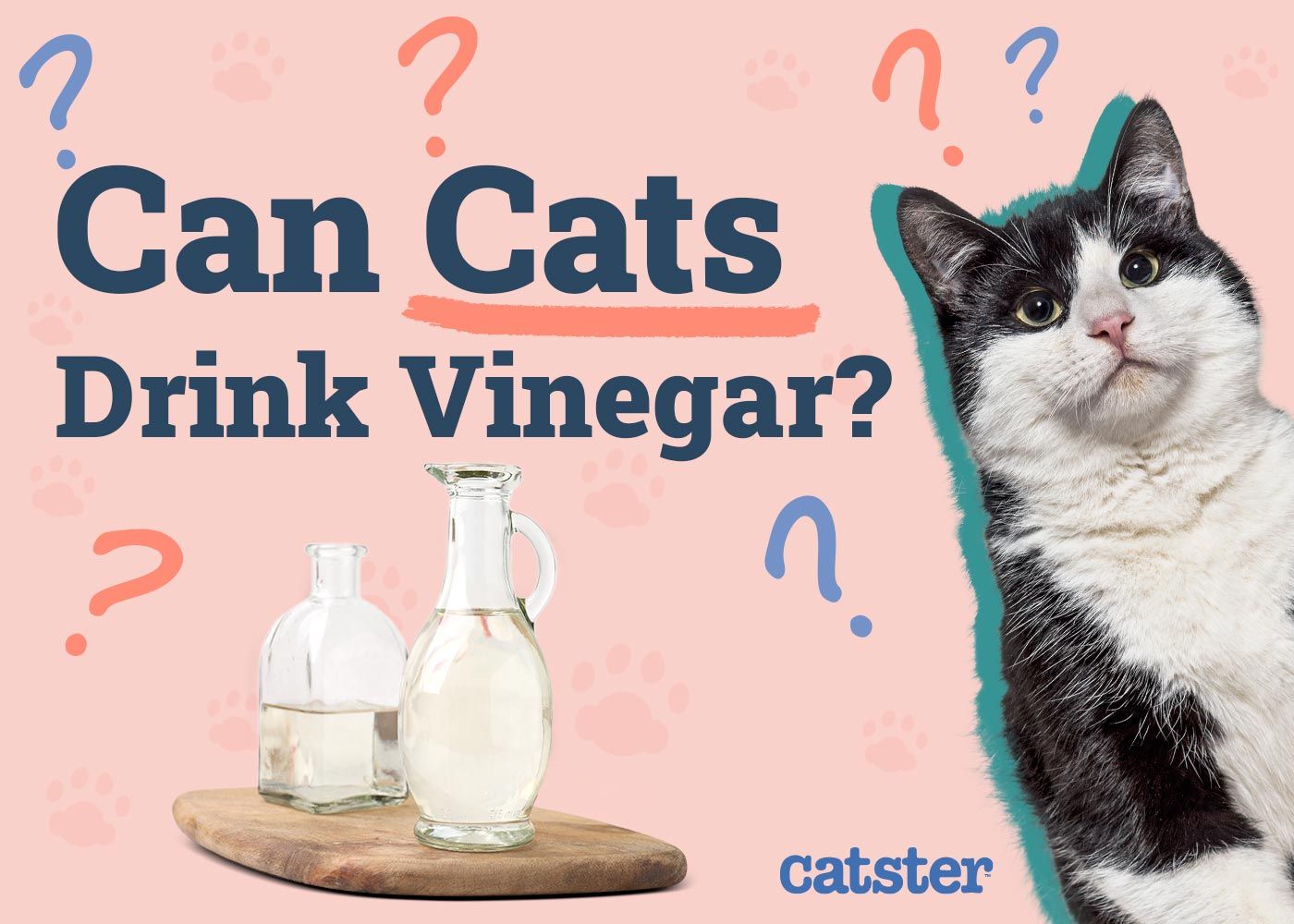
Can Cats Drink Vinegar? Vet-Verified Health & Safety Facts


Vinegar is one of those pantry staples that most people have in their kitchens. It can be used in salads, marinades, and homemade cleaners. Some people even add a splash of apple cider vinegar to their water for its researched health benefits.1
However, would your cat’s health benefit from adding vinegar to their diet? There is currently no scientific evidence that vinegar is a helpful or beneficial addition for cats. While vinegar is non-toxic to cats, it is extremely acidic and, especially undiluted, can irritate your cat’s mouth and stomach.
Let’s go over whether you should give your cat vinegar and its potential uses.

What Is Vinegar?
Vinegar is an aqueous solution of acetic acid that is made by fermenting substances that contain sugar, such as fruit or wine. The acetic acid percentage ranges from 5% to 17% by volume. The skill of making vinegar is thousands of years old.
To make vinegar, you usually need to ferment sugars to ethanol using yeast and ethanol to acetic acid using bacteria. People can make vinegar at home (apple cider vinegar is particularly popular). Add apples and some sugar to distilled, clean water and place it in a slightly ventilated container for several weeks. Wild yeast will eat away the sugars, causing some bubbles. Once the bubbles have subsided, you can remove the fruit and let the mixture sit again until the desired vinegar level is achieved.

Benefits of Giving Your Cat Vinegar
While there are claims that vinegar has health benefits, those studies were primarily conducted on humans. Unfortunately, no scientific studies have been done on the benefits of adding vinegar to a feline’s diet. Since there are no toxic ingredients in most kinds of vinegar (although some balsamic vinegar glazes contain unsafe spices), it is unlikely that a small amount of diluted vinegar will make your cat sick. Although, since vinegar has a strong odor, your cat might not even be interested in tasting it if added to their water or food.
Apple cider vinegar might help your cat with UTIs and mild upper respiratory infections, however, there is currently no data from studies to prove that it is effective or beneficial. If you want to use this home remedy, speaking to a vet first is essential. They will be able to guide you as to whether it is appropriate to give your feline based on their medical history and the severity of their condition. If a vet gives you the go-ahead, it's important to serve it safely, use good quality organic apple cider vinegar, and give no more than a teaspoon of diluted vinegar.
Dangers of Giving Your Cat Vinegar
As we mentioned before, vinegar is not toxic for your cat, but it is very acidic, and if ingested undiluted, it can cause irritation to their mouths and gastrointestinal issues like vomiting and diarrhea. Even diluted vinegar could be harmful if your cat has been diagnosed with kidney disease. Kidney disease affects how efficiently the body can process acid. Acidic vinegar is not something you want to give to a cat with kidney disease.
What About Other Vinegar Uses?
Fleas
Vinegar may have some repellent action toward insects, but it won’t kill fleas or deal with an infestation in your home. It may also cause skin irritation when applied directly to your cat and cause distress due to the strong smell. Although it can be used on furniture and bedding, you should consult with a vet and use other safe and proven commercial flea control measures to deal with a flea problem.

Ringworm
Apple cider vinegar has shown some antifungal action in studies, but it is not a proven treatment for ringworm and may cause inflammation and soreness when applied to the affected skin. Again, always speak to a vet for advice if your cat has a health condition such as ringworm.
Cleaner and Germ Killer
White vinegar is an excellent cleaner. It lifts stains and grime, doesn’t streak, and kills germs at a fraction of the cost of most cleaners. Fill a 16-ounce spray bottle with 8 ounces of vinegar and 8 ounces of water for an amazing cleaner and germ killer that works great around the litter box and for countertops.
Conclusion
While there have been touted benefits of people adding vinegar to their diet, there are no conclusive studies that cats will share these benefits. Vinegar is not toxic, but undiluted, it can irritate your cat’s mouth and stomach due to the acidity. Cats with kidney disease should not be given vinegar of any kind. They will not handle the high acid percentage.
Sources
Featured Image Credit: focal point, Shutterstock
Expert cat care, straight to your inbox
News, insights, and useful advice, delivered to you.

No spam — unsubscribe anytime.
By signing up, you agree to our Terms & Conditions and Privacy & Cookies Policy.
How useful was this post?
Click a star to rate. You can leave written feedback afterwards. (We read all feedback.)
Christian started writing for a local newspaper as a teenager, and he's been involved in the publishing industry for most of his adult life. Combining his love of writing with a passion for animals, he is currently the Director of Editorial at Pangolia and the Editor-in-Chief at Catster.
Christian lives in the Philippines with his wife, son, and four rescue cats: Trixie, Chloe, Sparky, and Chopper.