How to Stop Cats From Pooping in Your Garden: 8 Vet-Reviewed Methods


In this article
You work hard to keep your garden clean and beautiful, so the last thing you want is to deal with cat poop all over. Whether you have indoor/outdoor cats or neighborhood strays, there are a lot of ways to keep cats out of your garden without harm.
Discover eight ethical and effective methods to stop cats from pooping in your garden.

The 8 Ethical & Effective Methods on How to Stop Cats From Pooping in Your Garden
1. Install a Motion-Activated Sprinkler
Most cats don’t like water. Motion-activated sprinklers are a humane way to deter cats from spending time in your garden to poop, play with your plants, or dig up your mulch. While it may be startling for a cat, a sprinkler only shoots gentle bursts of water and won’t cause any real harm. It should only take a spray or two for the cat to seek other options. Plus, a motion-activated sprinkler ensures that it always turns on when cats come around for a consistent deterrent without overwatering your plants.
Pros
- Works only when cats come around
- Humane and harmless
- Inexpensive
Cons
- Requires installation
- Will startle cats
2. Build a Cat-Proof Fence

There are many options for cat-proof fencing for your garden. You can use a small privacy fence or wire fence with an angled top or net that cats can’t jump over easily. Vinyl is a good choice since cats can’t get a good claw grip to climb. The downside of a fence is that it obstructs the view of your garden, however.
Pros
- Can be visually pleasing (depending on the fence)
- Harm-free
Cons
- Can be expensive
- Requires installation
- Obstructs the view of your garden
3. Use Scent Deterrents
Cats have sensitive noses and find many smells unpleasant, including citrus, peppers, and coffee. You can bury orange or lemon peels in the dirt or plant herbs that are off-putting to cats, such as lavender, mint, or eucalyptus. Coffee grounds are also an effective way to deter cats.
Avoid using essential oils, however, which can be toxic to cats. The whole plants can be also, but they’re not as concentrated.
Pros
- Enhances the smell of your garden
- Easy to implement
- Natural, subtle deterrent
Cons
- Plants are toxic if cats touch or ingest them
4. Install an Ultrasonic Deterrent

Ultrasonic deterrents emit a high-pitched frequency to scare off cats. While we can’t hear the sound, ultrasonic devices emit a piercing sound that’s uncomfortable for cats and other animals. However, ultrasonic devices aren’t specific to cats. You’ll also irritate any other animals that can hear the sound in the vicinity, including dogs.
Pros
- Easy to install
- Inaudible to humans
Cons
- Also deters/irritates other animals
5. Create an Outdoor Litter Box
Provide another area that’s more attractive to your cat than your garden to encourage them to go elsewhere. A makeshift outdoor litter box in a far corner of your yard with sand, wood chips, or loose clay is more like an indoor litter box, which could be enough for cats to claim as their own territory. To make the area even better, provide some security with shrubs or small walls. The downside of this method is that cats will still come to your yard, however.
Pros
- Quick and simple
- Gives cats their own space
Cons
- May attract cats to your yard
6. Add Pebbles to Your Garden

Cats can be particular about their bathroom space. Instead of smooth earth, put stone chippings, pebbles, rocks, or netting in your garden. Cats won’t like the texture on their paws and will likely seek other options. This will change the look of your garden, however.
Pros
- Simple to set up
- Humane, does not cause the cat any stress
Cons
- Affects your garden’s aesthetic
7. Keep the Area Clean
Cats are habitual. If you leave cat poop in your garden, it may deter new cats, but it will encourage the current cat to return. Make sure you clean up their poop regularly to ensure the smell doesn’t linger and keep them coming back. This is extra work for you, though, and exposes you to parasites like Toxoplasma gondii, a disease that can cause fever, loss of appetite, and more serious symptoms in humans. Always wear gloves and wash your hands after cleaning cat poop in your garden.
Pros
- Straightforward
- Part of garden maintenance
Cons
- Extra work
- Risk of disease
8. Keep Cats Indoors

If the garden poop is coming from your own cat, try keeping them inside. In addition to keeping poop confined to the litter box, confining your cat inside is safer for the cat and wildlife. Cats that are allowed to roam outside are susceptible to disease and injury from other animals and people. In addition, outdoor cats are devastating for wildlife, particularly birds, and their predatory behavior will keep a lot of beneficial animals from visiting your yard.
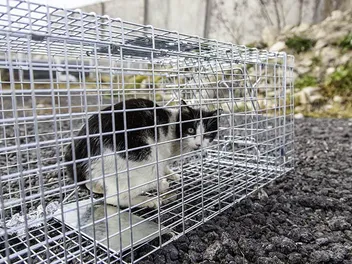
If the cats are local feral cats in the neighborhood, contact local cat rescues to see if they can help with trap-neuter-return (TNR). While this won’t keep all cats out of your yard, it helps to reduce the feral cat population and relocates cats to less-populated areas. You should also avoid feeding feral cats, as that will bring them around more and get them accustomed to your home and yard.
Pros
- Humane and responsible
- Protects wildlife
Cons
- Can be challenging for indoor/outdoor cats

Why Do Cats Poop in My Garden?
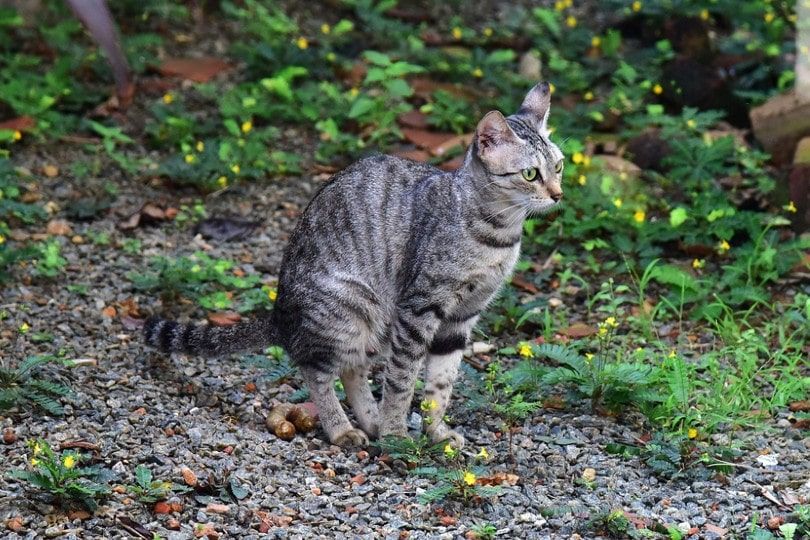
Cats that live outdoors have to make do without a litter box. In nature, the closest thing to a litter box is a garden. There’s plenty of space and soft soil, as well as some security provided by plant cover or a fence. Cats also learn which spaces are safe for them and mark their territory, so if they use your garden once and feel comfortable, they’re more likely to return.

Conclusion
Cats using your garden as a litter box cause a lot of problems, including extra cleanup for you and disease risk. Fortunately, the suggestions on this list are ethical and effective to make your garden an unpleasant place for cats and keep them from coming back.
Sources
Featured Image Credit: AjayTvm, Shutterstock
Expert cat care, straight to your inbox
News, insights, and useful advice, delivered to you.

No spam — unsubscribe anytime.
By signing up, you agree to our Terms & Conditions and Privacy & Cookies Policy.
How useful was this post?
Click a star to rate. You can leave written feedback afterwards. (We read all feedback.)
Nicole is a lover of all animals, especially of the feline variety. She's mom to four, three fur babies and a human baby. She and her husband, John, live on a large forest property down in New Zealand.
Their beautiful Burmese cat Baby (who is now 17 years old) was their first child, though he is now called Baby Cat since their human baby joined the party in 2022. The dogs Rosa and Mac also love cats, but the whole family agrees that King Baby Cat is enough cat for this household.
Nicole is the Director of Content Management at Catster and Pangolia. With a Bachelor's degree in Education and years of online experience, she shares her pet knowledge and the knowledge of other professionals with the world, aiming to improve pets and pet parents' lives.