Get

In Your Inbox

Catster is reader-supported. When you buy via links on our site, we may earn an affiliate commission at no cost to you. Learn more.

Do Cats Have Feelings? Feline Emotions Explained (Vet-Reviewed)


Share

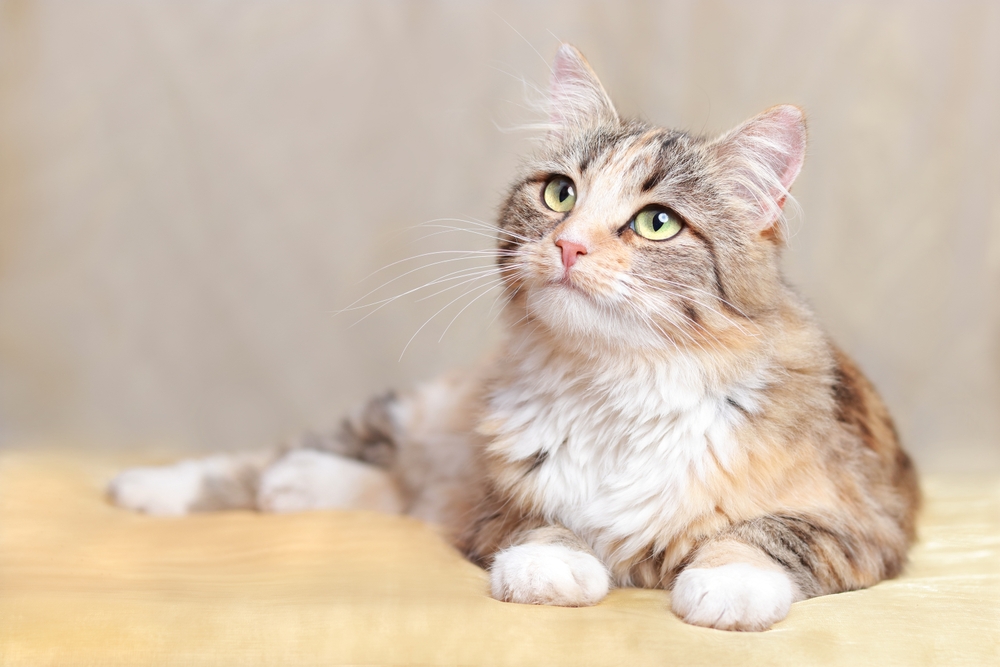
cat lying on bed and looking up

If you ask any pet owner, they’ll emphatically say that their cats have feelings. They say their cats have expressed love and affection, and can even recognize and respond to how their caregivers are feeling. And it turns out that they’re right about their feline companions!

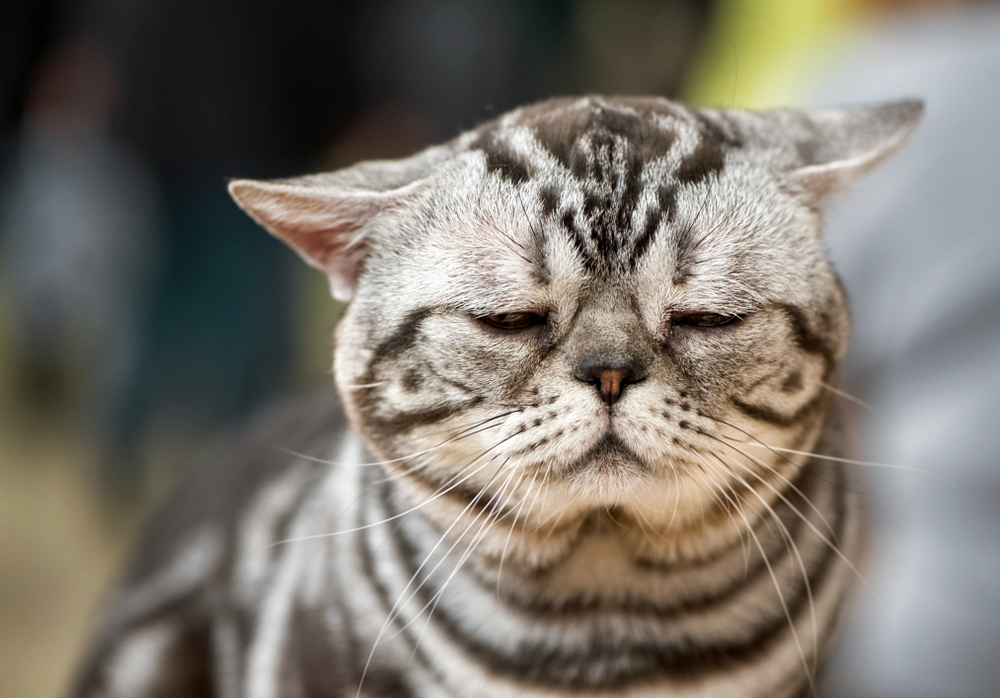
Research supports the hypothesis that our cats experience the six basic emotions of surprise, fear, disgust, sadness, happiness, and anger. These are all the emotions we’d expect to see in a 2 ½-year-old child. There is currently a lack of scientific evidence that cats are capable of more complex secondary emotions, such as compassion, shame, jealousy, and disappointment. Let’s learn a bit more about feline feelings and emotions just below.

divider 3 paws

Basic Cat Emotions and Body Language

Let’s consider how cats express their emotions. Visual communication is vital for animals since it can help avoid conflict. It can signal what they are feeling, if a territory is occupied, and readiness during courtship.

You can tell a lot about what your pet is feeling by observing and learning their body language. For example, a cat with their tail held high or in a question mark shape is willing to interact. Meanwhile, a feline swishing their tail back and forth is signaling their irritation. Woe to the person or animal who is the reason behind a puffed-up tail! That’s a feline that is upset and may strike if provoked.

These postures are examples of the six basic emotions that pet owners probably see often. Interestingly, research has uncovered evidence of heritability of some behavioral traits that speak to emotions. One study even identified Angora and Turkish Van cats as the most aggressive among the breeds studied.1 Likewise, the scientists found sociability differences among the breeds, with the British Shorthair being the least likely to seek human contact versus the outright friendliness of the Ragdoll.

Selective breeding undoubtedly plays a role since enthusiasts would invariably choose which traits to encourage. This study also found a high degree of heritability of aggression and shyness among cats.

Feline emotions are even evident in their facial expressions. An ambitious team of researchers studied these features in 50 cats over the course of a year. The scientists identified 276 different facial expressions which the cats used to communicate with each other and reveal their emotions. These were made up of a mix of 26 unique facial movements.2 For comparison dogs, that we may consider highly expressive, only have around 27 facial movements, but we are generally better at interpreting them.

brown Cornish Rex cat walking at the park
Image Credit: Natalia Fedosova, Shutterstock

divider 1 paws

Inherited Behavior Versus Learned Responses

Unlike dogs, cats are very much in touch with their wild side. Domestication has only altered 13 genes during our 12,000-odd years together. Surprisingly, our feline companions share 95.6% of their DNA with the tiger!3 We can conclude that much of our cats’ behavior and associated emotions are learned responses. After all, they are intelligent animals, and they even know when you’re talking to them.

Vocalizations

Another inherited and learned form of communication exists through vocalizations. Science has documented 21 different vocalizations in our feline companions. That of itself lends credence to cats having feelings. They have a lot to say with all those sounds. Research has shown the profound effects of domestication on their repertoire in some unexpected ways.

For example, cats learn and respond to their names even when someone unfamiliar to them says it. Research has also shown our feline companions look to us when presented with an unfamiliar object for cues about how to respond to it. The animals adjust their emotions accordingly. These findings suggest recognition of feelings and the ability to adapt to new situations. Let’s consider how it affects vocalizing.

Purring

Purring is one of the classic feline vocalizations. Interestingly, only small cats purr, whereas most large felines roar. The exceptions are the cheetah and cougar. A species can’t do both because of their varying anatomies. Purring serves several purposes for cats. Kittens, like human babies, are born helpless or altricial. They are entirely dependent on their mothers. Purring is a form of communication between them.

Humans are likewise hardwired to respond to cries. It’s imperative for our survival. Kittens can purr shortly after they’re born, supporting this role. People are equally responsive to purring, even among non-cat owners. It’s like the baby sound we hear. Kittens do it to get their mother’s attention, so your pet may also purr to get something from you, namely food or affection. This purpose is unique to domestication.

The cause and effect is that your cat wants something and has figured out what they must do to get it. That comes from experience and conditioning fortified with positive reinforcement. Your pet purrs, and you obey.

bengal kitten purring
Image Credit: Liz Creative Studios, Shutterstock

Meowing

Meowing is the quintessential feline vocalization. Children learn how cats make this sound early in their education. It seems like the sound and kitties are intertwined. However, the truth tells a different story. Cats do meow, but it’s usually communication between kittens and their mothers. It’s not something you often hear behind this life stage in feral or wild felines. Like purring, it’s another product of domestication.

Our pets need to be in touch with their feelings to express themselves. The manner in which they do it speaks to their intelligence. Nevertheless, it has worked. We respond to meowing like we do purring. Every time we respond, we reinforce its effectiveness. Couple this concept with the notion that felines can read our emotions and react to us.

Emotional Recognition

The development of feelings has been long in the making. Research reveals that cats bond strongly with their caregivers, not unlike dogs or even children. These findings are fascinating, given the stereotypical perception of felines being aloof and unattached. The evidence speaks for itself, with name and emotion recognition. Separation anxiety is an extreme example of the bond between cats and their owners.

Compelling evidence of our pets having feelings exists with research involving cat blinking and eye narrowing. Scientists know that felines use their eyes to communicate with conspecifics. Emotions run both ends of the spectrum. One study found that these gestures were associated with positive emotions between people and cats. The researchers equated it to a feline smile.

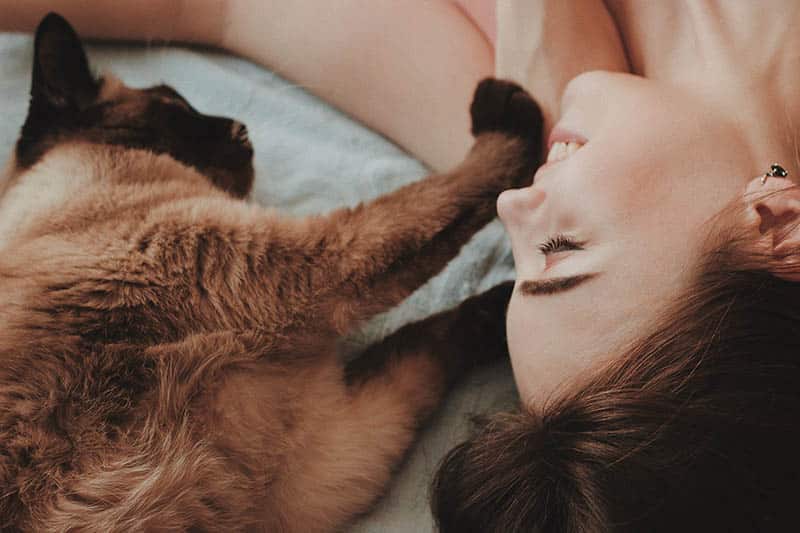
You blink, and your cat responds in kind. It’s a shared moment between owner and pet that symbolizes the affection for each other on a personal level. It doesn’t get any better.

divider 1 paws

Final Thoughts

The evidence is clear: Cats do have feelings. Our feline companions bond with us emotionally in relationships that reinforce and nurture these feelings. You may look at your kitty differently, knowing what lies between their cat’s eyes. However, their emotions will just continue to bring us closer together as time goes on.


Featured Image Credit: Mariia Romanyk, Shutterstock

Want content like this delivered to you?

Sign Up For Our Newsletter

News, insights, expert advice, and everything cat

* By submitting, you agree to our Terms & Conditions and Privacy & Cookies Policy.


How useful was this post?

Click on a star to rate (you can leave written feedback after clicking submit)

Help us improve Catster for pet parents!

Your feedback really matters.

What did you like about this post? Also how can we improve it?

Join the conversation

18 Responses

  1. I had to leave my 11 year old cat because I was hospitalized. I am well now’s and home. My Persian cat is being cared for, in the last 5 months. Can I take her back or will she be emotionally better off where she is today?

    1. Hi Sandy, sorry to hear you had to leave your cat, but great to hear you are home and it sounds like you are both doing well. Cats aren't the biggest fans of change, but that doesn't mean they aren't adaptable. If she was yours for 11 years, she will absolutely still remember you and just because she's been elsewhere for a few months does not automatically mean she won't want to be back with you. Our cat lived with friends for nearly a year when we were traveling and the moment we got home, he waltzed back into our lives as if no time had passed, he was our boy, and their nephew. That's not to say this is the same for every cat, but you being her mom, you'll know what's best for her. Hope that helps! <3

  2. I’ve always known in my heart that my cats have had feelings. The Princess (my kitty) has lived with me for almost 13 years, and comforts me always when I am having a bit of sadness. She’s never been a lap cat, but if I am ill or sad, she jumps up in my lap and stays. When I return from a travel, she sleeps in my bed every night for awhile. When she becomes convinced that I am truly home, she sleeps all over the house. Of all the felines I have known, she is my very favorite. We will both turn 80 in a couple of years, the good Lord willing.

    1. Hey Peggy, that is so lovely to hear about the special relationship you and the Princess have, thank you for sharing :) Hope you are starting the big 80th birthday plans! That will be a wonderful milestone to reach together. <3

  3. Interesting articles today – thank you. I always wondered why we used "cat hair" and "cat fur" interchangeably. Now I learn that short hair is hair, and long hair is fur. All are called "Hairballs" when found on the carpet! All are called "Hair brushes" and not fur brushes when grooming our cats. All is "Cat hair" when it sticks to our clothing! I guess it really does not matter, we all know what it is!
    Margot

    1. Thanks, Margot! Yep, it's all a hairy mess when it's on our clothing haha. Glad you enjoyed our article :)

  4. Cats have great emotions and feelings and can vary depending on different situations and where they live more so then humans, a cat will adapt to situations and how you treat them and let you know, talk as it seems, but they all have a wild side and they will do there own thing at any cost, may be thats why we love them so much.

  5. I always enjoy reading your articles. For one thing you call always learn something new about cat behavior, even if like me you've had cats as a part of your life for the past 30 years. Second, it reconfirms that how I treat them is correct and good for the cat. Keep all the articles coming. I'm enjoying them.

  6. Very informative article. Interesting theories that help the cat owner understand the importance of knowing their cat better. My 5 year old cinnamon male tabby is the most unique cat we have ever owned. He hugs my husband, purring like a baby and lets me know with verbal sound when it’s time to eat and play. Very alert to our emotions as well. Thank you.

    1. Hi Carole, glad to hear you enjoyed our article. Your boy sounds like an absolute doll. So many cats that I have met challenge the typical feline stereotype with their ability to read human emotions. Even though it's hard to prove scientifically, it's very clear when you spend enough time with a cat. :)

  7. Pretty sure my cat know jealousy. She is "in love" with someone who always visits on -saturdays. If I talk to him while he is stroking her she has been known to give me a light bite to show she is not amused I am taking his attention away.

    1. Hi Valerie,

      Thank you for sharing such a sweet story about your cat! It’s amazing how our feline friends can show their personalities in unique ways. While cats may not experience jealousy in the same way we do, they can definitely become possessive or protective of their favorite people.

      It sounds like your cat really enjoys the special attention she gets during those visits!

  8. I love this article-thank you!
    I have to say that I am 100% sure that cats feel jealousy. Professor Sniffles would fuse herself to me if she could. When The Lady Wheezer and I are sharing a rare moment alone and Sniffles so much as walks past us, or even into the room, Wheezer hisses, spits and swats at her. If Sniffles is laying against me, Wheezer will come and lay on top of her. If I’m loving Sniffles and Wheezer can’t chase her away, Wheezer goes into the corner of the room and sits facing the wall. Cats absolutely feel jealousy!

    1. Hey Samantha, I agree, I've seen it before myself in my cats. But, it's anecdotal at the moment since it's near impossible to run emotional studies on cats. But that doesn't mean our experiences are anything less than real.

      Sounds like Professor Sniffles and Wheezer both love you so much and need to learn to share and trust that you have enough love for both of them! :)

  9. my two cats show me more love than any human has ever shown me. physical affection, kissing, wanting to be with me 24/7
    i am so lucky.

Leave a Reply

You’re very welcome to leave a comment or question. Please know that all comments must meet our community guidelines, and your email address will NOT be published. Let’s have a positive and constructive conversation.


Talk With A Vet Online

Peace of mind,
anywhere, anytime

Affordable vet advice

Why Chicken Bones Are More Dangerous for Cats Than Most Parents Realize

Chicken bones seem harmless enough, but for cats, they can cause serious damage quickly. Whether your cat swiped a piece off the counter...

Fantastic Pet Pantries and Where to Find Them

Let’s face it: times are really tough right now, and those of us in the 99% are struggling with the cost of just...

Ask Dr. Paola – Help! My Cat Refuses to Drink Water! (April 13, 2026)

Welcome to our “Ask Dr. Paola” series, where every Monday we bring expert advice straight from Dr. Paola Cuevas (MVZ) to help our...

Why Healthy Cats Still Vomit Sometimes (And How to Respond)

A cat that just vomited needs a specific kind of care, and the feeding decisions you make in the next few hours actually...

More related

9 Pet-Friendly Hotels in Dallas, TX (2026 Update)

With so many things to do in Dallas, Texas, it is no surprise that you’ll want to travel here for pleasure or even...

Can Cats Eat Turmeric? Vet-Approved Benefits & Advice

Cats may be carnivores, but they sometimes like to munch on plant foods like carrots and bananas. They might snatch our almost-finished muffin...

Reverse Sneezing in Cats: Our Vet Explains Signs, Causes & Treatment

When you spend your life surrounded by cats, it’s inevitable that you will become familiar with a wide assortment of sounds and actions,...

What’s the Best Material for Cat Bowls? Vet-Reviewed Types, Pros & Cons

Most cat owners understand the importance of feeding high-quality food to their cats, but they pay less attention to the quality and features...

Keep reading

Heartworm in Cats (Vet Reviewed Signs & Care FAQs)

Heartworms in cats are similar to those in dogs. However, they are difficult, if not impossible, to treat, and the best way to keep your cat healthy is to work with your vet to prevent them. Because heartworms can harm...

Sick cat in animal hospital

How to Cool Down a Cat: 9 Vet-Approved Tips

When the hot weather rolls around, it is imperative to know how to look after your cat. All felines, just like humans, can be at risk of overheating when it’s hot and humid, with the potential of causing heatstroke. Although...

blue-tabby-maine-coon-cat-playing-water

How to Take Care of a Cat: Vet-Approved Beginner’s Guide

Here are much-needed tips on cats and how you can give a kitty the best life possible. It can be difficult to be sure if you’re ready to take on the responsibility of owning an animal, so let’s get some...

Domestic-cat-lying-on-owners-lap

How Can I Talk With a Vet When It’s in the Middle of the Night? 5 Ideas & Online Vet Options

Cats are curious animals, and they tend to have active periods at night. This can cause them to get into accidents or get injured, and it can be difficult to contact your veterinarian because their clinic is closed in the...

woman using a laptop on couch with her cat

Cat Reproduction & Mating: Vet-Approved Facts & Explanation

Cat breeders and veterinarians aren’t the only ones who need to know about the feline reproductive system and mating behaviors. While the average cat owner doesn’t have to be an expert, having general knowledge can help you track their health...

two domestic cats sleep together on the sofa

Do Cats Have a Gag Reflex? Facts, FAQ & What the Science Says

If you’re a cat parent, you’ve likely come across your cat hunched over and gagging at some point. Often, this gagging will be caused by a hairball, but cats gag for a few reasons. This gagging is because of a...

cat choking or gagging

Redirected Aggression in Cats: Vet-Verified Causes & How to Stop It

Redirected aggression occurs when a cat becomes frightened or overstimulated by something they can’t get to or do anything about and then attacks a person or another pet who has nothing to do with the triggering event. Redirected aggression can...

Cat Angry Scared

Does Lysol Kill Fleas on Cats? Vet-Verified Facts & Safety Guide

Fleas endanger our pets and homes beyond the bites and unpleasant stigma attached to infestations. They are also hosts to other parasites, such as tapeworms, which can hatch inside your cat’s intestine if ingested. In some cats, flea bites can...

Lysol cleaning product

Love Cats? So Do We! Join the Catster Community

Stay informed with expert pet care insights delivered straight to your inbox! Discover professional guidance on animal behavior, feeding tips, trusted product picks, and much more.


Sign up for the Catster Email Newsletter

Stay informed with expert pet care insights delivered straight to your inbox! Discover professional guidance on animal behavior, feeding tips, trusted product picks, and much more.