What Emotions Can Cats Feel? What Science Has to Say


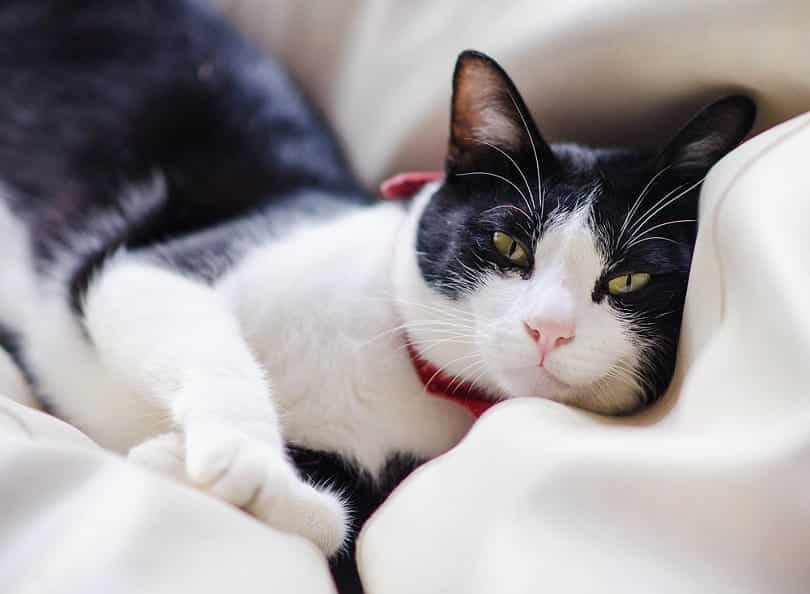
There is a long-held belief that dogs are more affectionate and emotional than cats. Dogs can express themselves with jumping, barking, wagging tails, and excitement. Cats, on the other hand, are usually aloof. It can be hard to tell what your feline friend is thinking because they are difficult to read.
Some cat owners believe that their cats can feel the same emotions that humans do. Cats are known for being curious and a bit mischievous by nature, but do they have feelings? If so, what emotions can they feel? There is evidence to support1 that cats feel six basic emotions.
Even though cats may not express their emotions in such obvious ways, they do have them. Read on to learn more about the emotions that cats feel.

Six Basic Emotions
Cats are believed to experience and express six basic emotions. There is not as much research done on cats as there is on dogs, but both animals are believed to show anger, happiness, fear, surprise, disgust, and sadness. If you think about life with your cat, you may be able to remember times when they seemed to express these feelings.
Researchers in the Netherlands surveyed 1,023 pet owners2. They all responded, having commonly witnessed the six basic emotions in their dogs and cats. More complex emotions, like shame, disappointment, and compassion, were rarely seen. However, jealousy, another complex emotion, was noted regularly. Owners who felt that they had strong bonds with their cats were more likely to notice emotional responses in them.

Can Cats Recognize Emotions?
Researchers in Italy3 wanted to find out if cats could recognize anger and happiness. They set out to discover if these emotions could be recognized in both humans and other cats.
First, sounds were recorded of a male and female cat both hissing and purring. Then, a man and a woman were recorded laughing and growling. A neutral sound was also recorded from the internet. Photographs were taken of the cats hissing and purring and of the humans laughing and growling. The study was then ready to begin.
Researchers tested 10 cats in their homes. Projectors and screens were set up in quiet rooms with speakers behind each cat. Cats sat in their owners’ laps and faced the screens. From a speaker, a happy, angry, or neutral sound was played while two faces appeared on the screen. If hissing or purring sounds were played, the cat faces were projected. If laughing or human growling sounds were played, the human faces showed on the screen.
The main findings of this study were that the cats spent long periods looking at the face whose expression matched the sound that was played. When they heard a hiss, they looked at the cat's face that was hissing. For human laughter, they looked at the photo of a happy human.
The most difficult thing for the cats to determine was the purring sound, but that could be because there isn't a specific expression that cats have for this behavior.
This study proves that cats can understand and recognize positive and negative emotions in both other cats and people.
Can Cats Bond to Their Owners?
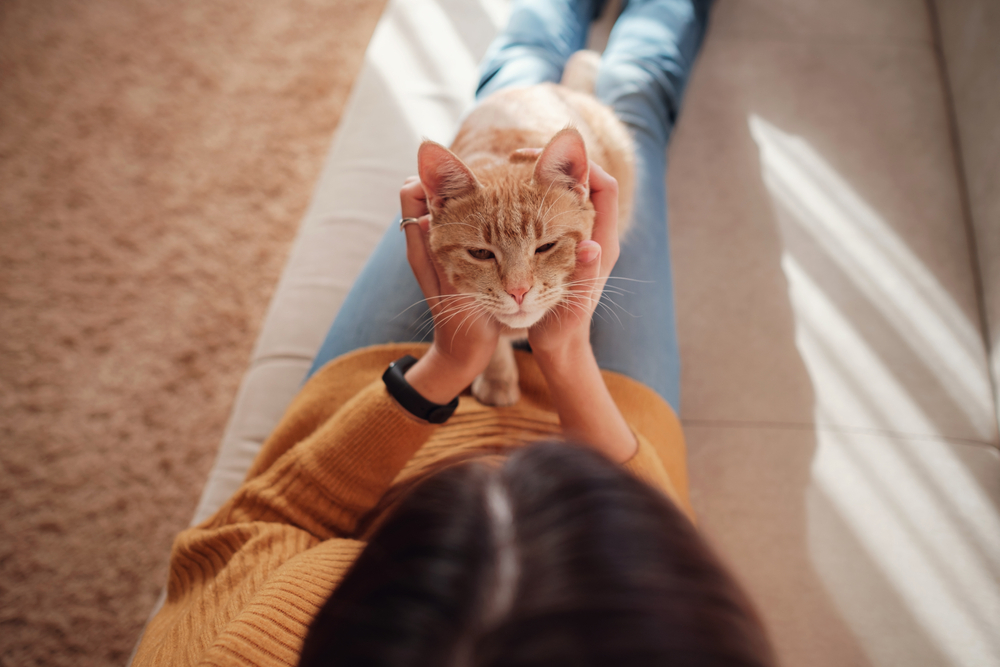
Cats can form strong bonds with their owners. This is evident in several ways, but a study in 20154 proved that cats react differently5 when their owners are smiling or frowning. When their owners were smiling, cats would purr, rub against them, or sit in their laps. They tended to avoid their owners when they were frowning.
A study by the Oregon State University’s Human-Animal Interaction Lab6 investigated the extent to which cats can bond with humans.
The experiment consisted of a cat and their owner in an unfamiliar environment for 2 minutes. The owner then leaves, and the cat is left alone for 2 more minutes. Then the owner returns for an additional 2 minutes.
Researchers noted that cats explored the territory calmly, expressing curiosity about their surroundings once their owners returned. This was noted as a secure attachment. Other cats expressed insecure attachment, avoiding their owners or jumping into their laps and remaining still.
Kittens and older cats were studied, with 64.3% of kittens and 65.8% of older cats showing to be securely attached to their owners.

Reading Your Cat’s Emotions
It can be difficult to read your cat's emotions if you don't know what signs to watch for. Here is a quick guide to help you understand what your cat may be feeling.
Happiness
Cats express happiness in different ways, and these are usually different from what humans do. Humans have different facial expressions and postures, and we can easily tell when they’re feeling joy. Cats aren’t as expressive, so their happiness is usually expressed through more subtle (to us) body language.
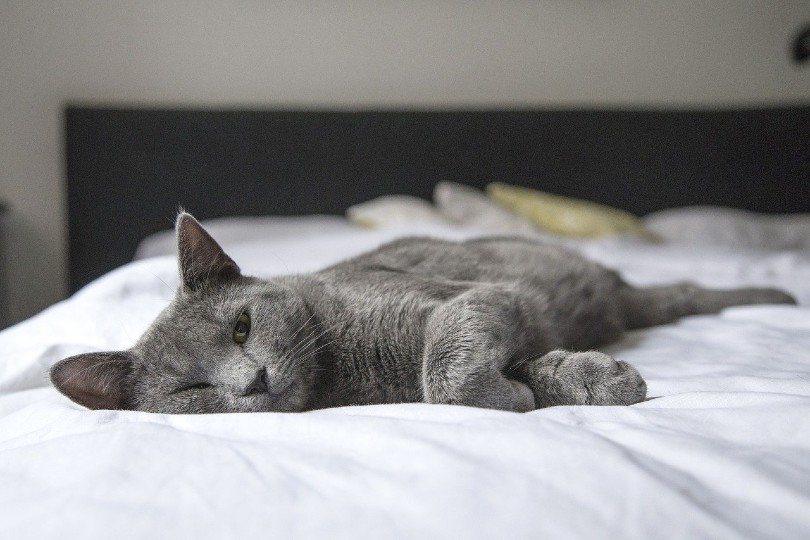
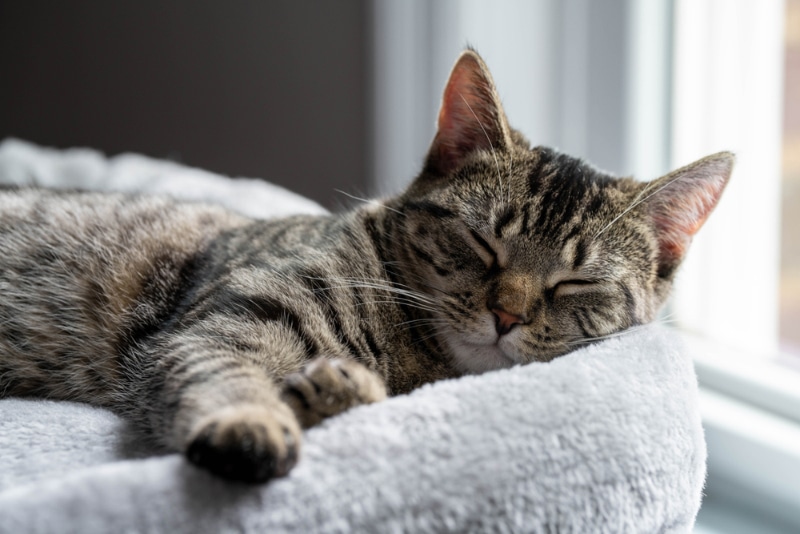
When cats are relaxed and feel content, they're happy. They may purr or knead a soft surface. If they’re lounging, their eyes may be half-closed, and they roll on their side with their tummy exposed. If standing their ears will be in a natural position and tail up and curled over at the tip. They will seek out affection. Happy cats have healthy appetites and tend to be more playful. Each cat is unique and may do one or all of these things to show their happiness.
Anger & Fear
When a cat is angry, there are obvious signs. Their ears are straight back or flat to the sides. Their fur may be standing straight up. Their tail is thrashing quickly back and forth. They may be hissing or growling and have an arched back.
These signs are similar to how cats react when they’re scared. Fearful cats may try to get away, hide, or become aggressive in an attempt to defend themselves. They will have ears directed to the side or back, lie on their sides with tail flicking, or walk slowly with flat back, tail, and head down.

Can Cats Have Hurt Feelings?
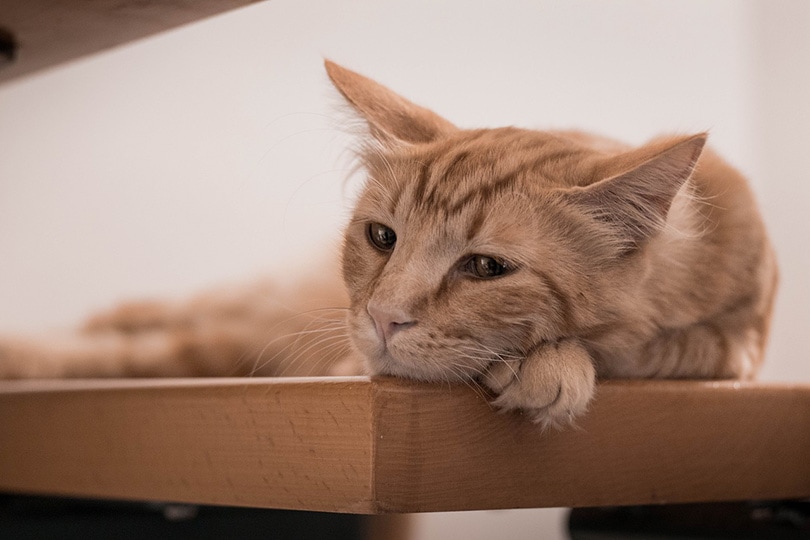
We know that cats have feelings, but can those feelings be hurt? Our feelings are hurt in response to how another person has treated or spoken to us. Cats seem more likely to be upset by changes in environment or routine. We know that cats can become sad and depressed. They may also get upset if their routine is changed. Cats can feel grief and loneliness, especially if they’ve lost an owner or feline companion. Since cats form bonds with their owners, they mourn when these attachments are broken.
Some cats are more sensitive than others, so the signs may not be as obvious in all cats. Depressed cats are listless, may lose their appetites, and tend to sleep more. They lose interest in playing and may seek out a hiding place.
If you notice that your cat is acting sad or depressed, it’s best to consult the vet for a health check to rule out a medical issue. After that, try to determine the cause of your cat’s sadness and see if you can help them overcome it.
Conclusion
Cats can feel the six basic emotions of anger, happiness, fear, surprise, disgust, and sadness. Studies have proven that cats can recognize emotions in people and other cats. They also form strong attachments to their owners. Learning to read cat body language will help you to understand their emotional state.
Even though cats may express themselves in less obvious ways, we know that they have feelings and that those feelings can be hurt. We hope that you’ve learned more about your cat today and how to identify their emotions.
Related Read:
Featured Image Credit: slidesl, Shutterstock

Expert cat care, straight to your inbox
Vet-reviewed advice, behavior tips, and the best of Catster. Free, and you can unsubscribe anytime.
By signing up, you agree to our Terms & Conditions and Privacy & Cookies Policy.
Christian started writing for a local newspaper as a teenager, and he's been involved in the publishing industry for most of his adult life. Combining his love of writing with a passion for animals, he is currently the Director of Editorial at Pangolia and the Editor-in-Chief at Catster.
Christian lives in the Philippines with his wife, son, and four rescue cats: Trixie, Chloe, Sparky, and Chopper.
Join the conversation
Ask a question, share your story, or send private feedback.