Do All Cats Have Whiskers? Vet-Reviewed Facts & FAQ


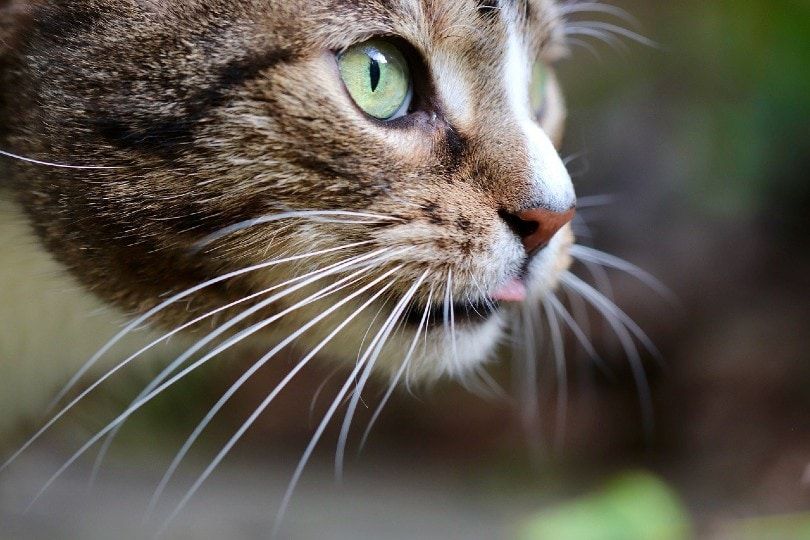
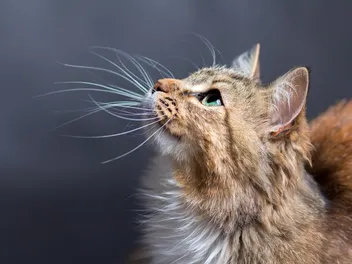
Whiskers are an iconic part of the cat’s face, but not all cats have whiskers. Some hairless cats, for example, do not have whiskers. Nevertheless, most cats have whiskers since they serve as a necessary part of their survival in the wild and captivity.
Of course, there’s more to understand about whiskers than just that. Let’s take a look at whiskers and why most cats have them.

What Exactly Are Whiskers?
To understand why most cats have whiskers, it’s important to understand what a whisker is.
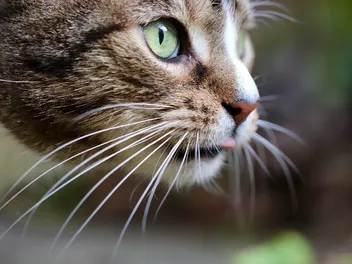
Simply put, a whisker is just like the hair found on the rest of the cat’s body. It comprises the same keratin material that makes up the cat’s coat. The only difference is that the whisker is thicker and rooted three times deeper than regular hair.
Additionally, there are a lot of nerve endings and blood vessels at the root of the whisker. As a result, the whisker can relay a lot of sensory information to the cat even though the whisker itself does not have any nerve endings. In fact, whiskers are so effective at relaying sensory information that they are considered as sensitive as human fingertips.

Most Cats Have Whiskers
Because whiskers are simply a form of hair, almost all cats have whiskers. Whiskers are vital to the cat’s survival and experience with the world. They allow the cat to know how close items are to them and to protect the sensitive parts of their face, such as their eyes.
However, not all cats have whiskers. For example, Sphynx cats are hairless cats that may not have any whiskers or eyelashes. Hairless cats have a mutation in the gene KRT71, which normally controls the protein keratin 71. This mutation causes the hair follicles to be underdeveloped or inactive.
So, most cats have whiskers, but not all. If you were to walk down a street and test random cats, more than likely, all of them would have whiskers. Only certain individuals of hairless breeds do not.

How Many Whiskers Do Cats Have?
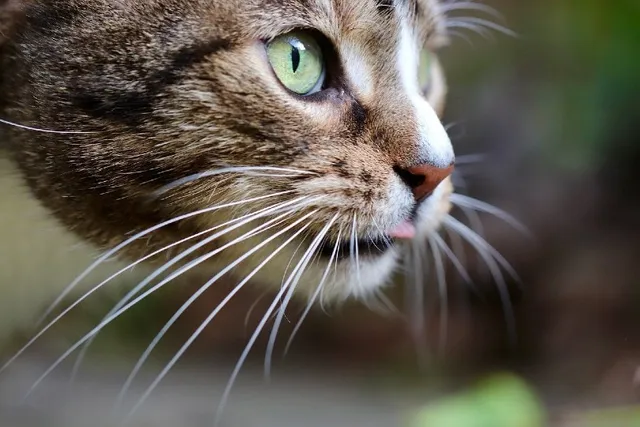
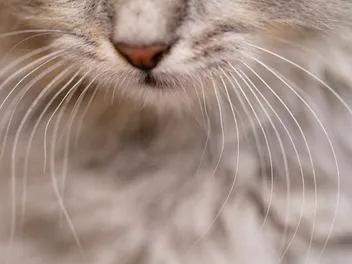
It can be difficult to count how many whiskers your cat has. Many cats have around 24 whiskers, but the whiskers all have symmetry or patterns. For the most part, cats will have four to five rows of prominent whiskers around their upper lip.
Additionally, cats often have three permanent whiskers over every eye, a few short whiskers on their chin, and very small whiskers on the back of their wrists. Unless you are a cat fanatic, there are likely more whiskers on your cat than you realize.

Why Do Cats Have Whiskers?
There are many reasons why cats have whiskers. As we have already mentioned, whiskers are responsible for relaying sensory information to the cat. This sensory information provides the cat with a sense of orientation and touch.
From this information, cats benefit quite a lot. Most notably, it allows them to judge whether they will fit into a tight space and allow them to hunt. It also helps to protect their eyes and face from pointy objects, as well as evaluate the environment around them.
Whisker Problems
Unfortunately, cats can experience a few whisker problems. Here are some of the most common ones.
Whisker Fatigue
Whisker fatigue is caused by the extreme sensitivity of the whisker. Even though the whisker does not get damaged from whisker fatigue, it is overwhelming to the cat. Whisker fatigue is mostly triggered by poorly sized water and food bowls.
Infections
Whiskers can also experience the same problems as regular fur. For example, whiskers can become infected or experience mange and folliculitis. It’s important to keep the cat’s fur healthy and clean so that the whiskers do not get affected.

Intentionally Damaged Whiskers
Some cat owners think it’s a good idea to trim their cats’ whiskers, but this leads to more problems. Even though trimming is not harmful to the cat, the shorter whiskers mean that the cat is not as prepared to deal with their environment. Do not cut your cat’s whiskers.
If the cat’s whiskers have already been cut or broken in some way, allow the whiskers to grow back. Whiskers should grow back within several weeks as long as the follicle is not damaged.

Whiskers Need Protection
Because of how many important features whiskers perform, they need protection. Without whiskers, cats will not be able to protect themselves and gauge their environment as adequately as they do with whiskers. Here are some things you can do to protect your cat’s whiskers:

Keep Your Cat Clean
The number-one way to protect your cat’s whiskers is to simply keep your cat clean and healthy. Preventing fleas, mange, and infection from targeting the cat’s body will largely keep the whiskers healthy and safe. Although you don’t need to bathe your cat regularly, bathe them when necessary and groom them regularly.
Select Whisker-Safe Bowls
Whisker fatigue mostly happens whenever the cat is forced to drink out of deep water bowls or eat out of deep food bowls. The reason for this is that the cat must go deeper to get the food, which causes constant stimulation on the whisker.
Avoid this scenario by selecting whisker-safe bowls. Whisker-safe bowls are wide and shallow. This will allow the cat to eat and drink safely without overstimulating the whiskers.

Final Thoughts
Once again, most cats have whiskers, but not all. Hairless cats, for instance, do not have whiskers. Most cats you meet on the street, in a pet store, or in a rescue center will have whiskers. After all, whiskers serve an important function in the cat’s health, safety, and well-being.
To make sure that your cat’s whiskers stay healthy, keep your cat groomed and clean. Invest in whisker-safe bowls as well to prevent whisker fatigue. Just by doing these few simple things, your cat’s whiskers will work as they should and help your cat get around the home.
See Also:
Featured Image Credit: Annette Meyer, Pixabay
Expert cat care, straight to your inbox
News, insights, and useful advice, delivered to you.

No spam — unsubscribe anytime.
By signing up, you agree to our Terms & Conditions and Privacy & Cookies Policy.
How useful was this post?
Click a star to rate. You can leave written feedback afterwards. (We read all feedback.)
Christian started writing for a local newspaper as a teenager, and he's been involved in the publishing industry for most of his adult life. Combining his love of writing with a passion for animals, he is currently the Director of Editorial at Pangolia and the Editor-in-Chief at Catster.
Christian lives in the Philippines with his wife, son, and four rescue cats: Trixie, Chloe, Sparky, and Chopper.