Get

In Your Inbox

Catster is reader-supported. When you buy via links on our site, we may earn an affiliate commission at no cost to you. Learn more.

7 Vet-Verified Abyssinian Cat Colors: An Overview (With Pictures)

Share

abyssinian cat resting in carpet

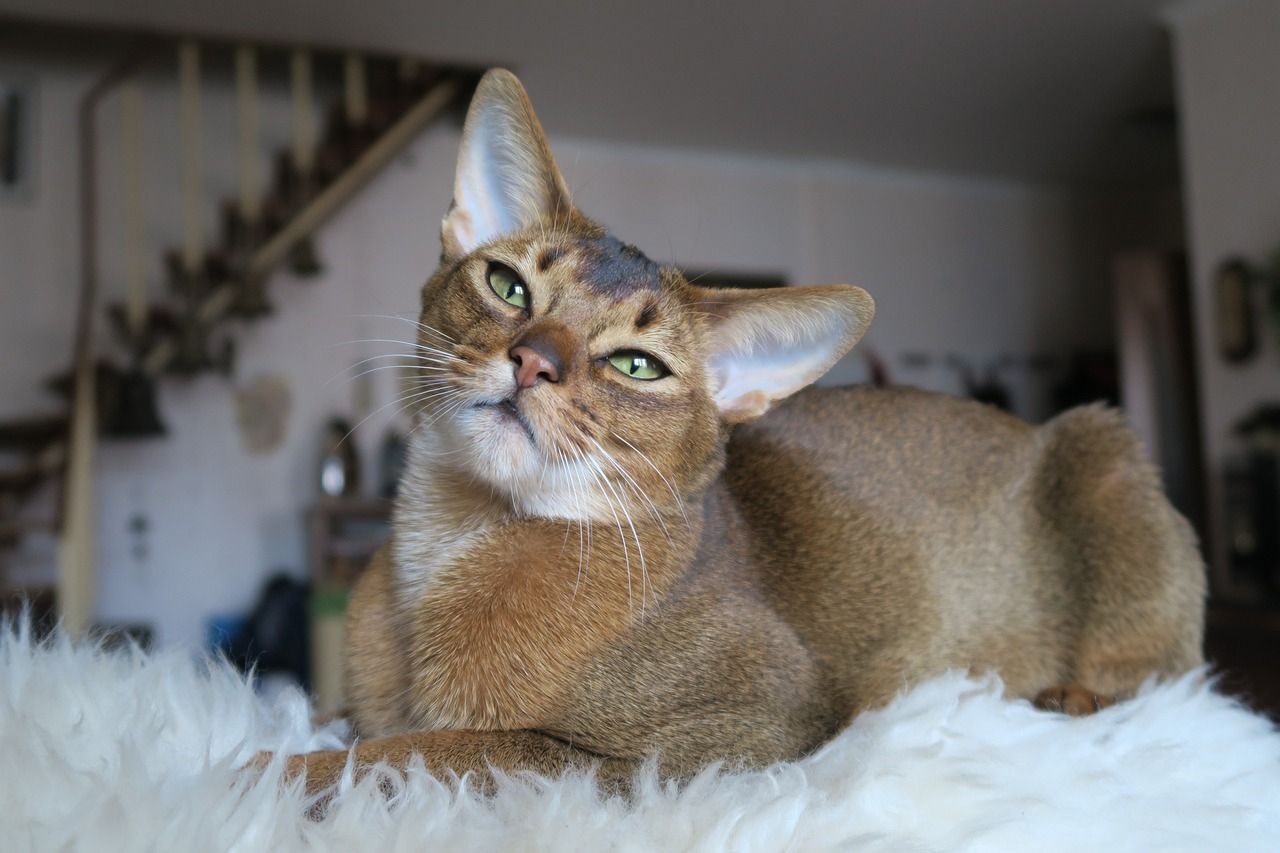
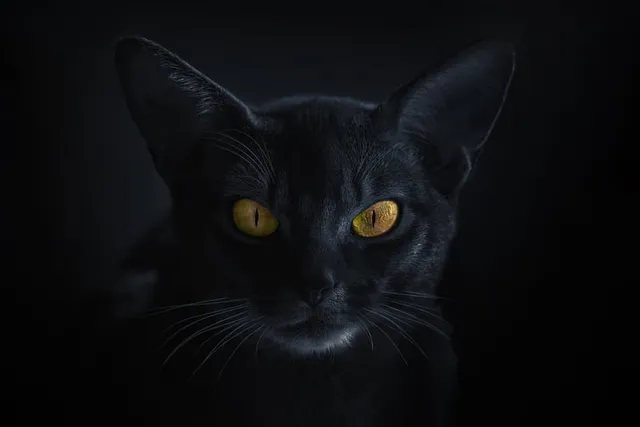
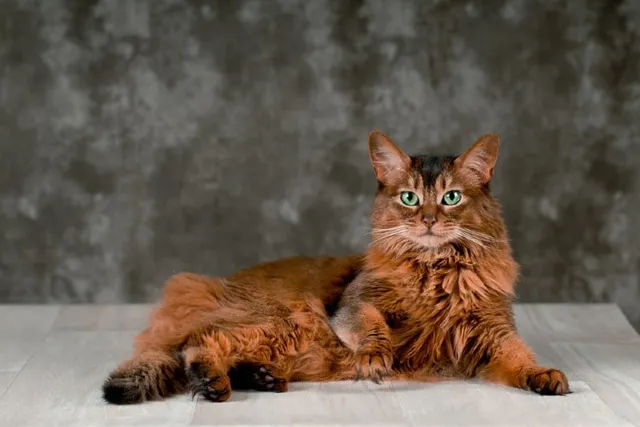
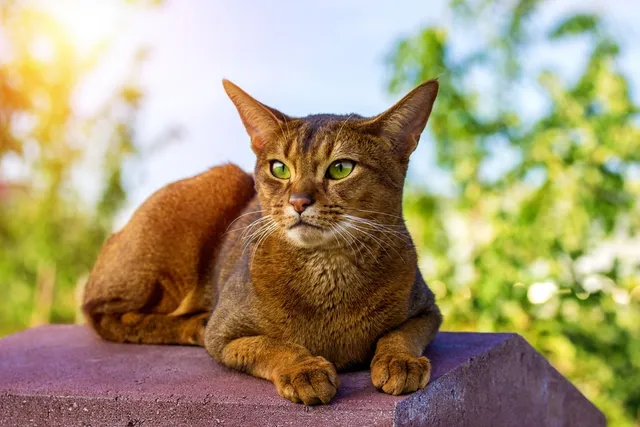
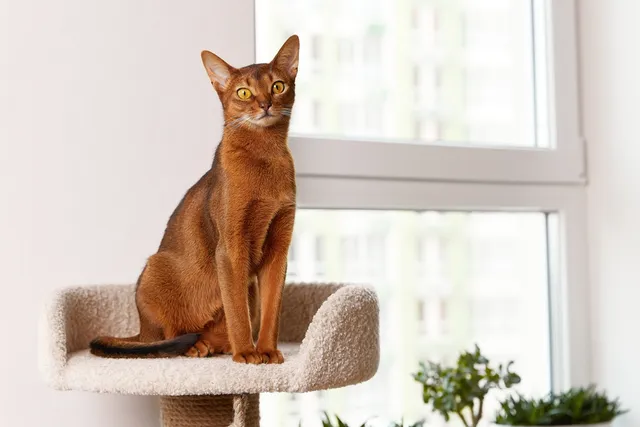
Abyssinians are known to be affectionate cats that are easy to care for, but perhaps they are best known for their beautiful, uniquely “ticked” coats. Their coat is short and thick with a distinctive ticked patterning, where each individual hair is banded with different colors. They do not reach their full, final coloring until around 18 months old, so their coloring as a kitten could change by the time that they reach adulthood.

divider 2 cats

The 7 Abyssinian Cat Colors

abyssian cat colors

The 4 Standard Abyssinian Cat Colors

Abyssinians come in four main colors and they are the only four recognized by the Cat Fanciers’ Association.

Those four colors are:

1. Ruddy Abyssinian

abyssinian cat looking away
Image Credit: Anton Akhmatov, Shutterstock

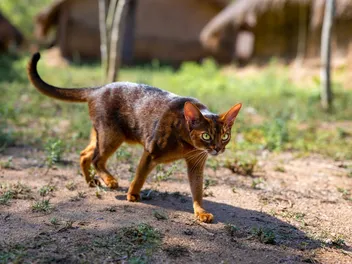
Also often referred to as “tawny” or “usual” coloring, ruddy is one of the most commonly found colorations among Abyssinians. Each hair is ticked with varying shades of brown and black, with a brown/orange shading closest to the base. The belly and insides of the legs should be unmarked and consist of this orange coloring only, with no markings, stripes, or white marks anywhere on the coat.

Abyssinians with this coat will typically have golden eyes, with hazel and green also being fairly common. They will typically have black-tipped ears with black paw pads and red noses.


2. Cinnamon Abyssinian

sorrel-abyssinian-sneaking-in-window
Image Credit: Jane Koshchina, Shutterstock

Another fairly commonly found coloring among Abyssinians is red or cinnamon. It is often described as a watered-down or diluted variation of the ruddy coloring and is typically a copper-red base shading with red/brown ticking. The stomach and inside of the legs are predominantly copper-red shading, with no patterns or stripes. These cats typically have pink paw pads and noses and amber, green, or yellow eyes.


3. Blue Abyssinian

blue-abyssinian-kitten-with-mother
Image Credit: Kseniya Lanzarote, Shutterstock

A cat having a blue coat is somewhat of a misnomer, and their coat is usually a deep, steel-grey that appears blue overall. The blue Abyssinian cat has a dark, soft blue/grey coat ticked with a deeper blue. The base hair, the belly, and the insides of the legs are typically a pale cream color. They also often have a dark blue stripe that runs down their spine through to their tails, which is usually tipped in a deep blue coloration. They have blue/grey paw pads and noses with amber, green, or yellow eyes. Whether you see them as a blue or grey Abyssinian cat, this coloration is undeniably beautiful.


4. Fawn Abyssinian

Fawn colored abyssinian
Image Credit: EvgenS, Shutterstock

Fawn is one of the rarest colorations found among Abyssinians and is characterized by a pale brown base hair coloration that extends throughout the belly and inside of the legs. This is ticked with bands of deep pink and light brown, giving an overall rose-colored appearance. The paw pads and nose are typically pink, and they usually have amber, green, or yellow eyes.

divider 2 cats

The 3 Unique & Uncommon Abyssinian Cat Colors

The above four colorations are the most commonly found among Abyssinians, and the only four recognized by the Cat Fanciers’ Association. However, there are a few other less common colors that are just as beautiful and definitely worth mentioning. Some other associations recognize these colors in their registries, notably in the United Kingdom, where they are far more accepting of the following unique colorations.

5. Chocolate Abyssinian

chocolate-abyssinian-outdoor
Image Credit: Nan Liu, Shutterstock

Chocolate Abyssinians are usually described as an intermediate between ruddy and sorrel, but they are uniquely beautiful all on their own. They typically have a rich copper-brown base that extends all around the belly and the inside of the legs and is ticked with dark chocolate and brown bands. The paw pads and nose are also a dark chocolate color.


6. Silver

silver-abyssinian
Image Credit: Krissi Lundgren, Shutterstock

Silver Abyssinians are often recognized as a separate group that includes usual silver, fawn silver, blue silver, and sorrel silver. Many breeders claim that these silver variations were some of the first and thus the oldest colorations in Abyssinians, although this is mostly conjecture and almost impossible to prove.

The four main variations of silver Abyssinians are:
  • Usual Silver: a silver/white base with black bands of ticking, black paw pads, and nose
  • Fawn Silver: a silver/white base ticked with fawn and chocolate paw pads and nose
  • Blue Silver: a silver/white base color ticked with blue and grey, giving a deeper blue overall appearance, with blue paw pads and a dark pink nose
  • Sorrel Silver: a silver/white base coloration with chocolate ticking and pink paw pads and nose

7. Lilac

The name lilac is somewhat of a misnomer with this coloration, as the ticking is a light grey rather than lilac. However, the base color of pink/cream with the bands of grey creates an overall lilac effect. The paw pads and nose have a mauve/pink coloration, and the lilac Abyssinian is one of the rarest and most difficult-to-find variations.

divider 2 cats

Final Thoughts

Abyssinians are one of the oldest and most elegant cat breeds, and their distinctive ticked coats make them truly stand out. While the four CFA-recognized colors—ruddy, cinnamon, blue, and fawn—are the most common, breeders and enthusiasts have continued to develop new shades like chocolate, silver, and lilac. Regardless of color, all Abyssinians share the same hallmark look: a warm, glowing coat and an athletic, graceful build that reflects their lively and affectionate nature.

You might also like:


Featured Image Credit: tsapenkodg, Pixabay

Want content like this delivered to you?

Sign Up For Our Newsletter

News, insights, expert advice, and everything cat

* By submitting, you agree to our Terms & Conditions and Privacy & Cookies Policy.


How useful was this post?

Click on a star to rate (you can leave written feedback after clicking submit)

Help us improve Catster for pet parents!

Your feedback really matters.

What did you like about this post? Also how can we improve it?

Join the conversation

2 Responses

  1. I would love to have a cat ???? especially with me living alone and I am 74 I was a cat owner when I was younger, I read about the Abssin cat very active, sounds like a sweet and loving cat to own.

Leave a Reply

You’re very welcome to leave a comment or question. Please know that all comments must meet our community guidelines, and your email address will NOT be published. Let’s have a positive and constructive conversation.


Talk With A Vet Online

Peace of mind,
anywhere, anytime

Affordable vet advice

Ask Dr. Paola – Help! My Momma Cat Is Very Thin! (May 18, 2026)

Welcome to our “Ask Dr. Paola” series, where every Monday we bring expert advice straight from Dr. Paola Cuevas (MVZ) to help our...

The Cat Biting Mistakes Most Owners Make (And What Works Instead)

Cat bites sent more than 400,000 people to emergency rooms in the US each year.1 Not scratches. Bites. And the reason they’re so...

Do Cats Cause Schizophrenia? Scientists Find a Link – Here’s What It Means

Being a fierce advocate (and occasional recipient of) mental health support and awareness, the term ‘crazy’ is not one I like to fling...

One in 100 Cats Gets Diabetes – Here’s How to Catch It Early

One in every 100 cats develops diabetes.1 That’s not a rare, unlucky condition reserved for cats with obvious health problems. It’s common enough...

More related

Do Cats Hibernate? Vet-Reviewed Facts & FAQ

Cats have long captured the imagination of humans with their strange behaviors and elusive nature. From their graceful agility to their quirky expressions,...

Why Do Cats Attack Pregnant Women? 9 Safety Tips

If you’ve recently become pregnant, you might’ve noticed that your cat’s behavior toward you has changed. It’s a common issue, but that doesn’t...

Cats and Tornadoes: 8 Vet-Reviewed Tips for Keeping Your Pet Safe

Tornadoes are one of the worst weather disasters that can befall a community. Bad twisters can flatten entire neighborhoods in a matter of...

5 Strange Cat Superstitions That Aren’t True: Myths Debunked

Cats are interesting animals that have been living with humans for thousands of years, so while they shouldn’t be strange creatures to us,...

Keep reading

How to Tell If Your Cat Loves You: 12 Vet-Reviewed Signs to Look For

Cats have an unfair reputation as aloof independent creatures that don’t need us humans—unless they’re hungry. While some cats can be self-contained, others are incredibly outgoing when it comes to letting their owners know that they love them. Whichever side...

boy-falls-asleep-and-hugs-his-cat-who-sleeps-with-him-under-the-covers

Do Cats Need Wet Food? Vet-Reviewed Benefits, Facts & FAQ

Are you wondering whether wet food is necessary or just a luxurious treat for your feline companion? The truth is that wet food is not an absolute requirement for a cat’s health, but it does come with a few benefits...

cat eating canned tuna

Can Cats Eat Kale? Vet-Reviewed Nutrition Facts & FAQ

If you found this article because your kitten snatched a very small piece of kale while you were chopping up your lunch salad, don’t panic! Kale is not toxic to cats, and in fact, small amounts of it are included...

Can Cats Eat Kale

Can Cats Eat Pepperoni? Vet-Reviewed Nutritional Facts & Safety Info

You might have left out a leftover pizza only to be interrupted by a phone call. When you come back, you find your cat chomping down on the pepperoni. Should you be worried? Can cats even eat pepperoni? We’ll look...

Can Cats Eat Pepperoni

10 Types of Veterinary Specialists & What They Do: Vet Approved Guide

Many cat parents may think their local veterinarian is the only option for their cat’s well-being and health, but this is not the case. Veterinary medicine and pet care operate in a similar way to human medicine. There is primary...

cat owner talking to the vet while examining the cat

Do Cats Need Sunscreen When Going Outside? Vet-Approved Facts

Applying sunscreen to a cat may sound a little messy or unnecessary, but some breeds and those with light-colored coats could benefit from wearing sunscreen at times. Cats that are at higher risk of skin damage due to sun exposure...

cat on the beach

Sphynx Cat Health Problems: 6 Vet-Reviewed Issues

Sphynx cats first came about in the 1960s as a result of a genetic mutation. Ever since cat owners have been in love with the unique look and personable nature of the hairless breed. Like other purebred cats, Sphynx cats...

Catster_Health Problems of Sphynx

IMHA in Cats: Signs, Causes & Care (Vet-Reviewed)

IMHA, or immune-mediated hemolytic anemia, describes a condition where the immune system misfires and breaks down the body’s red blood cells, a process called hemolysis. You may see it called autoimmune hemolytic anemia (AIHA) as well. The body inappropriately attacks...

veterinary-blood-test

Love Cats? So Do We! Join the Catster Community

Stay informed with expert pet care insights delivered straight to your inbox! Discover professional guidance on animal behavior, feeding tips, trusted product picks, and much more.


Sign up for the Catster Email Newsletter

Stay informed with expert pet care insights delivered straight to your inbox! Discover professional guidance on animal behavior, feeding tips, trusted product picks, and much more.