Cats and Tornadoes: 8 Vet-Reviewed Tips for Keeping Your Pet Safe


In this article
Tornadoes are one of the worst weather disasters that can befall a community. Bad twisters can flatten entire neighborhoods in a matter of minutes. But there are ways to stay safe and, importantly, also keep your cat safe during severe storms. Tornadoes are survivable disasters, but maximum safety requires awareness, planning, and a secure shelter.
This guide will give you eight critical tips on how to keep you and your cats safe during a potential tornado situation. It also includes some quick tips on what to remember before, during, and after the storm. By the end, you should have enough information to form your own tornado plan that will help keep you and your cat safe during the next severe weather incident.

The 8 Tips for Keeping Your Cat Safe During Tornadoes
1. Know the Forecast
Unlike hurricanes, tornadoes pop up rapidly and seemingly at random. However, meteorologists have a good idea of when and where tornadoes are likely to occur. The forecast is critically important to knowing whether you and your cat are going to be in danger. Forecasts can often predict with a few days' notice when severe weather is likely to break out and what region will be most affected. Knowing the forecast is the first step to having a plan.
- Severe Thunderstorm Warning: A severe thunderstorm is occurring. Tornadoes usually only spawn during severe thunderstorms.
- Tornado Watch: Conditions for tornadoes are present or are likely to occur. A tornado is not happening at this moment, but it is possible that a tornado will form during the watch period.
- Tornado Warning: A tornado has been spotted on radar and is being tracked or is imminent. This can be an emergency.
If the forecast is calling for severe weather in your area, it is time to pay attention and make sure you have everything in order in case the worst happens. You do not want to be surprised by an outbreak of severe weather. Knowing the forecast ahead of time will give you time to mentally and physically prepare for a potential disaster.

2. Have a Plan
The last thing you want to do in the event of an emergency is panic. Panicking does not help anyone, and one of the best ways to avoid panicking during a tornado is to have a plan. Know what you are going to do in the event of a tornado warning. Know where you are going to go. Have your supplies stashed away in an easy-to-access location. Assign duties to other members of your household in the event of an emergency. One person should be in charge of the cat. One person should be in charge of keeping track of where everyone is. One person should be in charge of watching the weather forecast and staying on top of information as it comes in.
Having a plan is vastly superior to winging it in the event of a tornado. Plans help keep everyone on track, and they can prevent you from forgetting something important.
3. Bring Your Cat Indoors Before the Storm
If you have outdoor cats or indoor-outdoor cats, it is imperative to bring them in before the weather gets bad. This is why knowing the forecast is so important. Your cat should be safely inside long before the weather turns dangerous. You absolutely do not want to be outside in a severe storm looking for your cat. Chances are, your cat is going to be hiding somewhere and won’t be easily found. This will put both you and your cat in danger. The safest place for both you and your kitty during a potential tornado situation is inside a well-built home.

4. Identify Your Cat
On the off chance that your cat gets out during the storm or if you cannot find them before the weather sours, you want to make sure that your cat has proper identification. Most experts recommend microchipping your cat. Unlike tags, microchips are under the skin and cannot get damaged, lost, or loose. Most animal shelters now check stray animals for microchips, and if your cat is chipped, your information will pop up when they are picked up.
If your cat is not microchipped for whatever reason, make sure they have a collar with their name on it and your phone number and address. This way, if someone finds your cat during or after the storm, they can get in contact with you and reunite you with your feline friend. A feline GPS tracker is another option to keep track of your cat’s whereabouts.
5. Stock Up on Emergency Supplies
Before a storm hits, you want to make sure that you have plenty of supplies in case the power goes out or in case you get stuck in your home for a long period of time. You want to have enough essentials for several days. That includes food, water, and medication for both you and your cat. You also want to make sure that you have extra kitty litter, treats, and toys to keep your cat comfortable during the period after the storm.
You will also want to keep a healthy number of batteries, an emergency weather radio, flashlights, and a first aid kit on hand to help you weather the storm. Having these supplies ahead of time is critical so you don’t run into shortages or run out of time to go to the store ahead of a powerful front.

6. Make Sure You Can Keep Your Cat Contained
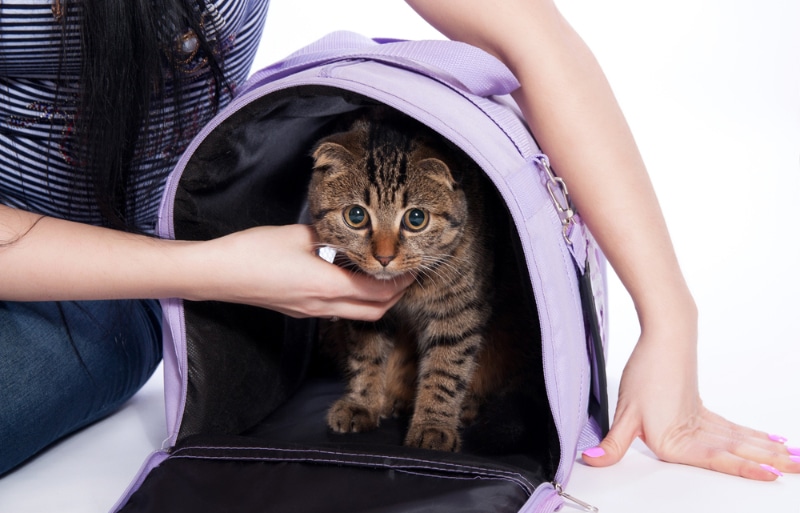
When making tornado plans, it is key that you keep your cat contained during the storm in your tornado-safe area, whether that is the basement or the most interior room on the bottom floor. Some cats will panic during bad weather and will try to run out of the house or out of your shelter, which would be very bad. It is suggested that you have a comfortable and spacious cat crate that your cat is familiar with and has been using that you can put your cat in to ride out the storm. That way, they won’t run out of the room and hide.
You don’t want to worry about where your cat is during a tornado. You want them to be right by your side in a safe area so you can keep an eye on them. Make sure you can keep your cat in the house or in your shelter during the storm.
7. Make Your Shelter Pet Friendly
If you live in a tornado-prone area, chances are you have a tornado shelter on your property. Many times, these shelters are old cellars or basement rooms that are designed to keep you safe during a tornado. People who do not live in places where tornadoes are common are urged to stock their emergency kit in an interior bathroom with no windows. This is where you will want to hide when you are under a tornado warning. Many times, these shelters are not thought about for months or even years at a time, but you want to make sure that whatever kind of shelter you have is safe for your cat.
You want to remove any sharp or rusty objects that could be lurking in the dusty corners. Remove any potential toxins or toxic plants from the area. Make sure that if there are shelves or boxes, they are secure because your cat will likely jump and climb them when they get anxious. Your tornado shelter should be stocked and safe for you, your family, and your cat. Keep some cat toys, beds, litter boxes, and other essential supplies handy, alongside cat food, snacks, and freshwater.

8. Evacuate if Possible
Lastly, if you have enough warning, you should consider evacuating ahead of a powerful storm system. This is especially true if you live in a dwelling that is not tornado-safe, such as an RV, mobile home, or garage apartment. Many cities will open pet-friendly shelters ahead of a storm that is likely to produce tornadoes. If you are not confident in your ability to ride out a storm with your cat, you should leave the area where the weather is supposed to be the worst or consider moving to a local shelter during the storm. Evacuating is never fun or easy, but in some cases, evacuation can save your life and that of your pet.
Quick Tips
With all of that being said, here are some quick tips to keep in mind of what you should do before, during, and after a tornado.
Before the Storm
- Make a plan.
- Know the forecast.
- Examine your shelter and make it safe.
- Check your supplies, both for you and your cat, and your emergency kit.
- Know your cat’s habits and schedule so you can quickly grab them in case of an emergency.
During the Storm
- Move into your tornado shelter.
- Make sure you have your emergency kit, radio, and all family members inside your shelter.
- Keep cats inside the shelter, ideally in a crate next to you.
- Do not leave the shelter until you get the all clear or the storm has completely passed.
- Try not to panic, though the storm is likely going to be scary.

After the Storm
- Exit the shelter carefully.
- Assess the house and property for damage.
- Keep your cat contained until you know the area is safe from debris and other hazards.
- Let your cat out carefully into the rest of the house and allow them to explore and reacquaint themselves with the situation.
- Keep your cat indoors until the area is safe and cleaned up.
- Avoid downed power lines, contaminated puddles or water, and debris.
- Seek veterinary services if necessary.
Conclusion
These tips will help keep you and your cat safe during a tornado. Tornadoes can be destructive and terrifying. Having a plan, knowing when they might appear, and having a safe place to go are all imperative to staying safe. Planning ahead of time and securing your cat and your supplies before the weather gets bad are crucial steps to staying safe during severe weather. Listen to your local weather station and officials during the event of severe weather.
Featured Image Credit: Moonflies Photo, Shutterstock

Expert cat care, straight to your inbox
Vet-reviewed advice, behavior tips, and the best of Catster. Free, and you can unsubscribe anytime.
By signing up, you agree to our Terms & Conditions and Privacy & Cookies Policy.
Grant is a freelance writer with years of experience writing about a diverse range of topics. He currently lives in his home state of Florida with his wife. His days are spent writing, raising a rambunctious son, and caring for eight animals (two horses, two donkeys, two goats, and two dogs). In his free time he enjoys slowly carving out a quaint hobby farm from the Southern scrub.
Join the conversation
Ask a question, share your story, or send private feedback.