Why Do Cats Attack Pregnant Women? 9 Safety Tips



If you’ve recently become pregnant, you might’ve noticed that your cat’s behavior toward you has changed. It’s a common issue, but that doesn’t mean you need to deal with an aggressive cat for the next 9 months!
There are plenty of reasons that a cat might start to attack a pregnant person, such as feeling anxious or territorial. Fortunately, with training, you correct this behavior and go on having a great life with your cat—even while you’re pregnant!

Why Do Cats Attack Pregnant Women?
There are a few different reasons that many cats will start to attack pregnant people. One of the most common is that they’re feeling neglected or replaced. It’s likely that cats can sense pregnancy, and being territorial animals, they might worry that the baby will invade their space.1 Cats also pick up on higher stress levels and hormonal changes, and they’ll associate this with the pregnancy and the pregnant person.
While it can be a challenging behavior to deal with, typically, with proper training, you can get this aggressive behavior under control before the baby comes.

The 9 Safety Tips to Keep in Mind While You’re Pregnant
1. Keep Your Cat Indoors
This isn’t about getting your cat to stop attacking a pregnant person as much as it is about keeping the pregnant person safe. Toxoplasmosis is a serious condition that a cat can pass onto a human.
However, cats can only pass this condition if they pick up the parasite, which most commonly happens with outdoor cats hunting small animals or exposed to other cat feces, but also with owners feeding raw meat.2 Pregnant humans will be infected through cat poop that has been out for more than 24 hours.
Giving the litter box a good clean every day, ideally by someone other than the pregnant person, and practicing good hygiene will keep you safe.
2. Make Your Cat Feel Loved
One of the most common reasons a cat starts to display negative behaviors toward a pregnant owner is that they’re feeling a lack of love and like the pregnancy is displacing them.
Of course, the negative behaviors can lead to the pregnant person withdrawing more, which only exacerbates the problem. But if you can spend a little extra time with your cat and make them feel extra loved so they don’t think anyone is replacing them, it can make a big difference.
3. Keep Movements Slow
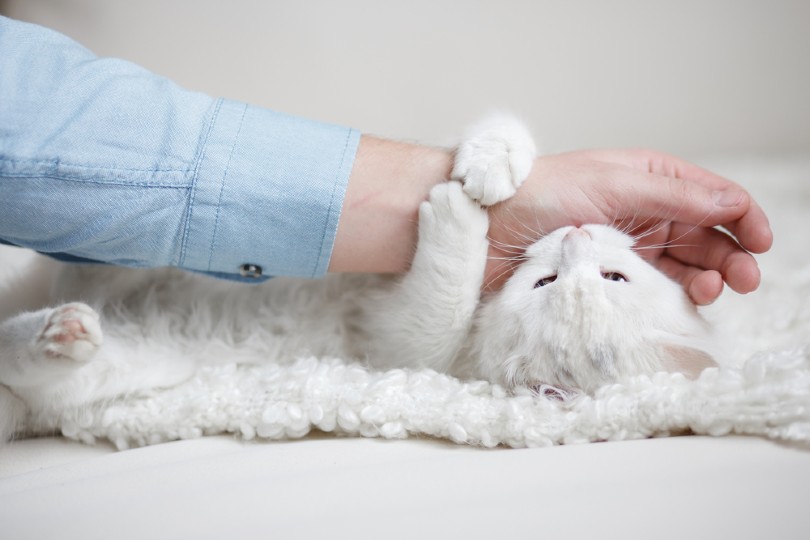
If a pregnant person is petting a cat, they need to do their best to avoid any sudden movements. These can scare the cat, and when they’re scared, you don’t know how they’re going to react.
Don’t hold them in place either, and only pet and cuddle them when they want it. Otherwise, the cat might fight back simply because they’re trying to get away. If your cat wants a bit more space, just give it to them!

4. Try to Avoid Stress
Before you start laughing at this, know that we completely understand that getting ready to bring a new baby into the home can be a very stressful time. We also understand that you’re not going to be able to eliminate all that stress, and that’s perfectly okay.
But if you can, do your best to reduce the amount of stress you exhibit around your cat. Your cat is extremely perceptive and can pick up on your increased stress levels. Not only that, but they can also pick up on why you’re feeling stressed and that it’s related to the pregnancy. Your cat then starts associating negative emotions with the pregnancy, which can lead to aggressive behavior toward you because you’re pregnant.
5. Give Your Cat Their Own Space
Cats are naturally a bit territorial, and sometimes pregnancy can make them feel like they’re losing out on their space. This can be especially true if the nursery or baby toys are starting to replace or relocate some of their stuff.
If you can, keep this at a minimum, but we understand that it’s completely necessary sometimes. You can help offset this by giving your cat a new space that they can call their own. It might not be as large or have as much stuff, but having an area that’s completely theirs can help them out quite a bit.
6. Don’t Pet Them If They Don’t Want It
You need to love on your cat to let them know you’re not replacing them, but that doesn’t mean you always need to pet them. There are plenty of other ways to play with your cat that give both of you a bit of space.
Laser pointers and other toys can be a great way to play and bond with your cat without getting into their personal space. Once they’re feeling a bit more comfortable with you again, you can start petting them again.

7. Stick to a Routine
This is another thing that’s extremely challenging when you’re pregnant. A baby will change things, and you’re going to be making some really serious routine changes during this time.
Unfortunately, cats hate changes in routine. We know that a change will be unavoidable, but changing to a new routine and sticking with it can help. If your cat knows what to expect each day, they can adjust to it and are less likely to display aggressive behavior.
8. Keep Your Cat Calm
When you scare your cat, there’s no telling how they’re going to react. Sudden movement and loud noises can freak out your cat, and when that happens, they might scratch or bite.
If you want to avoid this, one of the best things you can do is keep them calm. Don’t make sudden movements or loud noises, and perhaps give them a little catnip from time to time to help mellow them out. Pheromone diffusers also work well to help cats adapt to changes, like a new baby.
9. Train Them
A well-trained cat is far more likely to listen to you and stop any behaviors you don’t like. Use positive reinforcement training to show your cat better ways of getting rewards like your attention or treats. If your cat is displaying aggressive behavior, you want to respond sternly, letting them know that it’s unacceptable. You can also put them in a time-out as a form of punishment.
Avoid too much punishment, though. You want to build a strong relationship with your cat where they don’t want to act out, not a relationship where they’re scared of you.

Conclusion
When you’re getting ready to have a new baby, it can be a stressful time for everyone, and the last thing you want to deal with is correcting a cat’s behavior. We understand, but it’s also a stressful time for your cat, and they don’t know what will happen.
Correct the behavior with the tips that we’ve highlighted here, but also give them a little slack for their poor behavior, as they’re trying to adjust.
Featured Image Credit: Africa Studio, Shutterstock

Expert cat care, straight to your inbox
Vet-reviewed advice, behavior tips, and the best of Catster. Free, and you can unsubscribe anytime.
By signing up, you agree to our Terms & Conditions and Privacy & Cookies Policy.
Christian started writing for a local newspaper as a teenager, and he's been involved in the publishing industry for most of his adult life. Combining his love of writing with a passion for animals, he is currently the Director of Editorial at Pangolia and the Editor-in-Chief at Catster.
Christian lives in the Philippines with his wife, son, and four rescue cats: Trixie, Chloe, Sparky, and Chopper.
Join the conversation
Ask a question, share your story, or send private feedback.