Will Cat Conjunctivitis Go Away by Itself? Vet-Verified Facts & Info


There are a variety of eye infections and issues you may see in your cat throughout their life, and conjunctivitis is one of the most common eye issues that cats get. Conjunctivitis, also sometimes referred to as pink eye, is an eye infection that can be caused by a variety of issues.
At its most simple definition, conjunctivitis is defined by an inflammation of the thin membrane that covers the inside of a cat’s eyelids.
Does conjunctivitis require treatment, though? Does it go away on its own? Well, conjunctivitis does not always require treatment, however, that shouldn't stop you from seeing a vet. Here’s everything you need to know about conjunctivitis in cats.

What Causes Conjunctivitis?
Multiple things can lead to conjunctivitis, but it's most commonly seen in young cats, cats with depressed immune systems, and cats living in group settings like catteries. Much like children, kittens tend to pass conjunctivitis cases from one to the other until the whole litter has it.
In most cases, conjunctivitis is caused by microorganisms that are naturally present in a cat’s body. Sometimes, a cat’s immune system will overreact to the presence of these natural microorganisms, leading to an inflammatory response.
Allergic conjunctivitis is a form of conjunctivitis that is caused by exposure to environmental allergens and irritants, like dust, pollen, cleaning products, and plants.
The majority of conjunctivitis cases in cats are caused by herpesvirus, calicivirus, Chlamydophila, or mycoplasma. Cats with depressed immune systems, like those with feline immunodeficiency virus and feline leukemia, are at an increased risk of developing conjunctivitis.
Will Conjunctivitis Go Away Without Treatment?
Whether conjunctivitis will go away on its own or not is dependent on the cause of the infection. For bacterial conjunctivitis cases, medications are often required for treatment. For cats with immunosuppression and chronic diseases, like FIV, FeLV, and herpesvirus, conjunctivitis can recur regularly throughout their lives.
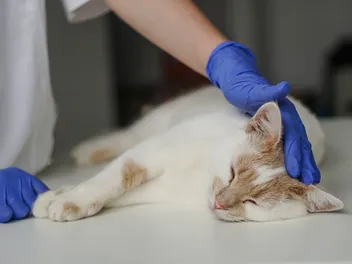
In general, eye problems are considered to be something that should be addressed by a vet as quickly as possible. Issues with eyes can quickly go downhill, leading to permanent damage. If your cat is exhibiting any signs of conjunctivitis or other eye issues, then they should be seen by a vet as soon as possible. Your vet will be able to determine if your cat needs to be treated for their conjunctivitis or not.
In complicated cases, a veterinary ophthalmologist may be needed to ensure your cat receives the appropriate treatment.
What Are the Signs of Conjunctivitis?
Due to the inflammation of the conjunctiva, you can expect to see swelling and irritation around your cat’s eyes and eyelids. You may also notice your cat squinting or blinking excessively, as well as not being able to open their eyes fully.
Tearing and eye drainage are also common symptoms. Eye drainage is typically clear, but it may oxidize as it dries, so keep an eye out for brownish or copper-colored drainage.
Sometimes, conjunctivitis is a symptom of other issues, with upper respiratory infections being the most common. Sneezing, coughing, nasal drainage, a poor appetite, and lethargy are often associated with upper respiratory infections.

Treating Conjunctivitis in Cats
The entire goal of treating conjunctivitis is to eliminate the infections and any pain that your fur baby is having. Most veterinarians will prescribe a topical eye drop or medicated ointment. All these things should help with inflammation and pain.
With proper treatment, you should expect to see your cat feeling better in 7–10 days. However, longer treatment may be required for more serious cases.
In Conclusion
Conjunctivitis is a treatable condition, but it doesn’t always require treatment. This is a common type of eye infection in cats, especially young cats and those with compromised immune systems.
Any eye condition should be seen by a vet to determine the cause of the infection and if it requires treatment. In some cases, conjunctivitis will clear on its own, but your vet will be able to determine if your cat’s case requires treatment or not.
See also:
Featured Image By: Dora Zett, Shutterstock
Expert cat care, straight to your inbox
News, insights, and useful advice, delivered to you.

No spam — unsubscribe anytime.
By signing up, you agree to our Terms & Conditions and Privacy & Cookies Policy.
How useful was this post?
Click a star to rate. You can leave written feedback afterwards. (We read all feedback.)
Brooke Billingsley, a former veterinary assistant for nine years, became a nurse in 2013. She lives in Arkansas with her boyfriend of five years, surrounded by her beloved pets: three dogs, two cats, five fish, and two snails. Brooke has a soft spot for special needs animals, caring for a three-legged senior dog and a widely known cat with acromegaly and cerebellar hypoplasia. She has developed a keen interest in fish keeping and is always learning how to provide the best environment for her aquatic pets. In addition to her passion for animals, Brooke enjoys gardening and maintains a vegetable garden during the summer. She stays active with yoga and received her 200-hour yoga teacher certification in 2020. Brooke also hosts a podcast that delves into folklore and myth, dedicating her spare time to research and writing. She embraces the philosophy that every day is an opportunity for learning and growth, continually working to acquire new skills and knowledge.