6 Most Common Eye Problems in Cats (Vet Answers)

Cat eye problems aren't all that common, but that does not mean they can't occur. Often, the types of issues seen are quite age-dependent.
For instance, young cats can get specific illnesses, like infections and "cat flu", which impact the eyes and are often viral or bacterial due to their developing immune systems. On the other hand, older cats can develop eye ulcers, as well as certain types of cancers. Old cat issues, like high blood pressure, can also impact the eyes, which is uncommon in younger cats.
Regardless, issues with cat eyes are almost always urgent, if not emergencies—so knowing what to look for can help determine if your cat has an eye problem. Read on to learn about some common eye issues seen in cats, how to identify them, and what to do about them. With a little knowledge, you can help your cat recover quickly and safely from any eye issues that might arise.

The 6 Common Eye Issues in Cats
As mentioned, common eye issues in cats can vary depending on the cat's age. So, let's break down the six most common eye problems in cats by the specific problem, typical signs, and treatment options.
1. Eye Infections

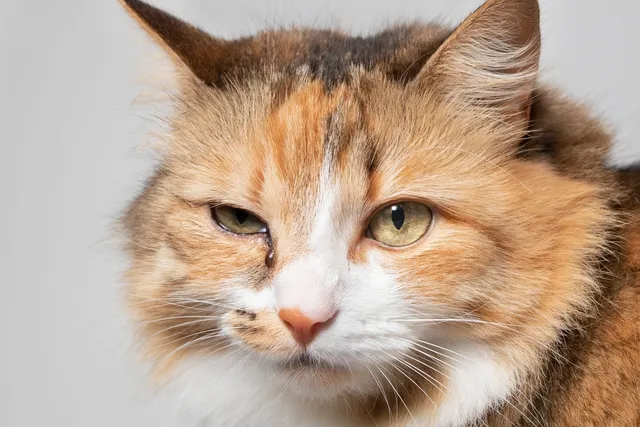
Eye infections can be bacterial or viral. Infections are most commonly seen in young kittens due to their developing immune systems, which can involve runny or weeping eyes, green or yellow eye discharge, or squinting. Sometimes, an eye infection is part of a larger upper airway infection, which many call the "cat flu".
Eye infections can be contagious to other cats in the house, so it may be a consideration to ask your vet if any affected cats should be isolated from other cats that are well (or dogs) in the house. The good news is that eye infections are generally very responsive to treatment, which often (though not always) involves antibiotics.
2. Uveitis

Inflammation of the eye without obvious infection is called uveitis. This can occur in both young and old cats alike, but it is often considered more common in cats with underlying immunosuppression—such as that caused by feline leukemia virus or feline immunodeficiency virus.
The inflammation can cause color changes to the eye or iris, the eyelids to look droopy, or the third eyelid to elevate. It can also leave deposits on the eye's surface that make it look bumpy. Often, the inflammation is treated with anti-inflammatory medications—sometimes in the form of eyedrops and sometimes as an oral medication.
3. Corneal Ulcers

Ulcers tend to occur during a viral infection—in particular, from feline herpes or feline calicivirus, though the former is more commonly the culprit. Ulcers can be seen in both young and old cats alike since the virus can sometimes go dormant in the tissues around the eye and flare up in later life.
By definition, an ulcer is a defect or loss of a portion of the superficial cell layer of the eye. This can allow other infections to occur or risk the integrity of the eye if the defect is deep enough. Ulcers often present with squinting or watery eye discharge. When big enough, ulcers can sometimes be seen with the naked eye.
Ulcers are considered to be quite painful for cats, and treatment should be sought if one is suspected. Medications are often prescribed, including antibiotics, antivirals, and ointments that wet the eye's surface, and encourage healing of the ocular surface.
4. Hypertensive Retinopathy

Generally only seen in older cats with high blood pressure, this eye problem results from extended periods of elevated blood pressure, leading to bleeding in the back of the eye, detachment of the retinal layers, and changes to vision—including permanent blindness, if left untreated. Most of these are not easily seen at home, so routine blood pressure monitoring with older cats is recommended.
Hypertensive retinopathy is treatable. However, immediate intervention is needed to have the best chance of treatment success. Treatment focuses on controlling blood pressure rather than any medications directly involving the eye.
5. Melanosis or Melanomas

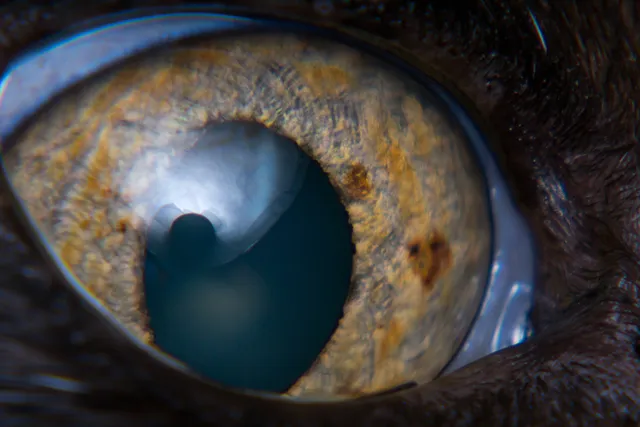
Melanin is a pigment found in cells that causes color changes. As cats age, the amount of melanin found in their iris' can increase in a normal aging process called melanosis. This can look like freckles in the eye.
However, in rare instances, this process can progress into a cancerous form called an ocular melanoma. In some instances, it can be difficult to determine the difference between melanosis and melanoma. Subtle changes of a melanoma may look like distortion of the eye or pupil, bulging of the iris, or a change in intraocular pressure.
Often, treatment for melanosis involves simply monitoring it at home, whereas melanoma may require removal of the affected eye.
6. Other Cancers
Other cancers can also impact the eye—including traumatic ocular sarcomas and fibrosarcomas. These types of cancer tend to occur as growths in or around the eye and often distort the eyeball or tissues around the eyeball. Treatment, when possible, may require removal of the affected eye.
Diagnostics
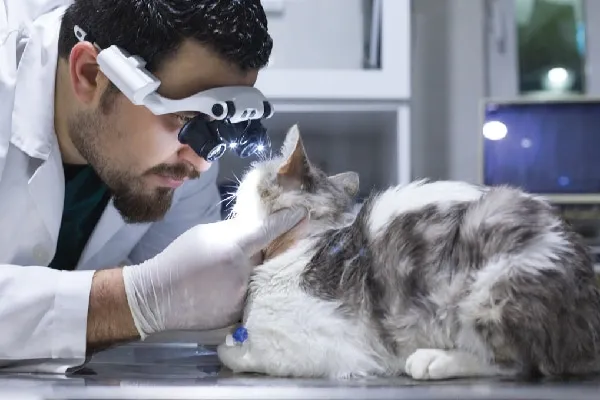
How are eye issues diagnosed? Many issues can be diagnosed via a physical examination. Sometimes, your vet will also do a retinal exam with an ophthalmic lens and light to look at the retinal layers.
If an ulcer is suspected, the surface of the eye can be stained with a dye to check for loss of the surface cells that indicate an ulcer.
If certain viruses or bacteria are suspected, swabs may be taken to examine under the microscope or cultured or sent for PCR testing.
Some issues might require specialized testing to diagnose, which can include slit lamps that allow for up-close inspection of the pupil and iris or handheld "pens" that check the pressure inside the eye.
General Signs of Eye Problems
In general, eye problems in cats are indicated by any of the following:
If you’re concerned about your pet’s well-being, we recommend you contact a veterinarian.
Conclusion
If you do have concerns about your cat's eyes, do not hesitate to reach out to your vet. If they are not open, contact a local emergency vet who can often offer you guidance as well—as eye problems generally should not wait!
If concerns do arise, photos and videos of the concern can be very helpful. This might even save you and your cat from needing a visit to the vet clinic if it is something that is normal or that can be monitored at home.
Related Reads:
Featured Image Credit: savitskaya iryna, Shutterstock
Expert cat care, straight to your inbox
News, insights, and useful advice, delivered to you.

No spam — unsubscribe anytime.
By signing up, you agree to our Terms & Conditions and Privacy & Cookies Policy.
How useful was this post?
Click a star to rate. You can leave written feedback afterwards. (We read all feedback.)
Dr. Lauren Demos DVM (Veterinarian)
As a veterinarian, Lauren is eager to share her experience in emergency medicine and cats, with our readers. She loves sharing helpful, real life tips for having cats as part of your life, and what to do in critical situations with your pets.
Lauren is a vet with over a ten years of experience in cats and dogs, along with infectious diseases. She enjoys teaching, and lectures for students, pet owners, and clinicians, on various topics.
Lauren received her degrees from Murdoch University, in Perth.