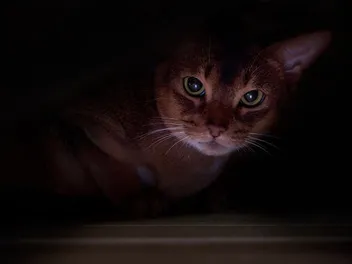
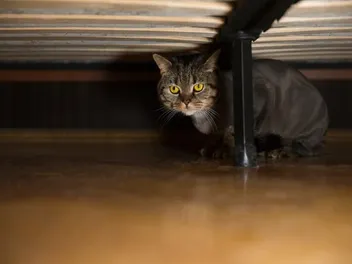
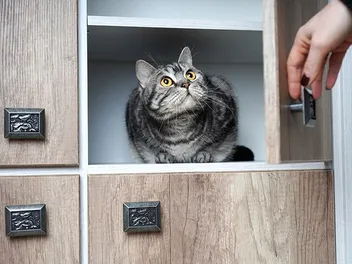
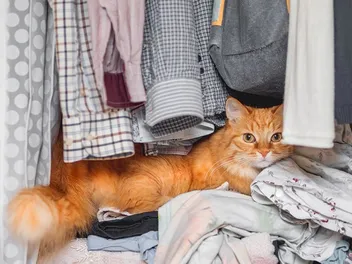
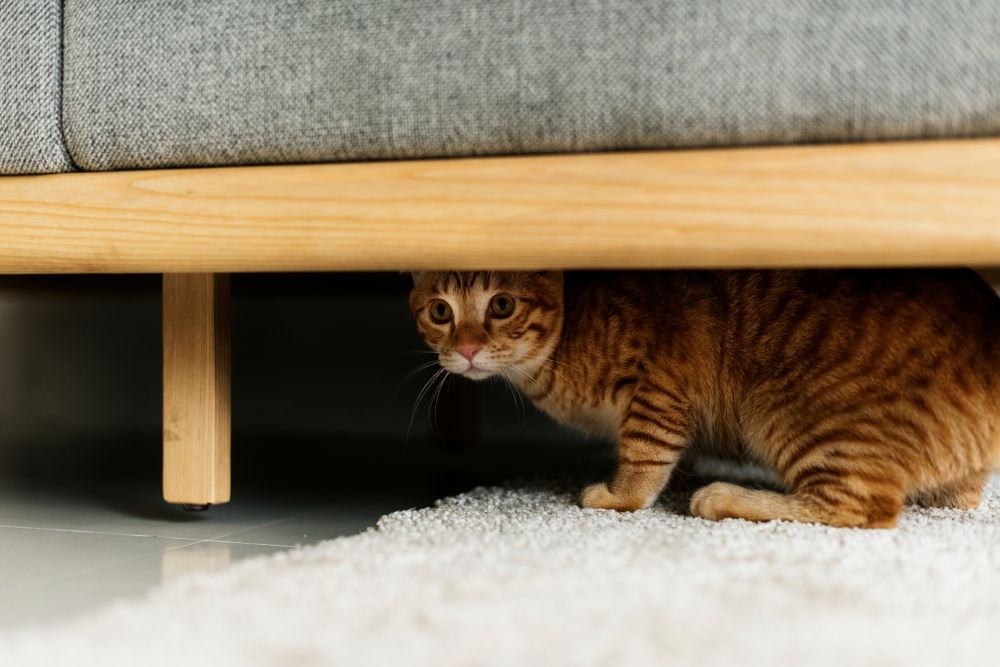
Why Is My Cat Hiding Suddenly: 12 Vet-Reviewed Reasons


In this article
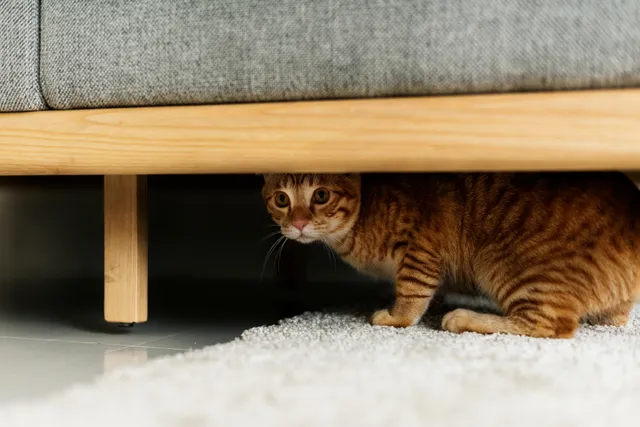
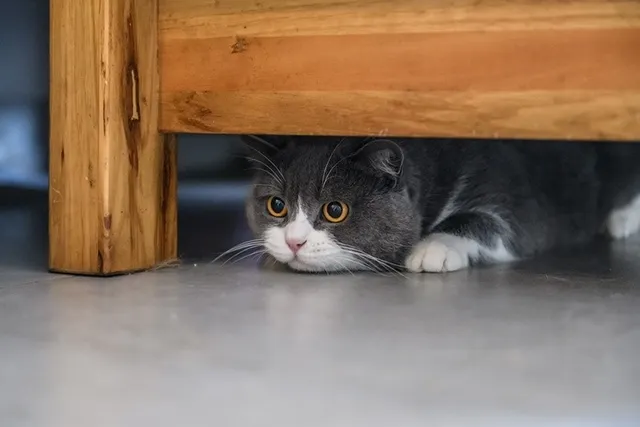
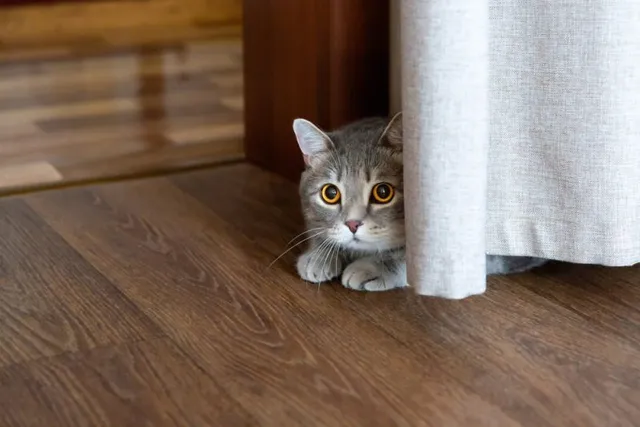
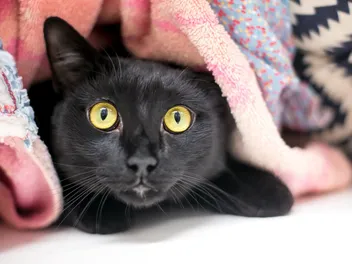
Hiding is a behavior that pet owners may not see as often in dogs as in cats. However, it’s a safe bet that something is behind it that may either mean something benign or a more serious issue worth further investigation. Bear in mind that felines exhibit traits closer to their wild side. After all, the domestic cat shares 95.6% of its DNA with its wild cousin, the tiger.1
Cats also have many similar behaviors, such as scratching and scent marking. It’s no wonder our feline friends would possess some of the same survival instincts as hiding. However, if your usual social pet goes dark on you suddenly, your concern may be valid. Many things may cause your pet to act this way, often with several factors at work.

The 12 Reasons Why Your Cat Is Suddenly Hiding
1. Frightened of Visitors to Your Home
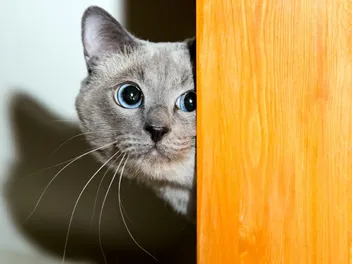
Many describe cats as hyper-sensitive. They prefer their worlds to stay the same. That instinct goes back to their wild side, where changes could mean danger. In the cozy environment of their home, that drive may extend to strangers. You may be the only humans that your pet thinks exist. Anyone else is a potential monster or predator. It may be more pronounced if your cat’s past experiences were negative.

2. Strange or Unexpected Sounds
Some dogs are fearful of storms, fireworks, or other loud sounds. However, they aren’t the only ones that may cringe at the sound of loud thunder or a heavy-duty truck going down your street. Cats may find comfort and security in a hiding place, not unlike lions, tigers, and bobcats—oh, my! It also goes back to the feline desire for no changes in their routine.
3. Illness
Of course, felines are predators, striking fear in prey species like squirrels. However, even tigers and lions are vulnerable at some times in their lives. The same adage applies to your domesticated house cat. If your pet is ill, it’s at risk of attack by other animals on the hunt. It’s the proverbial double-edged sword. Instinct tells them to rest for healing while putting them in danger from letting down their guard.
A box or covered bed may provide the security your cat needs during these times with three walls around it. However, any place may do the trick, even if it seems like an unusual hiding spot. Scientists theorize that an enclosed space may relieve their anxiety.
If you are concerned about the health and well-being of your pet, seek veterinary advice for the best course of action.
4. Pain
Like a sick pet, one that is in pain is also vulnerable. Your cat may seek shelter if something hurts, even if it’s the paw you stepped on accidentally. Your pet may want to lick its wound without the concern of injury or a repeat attack. Don’t be surprised if your kitty is reluctant to come out, no matter how much coaxing. If it hisses, remember that it’s often a defensive vocalization.

5. Imminent Birth
The behavior of a pregnant queen may change suddenly as she gets closer to birth. You may notice your pet hiding more or at least searching for a safe place to have her kittens. It’s a perfectly normal behavior for cats to “nest” and retrieve to birth and nurse their kittens, as they are extremely vulnerable, especially during the first weeks of life. In wild feline behavior, it makes sense for the mother to leave her offspring at a den or nest so she can hunt to keep them fed.
6. New Surroundings
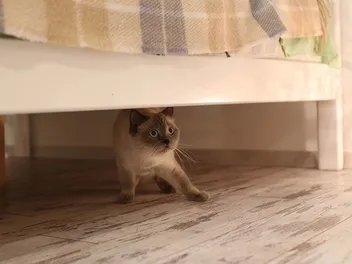
Moving to a new home is probably one of the most stressful events in a cat’s life. It makes sense, evolutionarily speaking, since it removes their competitive edge in different surroundings. Hiding allows your pet to survey the new digs while lessening their vulnerability. However, it doesn’t have to be a new house. Even getting new furniture or rearranging a room may prompt this response.
7. New Addition to the Household
“New” can mean anything, from another cat to a baby. Part of the reason is that it’s an unknown factor. Your pet isn’t sure what to expect with this possible change in home and family dynamics. You may find that particularly true if your kitty hasn’t had to share you with anyone. Of course, it can also take an aggressive turn, depending on your cat’s personality.

8. Anxiety or Stress
Exposing your pet to new experiences as a kitten is essential to make them less vulnerable to anxiety or stress when exposed to something different. The first instinct of a cat is to survive. Hiding offers the protection it needs until it can determine whether a change is of no concern or a potential threat. Some have a lower threshold than others.
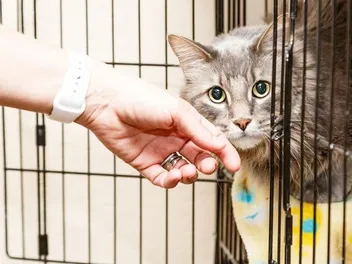
Rescued felines with a history of abuse and neglect are more likely to be triggered by small details and depending on their fight or flight response, they might attack or run to hide.
9. Lack of Early Socialization
Kittens inherit their friendliness and personalities in part from their parents. Socialization is also a critical part of a cat’s behavior. It typically occurs before 9 weeks old. However, the chances are that this task will fall to the breeder since it happens before weaning. That’s why you should ask about a kitten’s home situation and handling before you choose one for a pet.
Cats that aren’t handled a lot or exposed to new things are more likely to be fearful. You may find that they hide more than an outgoing pet. Any of the things we’ve described can trigger this behavior. The lack of early socialization may make it worse or more challenging to correct.
10. Too Much Love
Socialization and habituation may play a significant role in how well your cat accepts handling or play. Generally, felines respond best to short periods of playtime instead of one lengthy session. If your pet starts hiding, it’s a sign they need some downtime. That may be particularly true with children and dogs that may be too rough with your kitty. We suggest supervising when your kids play with your cat.

11. Breed
Sometimes, nature is behind hiding behavior. We’ve discussed how a pet’s personality is partially inherited by its parents. A study by the University of Helsinki identified seven traits in felines. The researchers found distinct differences in behavior based on the cat’s breed. For example, Russian Blues were the most fearful of the ones tested.
The researchers also found variations in sociability toward humans. The Persian was lowest versus the friendliness of the Siamese. This factor can come into play with our last reason. Your pet may instinctively hide if you or a family member dote too much on your cat. Felines will remember unpleasant experiences and try to avoid them.
12. Weaning Time
The time a cat spends with its mother and littermates is critical to its adult behavior. Often, it sets some traits seemingly in stone, making it challenging to build trust and a loving relationship. We love young kittens just as much as others. However, research has shown that you’ll have a better pet that is less aggressive and fearful if you wait until 14 weeks to bring a new pet into your home.

Helping Your Cat Come Out of Hiding
Anyone who has owned a cat knows they are notorious for masking or hiding illnesses. You may not know your pet is sick until it becomes more serious and the signs become evident. Therefore, it’s essential to investigate any sudden changes in their actions. You may find some evident triggers, like your pet disappearing when visitors or the little ones come to your home. The best solution is not to force the issue.
You should also respect your cat’s need for a stable home with no abrupt changes to the routine. Of course, some are inevitable. The good news is that your presence can help your pet cope with the stress and anxiety in these situations. It also goes a long way toward cementing your bond with your feline companion.
However, hiding is a red flag if it occurs suddenly with no evident cause. We strongly urge you to schedule a vet visit, especially if you notice other signs, such as a lack of appetite or lethargy in a normally active cat. Remember that hiding is often a later sign of a medical problem.

Conclusion
The takeaway is that your cat’s hiding may have other reasons behind it. Environmental circumstances may trigger unwanted behaviors. The best advice we can give is to meet your kitty on its terms. Remember that an unsociable pet is acting this way for a reason. Your job as a pet owner is to find out why and take the necessary actions.
Sources
https://www.livescience.com/cats-tricked-by-optical-illusion-boxes.html
http://www.vetstreet.com/our-pet-experts/why-does-my-cat-hiss
https://www.sciencedirect.com/science/article/abs/pii/S1385110117303428
https://vcahospitals.com/know-your-pet/socialization-and-fear-prevention-in-kittens
https://www.petmd.com/cat/care/how-long-should-you-play-your-cats-each-day
https://www.sciencedirect.com/science/article/abs/pii/S0168159121002318
Featured Image Credit: Rawpixel.com, Shutterstock
Expert cat care, straight to your inbox
News, insights, and useful advice, delivered to you.

No spam — unsubscribe anytime.
By signing up, you agree to our Terms & Conditions and Privacy & Cookies Policy.
How useful was this post?
Click a star to rate. You can leave written feedback afterwards. (We read all feedback.)
Christian started writing for a local newspaper as a teenager, and he's been involved in the publishing industry for most of his adult life. Combining his love of writing with a passion for animals, he is currently the Director of Editorial at Pangolia and the Editor-in-Chief at Catster.
Christian lives in the Philippines with his wife, son, and four rescue cats: Trixie, Chloe, Sparky, and Chopper.