Get

In Your Inbox

Catster is reader-supported. When you buy via links on our site, we may earn an affiliate commission at no cost to you. Learn more.

Cat Ear Mites vs Earwax: Vet-Reviewed Ways to Tell the Difference

Share

cat ear mites vs cat earwax featured image

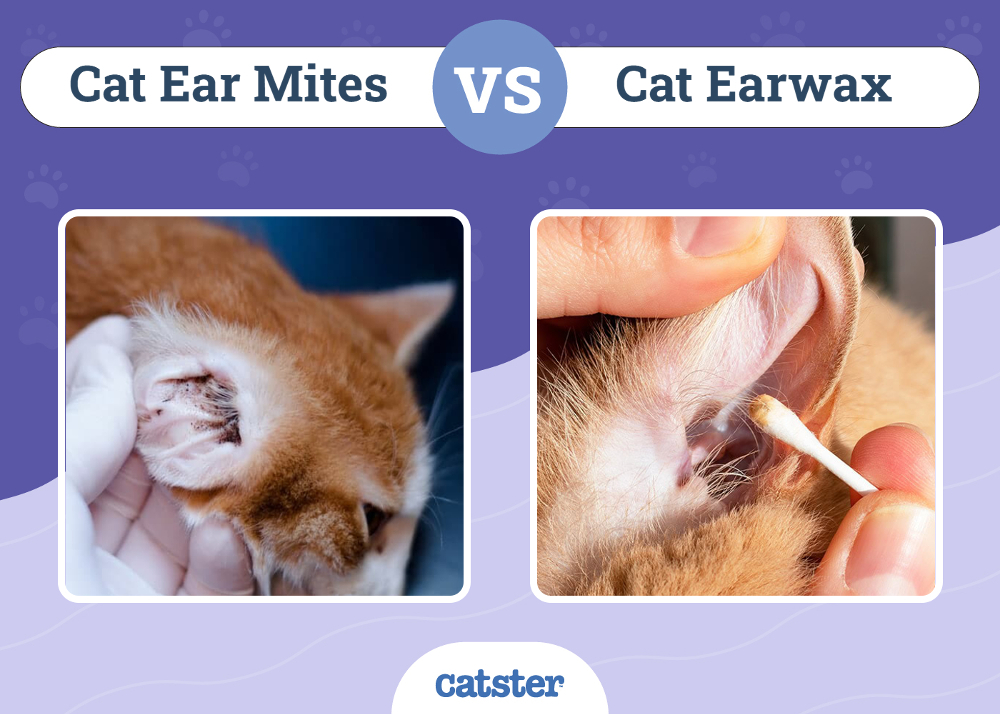
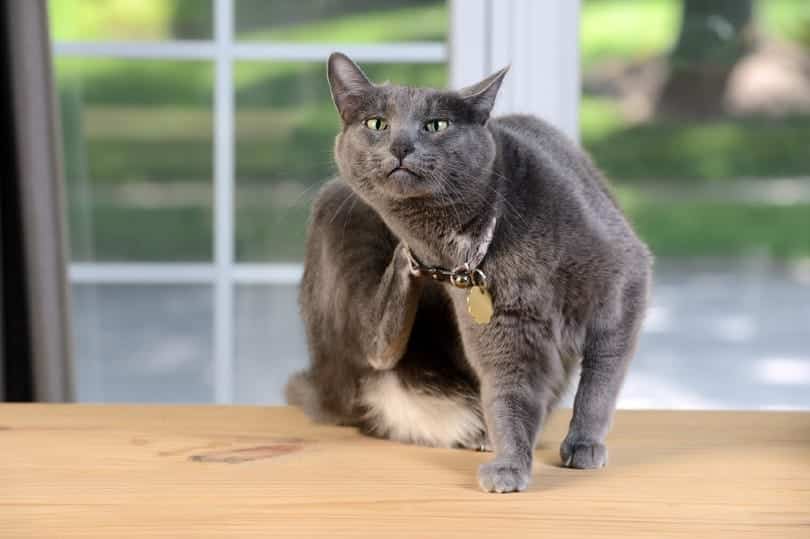
Earwax is entirely normal. Ear mites, on the other hand—not so much. If your cat has ear mites, they will require veterinary care. While ear mites aren’t often serious, they can cause extreme itching, discomfort, and even skin lesions if they aren’t dealt with promptly.

Sometimes, it is difficult to tell the difference between ear mites and earwax when it comes to your feline. Luckily, there are a few differences between these two scenarios. There is no reason to take your cat to the vet for a small amount of earwax, but ear mites are different.

In this article, we’ll help you tell the difference between these two issues. You don’t want to take your cat to the vet unnecessarily, but you don’t want to ignore health problems either. Remember that, if in doubt, you should always get your cat checked sooner rather than later!

If you need to speak with a vet but can't get to one, head over to PangoVet. It's an online service where you can talk to a vet online and get the advice you need for your pet — all at an affordable price!

PangoVet_Mention-in-Content for PangoVet2 save money

divider 1 paws

Overview of Cat Ear Mites

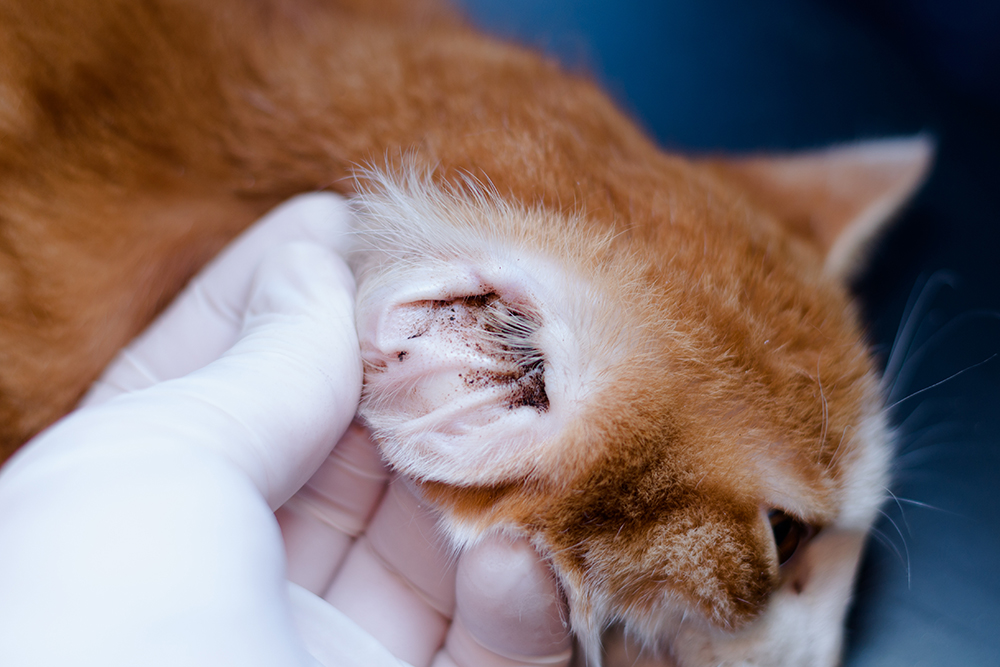
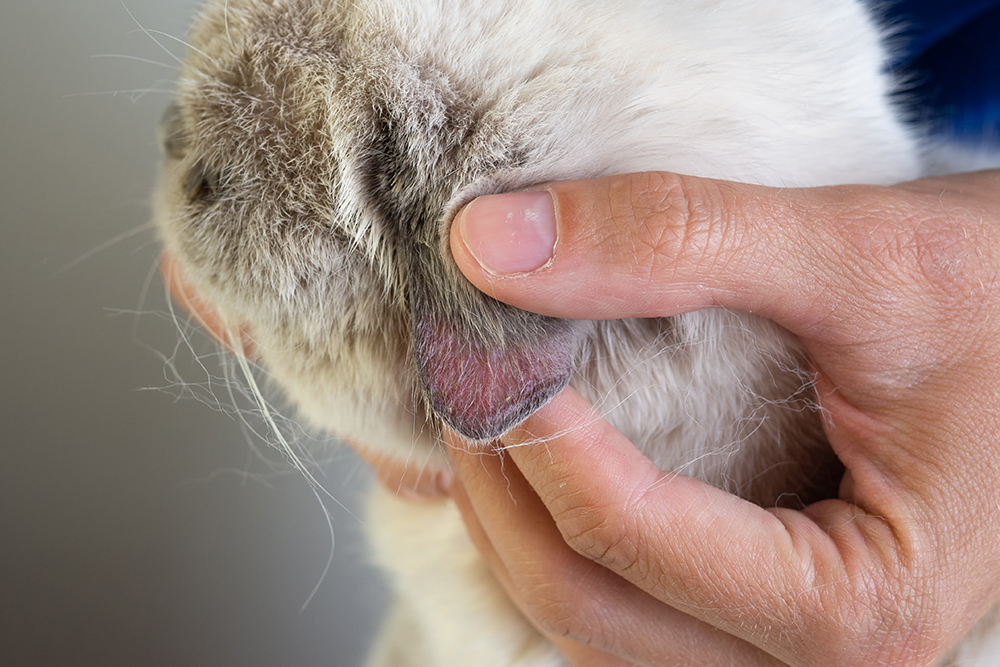
hand showing cat ear mites
Image Credit: Todorean Gabriel, Shutterstock

Ear mites (Otodectes cynotis) are tiny parasites that live in an animal’s ear canal, including cats. They are widespread in sick cats, kittens, and those with compromised immune systems. However, ear mites can also occur in otherwise healthy adult cats.

Ear mites are highly contagious, and they can jump from dogs to cats. However, they are not very common in people.

Signs

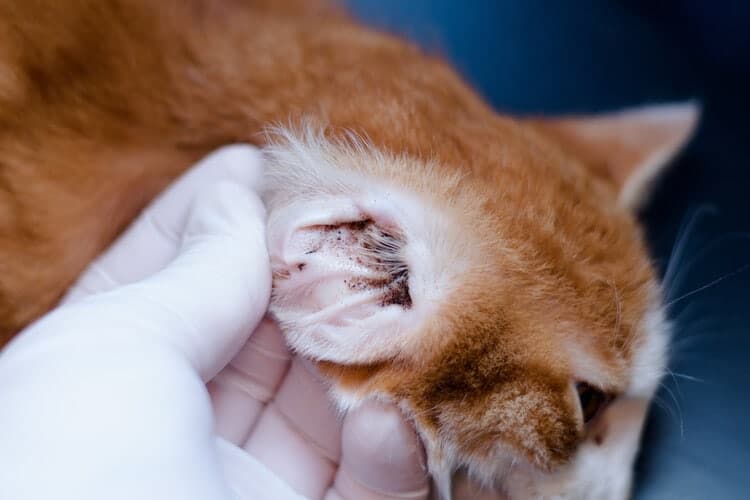
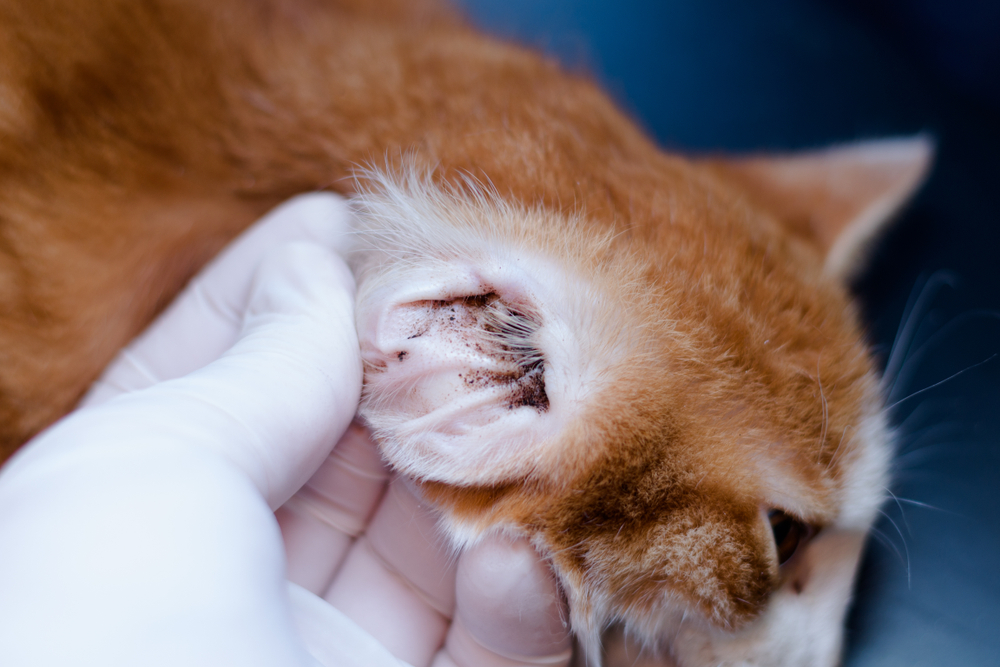
The naked eye can barely see ear mites. They are so small that only a microscope can pick them up clearly. Just by looking into your cat’s ear, you might be able to see tiny whitish dots that move away from the light. However, your cat’s other signs will be more helpful to determine if your cat has ear mites.

Here are some of the most common ear mite signs:

  • Constant head shaking
  • Constant ear scratching
  • Irritated ear canal
  • Skin around the ear is inflamed and crusty
  • Buildup of dark ear discharge
  • Unpleasant odor from the ear
  • Disoriented movements
  • Tilted head

divider 1 paws

Overview of Earwax

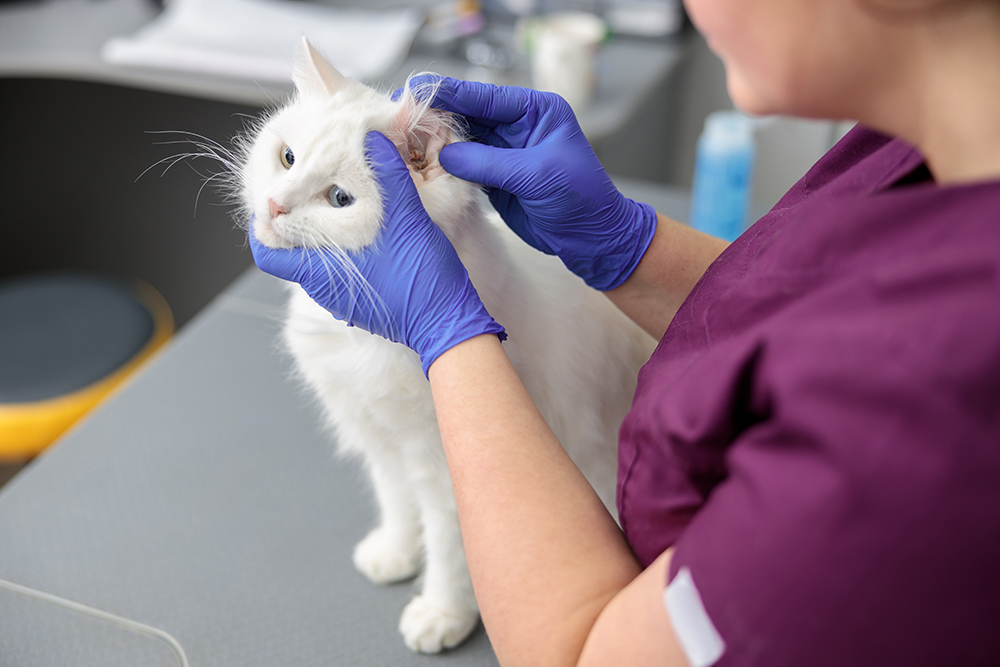
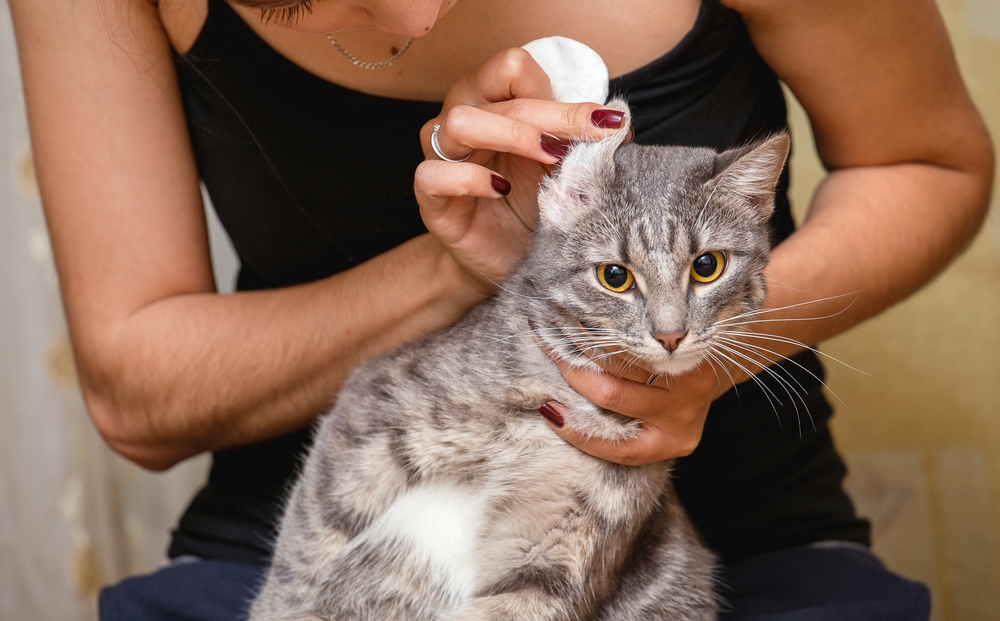
Cat ears getting cleaned
Image Credit: Yaya Photos_Shutterstock

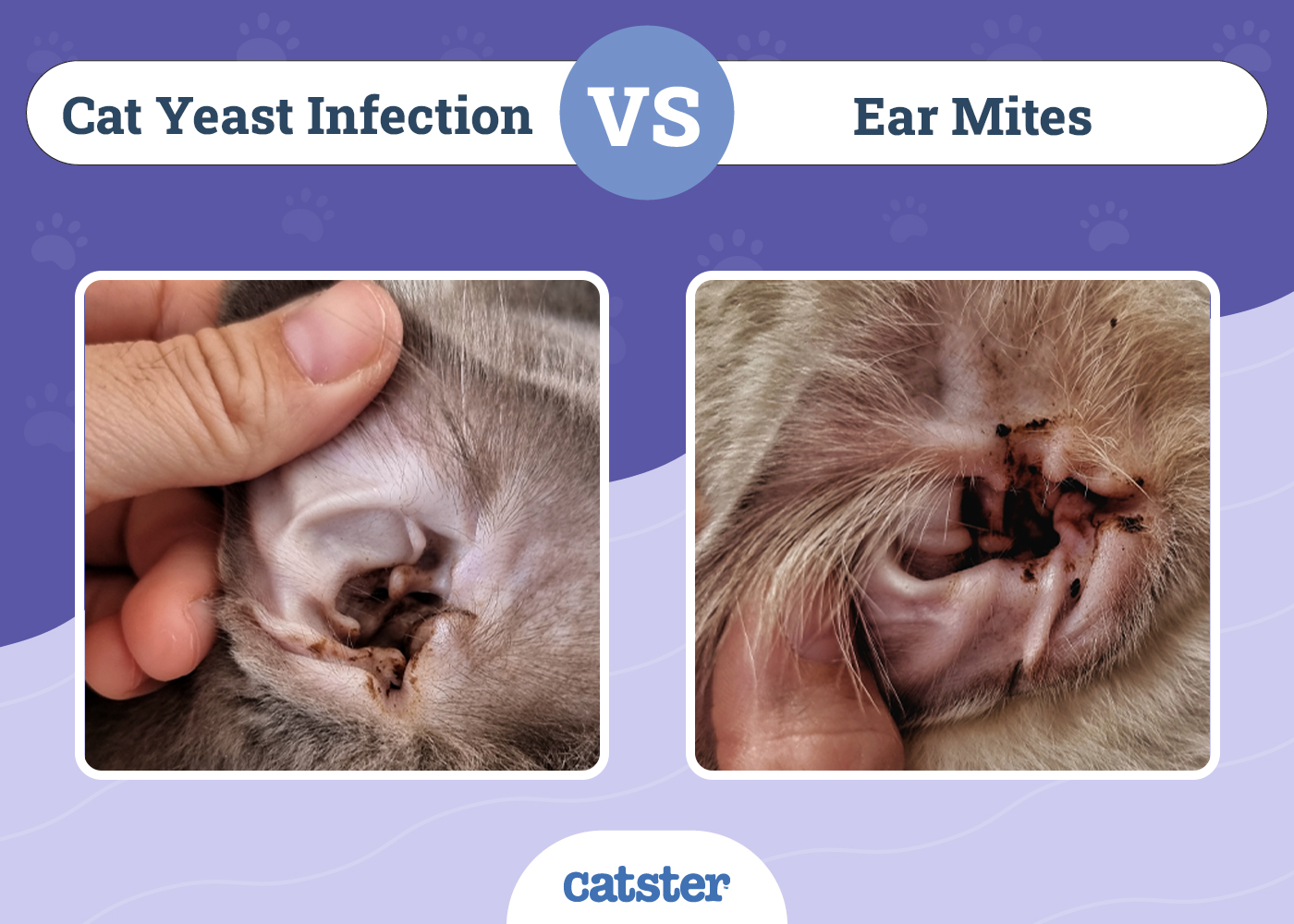
Cats do not usually have a lot of earwax in their ears. If a cat has a lot of earwax, it may be a sign of an underlying problem, so it is recommended to speak with a vet. This is especially true if the earwax is smelly. Yeast and bacterial infections will cause an increase in earwax, for instance.

Normal ear appearance includes a minimal or no amount of earwax and pale pink skin. If the earwax is abundant or smelly, it is a sign of an underlying problem. It is essential to note that earwax and ear mites are not necessarily exclusive. Increased dark and dry ear discharge is a sign of ear mites. Therefore, if your cat has a lot of earwax and they are scratching, there is a good chance that they have an ear mite infestation.

Hepper Pet Wash Wipes
  • Gentle Care For All Pets - Infused with moisturizing hypoallergenic ingredients & enriched with...
  • Deep Cleans From Head to Tail - Tackle the toughest dirt & messes with our extra strong pet wipes...
  • Freshness On The Go - Each dog grooming wipes pack contains 30 counts of premium dog wipes that...

Cleaning your cat's sensitive areas can be tricky, but high-quality wet wipes can make it much easier. Try a natural, hypoallergenic option like Hepper's Wash Wipes, made with moisturizing ingredients and specifically designed to gently clean your cat's skin and fur. These wipes are as convenient as they are effective!

At Catster, we’ve admired Hepper for many years and decided to take a controlling ownership interest so that we could benefit from the outstanding designs of this cool cat company!

divider 1 paws

How to Tell the Difference

Ear problems leading to increased earwax typically cause various degrees of itchiness, ear discomfort, redness, inflammation, and head shaking. If your cat shows any of these signs, you should consult with your vet because an underlying ear problem is extremely likely.

Cats with ear mites will usually have dark and dry ear discharge that can resemble coffee grounds. However, this can be difficult to figure out if you’ve never paid much attention to your cat’s ears before. What exactly darker means can be confusing. Cats with ear mites might have a different odor coming from their ear; however, this is not a typical sign.

Bacterial or yeast infections do generally cause an odor. You will need veterinary attention to determine precisely what is wrong with your cat’s ear, but ear odor does indicate that something is wrong.

Usually, the ear mites lead to damage in the ear canal and ear flap after they’ve been there for a while. Severe itchiness and discomfort appear sooner, the damage to the skin is a consequence of the scratching. Bacterial and yeast infections are also itchy and uncomfortable.

divider 1 paws

Treating Ear Mites

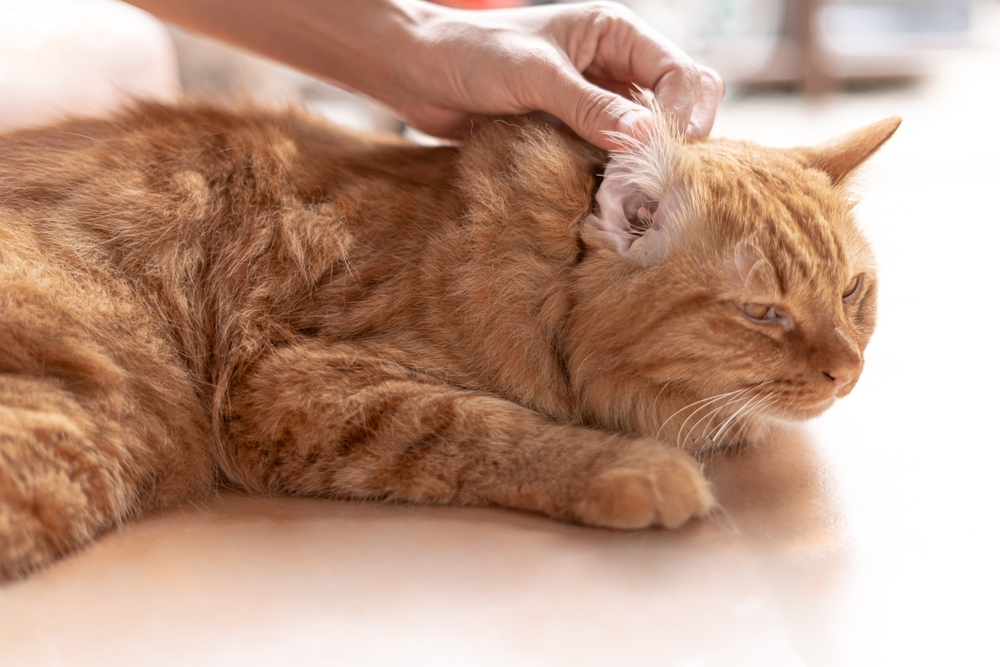
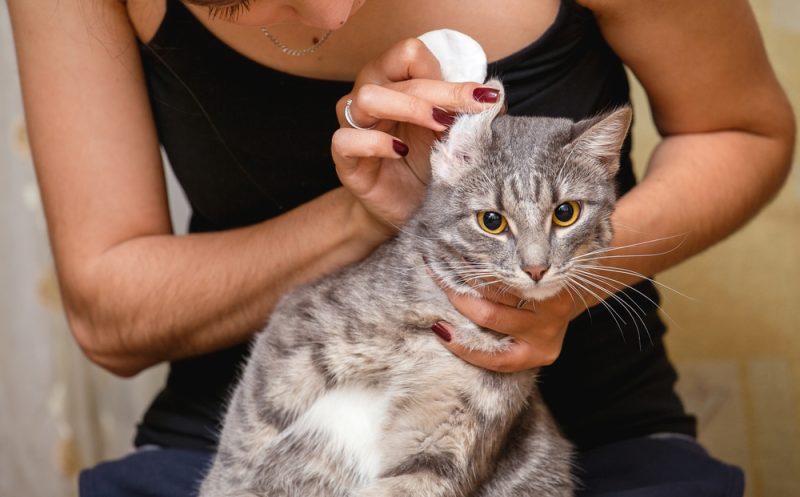
woman-cleaning-cat-ear
Image Credit: frantic00, Shutterstock

If you notice any signs that your feline has ear discharge or uncomfortable ears, you should seek veterinary attention. Your vet can quickly get a swab sample of your cat’s ears and look at it under a microscope, which will help them determine the underlying problem.

Bacterial infections often require antibiotics. However, the medication for treating ear mites or fungal infections is different. That is why your vet needs to determine the correct cause. Otherwise, the treatment could be ineffective. For ear mites, an anti-parasitic formulation will be administered. This formula is straightforward to administer at the vet’s office and quickly gets rid of these bugs.

Other Types of Mites

There are other types of skin mites your cat may get as well. Feline scabies (Notoedric mange), walking dandruff (Cheyletiellosis), and feline demodicosis are the most common. These produce slightly different signs depending on the body part affected. Your vet can treat these mites, but it requires an accurate diagnosis. The treatment consists of antiparasitic medication and, sometimes, medication to treat the itchiness and secondary infections.

These mites are generally very contagious. Because of this, it is essential to seek veterinary care right away.

divider 1 paws

Conclusion

Ear mites and earwax often come hand-in-hand. Ear mites will cause an increase and change in your cat’s earwax due to the blood, debris, and skin issues caused by the ear mites. Typically, a cat with an infection or ear mites will have uncomfortable and itchy ears with earwax. They may look a bit like coffee grounds.

Therefore, you shouldn’t necessarily be trying to tell the difference between ear mites and earwax. You should always consult your vet since an untreated ear infection will cause major problems for your cat that may be avoidable.

Related Reads:


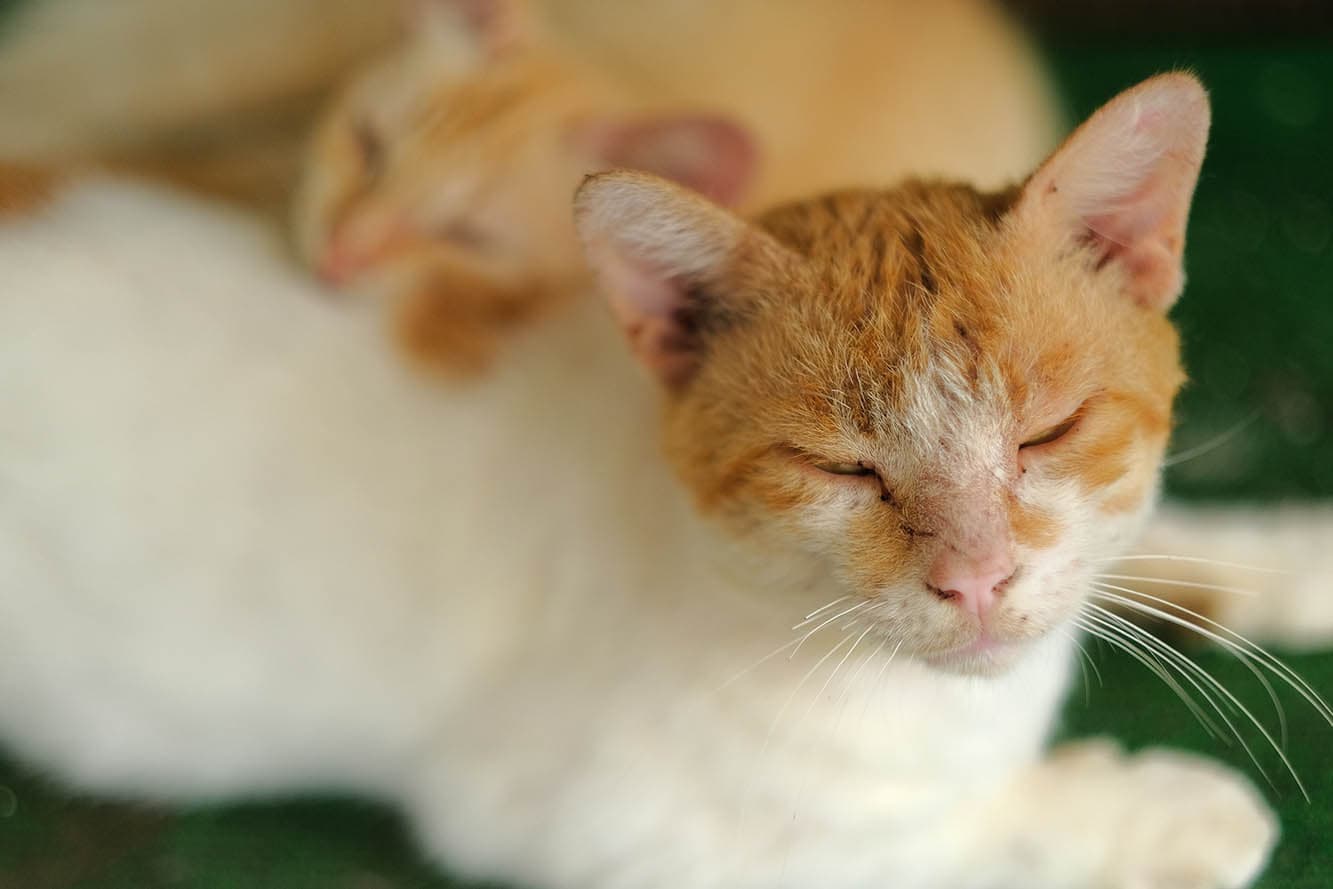
Featured Image Credit: (L) Todorean-Gabriel, Shutterstock | (R) Yaya Photos, Shutterstock

Want content like this delivered to you?

Sign Up For Our Newsletter

News, insights, expert advice, and everything cat

* By submitting, you agree to our Terms & Conditions and Privacy & Cookies Policy.


How useful was this post?

Click on a star to rate (you can leave written feedback after clicking submit)

Help us improve Catster for pet parents!

Your feedback really matters.

What did you like about this post? Also how can we improve it?

Join the conversation

Leave a Reply

You’re very welcome to leave a comment or question. Please know that all comments must meet our community guidelines, and your email address will NOT be published. Let’s have a positive and constructive conversation.


Catster's Digital Magazine is Back!

Vet-approved health & behavior advice

Real cat stories & community features

Chatting About the Rainbow Bridge, Euthanasia, and Laughter During Grief | Chatty Cattys, Episode 24

If you’ve ever felt the loss of a beloved cat, or are dreading the day when your pet crosses the rainbow bridge, you’ll...

The Simple Reasons Cats Refuse to Let Anyone Use the Bathroom Alone

Cats have an extraordinary talent for making themselves present in the most inconvenient places, and the bathroom ranks near the top of the...

A Paw-sitive Milestone: Canada Officially Becomes a Declaw-Free Nation

Canada has officially become a declaw-free nation. On May 25, 2026, a new regulation was filed in Ontario under the Provincial Animal Welfare...

The Surprisingly Simple Ways to Help a Cat With Hairballs

Cats spend an astonishing amount of time grooming. It is part hygiene routine, part comfort ritual, and part instinct that traces back generations....

More related

Are Diffusers Safe for Cats to be Around? Vet-Approved Science & Safety Guide

It may surprise you to learn that cats primarily interpret the world from their nose. This is because, like many other animals, their...

Do Pets Affect Intimacy Between Pet Parents? 2026 Survey Results

Thanks to several factors, including the recent Covid-19 pandemic, pet ownership worldwide has increased significantly.1 The millennial generation, in particular, leads the charge,...

Scented No More: Dr Elsey’s Cat Litter Makes a Sensible Switch

Dr Elsey’s has been a household name in cat food and litter for decades, but just because they’ve been around for a long...

Why I Allow Our Cats on the Countertops: Dr Karyn’s Perspective

Hi, I’m Dr. Karyn! Read my introduction to learn more about me and meet my five hilarious cats: Clutch, Cyril, Alex, Zelda, and...

Keep reading

Why Is My Cat Suddenly a Picky Eater? 7 Vet-Reviewed Reasons

Cats are known to be relatively pickier than most animals out there. In a way, this helps them stay alive. They aren’t prone to eating things that they shouldn’t (usually), which would help them stay alive in a natural setting....

cat not eating

IMHA in Cats: Signs, Causes & Care (Vet-Reviewed)

IMHA, or immune-mediated hemolytic anemia, describes a condition where the immune system misfires and breaks down the body’s red blood cells, a process called hemolysis. You may see it called autoimmune hemolytic anemia (AIHA) as well. The body inappropriately attacks...

veterinary-blood-test

Can Cats Eat Pumpkin? Vet-Reviewed Facts & FAQ

Yes, cats can eat pumpkin. It isn’t suitable as their whole diet or even most of their diet. However, it can be a nice treat or be used in specific circumstances to add nutrients to your cat’s diet. Pumpkin has...

Can Cats Eat Pumpkin

Is Pilea Toxic to Cats? Vet-Reviewed Houseplants Examined

When you think you’ve seen everything as a pet owner, your furry friend does something new to throw you for a loop. That’s what happens to cat owners every year when they notice their feline friends eating different plants in...

Catster_Is Pilea Toxic to Cats

Can Cats Eat Mustard? Vet-Verified Risks & Precautions

A cat sneaking a taste of the turkey sandwich you accidentally left on the counter can seem harmless until you consider everything that might be in it. While many toppings like lettuce or mayo may be safe for cats to...

Catster_Can Cats Eat Mustard_v1_Dec 4 2024

How to Get Your Cat to Stop Meowing: 4 Vet-Approved Methods

If any animal embodies the phrase “moving in silence like the G in lasagna,” it must be a cat. Unlike canines, felines are not perceived as overly vocal since being silent allows them to stalk their prey and pounce like...

Cat-meowing

Can I Cut My Cat’s Nails With Human Nail Clippers? Vet-Reviewed Facts & Risks

Some cats, especially indoor cats, need to have their claws regularly trimmed. It prevents the nail from curling around and growing in on itself and can stop injuries to the soft paw pad. Outdoor cats don’t generally need their claws...

hand holding human nail clipper and cat paw

Why Do Cats Hiss and Growl at Strangers? Vet-Reviewed Behavior Insights

Hissing and growling are ways cats communicate how they’re feeling. Hearing your cat hiss and growl can be shocking and a bit embarrassing if they’re doing it when you have house guests. Some cats may hiss and growl at strangers...

siamese cat hissing

Love Cats? So Do We! Join the Catster Community

Stay informed with expert pet care insights delivered straight to your inbox! Discover professional guidance on animal behavior, feeding tips, trusted product picks, and much more.


Sign up for the Catster Email Newsletter

Stay informed with expert pet care insights delivered straight to your inbox! Discover professional guidance on animal behavior, feeding tips, trusted product picks, and much more.