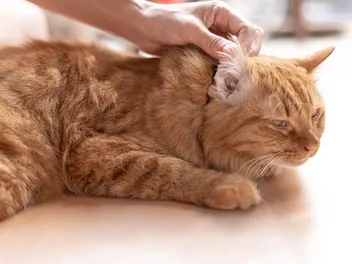
Can I Catch Ear Mites From My Cat? Vet-Verified Facts & Info


Ear mites are an icky problem that is common in stray cats and kittens but also can occur in outdoor cats that are exposed to the mites. Ear mites are tiny mites that live on the surface of the skin. They are most commonly found in the ear canal, but they can also infect the skin around the ear, as well. While it is rare for them to be transferred to humans, ear mites are extremely contagious between pets.
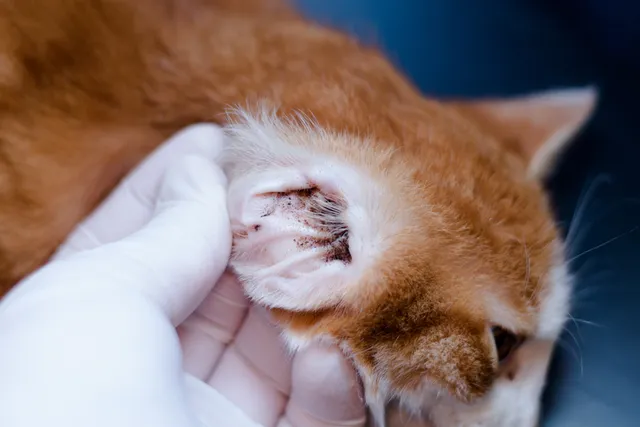
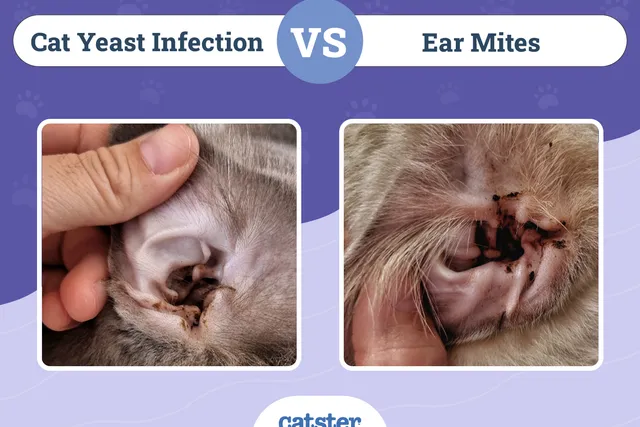
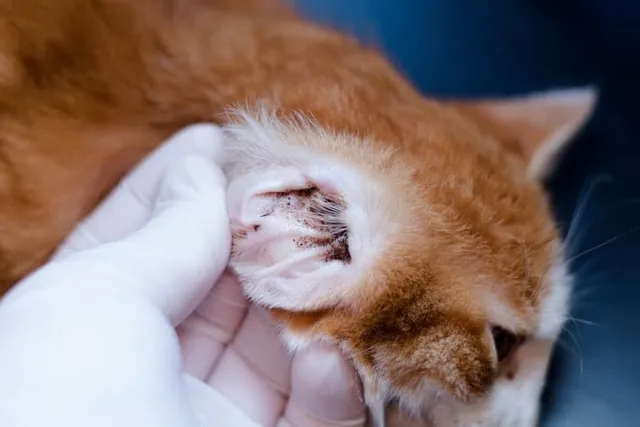
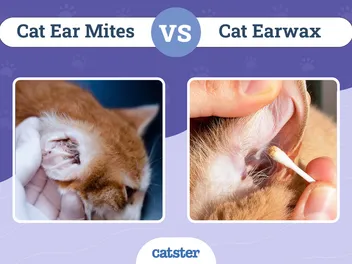
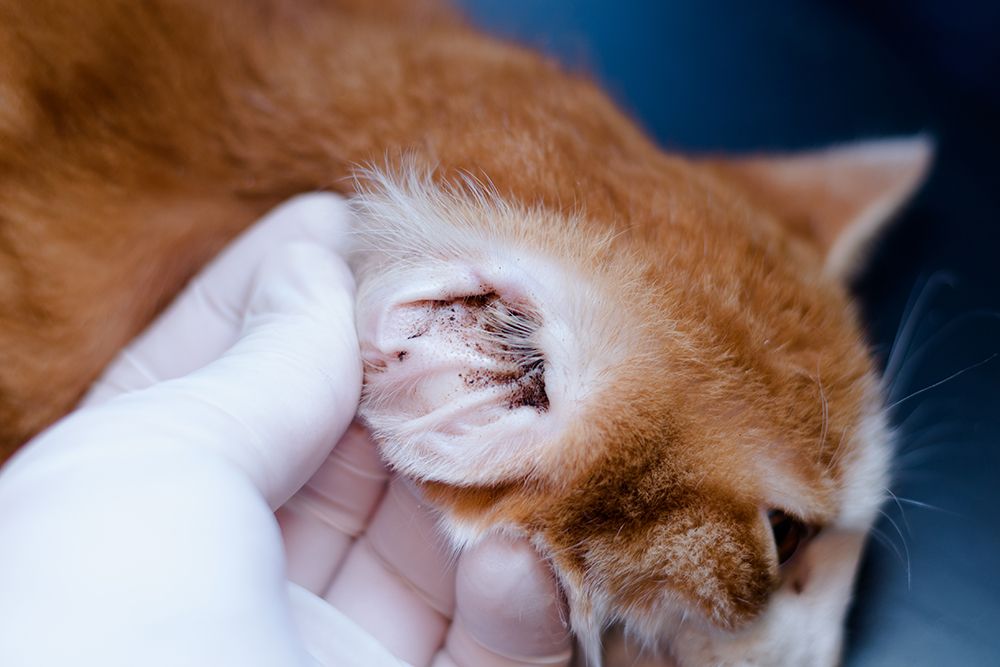
If your cat has ear mites, you are unlikely to see the mites due to their tiny size, but they are sometimes slightly visible if you see a mite moving against a dark-colored background, like ear wax. The most likely way you’ll notice if your cat has ear mites is by the development of dark discharge from the ears or excessive itching.

What Are Ear Mites?
Ear mites are very contagious mites. They are routinely seen in cats, dogs, ferrets, and rabbits, especially those that live outdoors. The good news, though, is that it is exceptionally rare for ear mites to be transmitted from pets to humans.
We are simply not the ideal hosts for these parasites. They live for approximately 2 months, actively reproducing for about 5 weeks of that. They go through five life cycles, starting from an egg and ending as an adult.
Since ear mites have very short lives, it might seem like an infestation wouldn’t be likely to occur, but due to their high rate of reproduction, just a few mites can turn into a full-blown infestation in just a month or two. Like most parasites, ear mites require a host to survive for their whole lifecycle. Without a host, they can only survive for a brief period.
Ear mites feed off of epithelial cells, tissue fluids, and exudate that are most commonly found in the ears. They can be found in other areas of the body, but this is much less common.

What Are the Signs of Ear Mites?
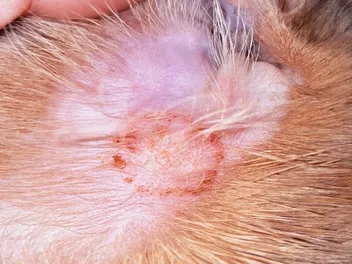
While black or brown discharge is a common sign1 of ear mites in cats, there are multiple signs to watch for. Head shaking and scratching at the ears are also common. Excessive scratching at the ears can lead to hair loss on and around the ears. You may also notice redness or a rash-like appearance to the skin in and around the ears.
On the off chance that you catch ear mites from your cat, there are some things you’ll need to watch for. Itchiness in the ears, redness in and around the ears, dark earwax, and generalized ear irritation are the most likely signs.
For you to catch ear mites from your cat, you’ll have to come into very close contact with places where your cat has shed the mites. This means that if your cat has been scratching their ears on your pillow and then you go to sleep on the pillow, you could catch ear mites. Even with close contact, though, it’s still uncommon for humans to catch ear mites.

How Are Ear Mites Treated?
Your cat’s vet may prescribe one of multiple options to treat your cat’s ear mites. Some vets may opt for topical ear treatment, while others will provide a topical treatment applied to the back of the neck for the mites.
You mustn’t attempt to treat your cat’s ear mites on your own, though. Ear mites are diagnosed through a microscopic examination of the discharge from your cat’s ears. Ear mites shouldn’t be treated based solely on symptoms since the symptoms of ear mites can also indicate other problems.
In humans, ear mites are typically treated through multiple steps. Your doctor will likely want to provide a thorough flushing of your ears to remove any wax buildup. Afterward, your doctor will likely prescribe medicated ear drops to treat any remaining mites and infections, as well as to reduce irritation to the ears.

Conclusion
Ear mites spreading to people is very uncommon, but it is possible. Ear mites are much more likely to spread between the pets in your home than they are to infect you or any humans in your household. However, if you have a pet in the home that you suspect might have ear mites, it’s best to keep them confined to one area of the home to prevent the spread of the mites to anyone in the household.
Make sure to take your cat to the vet if you suspect they may have ear mites so they can rule out other problems and get your cat appropriate treatment.
Related Reads:
Sources
Featured Image Credit: Todorean Gabriel, Shutterstock
Expert cat care, straight to your inbox
News, insights, and useful advice, delivered to you.

No spam — unsubscribe anytime.
By signing up, you agree to our Terms & Conditions and Privacy & Cookies Policy.
How useful was this post?
Click a star to rate. You can leave written feedback afterwards. (We read all feedback.)
Brooke Billingsley, a former veterinary assistant for nine years, became a nurse in 2013. She lives in Arkansas with her boyfriend of five years, surrounded by her beloved pets: three dogs, two cats, five fish, and two snails. Brooke has a soft spot for special needs animals, caring for a three-legged senior dog and a widely known cat with acromegaly and cerebellar hypoplasia. She has developed a keen interest in fish keeping and is always learning how to provide the best environment for her aquatic pets. In addition to her passion for animals, Brooke enjoys gardening and maintains a vegetable garden during the summer. She stays active with yoga and received her 200-hour yoga teacher certification in 2020. Brooke also hosts a podcast that delves into folklore and myth, dedicating her spare time to research and writing. She embraces the philosophy that every day is an opportunity for learning and growth, continually working to acquire new skills and knowledge.