Get

In Your Inbox

Catster is reader-supported. When you buy via links on our site, we may earn an affiliate commission at no cost to you. Learn more.

How to Check Your Cats Heart Rate: Vet-Reviewed Advice & Tips

Share

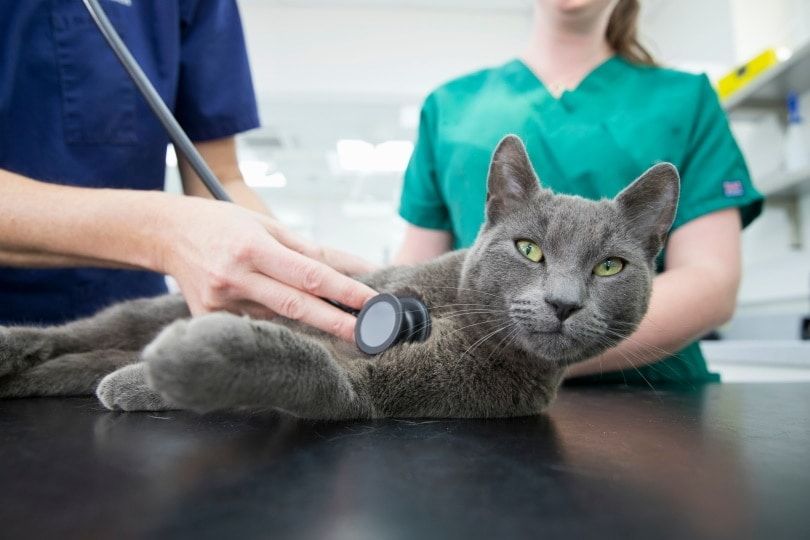
nebelung cat in vet clinic

As a pet parent of a beloved cat, you want the cat to be happy, healthy, and well-fed. You do everything in your power, from taking the cat to the vet for checkups to buying only the best high-quality, protein-filled food, but sickness and accidents will still happen.

One thing you can do to help protect your feline’s health and happiness is to check your cat’s heart rate and know what your cat’s normal heart rate should be.

divider 3 paws

How to Check Your Cat’s Heart Rate

First, gauging your cat’s general health by checking their heart rate is not a replacement for taking them to the vet. You should still take your cat for regular checkups; a vet is an expert on your cat’s health and will catch things you miss. However, the faster you realize there’s something wrong with your cat, the quicker you can get them to a vet to address the issue, so knowing how to check your cat’s heart rate is useful.

Checking a cat’s heart rate isn’t a complicated task, but it might take several attempts for success.

Here are a few spots you can feel to check your cat's heart rate
  • Gently place a finger on your cat’s left chest at the point where their left elbow meets the body. This spot is known as the point of maximal impulse (PMI) and is one of the best locations to appreciate a pulse. If your cat is in a healthy weight range and you can feel their ribs, you can gently count the ribs to find your way to the heart. Cats have 13 pairs of ribs. Begin by feeling the last rib and work your way up towards ribs 7, 6, 5, and 4. You should be able to detect the pulse with your finger in this area.
  • Gently place a finger on your cat’s inner thigh. You may have to gently maneuver your finger through your cat’s fur until you feel contact with their skin. You may be able to feel a gentle thumping with your finger in this area. Specifically, this is where the femoral artery is located, which is the artery you would be feeling for a pulse. It may take some time and practice to determine how much pressure you need to apply before you can pick up a pulse. Start off by placing your finger as lightly as possible and gently increase the pressure until you feel a rhythmic, thumping sensation.
  • A third way to determine a pulse is by gently placing your finger on your cat’s lower neck to feel for a jugular pulse from your cat’s jugular artery. Again, use gentle pressure while attempting.

Once you locate your cat’s heartbeat, you must count the beats that you feel. Use a watch, clock, or stopwatch to help you count the heartbeats for either a minute (60 seconds) or however long your cat cooperates. If your cat cooperates for a minute, the number would be their beats per minute (BPM). If your cat stopped cooperating before the minute finished, multiply the number you recorded with an appropriate factor to determine their beats per minute. For example, if your cat cooperated for 15 seconds, multiply the number by 4. Likewise, if your cat cooperated for 30 seconds, multiply the number by 2.

You might encounter some challenges when it comes to taking your furry friend’s pulse.

  • Your cat may refuse to sit still long enough for you to appreciate their pulse
  • If your cat is overweight or obese, feeling for a pulse is much more difficult
  • If your cat begins to purr loudly during the process, it may be difficult to focus on their heartbeat
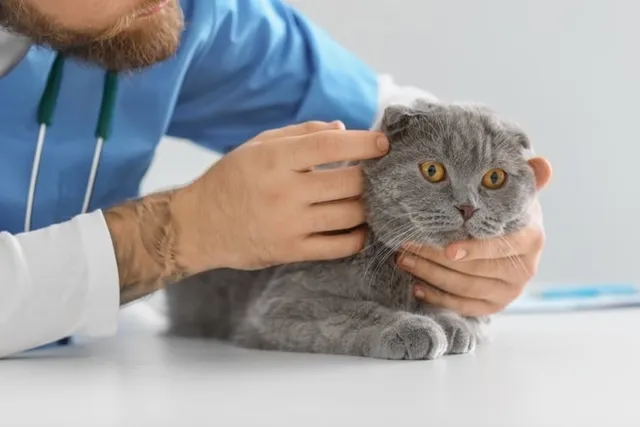
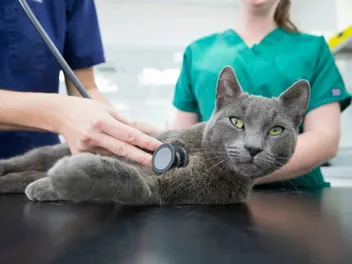
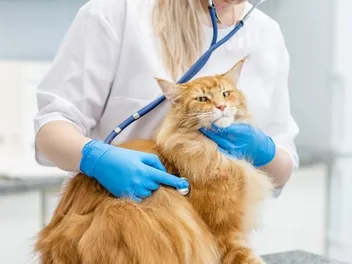
scottish fold cat checked by vet
Image Credit: Pixel-Shot, Shutterstock

What Is a Normal Heart Rate for a Cat?

So, now you know how to check your cat’s heart rate, but that’s not really helpful unless you know what your cat’s heart rate should be. The normal heart rate for a healthy adult cat at rest is around 120–160 beats per minute. It’s important to note that this is the normal heart rate for a cat at rest; a cat that is stressed, anxious, or running around will have a faster heart rate. In addition, the heart rate of a kitten is much higher than that of an adult cat.

You should record your cat’s heart rate on a daily basis and take note of the time you took the reading and the site from where you took the reading (inner thigh, base of neck, or chest). It is best to take the readings at around the same time each day.

Schedule an appointment with a vet for a checkup if:
  • You feel that your cat’s pulse feels exceptionally strong or weak
  • Your cat’s pulse seems to be fluctuating and isn’t the same as it was on previous measurements.
  • You have other concerns about your cat’s health and aren’t sure if they have a cardiac issue
If you can’t feel a pulse at a site where you could previously find it, immediately take your cat to an emergency veterinarian.

If you need to speak with a vet but can't get to one, head over to PangoVet. It's an online service where you can talk to a vet online and get the advice you need for your pet — all at an affordable price!

PangoVet_Mention-in-Content for PangoVet2 save money

divider 3 paws

Final Thoughts

Your cat is a beloved family member, and you treat it like one of your children. Knowing how to check your cat’s heart rate and what the normal heart rate for your feline is can help you determine if your pet is unwell. If you feel that your cat’s heart rate is too low or too high, it’s best to get the cat to a vet right away for diagnosis and treatment.

Even knowing how to check your cat’s heart rate is no substitute for a vet’s diagnosis, as there could be an underlying problem that needs to be addressed. For the safety and health of your feline, take your kitty to the vet every 6 months for checkups. A healthy, happy cat will love you and be loyal for many years.

Sources

Featured Image Credit: Juice Flair, Shutterstock

Want content like this delivered to you?

Sign Up For Our Newsletter

News, insights, expert advice, and everything cat

* By submitting, you agree to our Terms & Conditions and Privacy & Cookies Policy.


How useful was this post?

Click on a star to rate (you can leave written feedback after clicking submit)

Help us improve Catster for pet parents!

Your feedback really matters.

What did you like about this post? Also how can we improve it?

Join the conversation

Leave a Reply

You’re very welcome to leave a comment or question. Please know that all comments must meet our community guidelines, and your email address will NOT be published. Let’s have a positive and constructive conversation.


Talk With A Vet Online

Peace of mind,
anywhere, anytime

Affordable vet advice

Welcome to Coastal Cats & Critters

As much as we all love cats, we also know that in many parts of the country (and the world), the problem of...

Ask Dr. Paola – Help! My Cat Suddenly Has Dandruff! (March 30, 2026)

Welcome to our “Ask Dr. Paola” series, where every Monday we bring expert advice straight from Dr. Paola Cuevas (MVZ) to help our...

Your Cat Keeps Vomiting After Eating: Here’s What’s Going On

Cats vomit. It’s one of the less glamorous facts of life with a feline, and most cat owners have cleaned up more than...

Ask Dr. Paola – Help! My Cat Gets Diarrhea from Wet Food! (March 23, 2026)

Welcome to our “Ask Dr. Paola” series, where every Monday we bring expert advice straight from Dr. Paola Cuevas (MVZ) to help our...

More related

Are Egyptian Maus Hypoallergenic? Vet-Approved Facts & FAQ

If you’re an allergy sufferer and pet lover, you’re likely looking for a companion that won’t make your eyes water every time you’re...

When Do Kittens’ Eyes Change Color? Vet-Verified Facts & FAQ

You may have recently brought home an adorable new kitten with baby-blue eyes, but did you know that those icy-blue eyes might change...

How Poisonous Are Wolf Spiders to Cats? Vet-Reviewed Safety Facts

Wolf spiders look downright scary. These arachnids are hairy and are relatively large compared to other spiders you may find in and around...

Are Savannah Cats Hypoallergenic? Vet Approved Facts & Allergy Prevention Tips

As a hybrid between wild African Servals and domestic cat breeds, Savannah cats are gorgeous animals with unique personalities. Because they shed less...

Keep reading

Why Do Cats Sleep in a Ball? 3 Vet-Reviewed Reasons

There’s something delightful about watching your cat sleep while curled up into a tight fluff ball. They look so sweet and serene, and it’s amazing how their supple bodies can sleep comfortably in this position. If you have ever wondered...

cat sleeping on the patio

Cat Airplane Ears: 4 Vet-Verified Reasons Why Cats Do This, Facts & FAQ

Cats are known for their quirky behaviors, but one that continues to baffle pet owners is when they have “airplane ears.” This seemingly strange behavior does have a purpose, and it’s not necessarily a good thing when your cat has...

Cat laying on the grass with airplane ears

Do Senior Cats & Kittens Get Along? Vet-Approved Introduction Guide & Tips

Introducing a senior cat to a new kitten can be tricky. Differences in ages, energy levels, and physical conditions can create tension. But it doesn’t mean that your two cats will dislike each other forever. Introducing your cats to one...

Do Senior Cats and Kittens Get Along

Can Cat Pee Make You Sick? Vet-Verified Facts & Safety Tips

We all know that cat pee smells awful, but did you know that cat pee can be harmful to you and can cause allergic reactions in people who are allergic to cats? But just how dangerous is cat pee, can...

cat-peeing-on-the-bed

25 Vet-Reviewed Essential Items for Your Cat’s First-Aid Kit

Disclaimer: The information about these products has been fact-checked by one of our licensed veterinarians, but the purpose of this post is not to diagnose illness or prescribe treatment. The views and opinions expressed are not necessarily those of the...

Cat with a first-aid kit

Can Cats Eat Coconut? Vet-Reviewed Health Benefits & Risks

Coconut has made a name for itself in the last few decades as a health food, thanks to the nutrient density of everything from coconut water to coconut oil. Although it is technically a type of fruit called a dry...

Can Cats Eat Coconut

Is Peppermint Oil Safe for Cats? Vet-Reviewed Facts & FAQ

Cats are incredibly explorative and curious animals, often found rummaging through forgotten corners of your home for a new adventure. If you have essential oils around your home, you may have noticed your cat taking an interest in them. However,...

Catster_Is Peppermint Oil Safe for Cats

Why Do Cats Lift Their Tail When Petted? 4 Vet-Reviewed Reasons

If you have ever been petting your cat, you may have noticed that they lift their tail or bum in the air. There is a lot of confusion as to why cats do this and what the meaning behind the...

woman owner petting and playing with her cat at home

Love Cats? So Do We! Join the Catster Community

Stay informed with expert pet care insights delivered straight to your inbox! Discover professional guidance on animal behavior, feeding tips, trusted product picks, and much more.


Sign up for the Catster Email Newsletter

Stay informed with expert pet care insights delivered straight to your inbox! Discover professional guidance on animal behavior, feeding tips, trusted product picks, and much more.