Get

In Your Inbox

Catster is reader-supported. When you buy via links on our site, we may earn an affiliate commission at no cost to you. Learn more.

What Are Normal Vital Signs for Cats? Vet-Approved Tips & FAQ

Share

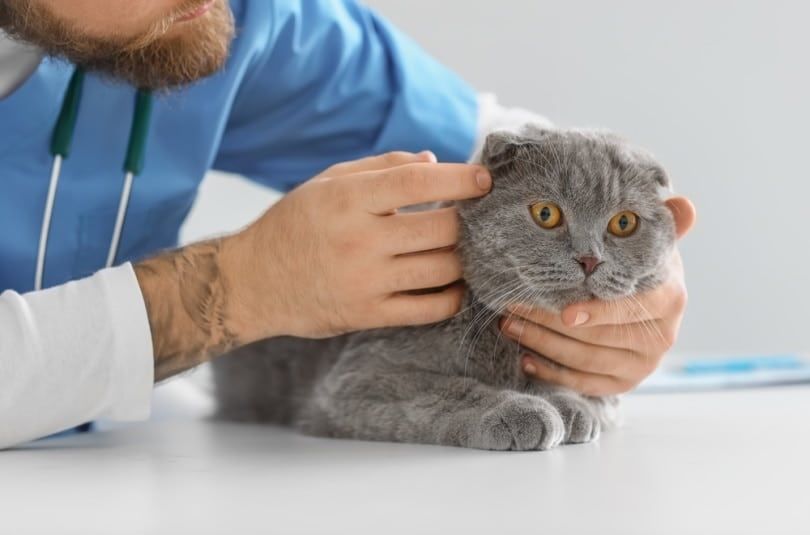
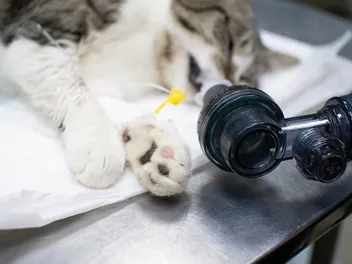
scottish fold cat checked by vet

A cat’s vital signs can help determine how the feline is doing, as well as point out any potential problems. For instance, if a cat’s heart rate is too fast or too slow, it may indicate an underlying issue.

Of course, you have to know how to read a cat’s vital signs to use them in this manner. Veterinarians are trained to read cats’ vital signs and should be sought out if you believe there is something wrong with your cat. However, it may also be helpful for owners to know what to look for.

Knowing what normal ranges are can help you understand what a vet says when at the office. Generally, normal vital signs for cats mean having a temperature between 100°F and 102.5°F (38.1°C and 39.2°C), a heart rate between 160 to 210 beats per minute (bpm), and a respiratory rate of 20-30 breaths per minute. Furthermore, being able to check a cat’s vital signs can help you determine if they need veterinary assistance or not.


divider 3 paws

How Does It Work?

Vital signs measure the body’s basic functions. For instance, temperature, heart rate, and respiratory rate are all included in “vital signs.” By looking at these measurements, veterinarians can help determine a cat’s health and diagnose underlying issues. Certain diseases will affect certain vital signs and not others, which can help the vet narrow down what is wrong with the cat.

Furthermore, certain conditions may change a vital sign in a specific way. A high heart rate may indicate something different than a low heart rate, for instance.

Plus, vital signs are relatively easy to measure and can be measured fairly quickly. They don’t require any complicated procedure and are often included in the base cost for the vet visit. Therefore, they’re often used as a starting point to determine what the possible diagnosis could be.

If you have a question about your cat's health or behavior, why not Ask a Vet for Free with Catster. Our veterinary team answers reader questions and provides trusted advice to help you better understand your cat.

askavet on catster

What Are the Different Vital Signs in Cats?

There are many different vital signs that a veterinarian or owner can check. All of these vital signs may not be checked all the time. Sometimes, there are a few vital signs that are obviously abnormal, and tell the vet what is wrong.

  • Temperature: Temperature is one of the easiest and most telling vital signs, so it is often checked whenever an animal visits the vet (even if the animal isn’t sick). A healthy cat’s temperature should be between 100 and 102.5 degrees°F (38.1°C and 39.2°C). The temperature is measured in the ear or rectum—not in the mouth.
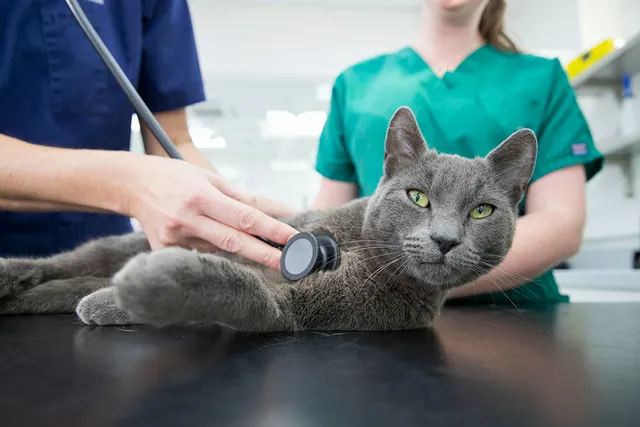
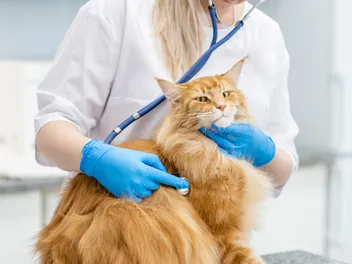
  • Heart rate: A cat’s normal heart rate is between 160 to 210 beats per minute (bpm). The average is around 195 bpm. The heart rate is often checked by feeling for a pulse on the inside of the cat’s rear leg. Vets also use a stethoscope, which lets them hear the heart.
  • Respiratory rate: Cats breathe between 20 to 30 times a minute. This vital sign is easy to measure, as you simply need to count all the breaths a cat takes (by looking at their chest) in one minute.

How Are Vital Signs for Cats Used?

Vital signs are used to see how a cat’s body is doing at any given moment. They give the vet a look at the cat’s general health and well-being. Because they’re easy to check, they’re usually checked before any other, more invasive tests. Vital signs are also used to monitor a cat that’s already diagnosed, as they could signal if the cat is getting better or worse.

Anything outside of the normal range is often considered abnormal. However, it does depend on the specific cat. A cat that’s stressed due to being at the vet may have a higher heart rate without it being considered abnormal.

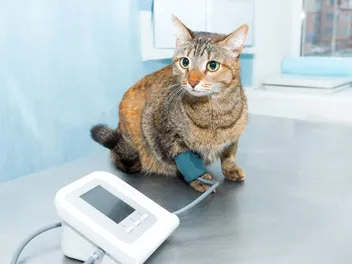
Vital signs can help identify any changes in an animal’s health. For instance, during surgery, a cat’s vital signs are monitored to ensure everything is going smoothly. They can help the vet spot problems before they become serious. Vital signs can also help vets evaluate how an animal is responding to treatment and monitor the course of a disease over time.

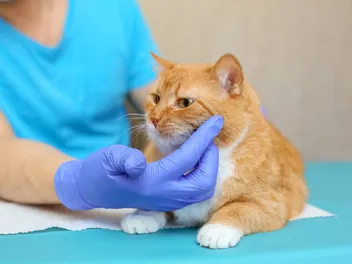
veterinarian examining a bengal cat at the clinic
Image Credit: Pressmaster, Shutterstock

divider 3 pawsFrequently Asked Questions

What are some common diseases or conditions that affect vital signs?

Here’s a list of common diseases and conditions that affect vital signs:
  • Infections: Infections lead to a fever, increased heart rate, and respiratory rate. They can also affect the color and moisture of mucus membranes in felines.
  • Dehydration: Dehydration can cause increased heart rate and respiratory rate. It may also cause poor skin elasticity and low blood pressure. Dehydration can be caused by underlying illnesses and conditions.
  • Respiratory distress: If the cat cannot breathe properly, their respiratory and heart rate may increase or decrease.
  • Tapeworms: These parasites often have no effect on the cat’s vital signs. However, some cats may have changes in temperature, heart rate, respiratory rate, or blood pressure (usually at-risk cats and kittens).
  • Heart Disease: Heart disease is a condition that prevents the heart from pumping blood efficiently. It’s caused by many different conditions. It affects the cat’s heart rate, blood pressure, respiratory rate, oxygen saturation, and mucous membrane color.
  • Neurological Conditions: Any conditions that affect the brain can also affect a cat’s vital signs. The brain controls the rest of the cat’s body, potentially leading to systematic problems.

Why Are Vital Signs Important for Cats?

Checking the vital signs is a noninvasive way for a vet (or an owner) to detect problems with a cat’s body. Certain conditions will affect certain vital signs, which are easy to pick up by those trained to do so. These vital signs can tell if something is wrong with a cat, possible diagnoses, and what other tests may be necessary.

Furthermore, vital signs can also help determine if a cat is recovering and responding to treatment. During surgeries, vital signs are used to ensure the cat is responding to the surgery okay. Problems can be picked up early when vital signs are monitored.

divider 3 paws

Conclusion

Cat vital signs are very similar to those used in humans. However, the normal ranges are a bit different. For instance, cats tend to run a lot warmer than humans. By monitoring a cat’s vital signs, vets can determine if there is anything wrong with them, how they’re responding to treatment, and potentially diagnose underlying issues.

Vital signs are easy to check for, which is why they are commonly used. They can tell a vet what’s going on in a cat’s body without using more invasive tests. Therefore, vital signs are often used to narrow down what may potentially be wrong with the cat, which helps the vet determine which tests to run.


Featured Image Credit: Pixel-Shot, Shutterstock

Want content like this delivered to you?

Sign Up For Our Newsletter

News, insights, expert advice, and everything cat

* By submitting, you agree to our Terms & Conditions and Privacy & Cookies Policy.


How useful was this post?

Click on a star to rate (you can leave written feedback after clicking submit)

Help us improve Catster for pet parents!

Your feedback really matters.

What did you like about this post? Also how can we improve it?

Join the conversation

Leave a Reply

You’re very welcome to leave a comment or question. Please know that all comments must meet our community guidelines, and your email address will NOT be published. Let’s have a positive and constructive conversation.


Catster's Digital Magazine is Back!

Vet-approved health & behavior advice

Real cat stories & community features

Ask Dr. Paola – My Cat Loves Eating Grass, But It Makes Her Vomit! (June 29, 2026)

Welcome to our “Ask Dr. Paola” series, where every Monday we bring expert advice straight from Dr. Paola Cuevas (MVZ) to help our...

Learning to Speak Cat with Anthony Smith

Many cat lovers know me through Learn to Speak Cat and Cattitude – Doggonit, cartoons that explore the often mysterious, occasionally mischievous, and...

Weird Cat Behaviors That Actually Make Perfect Sense

We have been sharing our lives with cats for thousands of years, yet we still find ourselves genuinely stumped by what they get...

The Dream of Talking to Cats Just Got Closer to Becoming a Reality

If you’ve ever wished your cat could simply tell you what they wanted, you’re not alone. From the meow that wakes you before...

More related

How To Make An Outdoor Cat Into An Indoor Cat

There are many reasons why your outdoor cat is now transitioning to life as an indoor cat. Your kitty could be getting older...

Do Cats’ Weights Fluctuate With the Seasons? Vet Approved Facts & Care Tips

If you have been a cat owner for several years, you may have noticed your pet occasionally but regularly looking heavier or thinner,...

Why Do Cats Have Slit Pupils? Feline Anatomy Explained (Vet-Verified)

Do you ever sit and watch your kitty at play, chasing after a bug or looking intently out the window, and wonder how...

Do Cats Kill Rats? Vet-Reviewed Facts & Efficacy

Cats are well-known for their hunting prowess, but some cats are more talented at this skill than others. When humans began farming several...

Keep reading

Love, Nala Cat Food Review 2026: A Detailed Look

If you’re like me (and so many other obsessive cat owners) and spend too much time on Instagram stalking adorable kitties, then you probably already know who Nala Cat is. She does, after all, hold the Guinness Book of World...

Love Nala Cat Food

Can Cats Eat Salmon Skin? Vet Reviewed Facts & Health Guidelines 

Salmon is an all-time favorite treat for many cats thanks to its tantalizing aroma, but can cats eat salmon skin? As long as the salmon is thoroughly cooked (plain, not with seasonings) and your cat doesn’t have a sensitive stomach,...

Can Cats Eat Salmon Skin

5 Vet-Reviewed Reasons Why Your Cat Uses You As A Scratching Post & How To Stop It

Your cat’s claws are used for survival as hunting weapons and tree-scaling devices in the wild. As domesticated pets, their claws are kept in tip-top shape with regular scratching, which also serves as a way to do a full body...

Two cats in a cat tree with scratching post

Can Cats Eat Sherbet? Vet-Reviewed Facts & FAQ

Have you ever wondered, as you were enjoying a cold bowl of sherbet on a hot day, whether or not it would be OK to share a bit of your yummy dessert with your favorite feline companion? Most cat lovers...

Can Cats Eat Sherbet

Do Cats Pee Blood When Stressed? Vet-Reviewed Causes For Blood In Urine

Any health problem that affects your four-legged friend is cause for concern, especially if it seems like your cat is peeing blood. The presence of blood in the urine is called hematuria, and it can be caused by various underlying...

Why Does My Cat Paw at Her Water Bowl? 8 Vet-Reviewed Reasons

Cats do all sorts of silly things that seem senseless to us. Yet, their behavior, including the oddest tasks, can be explained reasonably well. Does your cat paw at her water bowl? Well, there are explanations for that! Some reasons...

cat dipping its paw in water bowl

Do Feral Cats Like Catnip? Vet-Approved Facts & FAQs

If you’ve ever watched a cat go crazy over catnip, you may be surprised to learn that some cats are completely indifferent to it. However, feral cats, house cats, and even large wild cats, such as lions, leopards, jaguars, and...

cat smelling catnip

Is Borax Safe for Cats? Vet-Approved Safety and Usage Advice

Borax is a multipurpose cleaner that can be used for stopping an infestation of ants or cleaning mold. It’s even become popular as an ingredient for homemade slime recipes! You might also see it being suggested as a “natural” alternative...

Catster_Is Borax Safe for Cats

Love Cats? So Do We! Join the Catster Community

Stay informed with expert pet care insights delivered straight to your inbox! Discover professional guidance on animal behavior, feeding tips, trusted product picks, and much more.


Sign up for the Catster Email Newsletter

Stay informed with expert pet care insights delivered straight to your inbox! Discover professional guidance on animal behavior, feeding tips, trusted product picks, and much more.