Treating Ear Mites in Cats: Vet-Approved Tips & Tricks



In this article
Cats have incredible ears! Their hearing range is over 10 octaves, more than dogs or humans, and they have 32 muscles in each ear to help them pinpoint sounds exactly. But that doesn’t make them immune to parasites. If your cat has ear mites, you’ll want to act fast to protect your pet’s precious ears.

What Are Ear Mites?
Ear mites are small parasitic arachnids that live and breed inside animal ears, including those of cats and dogs. They are tiny—barely big enough to see with the naked eye—and since they can’t hop or fly, they need to crawl from host to host. Once a mite gets into your cat’s ears, it can lay eggs, and before long, your cat is infested. Ear mites can cause irritation and infection that can lead to permanent hearing damage over time, so proper treatment is important to stop ear mite infestations.

Where Do Cats Catch Ear Mites?
Because ear mites can’t fly, they can only travel short distances to find new hosts. Most cats catch ear mites when they are outdoors, where they can come into contact with other cats and dogs. If you have a multi-pet household, one pet might bring ear mites into the home and pass them to others.
Unlike cats and dogs, human ears can’t host ear mites. Mites have hitched rides on human hosts in the past, but this is rare. Because most ear mite infestations start with a pet going outdoors, indoor pets are at a much lower risk of ear mites.
Treatment of Ear Mites
If you suspect your cat has ear mites, it’s important to treat them as quickly as possible. Ear mites are easily treatable with proper care. Here are seven steps to deal with an ear mite infestation in your cat.
1. Diagnose Ear Mites
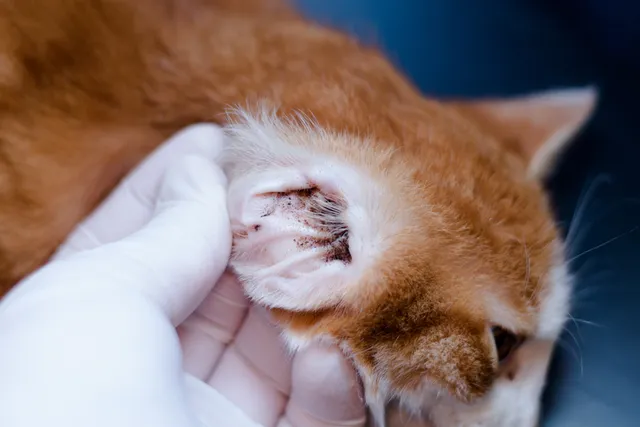
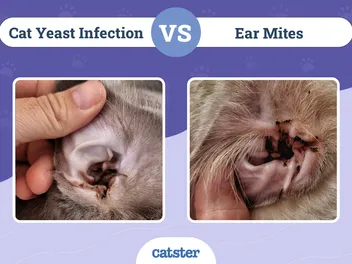
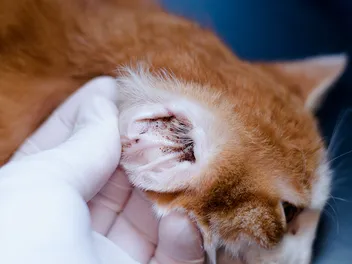
The first thing you should do is confirm your cat has ear mites. You might notice behavioral changes that let you know that something is wrong. Your cat might scratch at their ear incessantly, shake their head like they're trying to dislodge something, or hold their ear flat against their head. Up close, you’ll probably see that your cat’s ear is inflamed or swollen. Because ear mites are so small and live deep inside the ear, you might not see them. But the mess they leave behind is harder to miss—a stinking goop that’s a combination of earwax and mite waste.

2. Clean Your Cat’s Ears
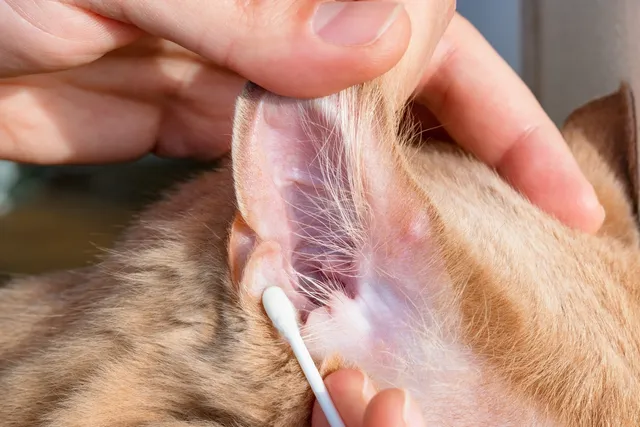
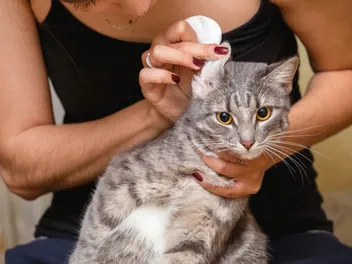
Once you know that your cat needs help, you should schedule a vet appointment as soon as possible. But if you can’t get to a vet right away, cleaning your cat’s ears can relieve some discomfort. Use cotton balls or gauze to gently clean your cat’s ears. Don’t use a Q-tip or try to dig too deeply—you’re trying to avoid injury, not dig all the way down to the base of the ear. You can use a cat-safe ear-cleaning solution if you have it.
Check out our top picks for pet cleaning wipes to clean cat's sensitive areas here.
3. Keep Your Cat Safe and Indoors
While waiting for treatment, you should keep your cat safe and indoors. If you own multiple pets, keep your infested cat in their own room so that the infestation doesn’t spread. A head cone can help prevent scratching and further irritation.
4. Seek Vet Advice
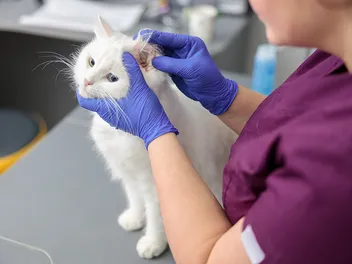
When you go to a vet, they'll likely want to confirm that your cat has ear mites. They might perform an otoscopic exam of your cat’s ear or take a swab from the inside of the ear and look at it under the microscope. Once they've confirmed the ear mites, they can prescribe a treatment.
There are many different medications available, but they tend to come in three main types. The first is a daily topical treatment that can be applied to your cat’s ears by you. The second type is a single-use external treatment. The third is a treatment administered through a shot. Your vet will recommend treatment based on your cat’s needs and situation.
5. Apply Topical Treatment If Recommended
Injection or single-use treatments are usually performed by the vet, but if your vet recommends a topical treatment, you’ll probably treat your cat at home. Most topical treatments are applied daily for a few days to a few weeks. Put a few drops into your cat’s ears every day as prescribed by the vet.
6. Watch for Infection
Even after ear mites are gone, you will want to watch for signs of infection. These include continued scratching, lingering inflammation, and black or yellow discharge from the ears. If any infection is present, your vet can recommend an antibiotic.
7. Prevent Future Infestations
After your cat is fully healed, consider what you can change to prevent future infestations. If your cat is regularly outdoors, consider keeping them inside or supervising them outdoors. Minimize your cat’s encounters with pets outside your household. There is some evidence that flea prevention products have some effectiveness against ear mites as well.
Final Thoughts
We hope this article will help you to effectively deal with your cat’s ear mites. Once the issue gets solved, your cat will be incredibly grateful! Ear mites can be very annoying for your furry friend, so once they are eradicated, they can breathe a meow of relief.
Featured Image Credit: Azami Adiputera, Shutterstock
Expert cat care, straight to your inbox
News, insights, and useful advice, delivered to you.

No spam — unsubscribe anytime.
By signing up, you agree to our Terms & Conditions and Privacy & Cookies Policy.
How useful was this post?
Click a star to rate. You can leave written feedback afterwards. (We read all feedback.)
Chelsea Flake Mortensen is a writer with a passion for cats. Growing up, she spent quite a bit of time around cats, along with a variety of other interesting pets. Chelsea holds a BA in English and Creative Writing from Brigham Young University.