Why Does My Cat Chew on Cardboard Boxes? 6 Vet-Reviewed Reasons


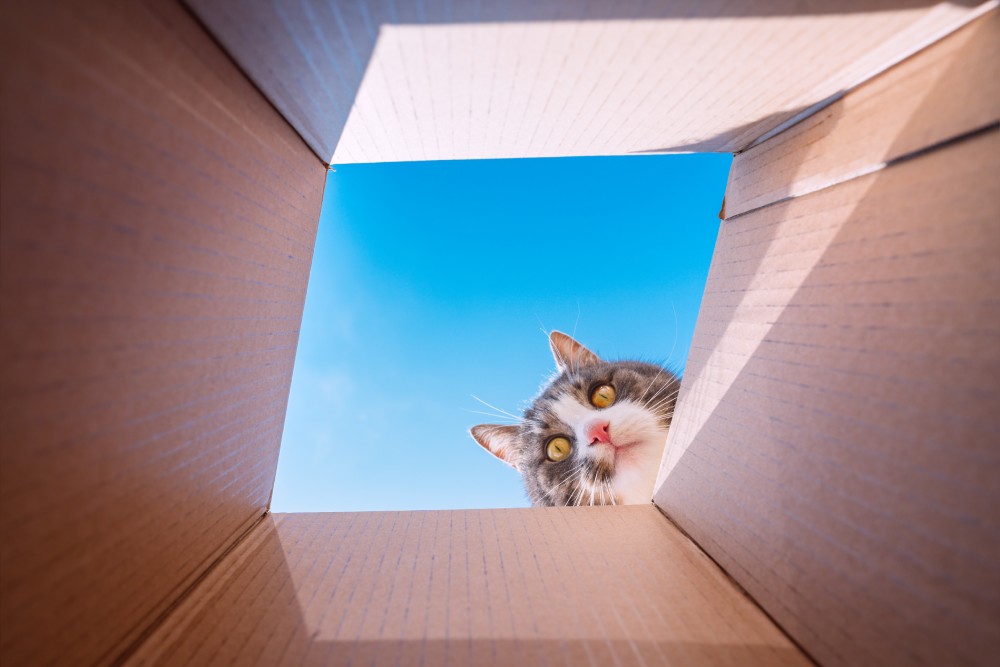
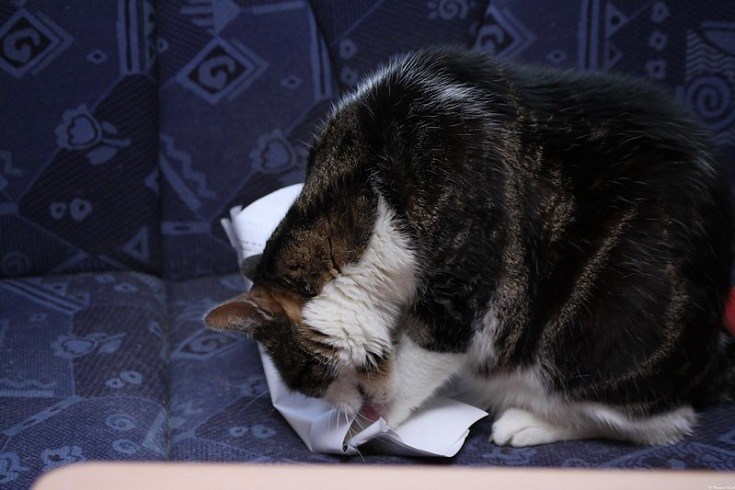
Some cats are chewers, and some not so much. Cats that enjoy a good chewing session might gravitate to cardboard boxes. They are everywhere and can be everything from your cereal boxes, to your moving boxes, to your goodies that just arrived from your online shopping spree.
Maybe you’ve been wondering if it’s something you should worry about or if it’s just your cat who is a little weird. Well, rest assured, many cats seem to enjoy gnawing on cardboard boxes, but it is important to double-check the reasons behind this behavior.

Top 6 Reasons Why Your Cat May Chew on Cardboard Boxes
1. Sore Gums

If you have a kitten who seems to love chewing on cardboard, she may be going through some teething pain. Just like human babies find relief from biting down on teething rings, kittens find relief from chewing—and cardboard boxes will fit the bill.
However, if your adult cat is gnawing, it could indicate that her teeth or gums have some issues, like gum disease. Gastrointestinal problems can also be a problem, and just like the teething kitten, your cat is chewing to relieve the discomfort. If your cat’s gums are red, this could indicate a problem with her teeth and gums, and she should be examined by your vet.
You could also invest in some cat toys that are designed for chewing and provide her with dental treats.
2. Territorial
Just like when your cat rubs on everything in sight (including your legs) to mark her territory, she might be doing the same with the boxes. Chewing on objects around the house is a great way for a cat to leave her scent on everything.
If your cat seems to be rubbing her cheeks on the box in between bouts of chewing, then there’s a good chance that she’s claiming these boxes as her own. This is nothing to worry about, as long as she isn’t aggressive about defending her territory.
3. Prey Drive

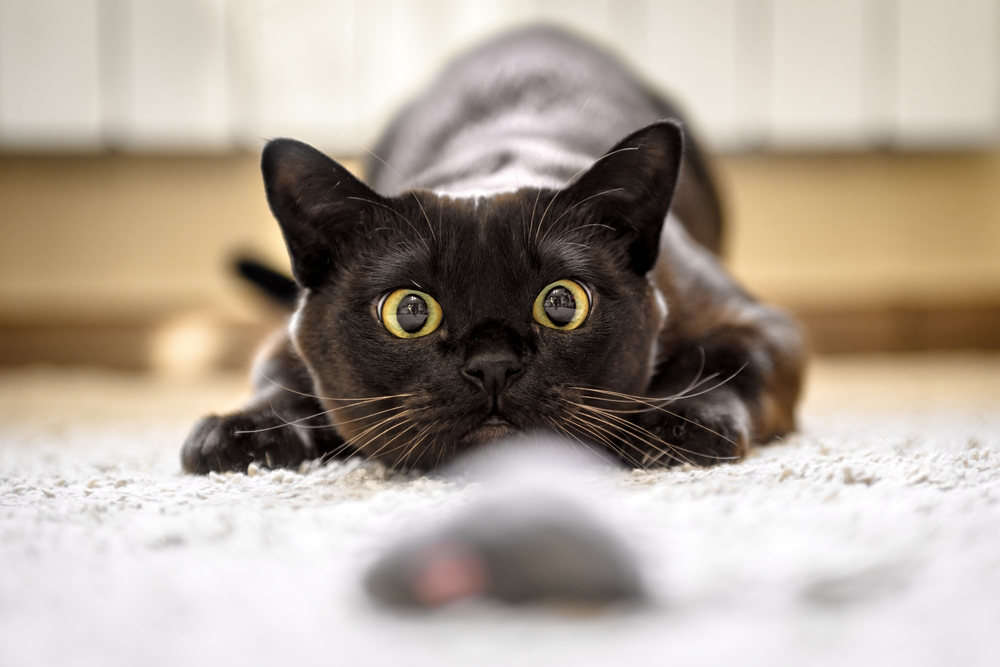
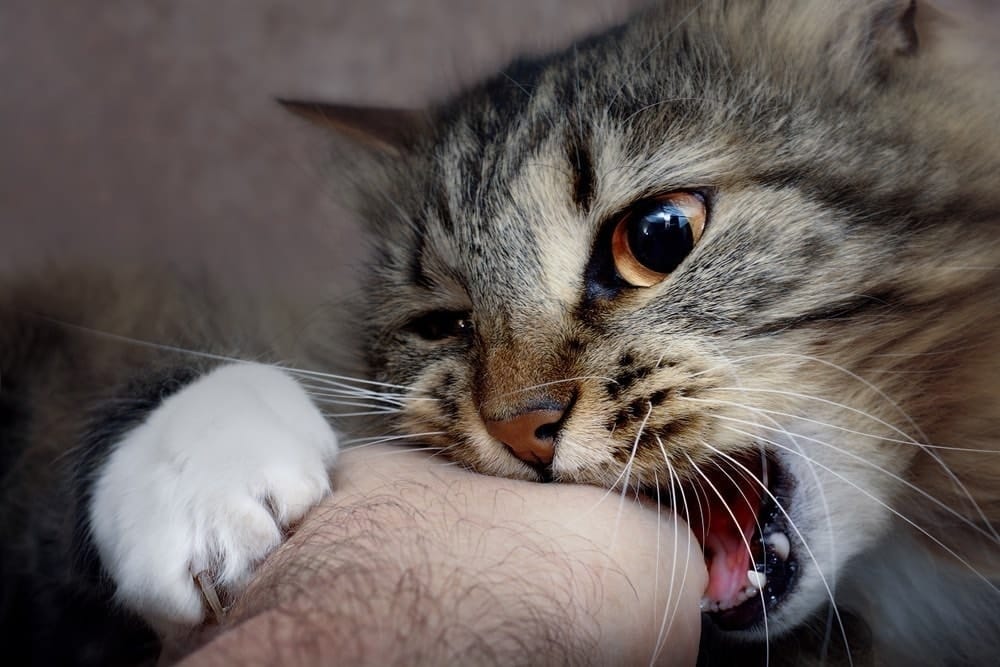
Cats are fantastic hunters, and they use these instincts as a part of their playtime. We’ve all seen our cats stalking, pouncing, and biting various toys (and sometimes our feet). The cardboard box might just be another outlet for your cat to tear into.
Since most cats, particularly indoor cats, don’t have the opportunity to hunt and kill prey, they will use objects to satisfy this urge. If your cat seems to attack the cardboard by biting as well as using bunny kicks (holding onto the box with their front legs and kicking it with their back legs), then there’s a good chance she’s treating the box like its prey.
4. Creating a Fortress
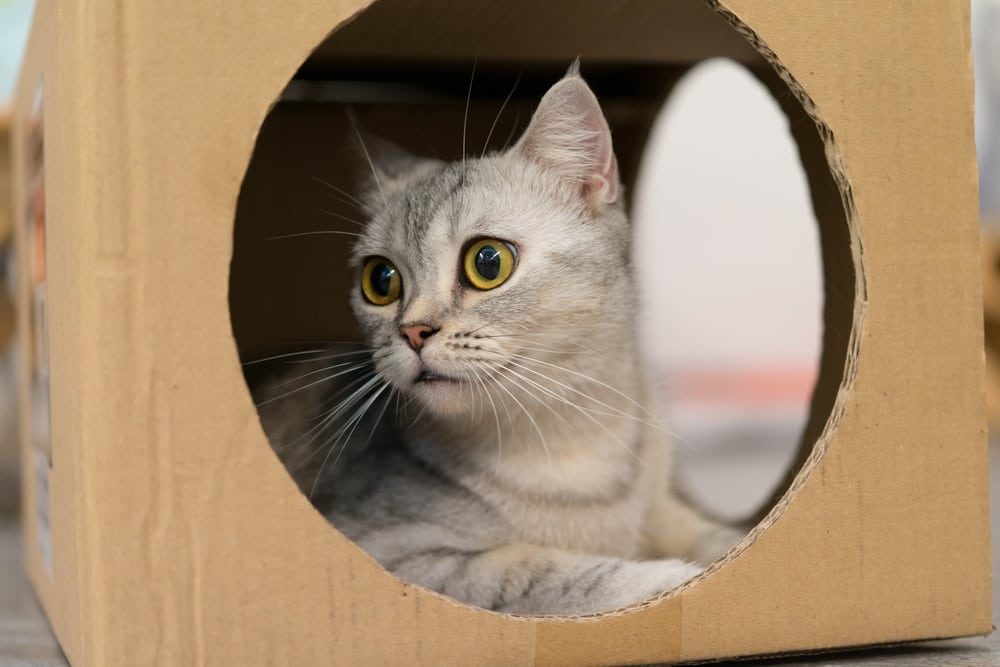
This one has some similarities to the third point above on prey instincts. Many aspects of how cats play are based on their hunting instincts, such as chasing the feather wand, bunny-kicking the large stuffie, and acting crazy inside the large cardboard box. They love to pop out and smack your ankles as you walk by, and nothing beats a dark and enclosed space for a cat.
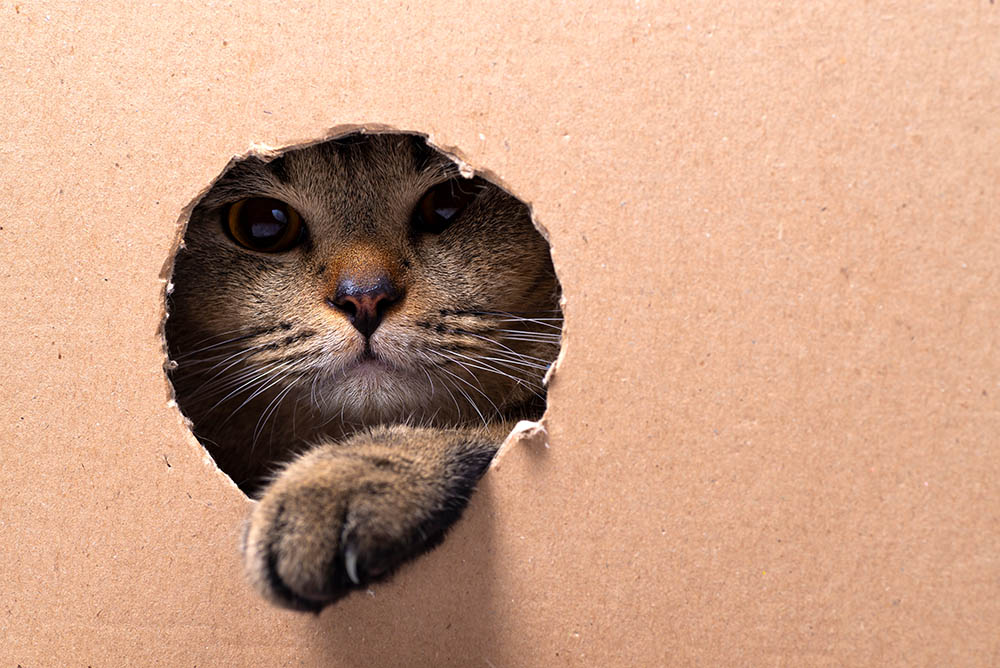
Part of this behavior can sometimes include a cat attempting to make the box perfect for her needs. Maybe she’ll chew a hole on the side of the box so she can peek out and stick her front leg out in the attempt to snag something.
5. Boredom
If your cat is easily bored, biting on cardboard boxes might be a way for her to find something to do and expend some of her energy. She might even be trying to gain your attention. Like a toddler who seems to act out to get a parent’s attention, cats will sometimes act mischievously because they will catch your attention.
If you give your cat attention while she’s doing something destructive, you are actually teaching her that if she keeps doing this behavior, she will always get your attention. So, do your best to ignore your bored feline when they behave this way.
6. It’s Fun!
Cats are just very curious and playful animals, and they are endlessly amused by a variety of items and objects that are a part of our everyday world. They enjoy knocking things off shelves, sitting on our laptops, licking our hair, and watching us brush our teeth.
Part of the allure of a cardboard box is that it’s a great place to explore, hide, sleep, and play. The texture of the box might feel great to chew on, and maybe your cat is just expending some of that zany energy she has while playing hide and seek inside the box.

- Premium Materials - Hepper's cardboard scratcher is made with dense, B-flute cardboard, and a metal core. Encased in a 1/2" plywood frame with gloss coating. Stable and beautiful, use after use
- High, Low and Lower - A single cat scratch pad won't keep your cat engaged. 3 unique positions keeps them coming back, and back, and back again. Finally, something to get them away from the couch!
- Activates Muscles - The Hi Lo isn't just a cat nail file to stop the chief cat couch scratcher. The deep cat scratcher wave encourages maximum musculoskeletal activation for a healthier workout
We're quite fond of cardboard as a material in cat scratchers, which is why we love the Hepper Hi-Lo Cat Scratcher. Encased within a well-constructed, modern birch plywood frame, this scratcher is designed with both cats and their owners in mind. It offers three versatile configurations to keep your feline friend active and entertained while enticing them to fulfill their natural scratching instincts (and away from scratching things they shouldn't). For more details, click here!
At Catster, we’ve admired Hepper for many years, and decided to take a controlling ownership interest, so that we could benefit from the outstanding designs of this cool cat company!
Eating the Box
Another consideration we need to explore is whether or not your cat is eating the box. Some cats suffer from pica, which is eating and ingesting items that are not food.
Medical issues that cause pica:
It can also be behavioral problems that stem from compulsive disorders, boredom, being weaned too young, or stress. If your cat seems to be easily stressed, she could be destroying boxes out of some kind of anxiety, particularly if she’s eating them as well.
If you suspect your cat might be eating cardboard (or anything else that is non-food) and might have pica, do take her to see your vet.
Is It Safe?
In general, if your cat is chewing cardboard and not swallowing, it’s usually quite safe. You just need to be sure that there aren’t any sharp bits in it, such as staples, or that the edges of the box itself aren’t sharp.
Make sure the box is empty and doesn’t contain anything that could be harmful to your cat, such as sharp objects or string. If your cat is prone to pica, swallowing string can cause an intestinal blockage and might need to be surgically removed.
You also need to be sure that the box does not contain any toxic substances. This could be a serious problem if your cat chews on the box and accidentally ingests a harmful substance. Some boxes are coated and treated with chemicals, so be sure that any box your cat plays with has not been chemically treated.
Again, if you believe your cat has eaten some of the box or anything dangerous inside, please see your vet immediately.
How Can You Make Your Cat Stop?
Perhaps you’re worried about the chewing, and you just want your cat to stop. Better to be safe than sorry, right? Well, here are a few methods you can use to try to stop the behavior.
Remove It
One solution, and the simplest one, is to just remove the box. Recycle it or store it in a room, basement, or closet that your cat does not have access to.
Redirect
You could redirect your cat. Offer an alternative chewing toy and give her treats when the toy is presented and chewed on.
Learn to recognize the scenarios when you normally see her engaging in the chewing box behavior. Don’t forget the toddler rule. If you scold your cat, she will see this as attention and will more than likely continue the behavior.
This all starts with you first trying to understand why your cat is chewing on the cardboard. After you’ve read the above 6 typical reasons for why cats chew cardboard, you should have a much better idea of why your cat is chewing it, which will help you address the problem.
You will offer the toy before she engages in chewing the box. Continue offering favorite treats for playing with the toy rather than with the box.
If your cat is bored, make sure you play with her more and ensure she has enough toys and other outlets to play with and be engaged in (access to look out of windows, etc.). Sometimes finding your cat a playmate, namely another cat, can stop a lot of unwanted behaviors and give her lots of opportunities for play so that she's less likely to be bored.
Remove the box access and toy access when you can not supervise the cat’s behavior.
Discourage
Lastly, we have ways of discouraging your cat from chewing on boxes. If your cat is chewing on boxes that need to stay where they are, there are sprays designed for animals that taste bad and will deter your cat from chewing on them. Bitter apple spray, for example, could be sprayed on a surface to stop your cat’s negative behavior.
There are also sprays that have motion detectors and will make a harmless loud hissing sound that will startle your cat that you can place near the boxes. Even placing aluminum foil or double-sided tape on these surfaces can act as a deterrent.
Conclusion
While a cat chewing on cardboard boxes can be considered normal and harmless behavior, just be sure to watch your cat when she’s engaging in this behavior. You want to rule out any medical problems and make sure she’s not harming herself in some way. Also, ensure the box is empty and not treated with or containing harmful chemicals.
As long as you know your cat is safely enjoying herself, and you don’t mind small pieces of cardboard scattered around your house, then let her have her fun. After all, cats and boxes are like peas and carrots.
You might be interested in:
Featured Image Credit: Creative Cat Studio, Shutterstock

Expert cat care, straight to your inbox
Vet-reviewed advice, behavior tips, and the best of Catster. Free, and you can unsubscribe anytime.
By signing up, you agree to our Terms & Conditions and Privacy & Cookies Policy.
Kathryn was a librarian in a previous lifetime and is currently a pet writer. When she was a child, she hoped to work in ZOOs or with wildlife in some way, thanks to her all-consuming love for animals. Sadly, she's not strong in the sciences, so she fills her days with researching and writing about all kinds of animals and spends time playing with her adorable but very naughty tabby cat, Bella. Kathryn is hoping to add to her family in the near future – maybe another cat and a dog.
Join the conversation
Ask a question, share your story, or send private feedback.