Can Cats Eat Silverfish? Vet-Reviewed Health Facts & FAQ


In this article
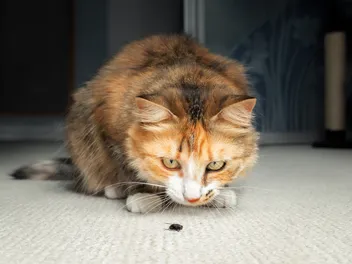
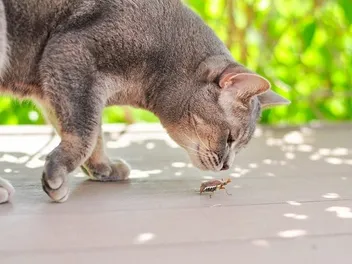
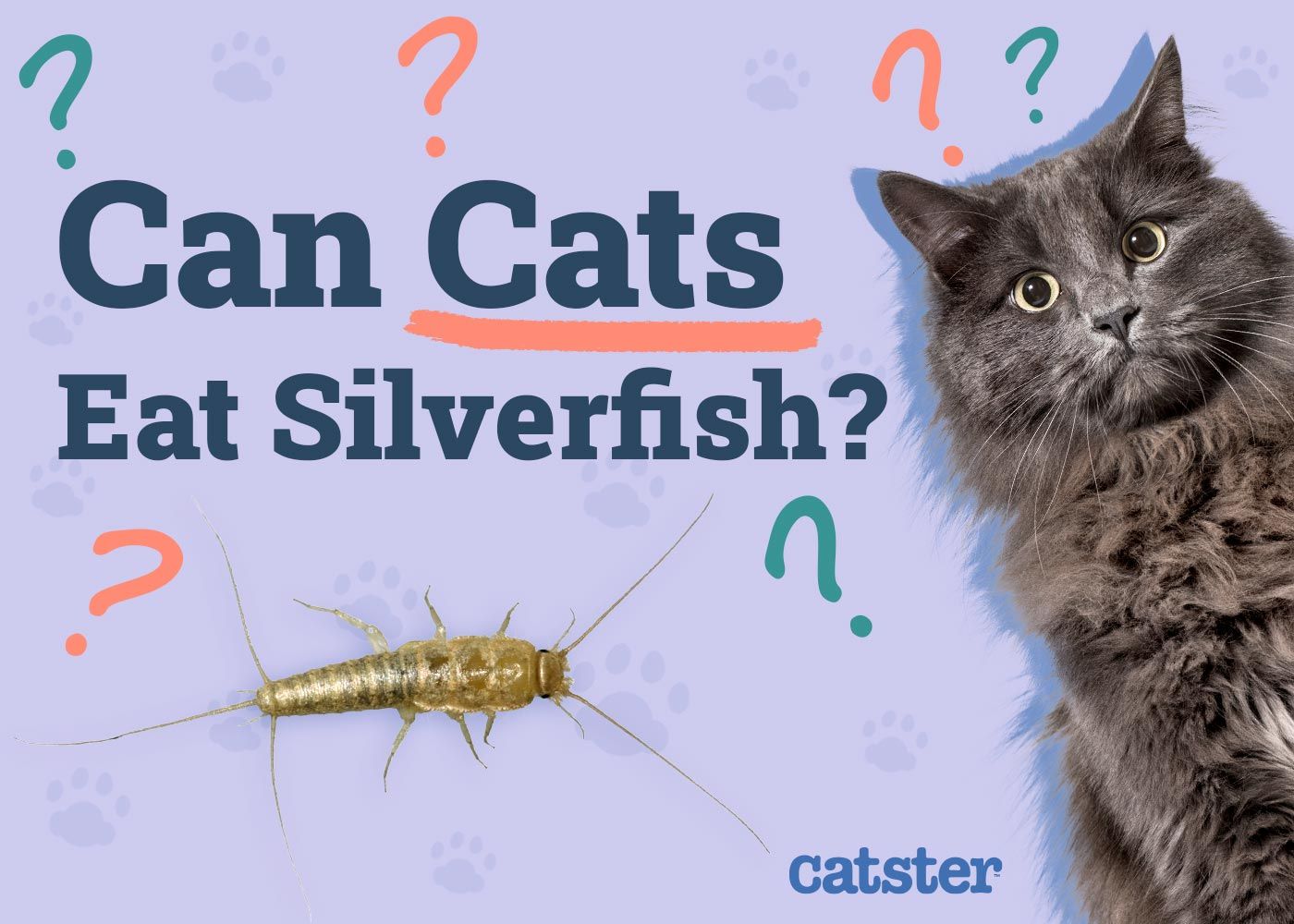
Most cat owners can attest that cats are like little toddlers; they grab anything they can and put it in their mouths. However, this can cause problems for their owners, who have to deal with the fact that their cats are eating things they aren't supposed to eat. You've probably seen your cat hunt and snap up a silverfish if there are any that live in the area. The good news is that silverfish pose no innate risks to cats1. That's not the same as being healthy, but at least they aren't dangerous.

Are Silverfish Dangerous to Cats?
Silverfish do not bite, and they don't carry any innate toxins that might pose a risk to your cat. The primary danger of silverfish is to the infrastructure of your home. Silverfish can wreak havoc on your home once they've got an infestation brewing. Damage to infrastructure can put your animals at risk of being injured by falling items.
Additionally, silverfish may feed on your pet's food and leave them hungry if you aren't careful. Usually, silverfish are brought into the home due to an infestation in a food source like pet food.

Are Silverfish Healthy for Cats?
Silverfish pose no physical risk to cats, but that's not the same as being healthy for them to eat. There are lots of things that we eat that aren't exactly healthy, like sugar, and cats are no different. While they may enjoy the occasional silverfish hunt and the spoils thereafter, the silverfish don't contain the nutrients needed to be considered "healthy" for cats.
Insect protein has been proposed as a protein option for cats and dogs. Housefly pupae, adult house crickets, yellow mealworm larvae, lesser mealworm larvae, Morio worm larvae, black soldier fly larvae and pupae, six-spot roaches, death's head roaches, and Argentinean roaches have been trialed in the creation of pet food. Proponents claim that insect proteins are a viable and sustainable source of protein for cats and dogs. Silverfish were not considered in this approach. So, it's best to assume they don't present a viable primary source of nutrients for your cat.
Is It Okay for Cats to Eat Silverfish?
There's nothing wrong with your cat catching and eating the occasional silverfish. Your cat probably enjoys the process of hunting the silverfish more than they enjoy eating them. If anything, your cat is getting valuable exercise and mental stimulation from hunting the silverfish.
If your cat has taken to eating silverfish, ensure that they're still eating their own food. If they're still eating their regular cat food and aren't gaining excessive amounts of weight, there's no need to intervene to stop your cat from chasing a silverfish.
Is It Okay for Cats to Eat Insects?
Cats have been documented chasing, hunting, and eating insects for as long as we've been domesticating them. Especially in the modern era, where cats are increasingly kept as indoor-only pets, they have no place to exercise their prey drives and natural instincts. In these cases, cats can be more inclined to hunt and chase insects.
While feeding your cat insects is almost unheard of, scientists estimate that 6% of a feral cat's diet comprises insects. While cats in captivity will sometimes eat things that are toxic to them, feral cats tend to be rather choosy about what they put in their mouths. So, it's safe to say that cats have the clear to eat insects from nature.
If you aren't totally sold on the whole eating insects thing, it's important to remember that this belief is largely a Western one. Entomophagy, the eating of insects, is practiced in over 100 countries, and an estimated 2 billion people engage in the practice. In many cases, insects are prized as a delicacy by these people.
As long as the insects your cat is consuming don't present an innate risk via toxins or disease, there's no reason to stop your cat from eating insects. Insect protein is a dense source of animal proteins, which make up the building blocks of our cats' vital body functions.

Cats are what are known as "obligate carnivores" in the science world. What this means is that their bodies are biologically designed to break down animal proteins as their primary food source. Feeding data from wild cats show that their primary food source is animal proteins; to be classified as an obligate carnivore, an animal must consume a diet comprised of approximately 70% animal proteins.
Going a bit deeper under the hood, cats have a short caecum that is macroscopically "undifferentiated" from the rest of the digestive tract. The caecum is the part of the digestive tract usually reserved for the gut bacteria that breaks down plant nutrients and transforms them into the nutrients we use to power our bodies.
The shortness of the cat's caecum is important because a shorter caecum is correlated to low plant-material consumption in animals. Additionally, the conspicuous lack of plant-digesting enzymes means that cats aren't eating much plant material since they don't get much nutrition from them.
What does this have to do with eating insects? Insects are considered a form of animal protein. So, if you need a little more push to allow your cat to eat insects, that's the real key. Insects are a vital animal protein that cats can use to derive nutrients that they need to survive.
Eating insects may be gross to you, but to your cat, they're just an available snack that they can chase! So, you don't have to intervene unless your cat is playing with a bug that might pose an innate risk to them, like a black widow spider.
Final Thoughts
Cats seem like they'll eat just about anything sometimes, but silverfish are not a risk that you need to worry about. Eating silverfish might not be healthy, but it does not pose a risk to your cat, and you're free to let them chase and hunt the little menaces; doing so may even help prevent you from dealing with a full-blown infestation!
Sources
Featured Image Credit: Hans, Pixabay
Expert cat care, straight to your inbox
News, insights, and useful advice, delivered to you.

No spam — unsubscribe anytime.
By signing up, you agree to our Terms & Conditions and Privacy & Cookies Policy.
How useful was this post?
Click a star to rate. You can leave written feedback afterwards. (We read all feedback.)
Luxifa is a freelance writer with a passion for animal science and technology. She loves to share the world of animal science with people to help them make informed decisions for themselves and their pets. Luxifa has worked in professional pet care for over six years and strives to help change the world of pet care by bringing the information people need to them in terms they can understand. Knowledge is power, and Luxifa loves to help everyone become the most informed they can be.