Insect-Based Cat Food: Vet-Reviewed Pros, Cons & FAQs


In this article
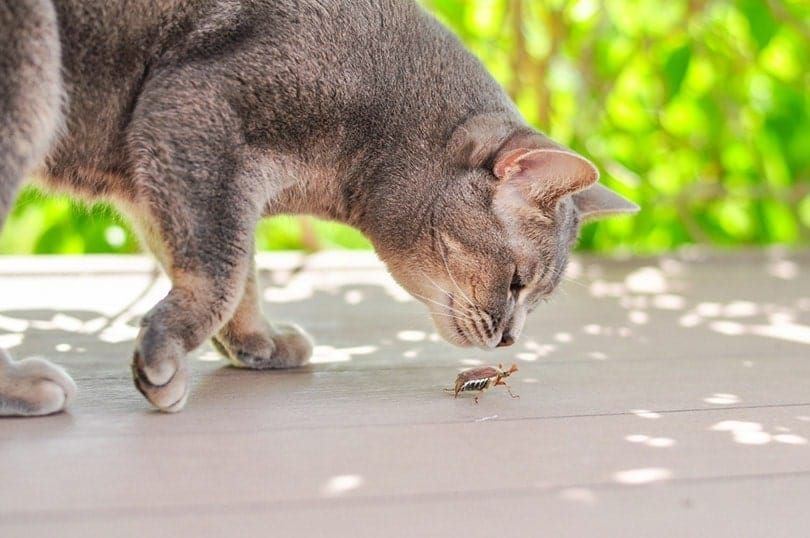
You may have heard about the recent trend of pet food made with insects rather than more conventional animal protein. While this might sound gross to you, our pets won’t worry about eating this new kind of food. After all, both cats and dogs will eat bugs by accident and sometimes on purpose. Cats certainly love to hunt them!
There are definite advantages to pet food made with insects rather than animals, but there are issues to be aware of too. Here, we go over the pros and cons of giving your cat insect-based food and cover the potential questions that you might have.

What Exactly Is Insect-Based Pet Food?
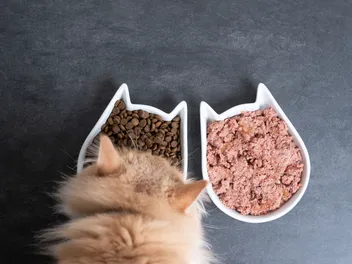
Cat food made with insects is not the same thing as pouring a bowlful of dead bugs into your cat’s bowl. The insects are processed just like meat, so the product comes out looking exactly like the cat food that you’re accustomed to.
There are several companies in certain parts of the world that have already produced this kind of kibble.

Pros of Insect-Based Pet Food
The following are select advantages of trying out this new type of cat food.
Sustainability
Anyone who is environmentally conscious could benefit from switching to insect-based pet food. Typical factory farming uses vast amounts of land, water, and energy. There’s also the amount of pollution produced from this type of manufacturing.
Insect farming is accomplished with much fewer resources, produces almost no ammonia and methane, and doesn’t require antibiotics or hormones, all of which are issues in traditional commercial factory farming.
Generating insect-based pet food has a much lower environmental impact, which is arguably the most important selling point for this product.
More Ethical
This should be an obvious advantage, as using insects is ethically an excellent alternative to traditional meat. Besides feeling better about the environment, anyone concerned about the animals' welfare when chicken, pork, and beef are sacrificed for conventional pet food can feel less guilty. Of course, insects are also living creatures, so some might not agree with this point.

Novel Protein Option
Some pets have food intolerances and allergies, which are more common in dogs than cats. But cats can also suffer from food allergies, which are usually triggered by protein components in the food.
Cats are obligate carnivores, which means they need protein that typically comes from animals, so they can’t be fed a vegetarian diet. The alternative is using a novel protein, such as buffalo or venison, in place of the protein that triggers the allergy (which is commonly beef, chicken, fish, or dairy).
This is where insects can come in handy. While you can still feed your cat other proteins (like a duck), insect-based food gives you another option.
Nutritious and High Protein
Beyond being a natural source of high protein, insects are full of healthy nutrients. They are rich in minerals, vitamins, and fatty acids, though of course, the amount of these nutrients depends on the type of insect.
The Food and Agriculture Organization of the United Nations has stated that not only are insects no different than other protein sources, like beef, chicken, fish, and pork but also that their protein levels can be even higher, as much as 60% higher in some species of insects.
Cons of Insect-Based Pet Food
You might be thinking that insect-based cat food sounds like an incredible option for you and your cat! But there are also distinct disadvantages.
Effects Unknown
This is a critical con of this product. To this date, there haven’t been any studies done on the long-term effects that this type of food will have on pets. With cats being obligate carnivores and needing a particular kind and amount of protein in their diets, there’s no way to know for sure if insect-based food is good for cats.
While the protein in insects is comparable to the protein in animals and they are full of healthy nutrients, no guarantee feeding your cat a diet of bugs will not eventually cause any health conditions in the future.

Approval
Insect-based cat food has been approved in the parts of the world where the food is being manufactured and sold. But this isn’t the case everywhere.
In the United States, the Association of American Feed Control Officials voted for the approval of the use of insects in adult dog food in August 2021. However, at the time of writing, the AAFCO is not reviewing the possible use of insects in adult cat food.
Countries in Europe, like the U.K., France, Switzerland, and Canada are all making this food, but it will take a while before it’s potentially available in the States and other parts of the world.
Cost
At this point, it is more expensive to purchase insect-based food over regular cat food. This is bound to change in the future as it gains more approval and more products are produced, but for now, it’s even more expensive than most higher-end cat food.
Attitudes Toward Bugs
Many people’s squeamishness over the thought of eating bugs can be an obstacle. But it’s important to note that if our cats end up benefiting from it and they enjoy it, they won’t care if they’re eating insects or fish.
Also, remember that you don’t actually see any bugs when you’re feeding your cat this kind of food, since it will just look like regular kibble.

Frequently Asked Questions
Now that you’ve learned the good and the bad of insect-based cat food, here are possible questions that you might have.
What Are the Most Commonly Used Insects for Pet Food?
The black soldier fly larvae are the primary insects being used in pet food. This species was the one approved by the AAFCO. Mealworms and crickets are also used in some products.

How Many People Are Willing to Feed Their Pets Insects?
Market research conducted has found that 47% of pet owners said that they would think about feeding their pets insect-based food, and 87% of respondents mentioned that the sustainability aspect was the most important factor when picking out pet food.
Is This Going to Be a Popular Alternative?
It’s estimated that the insect-based pet food industry might increase as much as 50 fold in the next 8 years by 2030. They expect half a million metric tons to be produced at that time, compared to the current approximate 10,000 metric tons. But of course, all this will depend on studies and approval in more countries.

- NO MESS - The 360° tray on this cat food and water bowl set has a raised design to catch and contain stray crumbs and drips. Protect your indoors and floors from wet and messy meals!
- WHISKER FRIENDLY - Shallow and wide metal containers with flat bottoms ensure your kitty can enjoy mealtime free from whisker fatigue!
- CHEW-SAFE MATERIALS - Kittens and cats love chewing on silicone and soft rubber - but it's a choking hazard. Our cat feeding station materials are anti-chew for a 100% safe feeding frenzy!
Feeding your cat a high-quality diet is important for keeping them healthy and happy. But it goes beyond the food you choose; the dishes they use also matter. The Hepper NomNom Cat Bowl is our favorite for its unique, five-star design that protects from whisker fatigue and promotes good posture which also aids in better digestion. As an added bonus, it’s beautifully crafted and offers a modern take on the traditional cat bowl that fits seamlessly with all home stylings. Learn more about the NomNom by clicking here.
At Catster, we’ve admired Hepper for many years and decided to take a controlling ownership interest so that we could benefit from the outstanding designs of this cool cat company!

Conclusion
If you’re interested in trying out an insect-based food for your cat, keep an eye out for any new products, particularly if you live in the States, since there isn’t anything available at the time of this writing. But if you do live in a country where it’s readily available, speak to your vet before trying out this kind of food.
There is definite promise with insect-based food, particularly for those who are concerned about sustainability and those with cats suffering from food allergies. But there’s no question that more studies need to be done before we can confidently understand the health implications of feeding this kind of diet to our pets. We think the future is bright and insect-based diets could be a game changer for many current issues. However, as usual, our recommendation is to speak to your vet before making any changes to your pet’s diet.
Sources
Featured Image: GooseB, Pixabay
Expert cat care, straight to your inbox
News, insights, and useful advice, delivered to you.

No spam — unsubscribe anytime.
By signing up, you agree to our Terms & Conditions and Privacy & Cookies Policy.
How useful was this post?
Click a star to rate. You can leave written feedback afterwards. (We read all feedback.)
Kathryn was a librarian in a previous lifetime and is currently a pet writer. When she was a child, she hoped to work in ZOOs or with wildlife in some way, thanks to her all-consuming love for animals. Sadly, she's not strong in the sciences, so she fills her days with researching and writing about all kinds of animals and spends time playing with her adorable but very naughty tabby cat, Bella. Kathryn is hoping to add to her family in the near future – maybe another cat and a dog.