Can Cats Eat Okra? Vet Reviewed Nutrition Facts & Alternatives


In this article
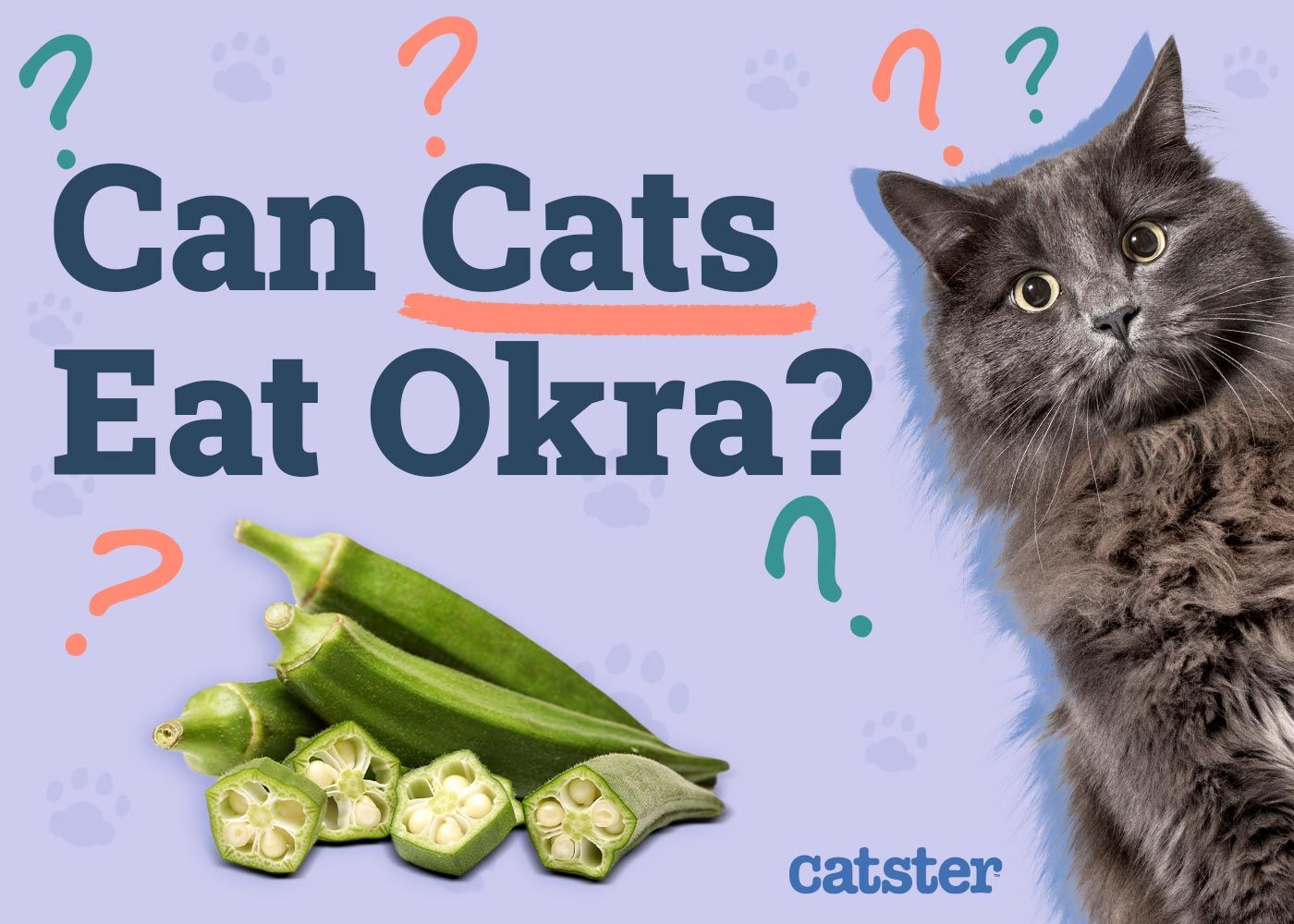
If you love okra and would like to share some with your cat, you should know that cats can only eat okra in small amounts. Just remember that your cat is a carnivore that needs to get most of their nutrients from meat-based food.
As a carnivore, your cat doesn’t need to eat any vegetables, including okra, to be healthy. If your cat loves okra and begs for it whenever you’re preparing it for yourself, only feed them a tiny amount because eating too much can lead to some gastrointestinal issues, like an upset stomach or diarrhea.1

The Shocking Truth About Okra
Even though okra is eaten by scads of people around the world every single day, this common vegetable contains a poison called solanine. This poisonous substance is also found in other vegetables like eggplant, artichokes, and green potatoes. When solanine is consumed in moderate or high amounts by a human or an animal, such as a cat, it can cause several symptoms. The most common symptoms of solanine poisoning include:
- Vomiting
- Abdominal pain
- Diarrhea

In more severe instances of solanine poisoning, more serious symptoms can occur, including:
- Visual disturbances
- Apathy
- Confusion
- Weakness
In the worst-case scenario, when high amounts of solanine are consumed, it can lead to paralysis, convulsions, coma, and even death.
The point of bringing this up is that okra does contain solanine, which, when eaten in excess, can cause sickness or even death. But when consumed in sensible and small amounts, there’s no danger of solanine poisoning with okra consumption.
It’s fine to give your cat a couple of bites of plain cooked okra if it’s something they like; just don’t allow them to eat a lot of this green vegetable.

Feeding Your Cat a Proper Diet
Just like people, cats need to eat a balanced diet every day to provide them with the energy and nutrients they need. A proper feline diet consists of a high amount of protein, a moderate amount of fat, a minimal amount of carbohydrates, and over a dozen other important nutrients, vitamins, minerals, fatty acids, and amino acids.
Thankfully, the high-quality cat foods on the market today meet all a cat’s dietary requirements. It’s up to you to decide if your cat should eat dry kibble or wet cat food. Just be sure to choose a quality product that is nutritionally complete and balanced.
The Association of American Feed Control Officials (AAFCO) is a non-profit corporation that’s responsible for establishing nutritional standards for complete and balanced pet foods. Any cat food manufacturer that has followed this organization’s recommendations can say so on their product packaging, so look for this info on cat food when sorting through your choices.

Other Vegetables and Fruits to Share With Your Cat
Even though cats must eat a meat-based diet to stay healthy, you can still share certain vegetables and fruits with your furry friend. These cat-friendly foods can give your cat a healthy boost as long as they’re eating a wholesome meat-based diet on a daily basis.
Feel free to share small amounts of the following vegetables and fruits with your cat.
- Broccoli
- Spinach
- Carrots
- Asparagus
- Pumpkin
- Bananas
- Blueberries
- Strawberries
- Cantaloupe
- Squash
- Cucumber
- Lettuce
- Kale
- Spinach

Foods You Should Never Share With Your Cat
While there are plenty of cat-friendly foods like those above that you can share with your feline friend, there are some foods you should never share with your pet cat. All these foods contain unhealthy ingredients that can make cats sick if eaten in high amounts, so don’t share them with your pets!

What to Do if Your Cat Eats Something They Shouldn’t
If your cat gets into food that is known to be unhealthy for cats to eat, it’s best to give your vet a call. Your vet will ask you what exactly your cat ate and how much of it they consumed. You will also be asked to tell the vet about any symptoms your cat is showing.
If your vet thinks your cat is in danger, you’ll probably be told to bring your cat in for an exam. If you’re lucky, your vet will determine that your cat’s health is not in danger.
Don’t take any chances with your feline friend’s health. If you suspect that they’ve eaten something dangerous, call your vet for advice. Remember that your cat depends on you to take good care of them. Also, your vet is your best ally when it comes to their health, so never hesitate to give them a call whenever you have questions.
Conclusion
While it’s perfectly fine for cats to eat okra in small amounts, don’t allow your cat to eat a lot of this vegetable. Your cat needs to get all their nutritional needs met by eating a meat-based diet. Pick a quality cat food in a flavor your cat enjoys to ensure your little friend stays healthy.
See Also:

Expert cat care, straight to your inbox
Vet-reviewed advice, behavior tips, and the best of Catster. Free, and you can unsubscribe anytime.
By signing up, you agree to our Terms & Conditions and Privacy & Cookies Policy.
Christian started writing for a local newspaper as a teenager, and he's been involved in the publishing industry for most of his adult life. Combining his love of writing with a passion for animals, he is currently the Director of Editorial at Pangolia and the Editor-in-Chief at Catster.
Christian lives in the Philippines with his wife, son, and four rescue cats: Trixie, Chloe, Sparky, and Chopper.
Join the conversation
Ask a question, share your story, or send private feedback.