Get

In Your Inbox

Catster is reader-supported. When you buy via links on our site, we may earn an affiliate commission at no cost to you. Learn more.

Russian Blue/Bengal Cat Mix: Breed Info, Pictures, Temperament & Traits
Share

Russian blue Cat vs Bengal Cat Breed

Breed Overview

Length:

10–16 inches

Weight:

8–17 pounds

Lifespan:

11–15 years

Colors:

Blue with rosettes or marbling

Suitable for:

Experienced cat owners, those looking for a high-energy cat

Temperament:

Intelligent, outgoing, and energetic

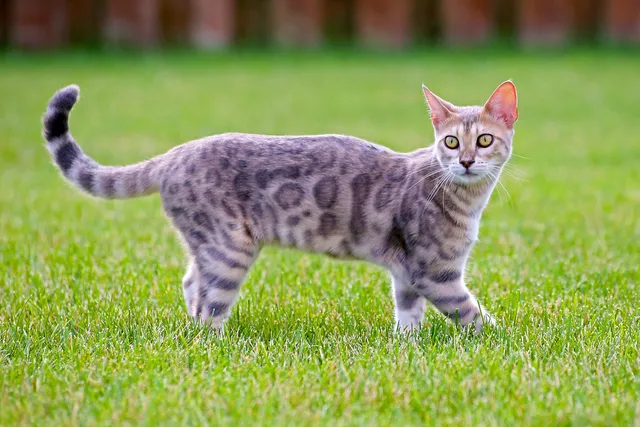
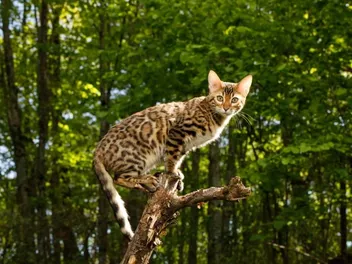
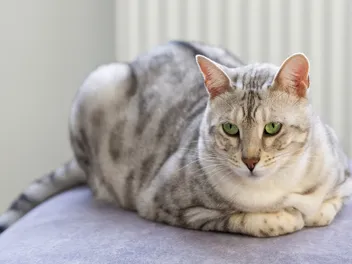
There’s nothing like a Bengal—these miniature wildcats are often seen as the most difficult and most exotic pet to keep. With their beautiful spotted fur and their high energy, these cats are impossible to mistake for anything. Although most Bengals have a brown and tan coat that makes them look like miniature leopards, there are many other options, including a beautiful silvery-gray fur that comes from cats of mixed Asian Leopard Cat and Russian Blue heritage. These cats have the energy and temperament of Bengals but an entirely new look! They are sometimes called Blue Bengals, although not all Blue Bengals have Russian Blue blood.

divider cats oct 2024

Russian Blue/Bengal Kittens

Russian Blue/Bengal Mix Characteristics

Energy
+
A high-energy cat needs a lot of physical and mental stimulation to keep healthy and happy, while a low-energy cat needs minimal physical activity, but still needs mental stimulation. When choosing a cat, It’s important to ensure their energy levels match your lifestyle.
Trainability
+
Cats that are easy-to-train are more willing and skilled at quickly learning prompts and actions with minimal training. Harder-to-train cats are usually more stubborn or aloof and require a bit more patience and practice.
Health
+
Certain cat breeds are more prone to various genetic health problems, and some more than others. This doesn’t mean that every cat in those breeds will have these issues, but they do have an increased risk, so it’s important to understand and prepare for any additional needs they may require.
Lifespan
+
Due to their size or potential genetic health issues of a specific breed, some cats have shorter lifespans than others. Proper nutrition, exercise, mental stimulation, and hygiene also play an important role in your cat’s lifespan and quality of life.
Sociability
+
Some cat breeds are more social than others, both towards humans and other cats and animals. Cats that are more social have a tendency to rub up on strangers for scratches or jump on laps for cuddles, while cats that are less social shy away, hide, are more cautious, and even potentially aggressive. No matter the breed or gender, it’s important to socialize your cat and expose them to many different situations.

divider 2 cats

3 Little-Known Facts About the Russian Blue/Bengal Mix

1. Their Amount of Wild Blood Influences Their Personality

Most Bengals aren’t half-wild cat and half-domestic—in fact, very few are. First-, second- and third-generation Bengal cats (F1–F3) are rare outside of breeding programs and are much harder to care for. Most Bengals used in shows are F4 or F5, and many Bengals for sale today only have a small amount of wild blood. Most Russian Blue/Bengal crosses are in this last category—which makes them a little easier to care for.


2. First-Generation Crosses Are Never Blue

Blue is a recessive gene in cats—which means that cats need a copy from each parent to get the coat color. If you breed a Russian Blue to an Asian Leopard Cat or a Bengal without blue coats in their genes, you won’t get any blue coats. Breeding blue Bengals requires a little more work, which is one reason they’re so rare.


3. Breeding Is All About the Mamas

When breeders start a new Bengal line, they always hope for girls. That’s because first through third-generation (F1–F3) males can’t father kittens. Breeders cross female Asian Leopard cats with domestic males to get kittens and then breed the daughters with more domestic cats. That means that an F4 kitten has a mom, grandmother, and great-grandmother who all had to pass down their leopard genes!

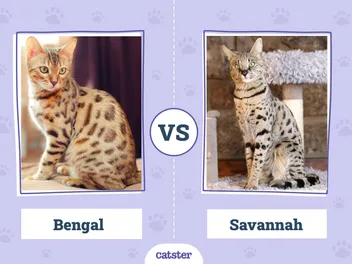
Russian Blue vs Bengal Cat breed
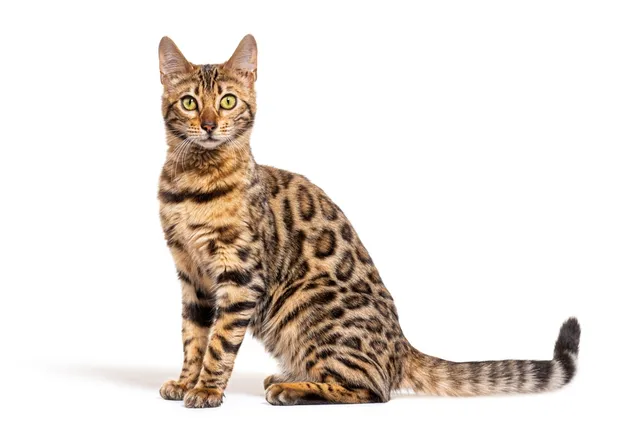
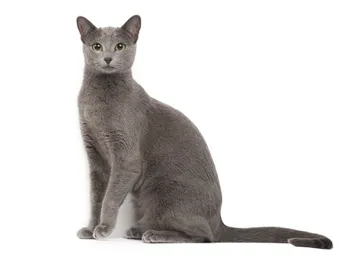
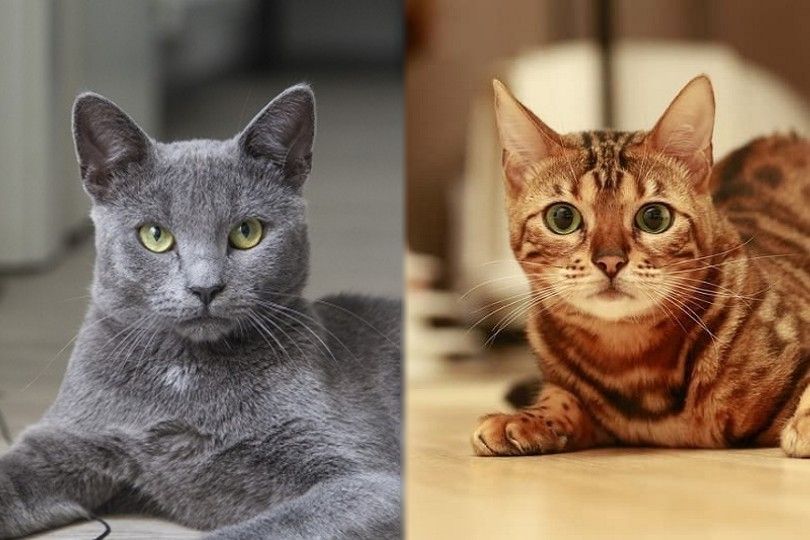
The parent breeds of Russian Blue/Bengal: Left – Blue Russian (Review News, Shutterstock); Right – Bengal Cat (Chrisnachall, Pixabay)

Temperament & Intelligence of the Russian Blue/Bengal Mix

Are These Cats Good for Families? 👪

In general, Russian Blue/Bengal cats aren’t ideal for families with small children.

Does This Breed Get Along with Other Pets?

Russian Blue/Bengal cats are social and outgoing, but they can be high-energy. It isn’t recommended to keep them with small pets as they have strong hunting instincts. Some Bengal cats are smart enough to get into locked cages and terrariums, so they can be a danger to birds and other small pets.

Bengals can do well with cats and dogs in the right circumstances.

divider 2 cats

Things to Know When Owning a Russian Blue/Bengal Cross

Food & Diet Requirements 🐡

Bengal crosses are generally large, active cats, so they might need a little more nutrition than your average feline. Look for cat foods that have real meat as the first ingredient and that are nutritionally balanced. You should feed your Bengal/Russian Blue Cross at least two meals a day and adjust the serving size based on your cat’s size and activity levels. In general, older kittens need the most food, while elderly cats will need less as their metabolism slows. In addition, males tend to be slightly larger and more active, so male cats might need more food. You might want to consider feeding your cat a mix of wet and dry food or a fresh food diet to make sure that they get a nutritionally balanced meal.

Exercise 🐈

Your Russian Blue/Bengal cross will definitely need space to exercise. It’s not usually the best idea to let them outdoors unsupervised as Bengal mix cats can be aggressive to unknown animals and are notorious for their ability to kill birds and other small wildlife; however, supervised outdoor time or a covered cat enclosure outside might help your cat have some extra space to move. Invest in a large climbing tree, scratching posts, and a variety of interesting toys to keep your cat healthy and stimulated, and make sure to schedule some regular playtime so that your cat doesn’t get lonely.

Training 🧶

Russian Blue/Bengal crosses are some of the most intelligent cats, so they can pick up training easily. However, some can be stubborn. These cats rarely need training on using the litter box or keeping themselves clean, but you might need to help your cat learn where appropriate scratching places are or cat-proof your space. These cats often love leash training and take well to outdoor walks. They can also be taught to do tricks with some patience, although some cats have more aptitude than others. Whatever you choose to teach your cat, make sure to do so with a lot of patience, redirection, and praise. Shouting and anger are more likely to stress your cat than teach good behavior.

Grooming ✂️

These cats are usually fairly low-maintenance because of their short, low-shedding coats. Depending on your cat’s individual coat, you might not need to brush at all, or you might want to give your cat the occasional groom. Blue Bengals are also known to be ideal cats for allergic owners as they tend to have less dander and a lower level of allergens than other breeds, depending on the cat.

Health and Conditions 🏥

Bengal cats are a fairly healthy breed, and crossing out with Russian Blue only adds more genetic diversity to their bloodlines. However, there are some issues that are more common in cats with Bengal ancestry that you should be aware of.

Minor Conditions
  • Patellar Luxation
  • Hip Dysplasia
  • Pyruvate Kinase Deficiency
Serious Conditions
  • FIP susceptibility
  • Progressive Retinal Atrophy

divider 2 cats

Male vs Female

There aren’t many differences between male and female Bengal/Russian Blue crosses. Both are outgoing, active, and social. Male cats tend to be slightly larger. Both male and female cats tend to be more even-tempered and get along better with other pets when they are spayed or neutered. Spayed and neutered cats also tend to live longer and have fewer long-term health issues. It’s recommended to spay or neuter cats unless you plan to use your cat for breeding purposes because of this.

divider cats oct 2024

Final Thoughts

Overall, the Russian Blue/Bengal cross is similar to other Bengal cats, with many of the same rewards and challenges. The beautiful blue coat with rosetting or marbling will set your cat apart from other cats, as it has one of the rarest coat patterns in the world. But if you’re interested in this cat for the looks, make sure to plan carefully before you jump to being a cat owner—this is not a low-maintenance pet, and it is recommended for experienced pet owners.


Featured Image Credit: Left – Russian Blue (milivigerova, Pixabay); Right – Bengal Cat (lshman000, Pixabay)

Want content like this delivered to you?

Sign Up For Our Newsletter

News, insights, expert advice, and everything cat

* By submitting, you agree to our Terms & Conditions and Privacy & Cookies Policy.


How useful was this post?

Click on a star to rate (you can leave written feedback after clicking submit)

Help us improve Catster for pet parents!

Your feedback really matters.

What did you like about this post? Also how can we improve it?

Join the conversation

Leave a Reply

You’re very welcome to leave a comment or question. Please know that all comments must meet our community guidelines, and your email address will NOT be published. Let’s have a positive and constructive conversation.


Catster's Digital Magazine is Back!

Vet-approved health & behavior advice

Real cat stories & community features

Chatting About the Rainbow Bridge, Euthanasia, and Laughter During Grief | Chatty Cattys, Episode 24

If you’ve ever felt the loss of a beloved cat, or are dreading the day when your pet crosses the rainbow bridge, you’ll...

The Simple Reasons Cats Refuse to Let Anyone Use the Bathroom Alone

Cats have an extraordinary talent for making themselves present in the most inconvenient places, and the bathroom ranks near the top of the...

A Paw-sitive Milestone: Canada Officially Becomes a Declaw-Free Nation

Canada has officially become a declaw-free nation. On May 25, 2026, a new regulation was filed in Ontario under the Provincial Animal Welfare...

The Surprisingly Simple Ways to Help a Cat With Hairballs

Cats spend an astonishing amount of time grooming. It is part hygiene routine, part comfort ritual, and part instinct that traces back generations....

More related

How Can I Talk With a Vet When It’s in the Middle of the Night? 5 Ideas & Online Vet Options

Cats are curious animals, and they tend to have active periods at night. This can cause them to get into accidents or get...

National Pet Month 2026: When It Is & How to Celebrate

Whether they’re providing laughs with their zoomies or snuggling up to us when they sense we’re sad, pets contribute so much love and...

9 Best Limited Ingredient Cat Treats in 2026 – Reviews & Top Picks

This article has been reviewed for factual accuracy by a qualified veterinarian. It should not however, replace advice tailored to your pet by...

Why Your Cat’s Poop Smells Like a Biohazard

Nobody enjoys litter box duty, but sometimes it gets unbearable. The smell hits you from across the room. You’re scooping faster, lighting candles,...

Keep reading

Why Is My Cat Only Eating Treats and Not Their Food? 4 Likely Reasons

Oh no! Your cat, who used to be such a good eater, is now ignoring their full bowl but won’t stop meowing for treats. What gives? Well, your cat may just be acting like a kid who only wants to...

calico cat having treats

Why Do People Hate Cats? What Science Tells Us (Vet-Reviewed)

Cat lovers think that their favorite animals can generally do no wrong. People who adore felines often find them loving, attentive, playful, and adaptable. They love cats’ independence and sweet companionship and feel honored that such self-sufficient and intelligent creatures...

red flame point siamese in the grass

6 Vet-Approved Natural Home Remedies to Treat Scabs on Cats

Frequent and persistent scabbing on your cat’s body is not normal. Keep track of where the scabs appear on your cat’s body and schedule a visit to your veterinarian immediately once you notice them. Treatment of the cause varies widely...

Close up of a rash or Diagnosis of scabies or Dermatological diseases on the skin of the cat's ears

My Cat Ate a Mouse: Vet-Approved Dangers & Prevention

Cats are born hunters, and it’s natural for them to pursue and catch prey such as mice. If your cat just consumed a mouse, you may be wondering if you need to be concerned. What if your buddy ate a...

My Cat Ate a Mouse

How Many Hours a Day Do Cats Groom? Vet-Reviewed Behavior Explained

Imagine spending half of your waking hours in the shower every single day. While that might seem exceedingly boring and tedious to us, cats spend approximately 2–5 hours grooming themselves every day, which is between 30% and 50% of their...

bengal cat grooming itself

Kittens First Vet Visit: What to Expect & How to Prepare (Vet-Approved)

The first days and weeks after welcoming a new kitten into your home are usually full of excitement as you become acquainted with your new companion. Getting to know your pet’s quirks and personality traits and bonding with them is...

vet checking up tabby cat

Why Is My Cat Afraid of the Ceiling Fan? – 4 Possible Vet-Reviewed Reasons

Cats, like many other pets (and us), possess unique personalities. Some can be extremely brave and adventurous, while others can be more timid and get scared easily. A cat’s personality can be influenced by several factors, including their genetics, early...

ceiling fan

GMO in Cat Food: Vet-Reviewed Health & Nutrition Facts

GMOs or genetically modified organisms is a buzz phrase often used when describing human foods, but it has segued into the pet industry. We want the best for ourselves and, consequently, for our pets. However, GMOs often get a bad...

Hungry cat sitting in front of a emty food dish and looking up

Love Cats? So Do We! Join the Catster Community

Stay informed with expert pet care insights delivered straight to your inbox! Discover professional guidance on animal behavior, feeding tips, trusted product picks, and much more.


Sign up for the Catster Email Newsletter

Stay informed with expert pet care insights delivered straight to your inbox! Discover professional guidance on animal behavior, feeding tips, trusted product picks, and much more.