Russian Blue Siamese Mix: Info, Pictures, Care & Traits
In this article
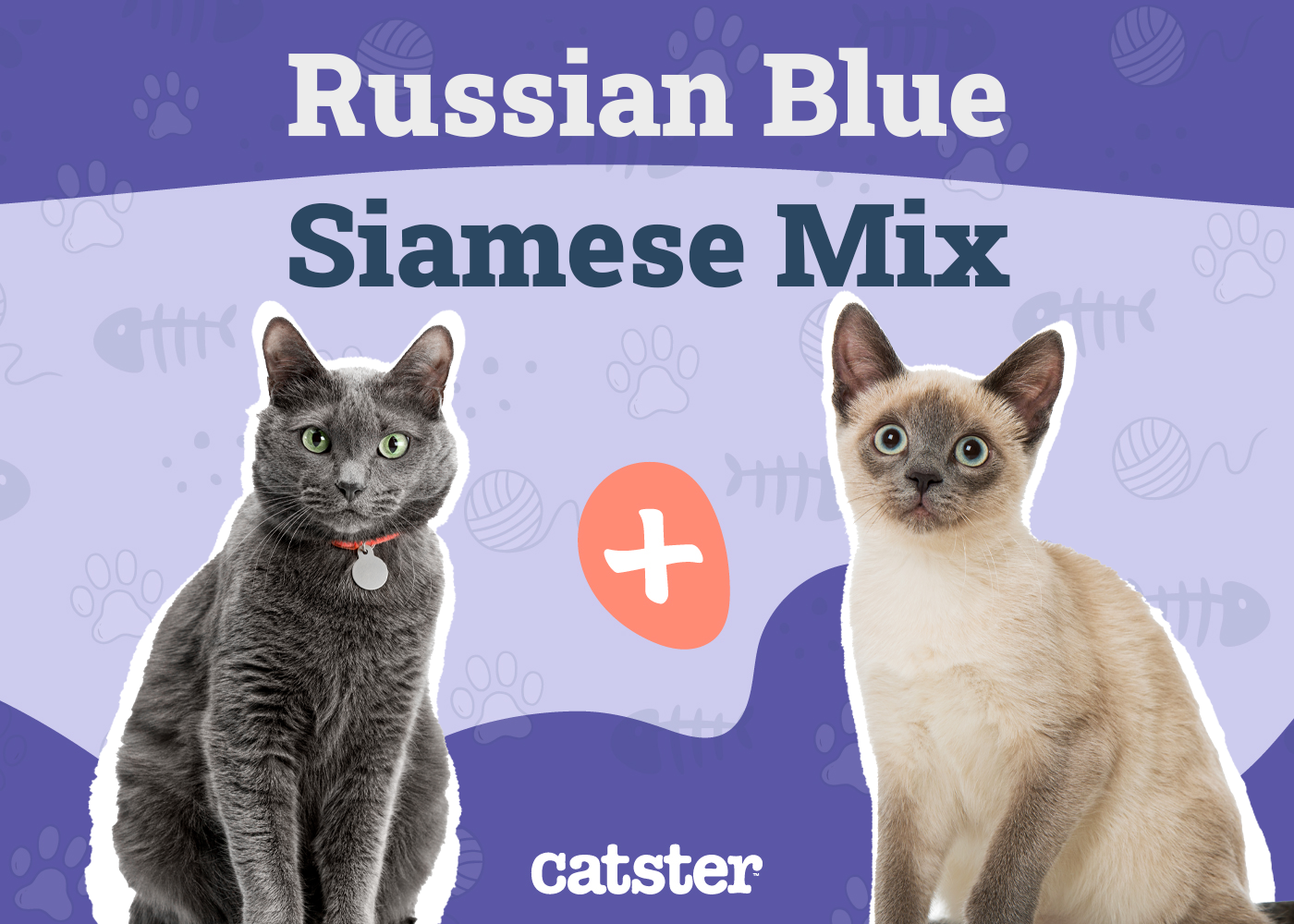
The Russian Blue Siamese mix is a rare hybrid breed resulting from pairing a Russian Blue with a Siamese. These gorgeous cats are intelligent, affectionate, and loyal to their family members, but their appearance and remaining personality traits will depend entirely on which parent breed they favor. Read on to learn more about this interesting mixed breed to see if it’s right for you, your lifestyle, and your family.
Breed Overview
Height:
Weight:
Lifespan:
Colors:
Suitable for:
Temperament:
The Russian Blue Siamese mix is an interesting hybrid resulting from two very different breeds. While they do have some similarities, the parent breeds are very different in many ways. One thing is for sure: you’re going to receive a gorgeous cat, as both Russian Blues and Siamese cats are downright stunning.
However, their temperament will be a mixed bag. One kitten from the litter may be outgoing, extroverted, and vocal like their Siamese parent, while the next will be reserved, quiet, and shy like their Russian Blue parent.
Russian Blue Siamese Mix Characteristics

Russian Blue Siamese Mix Kittens
While finding a breeder specializing in Siamese cats is relatively simple, the same cannot be said about Russian Blues. This is a relatively rare breed in North America, and folks with their hearts set on adopting one may need to wait quite some time before a kitten becomes available. That said, locating a breeder that specializes in mixing the two breeds will be even more challenging.
It is crucial, however, to do your due diligence if you do find a breeder focusing on the Russian Blue Siamese mix. We wouldn’t recommend adopting a kitten resulting from an accident litter, as proper genetic testing will not be done beforehand to ensure the health of the kittens.
Russian Blue Siamese Mix Origin & History
There is no origin story for the Russian Blue Siamese mix, though the history of the parent breeds is a lot easier to trace.
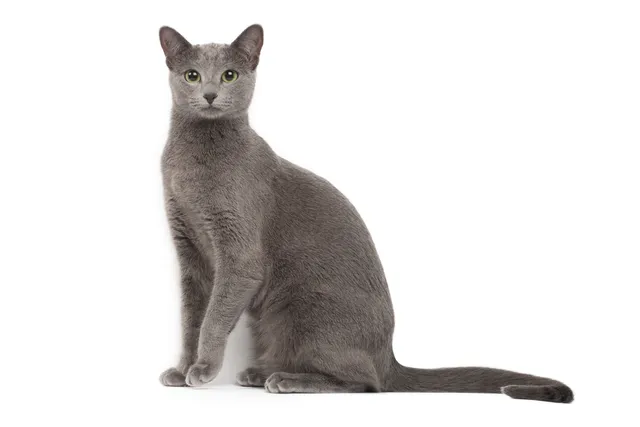
Russian Blues originated in the port of Arkhangelsk in Northern Russia, which is why they’re sometimes known as Archangel Blues. Sailors may have taken them from the Archangel Isles in Russia to Great Britain during the 1860s.
Siamese cats originated in Siam (modern-day Thailand). Legend says they were used to guard Buddhist temples and were therefore considered very sacred. Like the Russian Blue, the Siamese was transported to Great Britain in the late 1800s.


Temperament & Intelligence of the Russian Blue Siamese Mix 🧠
The Russian Blue Siamese mix may be a bit of a mixed bag when it comes to their personality, as it can depend on which parent breed they take after. The parents are precisely opposite in personality in many ways, so it’s impossible to know what to expect temperament-wise.
Russian Blues are known to be pretty reserved, especially around new people. They’re not particularly clingy or needy but are very sweet and gentle with their family members.
Siamese cats, however, are incredibly playful, social, and curious. They’re known for getting into mischief if they’re not given the enrichment they need to stay physically and mentally stimulated. They bond very closely with their humans and always want to be a part of the goings-on in the home.
Whereas a Russian Blue is content being on their own all day, a Siamese will be somewhat shadow-like toward their owner. Russian Blues are definitely introverts in the feline world, while the Siamese are, without a doubt, extroverts.
Are These Cats Good for Families? 👪
These cats can make fantastic family pets, especially if they take after their Siamese parent. Siamese cats are very gentle, playful, and friendly, making them terrific companions in homes with children. That’s not to say that Russian Blues wouldn’t make a good family pet, though. This breed is charming and can get along well with kids, though they’re not lap cats by default.
Both parent breeds tend to form a deep connection with one particular human family member.
Does This Breed Get Along With Other Pets? 🐶🐱
The amiable and outgoing temperament of the Siamese DNA in this mixed breed’s blood makes them very compatible with other feline companions. But don’t be put off if your kitty takes after the other parent more. Russian Blues can also get along well with other cats, though they may need more time to learn to become familiar and friendly with a new face.
This mixed breed can also get along with well-socialized and trained dogs, provided they’re introduced properly.
Things to Know When Owning a Russian Blue Siamese Mix:
Food & Diet Requirements 🐡
The best thing to feed a Russian Blue Siamese mix is a high-quality commercial diet approved by the Association of American Feed Control Officials (AAFCO) for their life stage (kitten, adult, or senior). Most vets also recommend feeding your pet a combination of wet and dry food to ensure your pet reaps the benefits of both types.
Free-feeding this breed is not recommended, as Russian Blues are prone to obesity. Try using a food puzzle or lick mat to banish boredom at mealtime and to slow down their eating speed.
Exercise 🐈
The Russian Blue Siamese cat can be a highly spirited and energetic kitty. They’ll need to be engaged in physical and mental stimulation regularly to stay happy, healthy, and out of trouble. Owners must provide opportunities for their agile cat to climb and perch. Offer plenty of cat trees, scratchers, toys, and window perches to encourage natural behaviors.
Training 🧶
This is a sensitive and gentle breed that responds best to positive reinforcement. They’re brilliant, so engaging them in activities and training is a great way to keep them stimulated and out of trouble. Some may be perfect candidates for harness and leash training, as well as other types of training, including tricks. However, please note that your cat may have a mind of their own, so it’s important to temper your expectations. The Russian Blue DNA in this breed’s blood can make them highly independent and even stubborn at times.
Grooming ✂️
This is a relatively easy breed in terms of grooming. They don’t have any requirements for routine washing, brushing, or combing, especially if they take after their Russian Blue parent in appearance. In fact, much fussing over their fur can actually ruin their double cat.
If they have the short, color-pointed coat of their Siamese parent, you should brush them once a week.
This breed has no specific eye, ear, or skin care requirements, either. However, if you notice them overgrooming or itching themselves, it’s best to check with a veterinarian to rule out any potential health conditions.
Health and Conditions 🏥
Both Russian Blues and Siamese cats have relatively long average lifespans of around 15 years. However, some Siamese cats have lived well into their 20s. While the mixed kitten resulting from these breeds may be healthier than their purebred parents, they still can be prone to the conditions often seen in their lineage.
Siamese cats are prone to pica (eating non-food items), asthma, amyloidosis, hypertrophic cardiomyopathy, mammary tumors, and hip dysplasia.
Russian Blues can be prone to obesity, diabetes mellitus, urinary tract diseases, and polycystic kidney disease.
As with all breeds, this mixed breed kitty can also develop dental issues and eye problems.
Male vs Female
The only significant difference between male and female Russian Blue Siamese mixes is their sizes. Males are typically a little heavier and larger than their female counterparts.
Personality is not dependent upon sex, though it may play a small role in some cases. Unneutered male cats can develop aggressive behaviors, typically toward other intact males. They may also be more likely to spray inside the home than males who have been neutered.
3 Little-Known Facts About the Russian Blue Siamese Mix
1. This mixed breed may be suitable for some folks with allergies.
While there is no 100% hypoallergenic cat breed, folks with allergies may find living alongside a Russian Blue Siamese mix a little more tolerable than other breeds. The best part is that it doesn’t matter which parent your kitty takes after more, as Siamese cats have short coats that aren’t prone to heavy shedding, and Russian Blues are also relatively light shedders.
2. Siamese cats and Russian Blues are considered natural breeds.
A natural breed occurs through natural rather than artificial selection. Siamese cats are natural as their coat pattern was the result of a genetic mutation. Russian Blues are a natural breed as they came to be without any help or selective breeding from humans.
3. Every Russian Blue Siamese mix will look different.
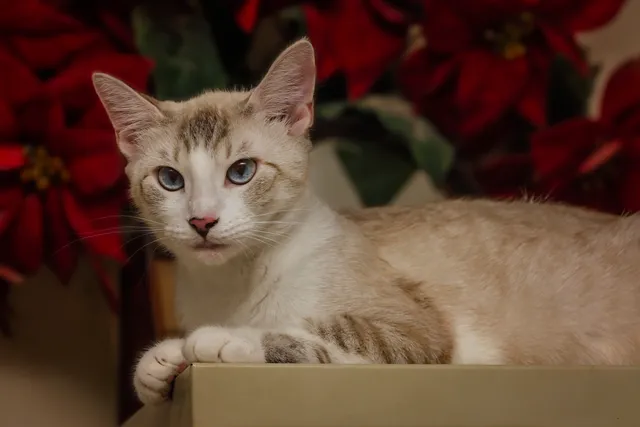
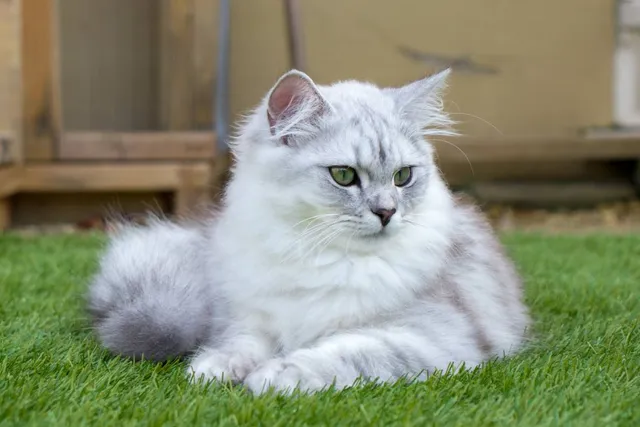
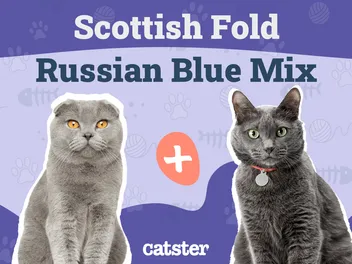
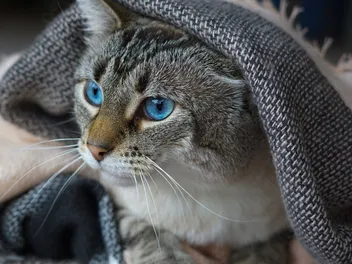
There are many visual differences between a Russian Blue and a Siamese cat, so it’s impossible to know for sure what the kittens will look like. They may have a coat that’s a dark slate gray or shimmery silver like their Russian Blue parent or a pointed pattern (pale body with darker extremities) as seen in their Siamese parent.
Final Thoughts
The Russian Blue Siamese mix is a rather unpredictable hybrid cat breed, both in appearance and temperament. Kittens resulting from such pairings can be extroverted, playful, affectionate, and social like their Siamese parent, or they could be sensitive, intuitive, and reserved like their Russian Blue side. Regardless of which side they take after more, this kitty is certain to bond tightly with their family members, though they may prefer one human over the others in the household.
These kitties will need a fair amount of enrichment, both mentally and physically, to stay happy and healthy. They’re quite active and limber, so the more opportunities you have for climbing and perching, the better.
The Russian Blue Siamese mix will be an affectionate and intelligent companion with a lot of love to offer their human, feline, and even canine housemates.
See also:
Siamese Munchkin Cat Mix: Pictures, Info, Temperament & Traits
Russian Blue vs. Munchkin Cat — What’s the Difference? (With Pictures)
Featured Image Credit: Left: Russian Blue Cat (Review News, Shutterstock) , Right: Siamese Cat (Andreas Lischka, Pixabay)
Expert cat care, straight to your inbox
News, insights, and useful advice, delivered to you.

No spam — unsubscribe anytime.
By signing up, you agree to our Terms & Conditions and Privacy & Cookies Policy.
How useful was this post?
Click a star to rate. You can leave written feedback afterwards. (We read all feedback.)

For Chantelle, writing and animals are the two driving forces in her life. Growing up on the Canadian prairies surrounded by pets, she now shares her home with five cats, two guinea pigs, and a bearded dragon. Chantelle, her husband, and their child pride themselves on being dedicated pet parent, even spending a fortune on wall-mounted cat shelves to provide their cats with an indoor jungle gym. When she's not snuggling with her cats or photographing their humorous moments, Chantelle is exploring the Rocky Mountains, rewatching her favorite Netflix series, and reading up on various random subjects.