Russian Blue vs. Munchkin Cat - What's the Difference? (With Pictures)
In this article
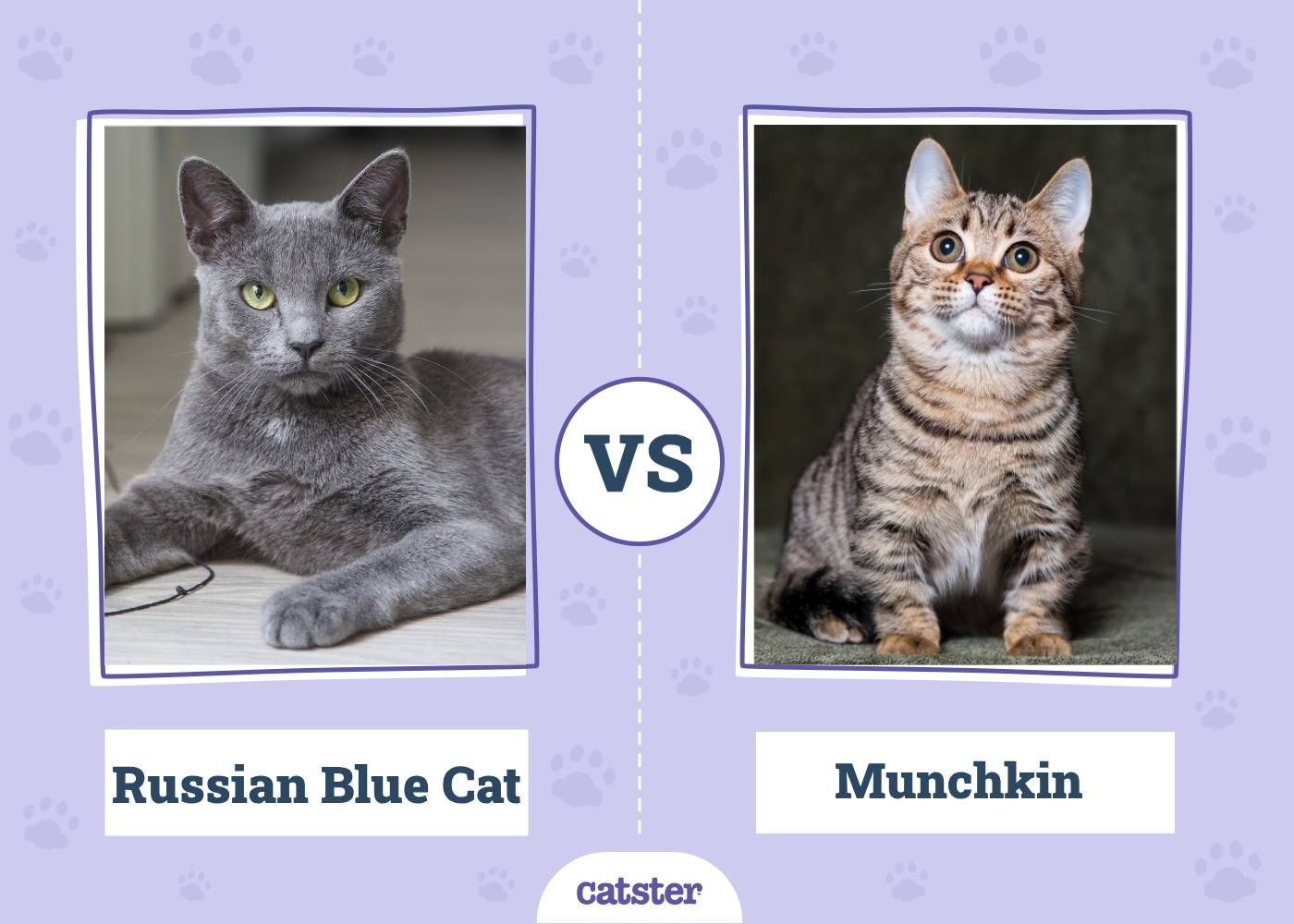
When you love cats, choosing a breed that would suit your lifestyle best can be difficult. After all, they’re all wonderful in their own unique ways! Between their varying coat colors and patterns, their different personalities and playfulness, and their sociable or independent natures, there are many things to consider before deciding on a particular cat breed. For example, if you’re considering either the Munchkin cat or the Russian Blue, you might wonder which one is right for you. Keep reading to learn more about these two lovable feline friends!

Visual Differences

At a Glance
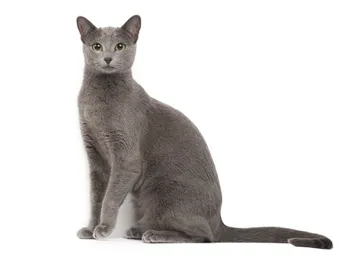
Russian Blue Overview
The Russian Blue cat is a short-haired breed that is widely recognized for having blue fur. However, they can actually be found in many different coat colors, including blue, black, grey, silver, and sometimes even a combination of these. This breed is affectionate and loving by nature. However, this doesn’t mean that they don’t have any energy. They love to play and are quite inquisitive. They also love being outside and exploring the area around them.

Personality / Character
The Russian Blue cat is sociable and affectionate. They are often used in therapy or as companions to those who suffer from anxiety, depression, or similar conditions. Due to their sociable and affectionate nature, Russian Blue cats are great for families with children or people who live alone. They are a calm and relaxed breed that is easy to care for.
Health & Care
If you are considering adopting a Russian Blue, you will be pleased to know that they are a low-maintenance cat breed. All you need to do is provide them with a safe and comfortable environment to live in and plenty of love and affection. Since the Russian Blue is so calm and relaxed, they don’t need as much attention as other breeds. However, they do enjoy affection and love to be cuddled and stroked.
One thing to keep in mind when caring for a Russian Blue is that they love being outdoors and will want to explore the area around them. Therefore, they are best suited to households that have a secure backyard to explore.

Suitable For:
Russian Blue cats are suitable for families with children, dogs, and other cats. They also make fantastic companions for seniors and tolerate being left alone. They’re great for first-time cat owners because they aren’t needy and are easy to groom, train, and care for. Russian Blues do have a high prey drive, so they aren’t suitable for homes with birds or small pets, like hamsters or guinea pigs.
Munchkin Cat Overview
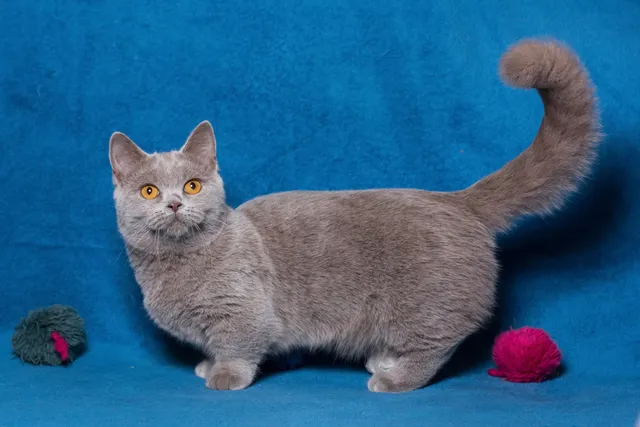
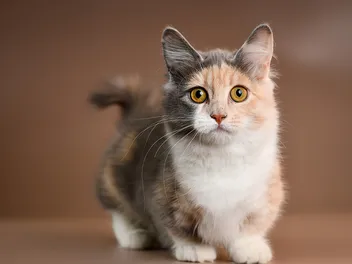
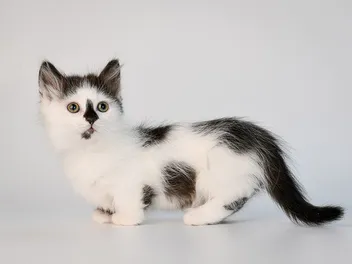
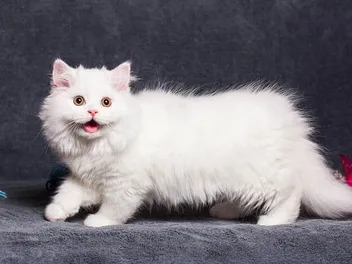
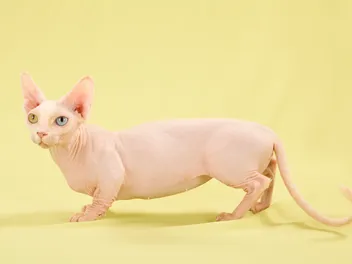
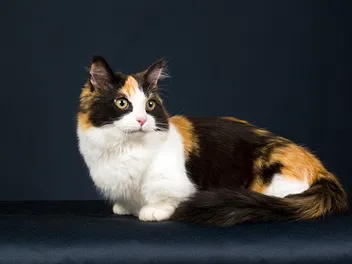
The Munchkin cat is a breed that has been around since the 1990s. They’re not recognized by cat associations, so their place in the cat world is somewhat questionable.
This short-haired feline also has short legs. In fact, their legs are so short that they look like they are bent. This trait is the result of a genetic mutation that causes their legs to grow at an abnormal rate when in the womb.

Personality / Character
The Munchkin cat is a playful and friendly cat breed. They are often compared to dogs because of their sociable nature, playfulness, and love of water. They are great cats for families with children or those with a lifestyle that involves frequent travel. They do need extra care because of their short legs, but they are affectionate cats and worth the extra effort.
Health & Care
If you are considering adopting a Munchkin cat, it’s important to remember that they require a bit more care than most other breeds. Due to their short legs, they tend to jump higher and land harder than other breeds. Therefore, it is recommended that they be kept indoors. Jumping down from a balcony or rooftop would not be safe for them.
Munchkin cats are energetic and love to play. However, their size means they are suitable for a small living space. They behave like any other cat but have lower exercise requirements due to their stature.

Suitable For:
Munchkin cats are suitable for families with children and other pets. They are highly affectionate and social, tolerate strangers, and are easy to groom and train. Munchkins are also suitable companions for seniors, and they tolerate being left alone for periods of time. While they love to play and have high energy levels, their small size means that they don’t need much room to do so.
Differences Between a Munchkin and a Russian Blue
Since the Munchkin cat is not a recognized cat breed, there are few differences between them and the Russian Blue. The most significant difference between the two breeds is their coat type. The Munchkin has short fur, whereas the Russian Blue has medium-length fur.
As far as personality and temperament are concerned, there are no significant differences between the two breeds. Both are sociable, affectionate, and great for families with children. The Russian Blue does have one advantage, however. They are a highly intelligent breed and among the easiest to train. This makes them a great choice for people who would like to use their cat as a companion for therapy or similar jobs.
Does a Russian Blue Munchkin Cat Exist?
While there is no reason to think that a Russian Blue cat and a Munchkin cat can’t breed, there is no indication that this crossbreed has been developed. Both breeds have similar personality characteristics. However, since the Munchkin has a genetic mutation, their bloodlines are often carefully preserved. The Munchkin is also not recognized as an official cat breed, while the Russian Blue is, so it is unlikely that breeders would want to mix these two distinct bloodlines.
Be aware of obtaining such a crossbreed from a “backyard breeder.” Many people will sell kittens that they have bred themselves without knowing the bloodwork and genetic information from the parents, and these kittens can suffer from inherited conditions that could have been prevented with ethical breeding practices.
Which Breed Is Right for You?

If you are still unsure which of these two lovable cats is right for you, here are a few more things to consider. The Munchkin cat has an average lifespan of 12 years. The Russian Blue has a longer life expectancy and can live for up to 15 years. The Russian Blue is a great cat for people who live alone, and the Munchkin is a great cat for families with children or other members in the household.
Both the Munchkin cat and the Russian Blue are low-maintenance breeds that are great for people who don’t have much time to spend with their cats. If you are looking for a kitty that will cuddle with you on the couch or love playing with you outside, either breed will be perfect.
When it comes to choosing a cat breed, there are many things to consider. Each has unique traits and qualities that make them special, and it can be difficult to choose which one would suit your lifestyle best. They're all wonderful in their own way!
Featured Image Credit: Left - milivigerova, Pixabay | Right - Sviatoslav Shevchenko, Shutterstock
Expert cat care, straight to your inbox
News, insights, and useful advice, delivered to you.

No spam — unsubscribe anytime.
By signing up, you agree to our Terms & Conditions and Privacy & Cookies Policy.
How useful was this post?
Click a star to rate. You can leave written feedback afterwards. (We read all feedback.)

Chelsie is a freelance writer who is passionate about helping owners and cats live their best lives. She currently lives in rural Alberta, Canada with her husband and two children, and is currently a pet parent to four horses, four cats, and a border collie.