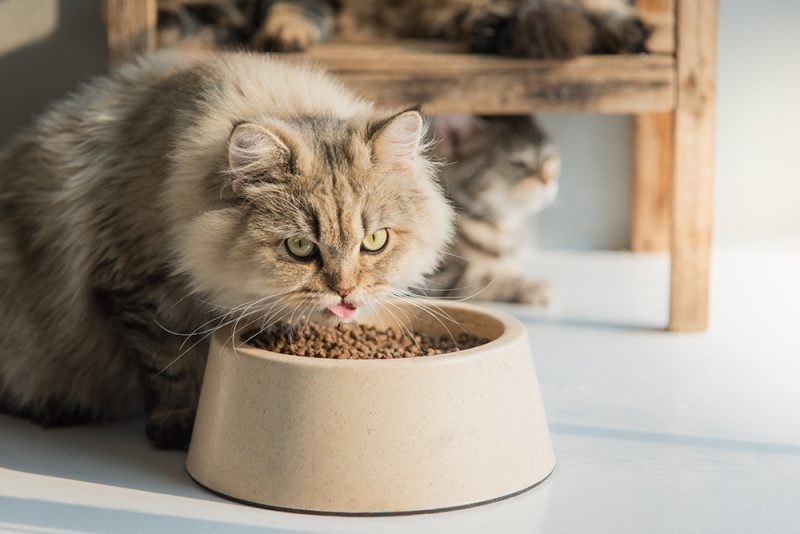
The Oriental Shorthair cat is known for its unique appearance. They have a triangular head, almond-shaped eyes, large and erect ears, elegant coats, and long, tubular bodies. As for temperament, these cats are loving, intelligent, and curious. They make terrific companions and love to talk to their humans.
With that said, they are also predisposed to specific health issues thanks to their Siamese ancestors. They are relatively healthy, but if you’re thinking of acquiring one, you may benefit from reading this article so that you’re aware of certain medical issues to watch out for.
In this guide, we’ll list each medical condition in order from least serious to most serious and explain what the condition is. Read on to learn more about this fascinating cat breed’s predisposed medical issues.

The 12 Most Common Oriental Shorthair Health Problems
1. Feline Asthma
Feline asthma is a disease that affects the lower airways, and it affects roughly 5% of cats. Certain breeds are more prone to having feline asthma, and the Siamese cat is one of them, making it possible for an Oriental Shorthair to have the disease as well. Asthma can be a life-threatening medical condition, so if you notice any signs, a trip to the vet is necessary.
Some signs to look for are coughing, wheezing, difficulty breathing, rapid breathing, vomiting, lethargy, and a chronic cough.

2. Vestibular Disease
If your Oriental Shorthair suddenly develops dizziness and a loss of balance, your cat could have vestibular disease. The vestibular system is responsible for keeping your cat’s balance while moving about.
The system is made up of fluid-filled canals and nerves that track your cat’s head movement in correlation with gravity. The system has two main locations: one at the base of the brain and the one in the inner ear. If the system is disrupted, the signals from the inner ear and the brain can cause your cat to lose its balance.
While the condition may look terrifying, it’s actually not a life-threatening event. Most symptoms clear up within 24–48 hours, or it could take as long as 3 weeks. However, if your cat is displaying any of these signs, you’ll need to take them to your veterinarian to rule out other conditions.
The Oriental Shorthair also likes to jump up on high pieces of furniture, so it’s imperative to avoid letting your cat do this until the condition clears up to prevent injuries.
3. Crossed-Eyes
This condition is common in Siamese cats, making the Oriental Shorthair more susceptible. This condition may look concerning, but it causes no harm to your kitty. In fact, despite the condition’s appearance, a cat affected can see just fine, and no treatment is necessary.
The medical term is called strabismus, and it may occur in either one or both eyes. If your Oriental Shorthair has this condition, the eye or eyes will point inward toward the nose instead of straight on. For the Oriental Shorthair, the condition is usually present at birth, but if your cat suddenly develops this condition, take it to the vet to ensure a head injury or neurological issue is not the cause.

4. Lung Inflammation
Oriental Shorthair cats may be more prone to developing chronic bronchitis because of their Siamese ancestors. The condition is slow to progress and is irreversible. Chronic bronchitis affects the lower respiratory tract, and a dry or hacking cough is often the first sign. As time goes on, breathing may become difficult, and your cat’s energy will become depleted.
If your cat has bronchitis or any type of lung infection, it’s vital to keep obesity at bay to prevent further complications. The condition may be treated with medications as well.
5. Bladder Stones
Also known as uroliths, bladder stones are a collection of organic material, crystals, and minerals that form in the bladder and cause pain and inflammation. Depending on the size of the stones, they can make it hard for your kitty to urinate, and sometimes, they won’t be able to urinate at all.
Cats hide their pain well, making it important to observe their behavior and signs, such as frequent urination, genital licking, straining to urinate, chronic urinary infections, painful urination, spraying, and blood in the urine.
6. Feline Hyperesthesia Syndrome
This condition is a sensitivity of the skin along the back and down to the base of the tail. An owner will notice this condition when petting the cat along the back. Depending on the severity, your cat may scratch itself in the area you touched, or your cat may become aggressive and even bite you.
Some veterinarians feel this is a compulsive disorder, while others feel it’s a type of seizure problem. Usually, self-mutilating issues may arise, such as excessive scratching and digging at the spots, and your cat may drool. A vet will first rule out other conditions before a diagnosis is made, such as spinal arthritis or a fungal infection.
If you need to speak with a vet but can't get to one, head over to PangoVet. It's an online service where you can talk to a vet online and get the advice you need for your pet — all at an affordable price!

7. Megaesophagus
The esophagus has the job of carrying food and water from the mouth to the stomach. In a cat with a megaesophagus, the esophagus doesn’t move food through the tube like it should, and the food stays in the esophagus.
Your cat may throw up particles of food or vomit often. The condition can be managed with treatment, such as special feeding postures and diet modifications, but it’s vital to start treatment ASAP because your cat can develop pneumonia if left untreated.
8. Progressive Retinal Atrophy (PRA)
PRA is a collective group of inherited genetic diseases that causes blindness due to an autosomal recessive trait. Night blindness is usually the first sign, followed by complete blindness. A second complication is cataracts.
PRA is slow to progress, with most cats showing symptoms at 3–5 years of age. Signs include dilated pupils and visible eye shine, or your cat may not jump anymore on furniture and may even bump into objects. There is no cure, but cats can adapt well to the condition.

9. Diabetes Mellitus
Feline diabetes is the inability to produce enough insulin or insulin resistance to balance glucose and blood sugar levels. Cats with diabetes suffer weight loss, poor appetite, dehydration, vomiting, motor function issues, depression, coma, and even death. Obesity can lead to your cat developing diabetes, making it necessary to feed a complete and balanced cat food.
Signs of diabetes are increased thirst and urination. If your cat has diabetes, you will work closely with your veterinarian to determine a course of action for treatment. Diabetes can be managed, but it will require sticking to a plan of treatment developed by your veterinarian to manage the condition. While there’s no cure, your cat can live a happy, normal life with proper treatment and diet.
10. Familial Amyloidosis
Amyloidosis is a serious condition that affects vital organs, such as the liver and kidneys, and the Oriental Shorthair is more susceptible than other breeds. This condition occurs when amyloids are deposited outside of various organ and tissue cells, causing a disruption in those organs. It usually develops in senior cats, but with the Oriental Shorthair, it can occur as young as 1–4 years of age.
Signs include weight loss, mouth ulcers, continual vomiting, and dehydration. Kidneys are mostly affected, resulting in kidney failure. However, your vet will put a treatment plan in place in an effort to prolong your pet’s life. This condition requires ongoing treatment.

11. Dilated Cardiomyopathy
Dilated cardiomyopathy is another word for an enlarged heart. This disease affects the ventricle muscle of the heart, reducing its contraction ability to keep blood pumping throughout the body normally. This condition is not as common as it once was due to added taurine in cat food today, but it is still occasionally seen in Oriental Shorthairs, Siamese, Burmese, and Abyssinian cats.
Signs include loss of appetite, weakness, and depression. Your veterinarian will use an electrocardiogram, X-rays, and an echocardiogram for diagnosis. Treatment plans vary depending on the severity, but the condition can be managed.
12. Cancer
Oriental Shorthair cats are more prone to developing two types of cancer: lymphoma and mast cell tumors. Lymphocytes are a type of white blood cell, and when a cat has lymphoma, the lymphocytes form abnormally throughout the body and can show up in any given area of the body. Luckily, treatment is available for this cancer with high success rates and can be detected through blood work.
Mast cell tumors are a type of skin cancer that resembles lumps or lesions under the skin and are usually hard hairless nodules. If surgically removed quickly, the prognosis is excellent for your feline. They are often seen on the head, neck, ears, or paws. Roughly 90% of mast cell tumors are benign, but having your cat examined as soon as you notice any kind of lump or lesion is critical in the outcome.
Mast cell tumors can also occur in internal organs. These types of tumors usually affect the spleen but can also affect the intestine. Weight loss, lethargy, loss of appetite, and vomiting are common signs.
Conclusion
As you can see, Oriental Shorthairs are genetically more prone to specific medical issues, but often, these cats are relatively healthy. Any of these diseases and conditions can occur in any cat, but it is a good idea to know what your particular cat breed is predisposed to.
Be sure to take your Oriental Shorthair for yearly check-ups, and if you notice any lumps, lesions, or any other signs, such as vomiting, weight loss, lethargy, etc., promptly take your cat to the vet for an examination.
Related Read:
- Burmese vs. Siamese Cat: What’s the Difference? (With Pictures)
- Do Oriental Shorthair Cats Shed? Breed Facts & FAQ
Featured Image Credit: Ambiento, Shutterstock
 The 12 Most Common Oriental Shorthair Health Problems