Burmese vs. Siamese Cat: What’s the Difference? (With Pictures)


In this article
If you are looking for a feline companion with lots of personality, you can hardly go wrong with either a Burmese or Siamese cat. In addition to being personable, they are both extremely intelligent, animated, and affectionate. This makes both breeds ideal candidates for people looking for a loyal companion, including self-proclaimed “dog people.” In fact, unlike most felines, Burmese and Siamese cats have a seemingly unending thirst for attention.
So, do their differences come down to looks, or do they differ in other ways? The following article will take a closer look at each breed to help you make an informed decision.

Visual Differences

At a Glance

Burmese Cat Overview
With their expressive eyes, high intelligence, and outgoing personalities, Burmese cats are some of the most unorthodox felines out there. When you couple their high degree of sociability with their intelligence, you have yourself a cat with dog-like tendencies. These cats are ideal for people who consider themselves dog lovers.

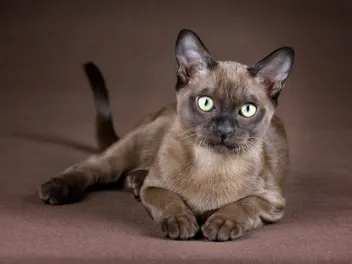
Burmese Cat Appearance
There are two versions of the Burmese cat, the American and the European. While they both originate from the same stock, they have developed noticeable differences over time. Nonetheless, most cat registries still consider them the same breed since they are not different genetically.
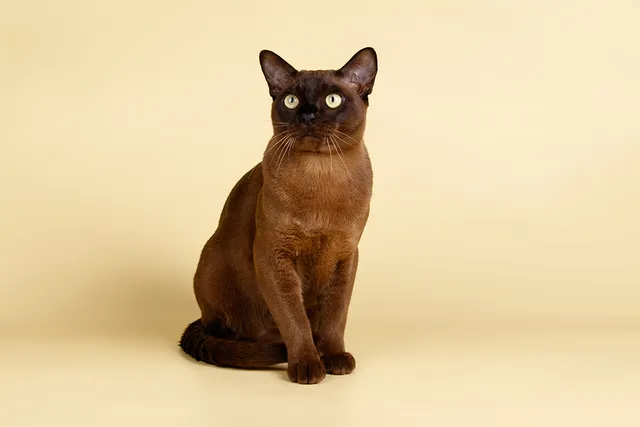
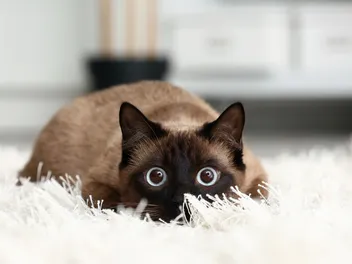
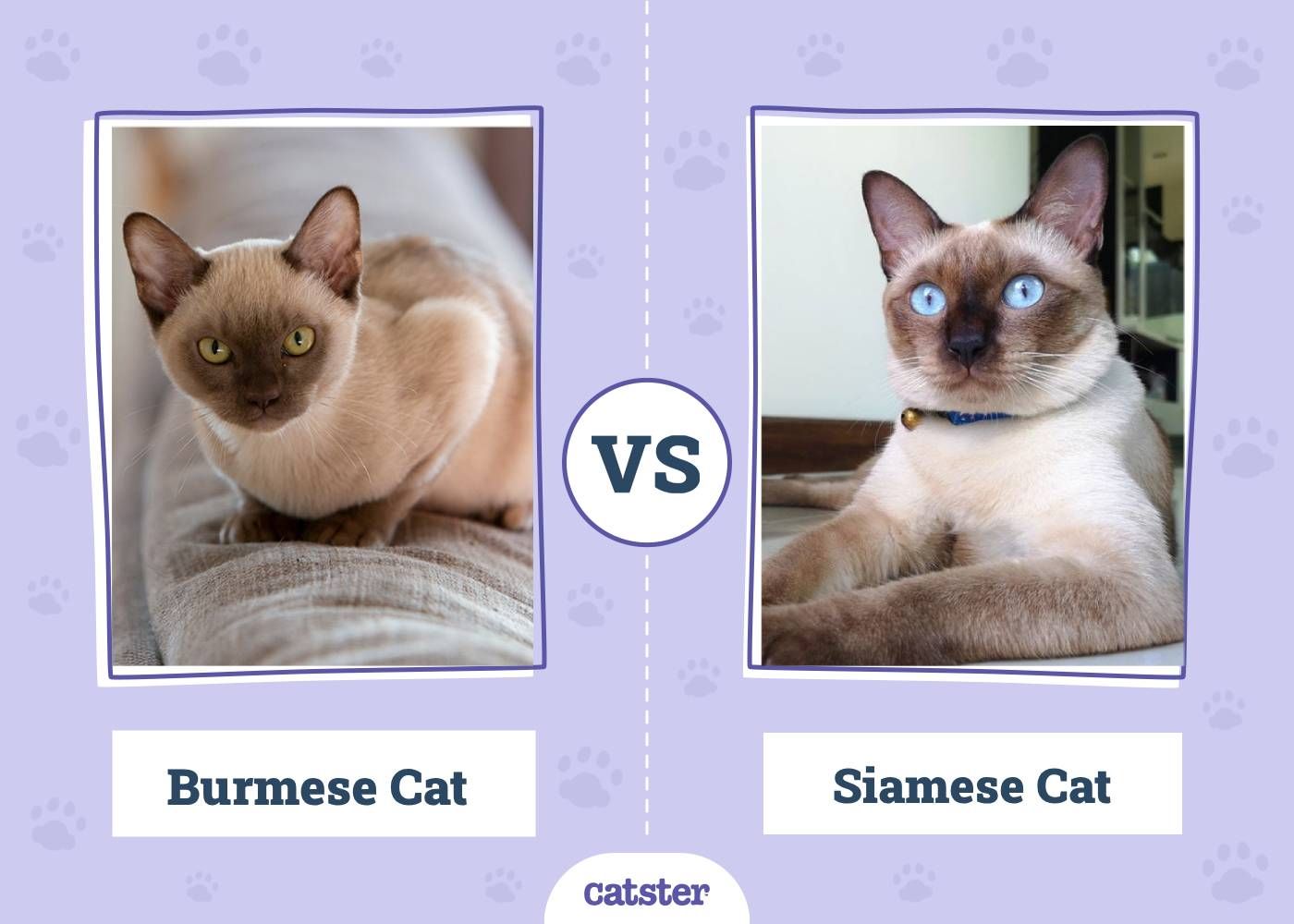
The European Burmese has a more slender frame, a wedge-shaped head, almond-like eyes, and small, pointed ears. The American Burmese, however, is stockier and has a wider head, rounder, more expressive eyes, and slightly wider ears. Both versions, however, sport short, silky coats with a single, solid color in most cases. Initially, all Burmese cats sported a sable coat. Over the 20th century, however, colors such as blue, lilac, and fawn started to become more common.
Today, British cat registries recognize colors such as solid brown, lilac, chocolate, cream, and red, in addition to the tortoiseshell pattern on a base of chocolate, brown, lilac, and blue. The Cat Fanciers’ Association, however, has been more conservative, only recognizing Burmese cats that sport a solid sable, champagne (chocolate), platinum (lilac), or blue coat.
Burmese Cat Temperament
Burmese cats are some of the most social felines around. They are also incredibly playful, loving, and loyal. It is no wonder, therefore, that they are often described as “dog-like.” These felines develop such deep attachments to their humans that it borders on obsession. As a result, these cats are not well-suited for solitary living like most other felines. In fact, Burmese cats develop negative stress-coping behaviors such as aggression when they feel isolated.
The upside is that they are extremely family-friendly animals, reveling in the company of humans and other cats, and they can even learn to tolerate the dog.
Their high intelligence enables them to pick up skills and training at an incredibly fast rate, which comes in handy when you are looking to teach them new games. Burmese cats are renowned for playing popular dog games such as fetch, hide and seek, and tag. What’s more, if you are a fan of cat shows, the Burmese cat is perfect for you, as these felines absolutely love being the center of attention.
There is a caveat: You do not get to choose when to give them attention—they do, and they will certainly let that be known through their constant talking. Burmese cats are among the most talkative cat breeds out there, although not as much as their Siamese relatives.

Burmese Cat Diet
Burmese cats require plenty of protein and nutrients to sustain their active lifestyles. High-quality, complete, and balanced food is an excellent option. Provide variability, and to prevent your cat from becoming a picky eater, make sure you switch cat food brands regularly so they do not become accustomed to a particular brand. Just take at least a week to gradually transition between foods.
Lastly, have the vet check the cat out so they can help you figure out the ideal nutrition requirements for your pet.
Burmese Cat Grooming
As mentioned, Burmese cats sport short coats, which makes grooming a breeze since there is little to no shedding. As a result, you will rarely have to brush or bathe them, as the cat will clean themselves without a lot of hassle.
Burmese Cat Health
This is a fairly healthy cat breed. However, European Burmese cats have been found to have a higher risk for diabetes mellitus than their American counterparts.
Burmese cats are also predisposed to hypokalemia, a disorder characterized by low potassium levels in the blood. This inherited condition results in skeletal muscle weakness, which can cause them to struggle to walk and hold their heads correctly. Fortunately, it can now be prevented by genetic testing of the parental lines.

Suitable For:
Burmese cats are best suited for active households due to their social nature. They also make excellent pets for people who are at home all the time. Do not get one if you know that they will be alone for extended periods. Doing so will only increase bad behavior. If you must, then consider getting a pair.
Additionally, if you do not like noisemakers, this cat is also not for you, as they are quite talkative. For the average household, however, Burmese cats should make excellent pets.
Pros
- Attentive and loyal
- Long lifespan
- Gets along with others
- Active
- Highly trainable
Cons
- Susceptible to hypokalemia
- Can be too demanding of attention
- Gets depressed when left alone for extended periods

Siamese Cat Overview
If you are looking for a charismatic, fun-loving, and affectionate feline companion, the Siamese cat is for you. However, this breed can be incredibly possessive and even territorial. Just like their Burmese cousins, Siamese cats are also attention hogs. Here is everything you need to know about Siamese cats.

Siamese Cat Appearance
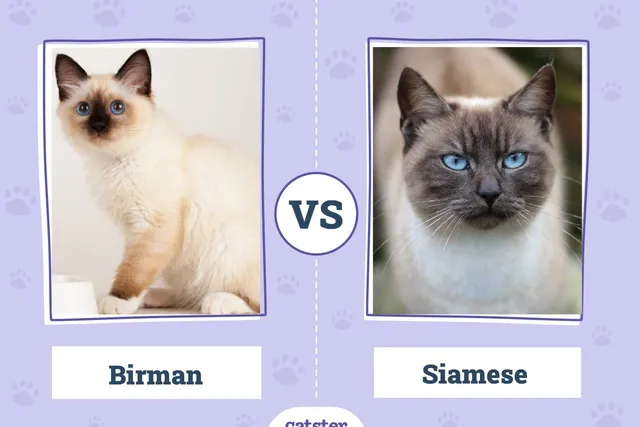
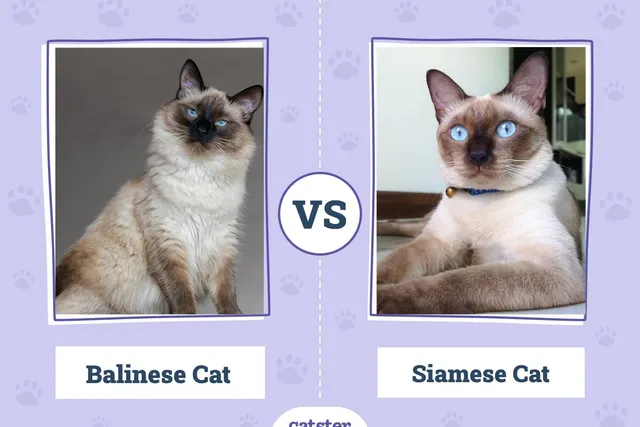
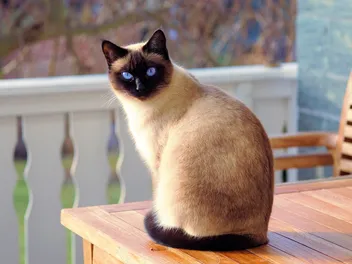
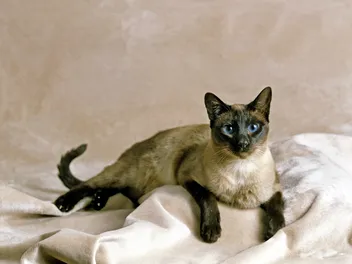
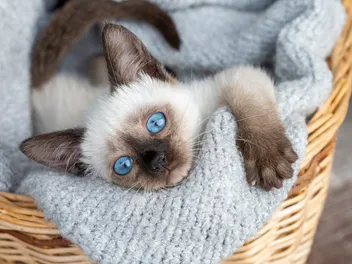
Siamese cats have lean, muscular, lengthy frames. Their limbs, as well as their tails, are long and thin, and they sport a coat featuring a contrasting color point pattern. Colorpoint means that there is a disparity in the intensity of coloration between the body and the extremities, with the latter being much darker. All Siamese cats have blue eyes, which gives them a striking appearance.
Their coats are short and light, meaning that they do not shed much. These felines come in four main color types: chocolate point (an ivory body and dark brown points), seal point (a cream or fawn body and dark seal points), lilac point (a light cream body and pink-gray points), and blue point (a light silver body and dark gray-blue points).

Siamese Cat Temperament
The typical Siamese is a highly social, fun-loving, and affectionate cat. They also happen to be one of the most intelligent felines in the world. Their social nature means that they do best when receiving lots of attention. If you think Burmese cats are noisy, Siamese cats take it a few notches higher. They are arguably the noisiest of all housecats. They are especially talkative with those they love and trust.
Like all felines, they also love their space, which to Siamese cats means hanging out a couple of feet away from you. These cats, however, are not very generous when it comes to sharing the object of their affection, which is you. This can make them aggressive toward other pets seeking your attention. This is why you should train them to get along with others from an early age.
Siamese cats are people-oriented pets, which means that you may not fulfill their attention needs by getting them another pet friend. Therefore, if your lifestyle does not allow you to spend extended periods with your furry companion, a Siamese cat might not be a good fit for you. Additionally, you will have to keep finding new games, tricks, and toys to satiate their intelligent minds; otherwise, they will quickly wear you down.
Siamese Cat Diet
This breed needs a species-appropriate, high-quality protein and low-carb diet. Ideally, it should also be a moisture-rich diet that provides plenty of hydration to your Siamese. Talk to your vet so they can help you create a proper food plan for your kitty. You may want to purchase a water fountain to entice them to drink more.

Siamese Cat Grooming
Thanks to their short coats, Siamese cats do not require much grooming. In fact, weekly brushing is all they need from you, as they will take care of the rest. Pay attention to their claws, trimming them as needed. Make sure that you provide them with a scratching post to save your woodwork and upholstery.
Brush their teeth regularly, too, while scheduling dental cleanings at the vet for optimal dental health.
Siamese Cat Health
While Siamese cats have one of the longest lifespans of any cat, often living for up to 20 years, nearly all of them have trouble with their eyes. This breed tends to suffer from progressive retinal atrophy, so their vision is not as acute as that of other cats, making them vulnerable to accidents, especially in the dark. Siamese cats are also more susceptible to chronic coughing or asthma, so keep smoking, home aromatizers, scented candles, or anything that can irritate their respiratory tract out of the house.
Suitable For:
Siamese cats are best suited for individuals who can fulfill their attention needs. Left alone, they become highly susceptible to depression. Also, they tend to build strong bonds with a particular human.
As such, we recommend Siamese cats to people who work or stay at home. However, if you do not like noisy pets, these cats are not for you.
Pros
- Bonds strongly with their humans
- Exotic, elegant look
- Gets along with other pets and family
- Energetic
- Extremely intelligent
Cons
- Predisposed to eye problems
- Sensitive respiratory system
- Needs constant attention and enrichment
- Depressed if left alone

Siamese vs Burmese: Which Breed Is Right for You?

As you have seen, there are not many differences between Burmese and Siamese cats. They are quite similar breeds, except that the Siamese amplifies the traits that they share. As a result, your choice might come down to looks, and you cannot go wrong with either.
Nonetheless, they both require someone who is in a position to meet their attention needs, as these are people-oriented pets.
Related Reads:
Featured Image Credit: Oleksandr Volchanskyi, Shhutterstock | Right Witsawat.S, Shutterstock
Expert cat care, straight to your inbox
News, insights, and useful advice, delivered to you.

No spam — unsubscribe anytime.
By signing up, you agree to our Terms & Conditions and Privacy & Cookies Policy.
How useful was this post?
Click a star to rate. You can leave written feedback afterwards. (We read all feedback.)
Christian started writing for a local newspaper as a teenager, and he's been involved in the publishing industry for most of his adult life. Combining his love of writing with a passion for animals, he is currently the Director of Editorial at Pangolia and the Editor-in-Chief at Catster.
Christian lives in the Philippines with his wife, son, and four rescue cats: Trixie, Chloe, Sparky, and Chopper.