How to Give Your Cat a Massage: 11 Vet-Approved Tips & FAQ


In this article
When we want to pamper and treat ourselves, we book a 45 or 60-minute massage with our favorite masseuse. But have you ever wondered what your cat could do to relax? While massages aren’t known to relax cats in the way they would a person, you might be surprised to learn that cats can benefit from massages in other ways too. Massages from trained therapists are often something your veterinarian will prescribe for your pet for instances such as chronic pain or swelling from an injury.
Nonetheless, if your pet is injury and pain-free, that shouldn’t stop you from gently rubbing your cat at home to strengthen your bond with them. If you want to learn how to better connect with your cat while also allowing it to relax, you’ve come to the right place.
Please keep reading to find our tips on how to massage your kitty.

The 11 Tips to Give a Cat a Massage
Please Note
1. Get in the Right State of Mind
No one wants to get a massage from someone angry or in a rush. The masseuse or masseur will be distracted by their own feelings and thoughts and not put their all into helping you feel better. This same rule applies when massaging your cat.
Do not start a massage when you’re in a hurry or feeling frustrated, stressed, or angry. Give yourself time to wind down and let your outside problems fall to the wayside for a few minutes. You don’t need to massage your cat for 60 minutes for it to reap the benefits of your touch. A few minutes of well-intentioned massage can do wonders for your kitty, so make sure you’re in a headspace where you can give your full attention.

2. Use Light Strokes
What type of pressure does your cat like when you pet them? Chances are they prefer light and soft touches that run the length of their body. Use this same style of touch during your massages. You might enjoy a deep tissue massage, but your cat probably won’t. If you think your cat needs a deeper massage, we recommend taking them to a professional. Remember that an in-home massage isn’t something you should attempt to treat an ailment for your cat but rather something informal and more of a bonding experience instead of medical therapy.
3. Keep It Short & Pay Attention to Body Language
Keep your massage sessions short, around 5 or 10 minutes, but also listen to what your cat is telling you. Let them go if they are trying to escape from you one minute into their massage. You don’t want to force a massage if your pet isn’t in the mood.
Stay alert and present throughout the massage so you can pick up on subtle body language cues. Your cat will tell you exactly how they feel about the massage if you pay close enough attention. You may notice purring, dozing off, kneading, and a relaxed demeanor if they’re really into it, or scratching, biting, growling, or fleeing if they’re not into the massage.

4. Set the Mood
Find a place in your home that is quiet and distraction-free. You and your cat should both be comfortable in this room. Before you start massaging, establish contact with your voice by speaking calmly and affectionately.
5. Begin with Pets and Simple Strokes
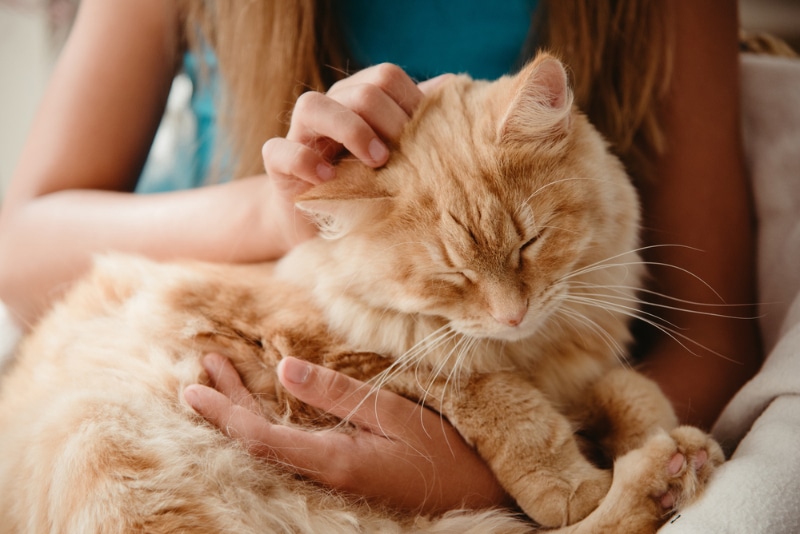
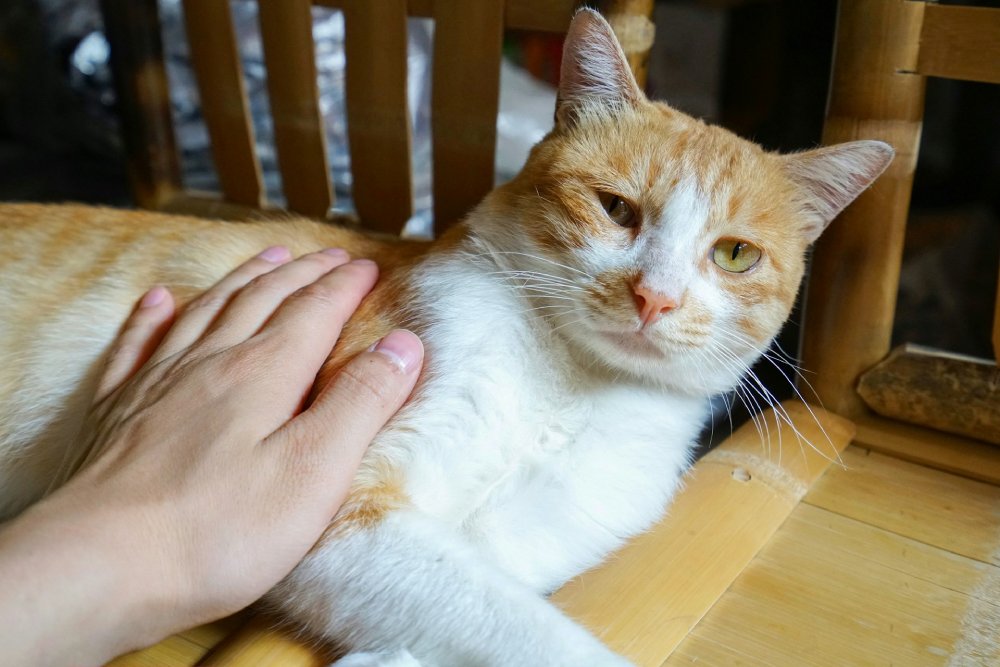
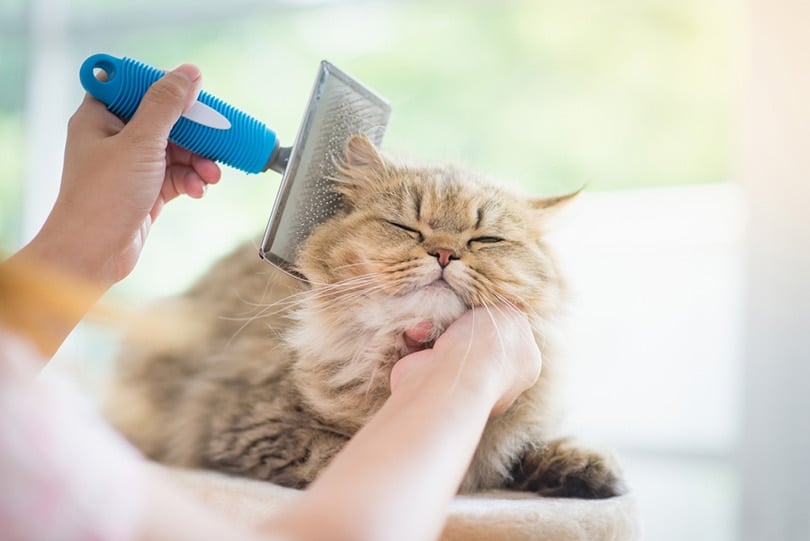
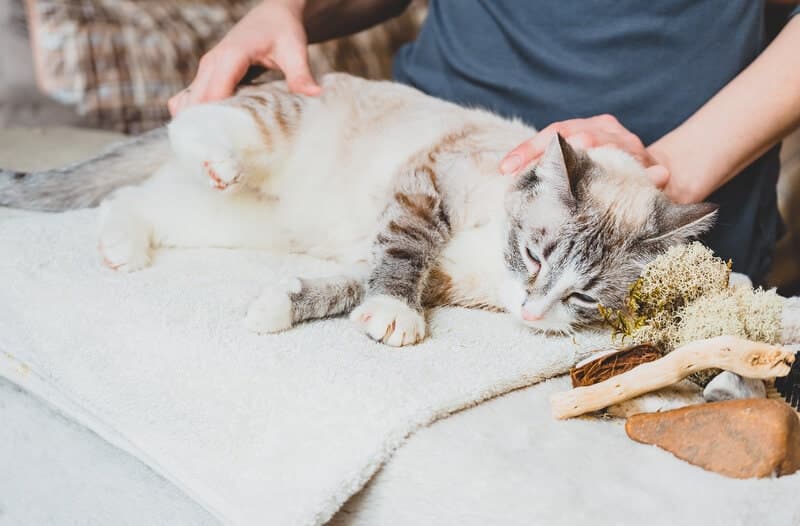
Simple strokes, like traditional pets, are typically the best way to start (and end) a massage. Use light to medium pressure to pet your cat from their head to the tail and down each limb. When you begin with long and light strokes, you can help your cat relax for the rest of the massage.
After a few moments of pets, move on to reversing the stroke on each limb - work from the paws up to their body, paying close attention to your cat’s body language.

Image Credit: Nesolenaya Alexandra, Shutterstock
6. Start at the Head
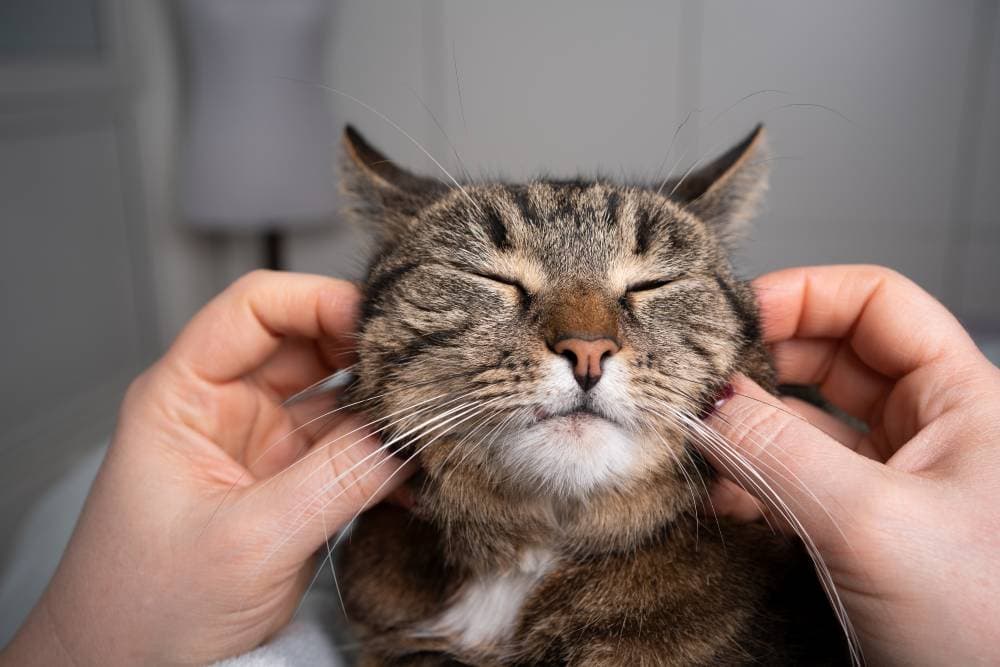
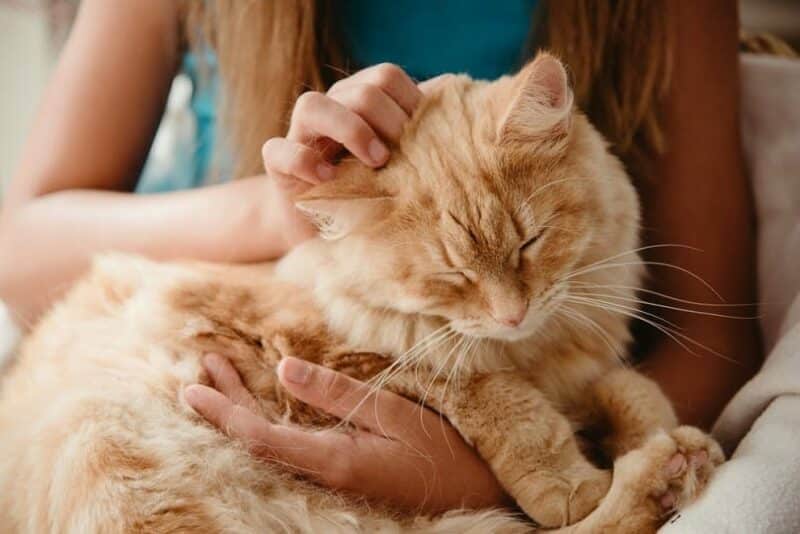
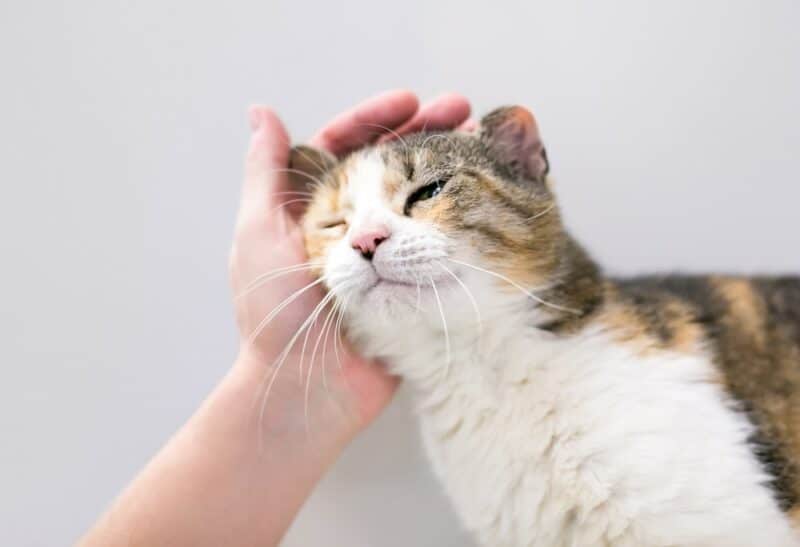
Start the massage by working around your cat’s head. Be gentle, and only use your fingertips to start with. Pat their head for a few moments and then move to the sweet spot: the ears. Move your fingers slowly around each, taking extra time here if your kitty enjoys scratches and rubs around the ears.
7. Move to the Shoulders
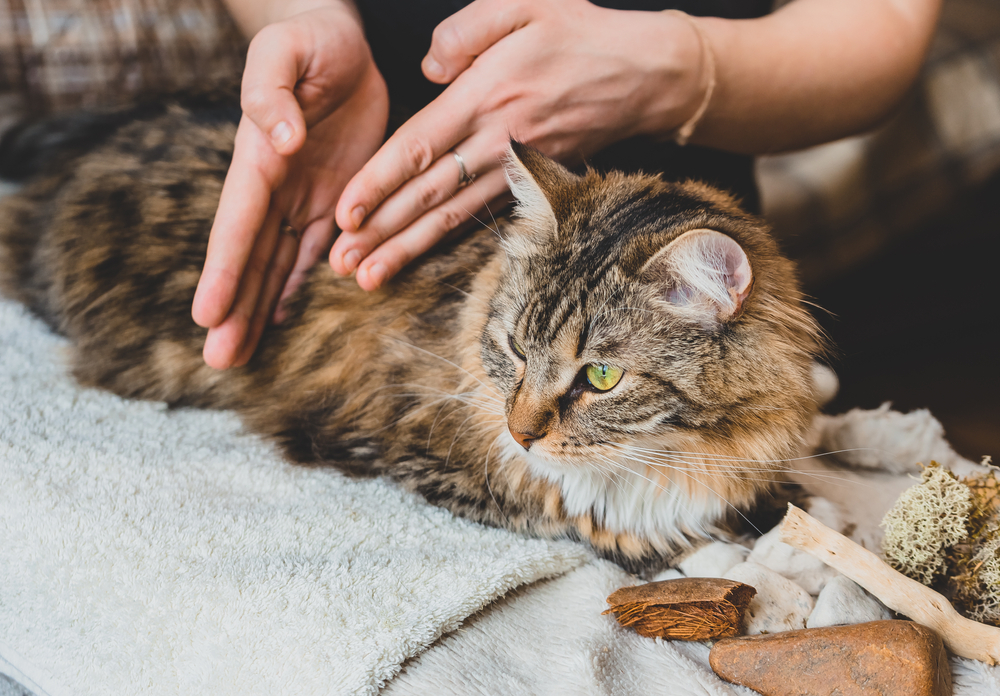
After the ears and head have received a good rubbing, move down your cat’s body to the back of their neck and shoulder. Use your thumb’s fingertips to make slow circles around the shoulder blades. Repeat the circular motion a few times, but go longer if your cat has relaxed and entered a nirvana-like state. Next, knead the sides of the neck but be careful not to apply too much pressure on the windpipe.

8. Go for the Back
After working the shoulders and neck, begin stroking your cat’s back. Apply gentle pressure along the back and sides and move your fingertips in a circular motion. Pay extra attention to the upper back and tread carefully around the lower back and hips. These areas can be sensitive for some cats, so only massage there if your cat has given you the go-ahead.
9. Try the Belly
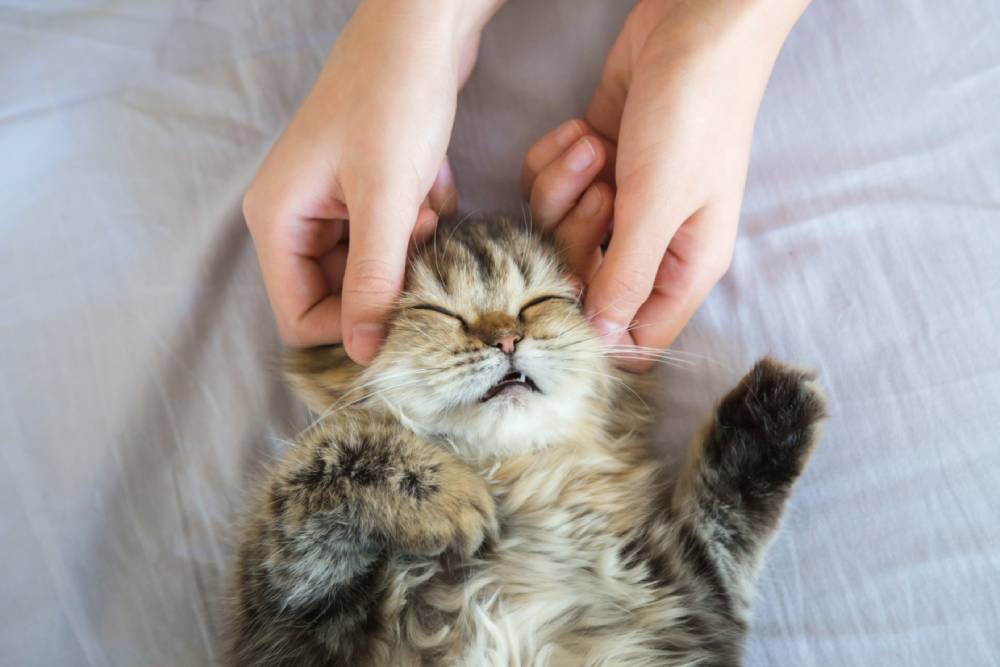
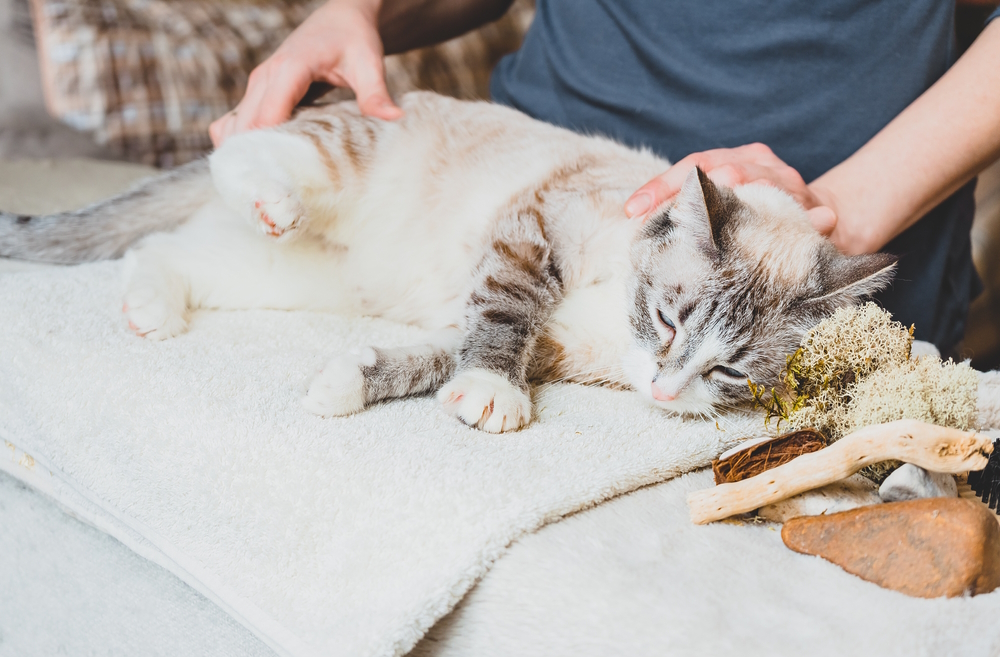
If your cat becomes relaxed enough, they might offer up their tummy. Hold your kitty with one hand and use the other to knead the belly skin very gently. If your cat is still in that nirvana headspace, you might even be able to use both hands to massage this area.
Not every cat enjoys a belly rub, so don’t force it if your cat isn’t into it. You probably already know without trying to massage your cat whether your kitty will go for a tummy rub, so use your best judgment when reaching this point of the massage.

10. Cup the Chest
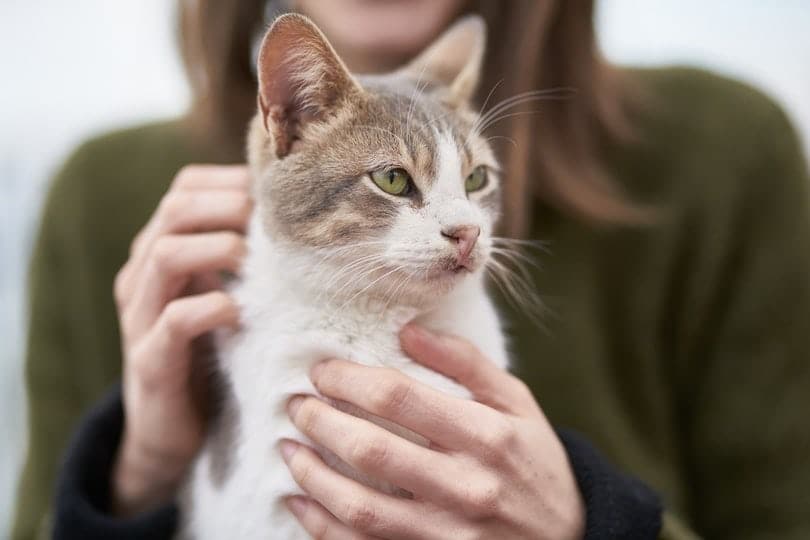
While your kitty is still on their back, use one hand to cup their chest while the other supports their head. Rub your palm in a circular motion to gently massage your cat’s chest. If your cat allows you, use your fingertips to massage the chest from the outside in.
11. Don’t Forget the Appendages
Finish the massage by focusing on your cat’s appendages, which are the tail and paws.
Start at the base of the tail and work your way to the tip. Use a very light touch here, as the tail can be pretty sensitive for some cats. If your kitty isn’t sure what to think about the tail massage, you can try using your other hand to massage their head or ears simultaneously.
Finally, choose one paw to start with and place your thumb in the middle of the paw pad. Using a circular motion, slowly begin rubbing and applying gentle pressure before moving on to the next paw.

If your cat has any medical condition, we highly recommend you to talk to a veterinarian before giving any massage.

Do Cats Really Need (or Enjoy) Massages?
Besides helping your cat feel great, massages can also improve their health and strengthen their bond with you. You can use the time you are massaging your pet to check on their skin and coat health and to feel for any lumps or irregularities. Massage therapy may also release endorphins and may make your cat feel better.
Therapeutic massages are a physical medicine technique that has inserted itself into pain management protocols for cats. This type of massage manipulates the body’s soft tissues, and each stroke serves a specific purpose for helping your kitty find relief from pain.
Therapeutic massages are best performed by trained individuals, and are not something you should attempt by yourself. This is especially true if your cat has injured themselves or is in pain; a massage by an untrained individual may actually make this situation much worse for your pet.
Nonetheless, you can perform a simple massage for your cat at home as a bonding exercise.
Important Considerations
While essential oils are commonly used in human massage therapies, your cat does not need them. In fact, many essential oils are toxic to cats. It is best to avoid them altogether!

Final Thoughts
Massages aren’t just for humans anymore. Your kitty can benefit a lot from home or professional massages if you can get them to sit still long enough. Remember, even short bursts of massage can be helpful, but you should never force your cat to endure your touches if they’re not in the mood.
If your cat is ill, you should speak to your vet before trying our massage techniques. They can provide you with insight into what massage methods will work best for your cat’s specific condition. More importantly, they can refer you to a professional for a prescription massage if they think your cat would benefit from it.
Sources
Featured Image Credit: Ekaterina Kuzovkova, Shutterstock

Expert cat care, straight to your inbox
Vet-reviewed advice, behavior tips, and the best of Catster. Free, and you can unsubscribe anytime.
By signing up, you agree to our Terms & Conditions and Privacy & Cookies Policy.
Christian started writing for a local newspaper as a teenager, and he's been involved in the publishing industry for most of his adult life. Combining his love of writing with a passion for animals, he is currently the Director of Editorial at Pangolia and the Editor-in-Chief at Catster.
Christian lives in the Philippines with his wife, son, and four rescue cats: Trixie, Chloe, Sparky, and Chopper.
Join the conversation
Ask a question, share your story, or send private feedback.