What Is Cat Massage Therapy? Our Vet Explains the Indication, Types, & FAQ

In this article
If you’ve ever received a therapeutic massage, you know how effective it can be against severe muscle aches, muscle pain, tension, and tightness. Massage therapy also reduces muscle spasms, helps aid the rehabilitation process, and helps you regain flexibility and strength. It is natural to wonder if massages can offer pets the same benefits.
Cats, not surprisingly, rely on the flexibility and suppleness of their muscles, ligaments, tendons, and joints as much, or more, than humans. If your cat has been injured, sick, or is getting on in years, cat massage therapy can go far toward helping cats recover or give them a better quality of life. If your feline friend is suffering and you’d like to know more about the benefits of cat massage therapy, what it does, and how it works, read on.

How Does It Work?
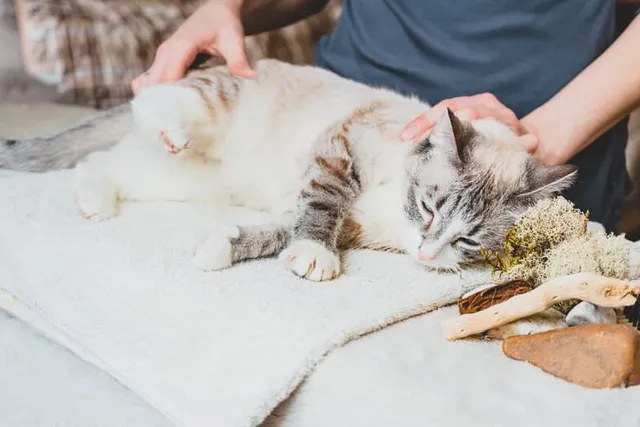
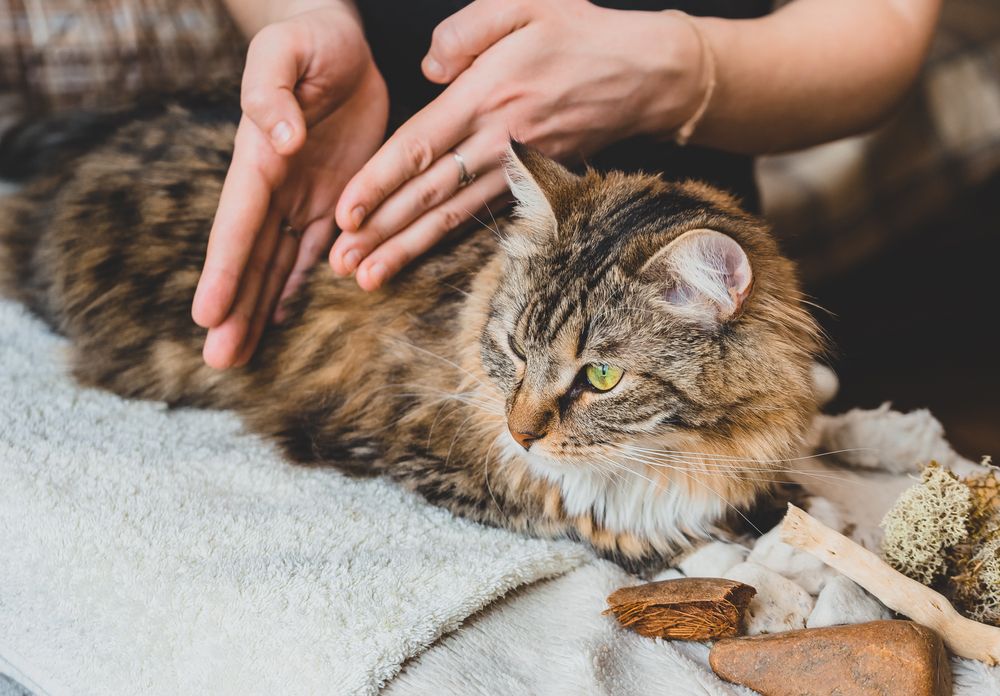
Cat massage therapy is quite similar to massage therapy for humans and uses many of the same techniques. That includes manipulation (i.e., movement) of the soft tissue of your cat’s body, which consists of the muscles, ligaments, and tendons.
Cat massage therapy, like its human counterpart, also involves the application of pressure to the soft tissue in various ways. These movements and pressure are referred to as “strokes,” and a massage therapist will use a wide variety of strokes on your cat during a therapy session. Each stroke is meant to provide a different result and is used to help improve a different muscular problem. Massage therapy works in several ways.
Reducing Muscle Soreness
When massaged, muscle is mechanically stretched. This action reduces the muscle’s tone, and increases its flexibility. Over time, this leads to a reduction in muscle soreness and an increase in the relative strength of the connective tissues that surround the muscle. Likewise, massage can soften and mobilize scar tissue, helping maintain mobility between tissues and restore muscle function after episodes of injury or surgery.
Improves Lymph Flow
Massaging any part of the body increases interstitial pressure (the pressure in between body tissues), which in turn increases venous and lymphatic flow. In addition, as the hands move, squeeze, and stretch the tissues, pressure differences are created between one tissue and another. Higher pressure pushes old fluid and irritating metabolites into the circulation. In turn, areas of low pressure draw in new fluid. This flushing effect may be responsible for decreasing inflammation, pain, and muscle fatigue.
Reduces Stress
In humans, massage induces reflexes that decrease blood pressure, slow breathing, and improve digestion. Human patients that receive massage also consistently report feeling less pain and request less medical intervention 1.
Dogs and cats lick and rub themselves and their young in response to injury, possibly as a means to expedite healing and to manage stress. Therefore, it’s possible that similar benefits are afforded to them through massage as well.

The 5 Types of Cat Massage Therapy
Please Note
1. Simple Stroke
One of the techniques is simple stroking, which is more or less petting your cat from head to tail and toes while applying low to medium pressure. There are two main benefits of this technique:
- It allows the therapist to perform a preliminary assessment of your cat’s body tissues.
- This technique may possibly help reduce anxiety and encourage relaxation in your pet

2. Effleurage Stroke
Another cat massage therapy stroke is called effleurage. When performing effleurage, a cat massage therapist molds their hand to a limb, stroking from the far ends of your cat’s limbs towards the parts of the limbs that are closer to their trunk. While performing this stroke, a therapist’s hands maintain contact and pressure throughout the strokes.
This stroke serves three main functions:
- It decreases swelling, thereby help with pain
- It reduces muscle tone while improving its flexibility.
- It improves mobility between tissues.
3. Compression, Kneading, and Wringing
This is one of the more complex motions a massage therapist does for larger muscles on your cat’s body. In this process, the large muscles are compressed and released in a rhythmical manner. The right and left hands, or the back of the fists alternate with each other and in opposite directions; one moves clockwise, the other counterclockwise, with medium or deep pressure.
Compression, kneading, and wringing serve several purposes:
- These actions have a “flushing” effect; they remove by-products of inflammation.
- Compression, kneading, and wringing increases mobility, extensibility, and strength of tissues.
- This action also helps decrease muscle tension and pain.
- These strokes aid in venous and lymphatic drainage, return, and flow.
4. Friction
Friction refers to the thumbs or fingers making small rotation-like movements with increasing pressure to the depth of the tissue being treated. The pressure is determined by the therapist.
Friction is used for the following:
- It breaks down adhesions between tissues.
- It stimulates local circulation, this can be beneficial for areas with limited blood flow, such as joint capsules.
- It helps restores mobility to tissues being treated.
5. Percussion
Percussion is also sometimes referred to as hacking or clapping. For this stroke, your cat’s massage therapist’s hands are cupped with wrists held loosely. The cupped side of their hand strikes an area of your cat’s body rapidly and briskly (but not forcefully), alternating between hands. Another version of this stroke is done with the hands held vertically, and the pinky fingers striking the tissues lightly and rapidly, with movement coming from the wrists.
Percussion is thought to be useful for the following purposes:
- It stimulates local circulation.
- It stimulates muscle and tendon reflexes and enhances muscle tone.
- In some instances, it may help loosen airway secretions.

The 4 Situations Where Cat Massage Therapy is Used
Cat massage therapy (aka feline therapeutic massage) is used for a wide variety of problems that your cat might be suffering. Most cat massage therapy is performed at a veterinarian's office by a trained and licensed therapist. However, you can sometimes find therapists who work independently and have their own offices.
Some will even make house calls for cats that aren’t fond of traveling. Below are several reasons you would want to talk to your veterinarian about using massage therapy for your pet. In most of these circumstances, it’s possible that the recommendation will come from your veterinarian.
1. Accidents and Injuries
If your cat has been injured or has gotten into an accident and has swellings somewhere along their body, your veterinarian may prescribe massage therapy to help reduce the swelling to promote healing and bring comfort for your pet.
2. Old Age
Like humans, when cats get older, their bones, joints, muscles, and other body parts become stiff and sore. When they do, your cat will have no choice but to slow down and take it easy, which can cause even more tension and stiffness. When an older cat receives cat massage therapy, they will be more relaxed, have less pain, and have more freedom of movement.
3. Chronic Pains
Many forms of chronic pains can lead to decreased mobility, pain, and may also leave your cat stressed out and anxious. Osteoarthritis is common in some pet cats, and your veterinarian may prescribe massage therapy to help your cat cope with their chronic conditions in a better way.

4. Critical Care Patients
Many pets that are hospitalized under intensive care (such as in the ICU) benefit from massage therapy at times. It goes without saying that in such a circumstance the massage would be performed by the veterinarian or clinic staff and would be used for hopefully expediting the healing process for your cat.
FAQ
Below are some of the most frequently asked questions about cat massage therapy.
Is petting a good substitute for cat massage therapy?
While petting your cat is essential to their health and your relationship with your cat, it’s not a substitute for massage therapy provided by a trained therapist.
Do all cats benefit from cat massage therapy?
Most cats will benefit greatly from massage therapy, but some find it highly annoying and fuss the entire time. This fussing can defeat the purpose and cause more harm than good.
Should I use essential oils while massaging my cat?
Never use any essential oils or other paraphernalia that is typically associated with human massages on your cat. Many essential oils are highly toxic to cats, even when applied topically.
If my cat is perfectly healthy, will massage therapy be of any benefit?
Yes! Even a healthy cat will feel more relaxed, less stressed, and have improved blood and lymph flow after a massage, which is beneficial to their health.
Is cat massage therapy harmful in any way?
As long as it’s done by a trained professional, cat massage therapy is safe and will not harm your cat. Most cats love it!

How much does it cost to get a massage for my cat?
While prices vary depending on where you stay, the typical 30-minute cat massage session costs between $25 and $60.
Is cat massage therapy covered by pet insurance?
Some pet insurance plans cover cat massage therapy if it’s given to help them recover from an illness or injury.
My cat is a purebred show animal, will cat massage therapy benefit them?
Massage therapy can help your cat look great and relax during a competition or show.
Is cat massage therapy recommended for older cats?
Yes, very much so. A regular massage can help an older cat stay more active and have less pain due to arthritis.
Can kittens get massage therapy?
Massage is generally prescribed to kittens that are injured. That being said, a gentle massage done by a trained professional might be welcomed by your kitten.
Final Thoughts
Cat massage therapy is very similar to massage therapy for humans and, as with humans, is likely beneficial for your cat. Massage therapy helps your cat in a wide variety of ways. For example, massage therapy can help your cat deal with chronic conditions or offer improved mobility after an accident or injury.
Massage therapy can also be beneficial for older cats and give them a higher quality of life as they age. In most instances, your veterinarian will likely refer you to a cat massage therapist. A cat massage performed by a skilled therapist can make a huge difference in your cat's life.
Related Read: Do Cats Like Head Massages?
Sources
Featured Image Credit: Ekaterina Kuzovkova, Shutterstock
Expert cat care, straight to your inbox
News, insights, and useful advice, delivered to you.

No spam — unsubscribe anytime.
By signing up, you agree to our Terms & Conditions and Privacy & Cookies Policy.
How useful was this post?
Click a star to rate. You can leave written feedback afterwards. (We read all feedback.)
Dr. Luqman Javed DVM (Veterinarian)
Dr. Luqman (also known as Dr. Lucky) grew up with an immense passion for animals of all kinds. By becoming a veterinarian, he turned his childhood dream into reality. Now, his goals are focused on providing help to cats all around the world by helping to cat owners understand their feline friends better to ensure the best quality of life for them. His passions are wildlife, exotic pets, pet owner education, and animal welfare. He graduated with his DVM from the Universiti Putra Malaysia in 2020. He has worked with a variety of animal species and has decades of personal experience with keeping many different types of exotic pets, such as turtles, hamsters, freshwater fish, chickens, songbirds, and parrots (and he has extensive skills in training parrots, too).